Loading...
Emperor Toba vs Yaroslav the Wise
Yaroslav the Wise leads by 17.8 pts · 2 figures compared
…
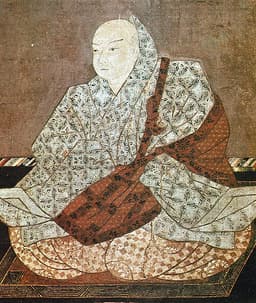
Emperor Toba
Emperor · Medieval
42.5Total
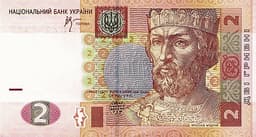
Yaroslav the Wise
Emperor · Medieval
60.3Total
Basic Information
Born
1103
978
Died
1156
1054
Era
Medieval
Medieval
Nationality
Japan
Kievan Rus
Occupation
Emperor
Emperor
Civilization
Eastern
Western
Score Comparison
Military (10%)
52.8
72.5
Political (20%)
27.9
70.0
Influence (20%)
48.6
55.0
Legacy (20%)
40.8
52.0
Leadership (15%)
38.1
72.0
Strategy (15%)
50.0
50.0
TOTAL
42.5
60.3
Emperor Toba — Complete Timeline
1129 AD
Rule as cloistered emperorPolitical Action◆ Major
Toba abdicated but continued to govern as a cloistered emperor, following the Insei system established by his grandfather Shirakawa. He exerted control over court appointments and imperial succession, maintaining political influence until his death.
Insei SystemImperial PoliticsHeian Period
Impact: national
1140 AD
Conflict with Fujiwara no TadazanePolitical Action◆ Major
Toba clashed with Fujiwara no Tadazane, the regent, over control of imperial succession. Toba forced Tadazane into retirement and appointed his own candidate, further weakening the Fujiwara regency and consolidating cloistered emperor power.
Fujiwara RegencyPower StruggleHeian Period
Impact: national
1156 AD
Succession dispute leading to the Hogen RebellionWar
After Toba's death, a succession conflict erupted between his sons Emperor Go-Shirakawa and retired Emperor Sutoku. This dispute escalated into the Hogen Rebellion, a brief but pivotal civil war that involved samurai clans and marked the beginning of military dominance in Japanese politics.
Hogen RebellionSamuraiSuccession War
Impact: nationaldestructive
Yaroslav the Wise — Complete Timeline
1016 AD
Promulgation of the Russkaya PravdaReform
Yaroslav issued the Russkaya Pravda (Rus' Justice), the first written legal code in Kievan Rus. It codified laws on crime, property, and inheritance, replacing customary law and establishing a unified legal system.
Legal CodeLawGovernance
Impact: nationalconstructive
1036 AD
Defeat of the PechenegsWar◆ Major
Yaroslav led the Kievan army to a decisive victory over the Pechenegs near Kiev. The defeat ended Pecheneg raids on Rus territory and secured the southern borders, allowing for a period of peace and prosperity.
Military VictoryBorder SecurityPechenegs
Impact: regionalconstructive
1037 AD
Construction of Saint Sophia Cathedral, KievCultural◆ Major
Yaroslav commissioned the Saint Sophia Cathedral in Kiev, modeled on the Hagia Sophia in Constantinople. The cathedral became the spiritual and cultural center of Kievan Rus, housing a library and scriptorium.
ArchitectureCathedralCultural Center
Impact: nationalconstructive
1043 AD
Marriage Alliances with European RoyaltyPolitical Action◆ Major
Yaroslav arranged marriages for his children with European royal families: his daughters married kings of France, Norway, and Hungary, and his sons married Byzantine and Polish princesses. This integrated Kievan Rus into European dynastic networks.
DiplomacyMarriage AlliancesEuropean Integration
Impact: regionalconstructive
Expert Analysis
Origins
Emperor Toba was born in 1103 in Japan, the son of Emperor Horikawa. He ascended the throne at age 4 in 1107, but real power was held by his grandfather, retired Emperor Shirakawa, who ruled as a cloistered emperor. Toba's early life was shaped by the Insei system, where retired emperors wielded authority from behind the scenes. He received a traditional court education but was groomed for ceremonial rather than executive leadership.
Yaroslav the Wise was born around 978 in Kievan Rus, the son of Vladimir the Great, who Christianized the realm. Yaroslav's youth was marked by internecine warfare with his brothers after Vladimir's death in 1015. He was appointed prince of Novgorod and later seized the throne of Kiev in 1019 after defeating his brother Sviatopolk. His formative years were spent in military campaigns and consolidating power, contrasting sharply with Toba's sheltered court upbringing.
Rise to Power
Toba's rise was largely passive. He became emperor as a child but remained a figurehead. After Shirakawa's death in 1129, Toba began exercising real authority as a cloistered emperor himself, having abdicated in 1123 in favor of his son Sutoku. However, Toba later forced Sutoku to abdicate in favor of another son, Go-Shirakawa, triggering the Hōgen Rebellion of 1156. Toba's political maneuvering, including his conflict with regent Fujiwara no Tadazane (whom he forced into retirement in 1121), demonstrated his desire for control despite his low political score of 27.9.
Yaroslav's path to power was violent. He fought his brother Sviatopolk for five years, finally winning the throne of Kiev in 1019 with help from Varangian mercenaries. He then subdued other rivals, including his brother Mstislav, with whom he divided the realm until Mstislav's death in 1036. Yaroslav's military success (score 72.5) was crucial; his defeat of the Pechenegs in 1036 secured his southern border and elevated his prestige. He also expanded Rus territory, founding the city of Yuryev (modern Tartu) in 1030.
Leadership & Governance
Toba's leadership was indirect, typical of the Insei system. He governed from retirement, issuing decrees and controlling appointments while the titular emperor performed rituals. His political score of 27.9 reflects limited effective governance; his main impact was in perpetuating a system that weakened the imperial house by dividing authority. Toba's conflict with the Fujiwara regents aimed to strengthen imperial power, but his methods were reactive and short-sighted.
Yaroslav was a proactive ruler who centralized authority and promoted culture. He issued the Russkaya Pravda, a legal code that standardized fines and punishments, reducing blood feuds. He built Saint Sophia Cathedral in Kiev, modeled on Hagia Sophia, and established the first library in Rus. His leadership score of 72.0 reflects his ability to unite diverse tribes and foster a golden age. Yaroslav also used marriage alliances to integrate Rus into European politics: his daughters married kings of France, Norway, and Hungary, while his sons married Byzantine and German princesses.
Triumph & Tragedy
Toba's greatest success was maintaining the Insei system and exerting influence after abdication, but his greatest failure was the Hōgen Rebellion. His death in 1156 immediately sparked civil war between his sons, leading to the rise of the samurai class and the end of imperial political power. Toba's score of 40.8 for legacy is modest because his actions inadvertently destroyed the very system he championed.
Yaroslav's triumphs include military victory over the Pechenegs, codification of law, and cultural achievements. His tragedy was the fragmentation of Kievan Rus after his death: he divided the realm among his sons, leading to internecine wars that weakened the state. Despite his legacy score of 52.0, his failure to establish a stable succession contributed to the Mongol conquest a century later.
Character & Destiny
Toba was cautious and manipulative, preferring behind-the-scenes control. His decision to replace Sutoku with Go-Shirakawa was driven by personal favoritism, not state interest. His character, marked by indecision and reliance on cloistered rule, led to a destiny of irrelevance: after the Hōgen Rebellion, the imperial family lost real power. Historians view Toba as a transitional figure who failed to adapt.
Yaroslav was decisive and visionary, earning the epithet "Wise" for his legal and cultural reforms. He was also pragmatic, using marriage alliances as statecraft. His character combined military prowess with intellectual curiosity. His destiny was to be remembered as the last great ruler of a unified Rus; after him, decline set in. Yaroslav's total score of 60.3 reflects a balanced but impactful reign.
Legacy
Toba's legacy is mixed. He is remembered primarily for triggering the Hōgen Rebellion, which ended the Insei system and ushered in samurai rule. His political score of 27.9 underscores his ineffectiveness. The rebellion demonstrated the weakness of imperial authority, a lesson for later shogunates.
Yaroslav's legacy is more enduring. The Russkaya Pravda influenced later Russian law; Saint Sophia Cathedral remains a symbol of Kiev's heritage. His marriage alliances connected Rus to Europe. Yaroslav's legacy score of 52.0 exceeds Toba's 40.8. However, his failure to prevent fragmentation is a significant counterpoint.
Conclusion
Yaroslav the Wise had greater impact. His military score (72.5 vs. 52.8), political score (70.0 vs. 27.9), and leadership score (72.0 vs. 38.1) far exceed Toba's. Yaroslav's legal code, cathedral, and diplomatic network shaped Kievan Rus for centuries, while Toba's actions accelerated imperial decline. The score gap of 17.8 points confirms this. Yaroslav's achievements were constructive and lasting; Toba's were reactive and ultimately destructive. Yaroslav is the more significant historical figure.
Rankings
🥇
Yaroslav the WiseLeader
Mil: 72.5Pol: 70.0Inf: 55.0
60.3
🥈
Emperor Toba
Mil: 52.8Pol: 27.9Inf: 48.6
42.5
+17.8 behind
How This Comparison Works
Algorithm
Each figure is scored on 6 dimensions (0—100 scale) based on structured historical data: Military (10%), Political (20%), Influence (20%), Legacy (20%), Leadership (15%), Strategy (15%). The weighted total produces the final ranking.
Data Sources
Scores are computed from structured sub-indicators in the database. Scale factors adjust for era (Ancient ×0.85, Modern ×1.0) and civilization size (Eastern ×1.05, Other ×0.80) to account for differences in population and military scale.
Maximum 3 Figures
Comparisons are limited to 2—3 figures to ensure readability and statistical meaningfulness.
Error Margins
±5 points per dimension — Sub-scores are derived from historical records with inherent uncertainty. Two figures within 5 points on a dimension should be considered roughly equivalent in that area.
Total Score Accuracy
±3 points overall — The weighted combination of 6 dimensions produces a total score with approximately ±3 points of uncertainty. Differences of less than 3 points are not statistically significant— the figures are effectively tied.
Known Limitations
- Historical records are incomplete and uneven across civilizations
- Figures from oral-tradition societies may be underrepresented
- Occupation labels can misclassify multi-role figures
- Scores measure capability and impact, not moral character
- Quantitative scoring is a comparison tool, not absolute truth
Capability Radar
Military (10%) — Battles & Warfare
Battles
48
60
Win Rate
46
65
Expansion
49
55
Political (20%) — Governance & Reform
Reform
20
85
Diplomacy
25
80
Economy
20
70
Influence (20%) — Cultural & Global Reach
Cultural
15
65
Global
5
55
Legacy (20%) — Historical Impact
Historical
25
70
Longevity
20
60
Leadership (15%) — Power & Stability
Tenure
30
75
Stability
15
70
Strategy (15%) — Tactics & Innovation
Strategy
52
60
Tactics
59
55
Reform
58
50
Similar Comparisons
Comments & Discussion
No comments yet. Be the first to share your thoughts!