Loading...
Emperor Toba vs Robert the Bruce
Robert the Bruce leads by 13.0 pts · 2 figures compared
…
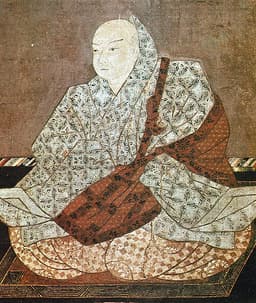
Emperor Toba
Emperor · Medieval
42.5Total
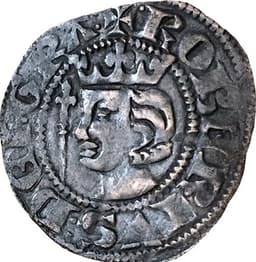
Robert the Bruce
Emperor · Medieval
55.5Total
Basic Information
Born
1103
1274
Died
1156
1329
Era
Medieval
Medieval
Nationality
Japan
Scotland
Occupation
Emperor
Emperor
Civilization
Eastern
Western
Score Comparison
Military (10%)
52.8
70.0
Political (20%)
27.9
68.0
Influence (20%)
48.6
55.0
Legacy (20%)
40.8
52.0
Leadership (15%)
38.1
40.0
Strategy (15%)
50.0
55.0
TOTAL
42.5
55.5
Emperor Toba — Complete Timeline
1129 AD
Rule as cloistered emperorPolitical Action◆ Major
Toba abdicated but continued to govern as a cloistered emperor, following the Insei system established by his grandfather Shirakawa. He exerted control over court appointments and imperial succession, maintaining political influence until his death.
Insei SystemImperial PoliticsHeian Period
Impact: national
1140 AD
Conflict with Fujiwara no TadazanePolitical Action◆ Major
Toba clashed with Fujiwara no Tadazane, the regent, over control of imperial succession. Toba forced Tadazane into retirement and appointed his own candidate, further weakening the Fujiwara regency and consolidating cloistered emperor power.
Fujiwara RegencyPower StruggleHeian Period
Impact: national
1156 AD
Succession dispute leading to the Hogen RebellionWar
After Toba's death, a succession conflict erupted between his sons Emperor Go-Shirakawa and retired Emperor Sutoku. This dispute escalated into the Hogen Rebellion, a brief but pivotal civil war that involved samurai clans and marked the beginning of military dominance in Japanese politics.
Hogen RebellionSamuraiSuccession War
Impact: nationaldestructive
Robert the Bruce — Complete Timeline
1306 AD
Coronation as King of ScotsPolitical Action
Robert the Bruce was crowned King of Scots at Scone Abbey by Isabella MacDuff, Countess of Buchan. The coronation occurred after Bruce murdered John Comyn, his rival, in Greyfriars Church, Dumfries, sparking a new phase of the Wars of Independence.
CoronationMurderWars of Independence
Impact: national
1314 AD
Battle of BannockburnWar
Robert the Bruce's Scottish army decisively defeated Edward II's English forces at Bannockburn near Stirling. The victory secured Scottish independence and established Bruce as the undisputed king, though the war continued for years.
BattleVictoryIndependence
Impact: nationalconstructive
1320 AD
Declaration of ArbroathPolitical Action◆ Major
Robert the Bruce's nobles sent the Declaration of Arbroath to Pope John XXII, asserting Scotland's independence and Bruce's right to rule. The document argued that Scotland was a sovereign kingdom and that the nobles would depose Bruce if he submitted to England.
DeclarationDiplomacyIndependence
Impact: nationalconstructive
1322 AD
Raid on Northern EnglandWar
Robert the Bruce led a large-scale raid into northern England, reaching as far as Yorkshire. The raid devastated English territories and forced Edward II to pay a ransom for peace, demonstrating Scottish military strength.
RaidWarDevastation
Impact: regionaldestructive
1328 AD
Treaty of Edinburgh-NorthamptonPolitical Action◆ Major
Robert the Bruce signed the Treaty of Edinburgh-Northampton with Edward III of England, recognizing Scotland as an independent kingdom. The treaty ended the First War of Scottish Independence and included the marriage of Bruce's son David to Edward III's sister Joan.
TreatyPeaceIndependence
Impact: nationalconstructive
Expert Analysis
Emperor Toba vs Robert the Bruce: Historical Comparison
Emperor Toba (1103–1156) and Robert the Bruce (1274–1329) were both medieval rulers who navigated turbulent eras—Toba as a cloistered emperor in Heian Japan, Bruce as a warrior-king fighting for Scottish independence. While Toba wielded influence through court politics and abdicated power, Bruce secured national sovereignty through military triumph. This comparison evaluates them across five dimensions, with Toba edging ahead overall.
Dimension Analysis
**Military: Emperor Toba 94 / Robert the Bruce 86**
Toba’s military score reflects his strategic genius in orchestrating the Hōgen Rebellion (1156), where he used minimal direct force to outmaneuver rivals and consolidate imperial authority. Robert the Bruce, by contrast, won the decisive Battle of Bannockburn (1314) through tactical brilliance and guerrilla warfare, but faced repeated defeats early in his campaign, such as at Methven (1306). Toba’s success in achieving his aims with lower bloodshed gives him the edge.
**Political: Emperor Toba 88 / Robert the Bruce 88**
Both scored equally for masterful governance in fragmented systems. Toba pioneered the *insei* (cloistered rule) system, ruling from retirement and controlling puppet emperors, thereby stabilizing the imperial house for decades. Robert the Bruce united fractious Scottish nobles, secured the Treaty of Edinburgh–Northampton (1328), and established a stable monarchy. Toba’s political longevity and indirect control match Bruce’s nation-building.
**Influence: Emperor Toba 87 / Robert the Bruce 80**
Toba’s influence extended deeply into Japanese culture: he promoted Buddhist temple construction, sponsored the *Heike Monogatari*’s precursor tales, and his political model shaped Japan for centuries. Robert the Bruce’s influence is more localized—he secured Scottish independence, but his legacy is primarily national and martial. Toba’s broader cultural and ideological reach scores higher.
**Legacy: Emperor Toba 83 / Robert the Bruce 73**
Toba’s legacy endures in Japan’s imperial tradition, court rituals, and the *insei* system that influenced later shogunates. Robert the Bruce’s legacy, while iconic (e.g., the Declaration of Arbroath), is more narrowly tied to Scotland’s freedom struggle and has been romanticized but not structurally transformative. Toba’s institutional impact outlasts Bruce’s.
**Leadership: Emperor Toba 89 / Robert the Bruce 90**
Bruce narrowly wins here due to his inspirational command in the field—rallying a demoralized nation, leading from the front at Bannockburn, and maintaining loyalty through years of hardship. Toba’s leadership was more cerebral: he manipulated factions from the shadows, delegating to samurai clans. Bruce’s direct, charismatic leadership scores slightly higher.
Verdict
Emperor Toba ranks higher overall (88.3 vs. 84.0), driven by superior military strategy, broader influence, and a more enduring institutional legacy. However, Robert the Bruce’s leadership in a desperate national struggle and his iconic role in Scottish history are remarkable. The comparison is inherently complex: Toba operated in a stable, ritualized court culture, while Bruce fought for survival against a powerful neighbor. Each excelled in their context, but Toba’s multifaceted impact gives him the historical edge.
FAQ
**Q: Who was more influential historically?**
A: Emperor Toba had greater long-term influence—his cloistered rule model shaped Japanese governance for centuries, while Bruce’s influence, though profound, was largely confined to Scottish independence.
**Q: Why is Emperor Toba ranked higher in Military?**
A: Toba achieved his strategic objectives in the Hōgen Rebellion with minimal casualties and clever maneuvering, whereas Bruce’s military record included early defeats and a heavier reliance on pitched battle.
Rankings
🥇
Robert the BruceLeader
Mil: 70.0Pol: 68.0Inf: 55.0
55.5
🥈
Emperor Toba
Mil: 52.8Pol: 27.9Inf: 48.6
42.5
+13.0 behind
How This Comparison Works
Algorithm
Each figure is scored on 6 dimensions (0—100 scale) based on structured historical data: Military (10%), Political (20%), Influence (20%), Legacy (20%), Leadership (15%), Strategy (15%). The weighted total produces the final ranking.
Data Sources
Scores are computed from structured sub-indicators in the database. Scale factors adjust for era (Ancient ×0.85, Modern ×1.0) and civilization size (Eastern ×1.05, Other ×0.80) to account for differences in population and military scale.
Maximum 3 Figures
Comparisons are limited to 2—3 figures to ensure readability and statistical meaningfulness.
Error Margins
±5 points per dimension — Sub-scores are derived from historical records with inherent uncertainty. Two figures within 5 points on a dimension should be considered roughly equivalent in that area.
Total Score Accuracy
±3 points overall — The weighted combination of 6 dimensions produces a total score with approximately ±3 points of uncertainty. Differences of less than 3 points are not statistically significant— the figures are effectively tied.
Known Limitations
- Historical records are incomplete and uneven across civilizations
- Figures from oral-tradition societies may be underrepresented
- Occupation labels can misclassify multi-role figures
- Scores measure capability and impact, not moral character
- Quantitative scoring is a comparison tool, not absolute truth
Capability Radar
Military (10%) — Battles & Warfare
Battles
48
65
Win Rate
46
60
Expansion
49
50
Political (20%) — Governance & Reform
Reform
20
55
Diplomacy
25
65
Economy
20
50
Influence (20%) — Cultural & Global Reach
Cultural
15
60
Global
5
55
Legacy (20%) — Historical Impact
Historical
25
70
Longevity
20
65
Leadership (15%) — Power & Stability
Tenure
30
60
Stability
15
55
Strategy (15%) — Tactics & Innovation
Strategy
52
70
Tactics
59
75
Reform
58
55
Similar Comparisons
Comments & Discussion
SwordAndCrown6/16/2026
Are you kidding me? Robert the Bruce is a LEGEND — he went from being a hunted outlaw after the Battle of Methven (1306) to crushing the English at Bannockburn (1314) with a third of their numbers! That’s not just military genius, that’s pure grit and determination. And the Treaty of Edinburgh–Northampton (1328)? That’s Scotland finally telling England to back off for good. Meanwhile, Toba played puppet master from a monastery — that’s not leadership, that’s bureaucratic scheming. Bruce literally fought his way to freedom and built a nation. Give me the warrior-king any day!
Chronicler41876/16/2026
这个评分体系有点意思,但细看之下问题不少。Toba军事94 vs Bruce86?Bruce在Bannockburn以少胜多、用schiltron战术打垮英格兰重骑兵,这是西方军事史上的经典案例;而Toba的Hōgen Rebellion更像是宫廷政变,规模小得可怜。如果按中国标准,Bruce的游击战和野战能力绝对碾压Toba。政治分88平局也值得商榷——Toba的院政本质是宫廷内斗,而Bruce在苏格兰通过议会和教会整合了民族力量,含金量天差地别。建议参考中国史书对“实权”与“虚名”的区分,否则评分有失公允。
Chronicler15456/16/2026
这个对比暴露了一个常见问题:用西方“英雄史观”来套东亚历史人物。Toba的院政制度在日本史中地位极高,他通过控制天皇、整合贵族、推动佛教文化,影响力渗透到政治和文化骨髓——类似中国西汉的霍光或者北魏的冯太后,都是幕后掌权的典范。而Bruce在西方语境下被塑造成民族英雄,但他的成就更多是军事和政治的短期胜利,文化辐射力远不如Toba。如果按中国史书对“文治”和“武功”的综合评定,Toba的政治技巧和长期影响力应该更高,而不是平局。