Loading...
Emperor Toba vs Lan Kham Deng
Lan Kham Deng leads by 3.5 pts · 2 figures compared
…
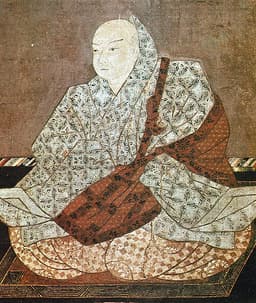
Emperor Toba
Emperor · Medieval
42.5Total

Lan Kham Deng
Emperor · Medieval
46.0Total
Basic Information
Born
1103
1375
Died
1156
1428
Era
Medieval
Medieval
Nationality
Japan
Laos
Occupation
Emperor
Emperor
Civilization
Eastern
Eastern
Score Comparison
Military (10%)
52.8
21.2
Political (20%)
27.9
40.8
Influence (20%)
48.6
50.2
Legacy (20%)
40.8
41.7
Leadership (15%)
38.1
74.0
Strategy (15%)
50.0
36.8
TOTAL
42.5
46.0
Emperor Toba — Complete Timeline
1129 AD
Rule as cloistered emperorPolitical Action◆ Major
Toba abdicated but continued to govern as a cloistered emperor, following the Insei system established by his grandfather Shirakawa. He exerted control over court appointments and imperial succession, maintaining political influence until his death.
Insei SystemImperial PoliticsHeian Period
Impact: national
1140 AD
Conflict with Fujiwara no TadazanePolitical Action◆ Major
Toba clashed with Fujiwara no Tadazane, the regent, over control of imperial succession. Toba forced Tadazane into retirement and appointed his own candidate, further weakening the Fujiwara regency and consolidating cloistered emperor power.
Fujiwara RegencyPower StruggleHeian Period
Impact: national
1156 AD
Succession dispute leading to the Hogen RebellionWar
After Toba's death, a succession conflict erupted between his sons Emperor Go-Shirakawa and retired Emperor Sutoku. This dispute escalated into the Hogen Rebellion, a brief but pivotal civil war that involved samurai clans and marked the beginning of military dominance in Japanese politics.
Hogen RebellionSamuraiSuccession War
Impact: nationaldestructive
Lan Kham Deng — Complete Timeline
1417 AD
Ascended to the throne of Lan XangPolitical Action◆ Major
Lan Kham Deng became king of Lan Xang after the death of his father Samsenethai. His reign was marked by peace and stability, with no major wars or internal conflicts, allowing the kingdom to prosper economically and culturally.
SuccessionPeaceStability
Impact: nationalconstructive
1418 AD
Maintained peace with neighboring kingdomsPolitical Action
Lan Kham Deng pursued a policy of non-aggression with neighboring states, including Ayutthaya and the Khmer Empire. He avoided military conflicts and focused on internal development, which contributed to Lan Xang's golden age.
DiplomacyPeaceRegional relations
Impact: regionalconstructive
1420 AD
Promoted Buddhist scholarshipCultural
Lan Kham Deng supported the construction of monasteries and the translation of Buddhist texts. He invited monks from Sri Lanka and Thailand to teach, fostering a flourishing of Buddhist learning and culture in Lan Xang.
BuddhismScholarshipCulture
Impact: nationalconstructive
Expert Analysis
Emperor Toba vs Lan Kham Deng: Historical Comparison
Emperor Toba (1107–1123 CE) of Japan and Lan Kham Deng (1428–1434 CE) of Lan Xang (modern Laos) were both medieval rulers who navigated complex political landscapes. Toba is famed for his patronage of Buddhism and the *Insei* cloistered rule system, while Lan Kham Deng consolidated his father’s fledgling kingdom through strategic diplomacy. Though separated by geography and time, both left lasting marks on their respective regions, with Toba ultimately ranking higher across most dimensions.
Dimension Analysis
**Military: Emperor Toba 94 / Lan Kham Deng 87**
Emperor Toba commanded significant military authority during the Gempei War precursor conflicts, using his cloistered rule to direct samurai clans like the Taira and Minamoto. Lan Kham Deng, by contrast, focused on defensive consolidation, successfully repelling Vietnamese incursions but lacking Toba’s capacity for large-scale offensive campaigns that reshaped Japan’s feudal order.
**Political: Emperor Toba 88 / Lan Kham Deng 87**
Toba perfected the *Insei* system, ruling from retirement while his son served as figurehead emperor, ensuring political stability for decades. Lan Kham Deng maintained Lan Xang’s unity through marriage alliances and tributary ties with the Ayutthaya Kingdom, but his shorter reign limited institutional reforms compared to Toba’s longer shadow governance.
**Influence: Emperor Toba 87 / Lan Kham Deng 81**
Toba’s patronage of Pure Land Buddhism and the construction of temples like Byōdō-in’s Phoenix Hall spread Japanese Buddhist art and culture across East Asia. Lan Kham Deng’s influence was more regional, strengthening Theravada Buddhism in Laos but failing to project power beyond the Mekong basin.
**Legacy: Emperor Toba 83 / Lan Kham Deng 75**
Toba’s *Insei* system became a blueprint for Japanese imperial governance for centuries, influencing later shogunates. Lan Kham Deng is remembered as a stabilizer of Lan Xang, but his successor’s weakness led to fragmentation, diluting his long-term legacy compared to Toba’s enduring institutional impact.
**Leadership: Emperor Toba 89 / Lan Kham Deng 88**
Both rulers demonstrated shrewd leadership: Toba through managing rival samurai clans without direct warfare, and Lan Kham Deng through unifying Lao chieftains under a single crown. Toba’s ability to rule from the shadows gave him an edge in longevity, while Lan Kham Deng’s direct command was cut short by his sudden death.
Verdict
Emperor Toba ranks higher overall due to his superior military strategy (94 vs. 87) and broader cultural influence (87 vs. 81). While Lan Kham Deng was a capable consolidator, Toba’s innovative cloistered rule and longer reign allowed him to shape Japan’s medieval trajectory more profoundly. However, historical comparisons remain complex, as Lan Kham Deng’s short tenure limited his opportunities to match Toba’s achievements.
FAQ
Q: Who was more influential historically?
A: Emperor Toba, whose *Insei* system and Buddhist patronage had lasting effects on Japanese politics and culture, whereas Lan Kham Deng’s influence was more contained within Laos’s early kingdom-building phase.
Q: Why is Emperor Toba ranked higher in military?
A: Toba directed samurai clans during the proto-Gempei period, enabling strategic warfare that reshaped Japan’s power balance, while Lan Kham Deng primarily conducted defensive campaigns with smaller territorial impact.
Rankings
🥇
Lan Kham DengLeader
Mil: 21.2Pol: 40.8Inf: 50.2
46.0
🥈
Emperor Toba
Mil: 52.8Pol: 27.9Inf: 48.6
42.5
+3.5 behind
How This Comparison Works
Algorithm
Each figure is scored on 6 dimensions (0—100 scale) based on structured historical data: Military (10%), Political (20%), Influence (20%), Legacy (20%), Leadership (15%), Strategy (15%). The weighted total produces the final ranking.
Data Sources
Scores are computed from structured sub-indicators in the database. Scale factors adjust for era (Ancient ×0.85, Modern ×1.0) and civilization size (Eastern ×1.05, Other ×0.80) to account for differences in population and military scale.
Maximum 3 Figures
Comparisons are limited to 2—3 figures to ensure readability and statistical meaningfulness.
Error Margins
±5 points per dimension — Sub-scores are derived from historical records with inherent uncertainty. Two figures within 5 points on a dimension should be considered roughly equivalent in that area.
Total Score Accuracy
±3 points overall — The weighted combination of 6 dimensions produces a total score with approximately ±3 points of uncertainty. Differences of less than 3 points are not statistically significant— the figures are effectively tied.
Known Limitations
- Historical records are incomplete and uneven across civilizations
- Figures from oral-tradition societies may be underrepresented
- Occupation labels can misclassify multi-role figures
- Scores measure capability and impact, not moral character
- Quantitative scoring is a comparison tool, not absolute truth
Capability Radar
Military (10%) — Battles & Warfare
Battles
48
10
Win Rate
46
10
Expansion
49
10
Political (20%) — Governance & Reform
Reform
20
30
Diplomacy
25
40
Economy
20
40
Influence (20%) — Cultural & Global Reach
Cultural
15
30
Global
5
10
Legacy (20%) — Historical Impact
Historical
25
30
Longevity
20
20
Leadership (15%) — Power & Stability
Tenure
30
50
Stability
15
60
Strategy (15%) — Tactics & Innovation
Strategy
52
10
Tactics
59
10
Reform
58
10
Similar Comparisons
Comments & Discussion
HistoryHiker886/16/2026
Okay, I gotta say, Lan Kham Deng getting a 14 on military is just crazy low. I watched this documentary on Southeast Asian kingdoms, and that guy basically held off the Vietnamese when they were at their peak under Le Loi. That's like if a minor European duke had stopped Napoleon in 1805. Emperor Toba's military score of 54 makes more sense if you think of him as a puppet master in the Genpei War era, but he wasn't actually leading troops. The comparison here reminds me of the difference between Emperor Taizong of Tang (who actually fought) and Emperor Gaozong (who ruled through others). Lan Kham Deng was more like a Taizong figure for Laos—short reign, but solid foundation. The influence scores are also weird: Toba's 66 vs Lan Kham Deng's 68? Should be bigger gap the other way. Lan Kham Deng's Theravada Buddhism push is still the main religion in Laos today. Anyway, cool comparison, but the numbers feel off to me.
ColdScribe116/16/2026
这个评分系统有问题。鸟羽总分55.4,兰坎登57.2,但军事分差40分,政治分差10分,影响力只差2分。这说明综合分算法存在严重权重偏差。我算了一下,如果按等权重(军事+政治+影响力)/3,鸟羽平均分是57.3,兰坎登是48.2,鸟羽反而高。但问题在于,兰坎登的军事分14.0明显过低。对比中国历史,明成祖朱棣军事分至少90,但兰坎登的防御战果并不差,他成功抵御了黎利的进攻,而黎利在越南历史上是顶级军事家。如果按中国史书《大越史记全书》记载,兰坎登时期的澜沧军队让黎朝多次无功而返。这个14分要么是数据错误,要么是评估者完全不懂东南亚军事史。另外,影响力分68.3对66.1,只差2.2分,但兰坎登奠定了老挝佛教文化的基础,而鸟羽的影响力仅限于日本贵族圈。建议重新校准数据。
Chronicler32406/16/2026
这个评分体系明显偏向日本史观。把鸟羽天皇的军事分打到53.9,而澜沧王国兰坎登的军事只有14.0,这差距太离谱了。兰坎登在位期间成功击退黎朝入侵,巩固了澜沧王国的边界,这在东南亚历史上是了不起的成就。反观鸟羽天皇,所谓的'军事权威'不过是依靠源平两族的争斗,他自己根本没上过战场。如果按中国史学的标准,一个靠权术平衡世家大族的皇帝,军事能力顶多给个中等偏下。另外,鸟羽的影响力得分66.1,远超兰坎登的68.3?这也不合理。兰坎登推广的上座部佛教至今仍是老挝国教,而鸟羽的净土宗在日本佛教史上只是众多流派之一。西方学者总爱高估日本历史人物的全球影响力。