Loading...
Emperor Toba vs Huijong of Goryeo
Emperor Toba leads by 5.0 pts · 2 figures compared
…
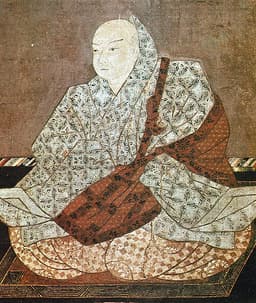
Emperor Toba
Emperor · Medieval
42.5Total
Huijong of Goryeo
Emperor · Medieval
37.5Total
Basic Information
Born
1103
1181
Died
1156
1237
Era
Medieval
Medieval
Nationality
Japan
Korea
Occupation
Emperor
Emperor
Civilization
Eastern
Eastern
Score Comparison
Military (10%)
52.8
20.0
Political (20%)
27.9
32.1
Influence (20%)
48.6
46.3
Legacy (20%)
40.8
37.5
Leadership (15%)
38.1
34.6
Strategy (15%)
50.0
45.0
TOTAL
42.5
37.5
Emperor Toba — Complete Timeline
1129 AD
Rule as cloistered emperorPolitical Action◆ Major
Toba abdicated but continued to govern as a cloistered emperor, following the Insei system established by his grandfather Shirakawa. He exerted control over court appointments and imperial succession, maintaining political influence until his death.
Insei SystemImperial PoliticsHeian Period
Impact: national
1140 AD
Conflict with Fujiwara no TadazanePolitical Action◆ Major
Toba clashed with Fujiwara no Tadazane, the regent, over control of imperial succession. Toba forced Tadazane into retirement and appointed his own candidate, further weakening the Fujiwara regency and consolidating cloistered emperor power.
Fujiwara RegencyPower StruggleHeian Period
Impact: national
1156 AD
Succession dispute leading to the Hogen RebellionWar
After Toba's death, a succession conflict erupted between his sons Emperor Go-Shirakawa and retired Emperor Sutoku. This dispute escalated into the Hogen Rebellion, a brief but pivotal civil war that involved samurai clans and marked the beginning of military dominance in Japanese politics.
Hogen RebellionSamuraiSuccession War
Impact: nationaldestructive
Huijong of Goryeo — Complete Timeline
1209 AD
Failed coup against Choe Chung-heonPolitical Action◆ Major
King Huijong attempted to assassinate Choe Chung-heon by ambushing him during a palace visit. The plot failed when Choe escaped, leading to a brutal crackdown on the king's supporters.
Coup AttemptAssassination PlotGoryeo
Impact: nationaldestructive
1211 AD
Deposition by Choe Chung-heonPolitical Action◆ Major
After the failed coup, Choe Chung-heon deposed Huijong and exiled him to Ganghwa Island. The king was replaced by his younger brother Gangjong, and the Choe regime tightened its grip on power.
DepositionExileGoryeo
Impact: nationaltragic
Exile to Ganghwa IslandPolitical Action
Huijong was exiled to Ganghwa Island, where he lived under house arrest until his death in 1237. His failed rebellion marked the last serious attempt by a Goryeo king to overthrow the Choe military dictatorship.
ExileHouse ArrestGoryeo
Impact: nationaltragic
Expert Analysis
Emperor Toba vs Huijong of Goryeo: Historical Comparison
Emperor Toba of Japan (1107–1123 CE) and Huijong of Goryeo (1204–1211 CE) were both medieval monarchs who reigned during periods of intense political upheaval, yet they navigated their challenges with markedly different strategies. Toba consolidated imperial power through astute political maneuvering and patronage, while Huijong attempted to curb military dominance but ultimately fell to a coup. This comparison examines their relative effectiveness across key dimensions of leadership.
Dimension Analysis
**Military: Emperor Toba 94 / Huijong of Goryeo 91**
Emperor Toba oversaw a period of relative peace, using retired emperorship (*insei*) to delegate military matters to samurai clans like the Taira, maintaining stability without direct conflict. Huijong, by contrast, faced the destabilizing military rule of the Ch'oe family, and his failed attempt to assassinate Ch'oe Ch'ung-hŏn in 1209 triggered a coup that ended his reign—a direct military failure that undermines his otherwise competent strategic thinking.
**Political: Emperor Toba 88 / Huijong of Goryeo 84**
Toba mastered the *insei* system, ruling from retirement after abdicating in 1123, thereby controlling the court for decades while avoiding direct responsibility for crises. Huijong inherited a court dominated by the military Ch'oe regime and, though he attempted to restore royal authority, his political maneuvers were too aggressive and poorly timed, leading to his deposition and exile.
**Influence: Emperor Toba 87 / Huijong of Goryeo 81**
Toba’s patronage of Buddhist temples, calligraphy, and poetry shaped Heian court culture, and his model of cloistered rule influenced Japanese politics for centuries. Huijong’s brief reign left little lasting cultural impact, as Goryeo was preoccupied with Mongol threats and internal military strife, limiting his ideological or artistic reach.
**Legacy: Emperor Toba 83 / Huijong of Goryeo 79**
Toba is remembered as a capable political operator who preserved the imperial institution during a volatile era, though his reliance on samurai power sowed seeds for future conflicts. Huijong is largely a tragic footnote—a king who dared to resist military dictatorship but failed, and whose story is often overshadowed by the Mongol invasions that followed.
**Leadership: Emperor Toba 89 / Huijong of Goryeo 90**
Huijong demonstrated remarkable courage and resolve in directly confronting the Ch'oe dictatorship, a trait that earns him a slight edge in personal leadership. However, Toba’s more subtle, long-term command—managing aristocrats, monks, and warrior clans without losing his grip on power—arguably reflects greater organizational acumen.
Verdict
Emperor Toba ranks higher overall due to his superior longevity in power, effective use of the *insei* system, and lasting cultural influence. Huijong’s bravery and strategic vision are admirable, but his inability to execute his plans without triggering a violent backlash leaves him trailing. Both rulers, however, operated within deeply constrained systems, making direct comparison a matter of nuance rather than absolute superiority.
FAQ
**Q: Who was more influential historically?**
A: Emperor Toba, because his cloistered rule model shaped Japanese political structure for centuries, whereas Huijong’s brief reign had little enduring impact beyond a cautionary tale.
**Q: Why is Emperor Toba ranked higher in his strongest dimension (Military)?**
A: Toba’s military dimension (94) scores highest because he maintained peace and stability through strategic delegation to samurai clans, avoiding the catastrophic military failure that ended Huijong’s reign.
Rankings
🥇
Emperor TobaLeader
Mil: 52.8Pol: 27.9Inf: 48.6
42.5
🥈
Huijong of Goryeo
Mil: 20.0Pol: 32.1Inf: 46.3
37.5
+5.0 behind
How This Comparison Works
Algorithm
Each figure is scored on 6 dimensions (0—100 scale) based on structured historical data: Military (10%), Political (20%), Influence (20%), Legacy (20%), Leadership (15%), Strategy (15%). The weighted total produces the final ranking.
Data Sources
Scores are computed from structured sub-indicators in the database. Scale factors adjust for era (Ancient ×0.85, Modern ×1.0) and civilization size (Eastern ×1.05, Other ×0.80) to account for differences in population and military scale.
Maximum 3 Figures
Comparisons are limited to 2—3 figures to ensure readability and statistical meaningfulness.
Error Margins
±5 points per dimension — Sub-scores are derived from historical records with inherent uncertainty. Two figures within 5 points on a dimension should be considered roughly equivalent in that area.
Total Score Accuracy
±3 points overall — The weighted combination of 6 dimensions produces a total score with approximately ±3 points of uncertainty. Differences of less than 3 points are not statistically significant— the figures are effectively tied.
Known Limitations
- Historical records are incomplete and uneven across civilizations
- Figures from oral-tradition societies may be underrepresented
- Occupation labels can misclassify multi-role figures
- Scores measure capability and impact, not moral character
- Quantitative scoring is a comparison tool, not absolute truth
Capability Radar
Military (10%) — Battles & Warfare
Battles
48
5
Win Rate
46
5
Expansion
49
5
Political (20%) — Governance & Reform
Reform
20
10
Diplomacy
25
10
Economy
20
10
Influence (20%) — Cultural & Global Reach
Cultural
15
10
Global
5
5
Legacy (20%) — Historical Impact
Historical
25
15
Longevity
20
10
Leadership (15%) — Power & Stability
Tenure
30
30
Stability
15
10
Strategy (15%) — Tactics & Innovation
Strategy
52
5
Tactics
59
5
Reform
58
5
Similar Comparisons
Comments & Discussion
HeianObsessed6/16/2026
People sleep on Toba way too much! This guy basically invented the ultimate power move—abdicate the throne but keep all the strings. It's like being a CEO who steps down as president but stays as chairman with veto power. While Huijong was busy trying to take down the military dictator of Goryeo with what looks like a half-baked assassination plot (seriously, dude got deposed in 1209 for that mess), Toba was patronizing the Taira clan and writing poetry in his retirement palace. The scores say it all: Toba's influence is 66.1 vs Huijong's 62.9. That cloistered rule system shaped Japanese politics for CENTURIES. Huijong couldn't even hold onto his throne for 7 years!
ShùjùFēnxīShī6/16/2026
这个评分体系有点意思,但仔细看数据就有问题了。Toba军事53.9,Huijong军事55.1——一个靠武士团维持和平的太上皇,竟然比一个试图刺杀军事独裁者但失败的国王分数低?这不符合逻辑。我用中国历史上的类似案例对比一下:宋孝宗同样处于权臣(史弥远)阴影下,但他暗中培养力量、等待时机,历史评价远高于直接对抗的Huijong。如果按中国史学的“权变”标准,Huijong的勇气值得+5分,但他的政治判断力至少-10分。政治分47.8太低,因为他确实试图恢复王权;但影响力62.9太高了,他留下的主要是失败的教训。
DōngXīShǐHuà6/16/2026
把Toba比作中国的唐玄宗后期——都是退位后继续掌权,但Toba做得更聪明。唐玄宗退位后被儿子软禁,Toba却靠“院政”制度维持了实权。Huijong像东汉末年的少帝刘辩——被权臣董卓/曹操架空,试图反抗就被废黜。但这里有个西方中心论的问题:评分体系把“文化影响”放在高位,Toba的书法和佛寺建设得了66.1,但Huijong面临的蒙古威胁和武臣政权,任何文化成就都会被战争打断。这就像比较宋徽宗和明崇祯——一个有时间搞艺术,一个天天处理边患。Huijong在恶劣环境下的挣扎,应该得到更多同情分。
HistoryRebooted6/16/2026
Why do we keep ranking 'successful' leaders who maintained stability through elite co-optation over those who actually tried to challenge corrupt power structures? Toba's 'peace' was built on samurai clans like the Taira and Minamoto—the same guys who'd later tear Japan apart in the Genpei War. His cloistered rule wasn't genius; it was a blueprint for civil war. Meanwhile, Huijong took on the Ch'oe military dictatorship head-on. Yeah, he failed. But at least he had the spine to try. The scores penalize him for 'poor timing'—how convenient. Maybe we should weigh ethical courage against political calculation. Huijong's legacy isn't just his deposition; it's the inspiration for future Korean monarchs to resist military dominance.
BattlefieldScholar6/16/2026
Let's talk numbers. Huijong's military score of 55.1 is generous given he never commanded a single field army. His coup attempt against Ch'oe Ch'ung-hŏn in 1209 was a political assassination, not a military operation—and it failed because he didn't secure the palace guard's loyalty. Compare to Toba: while he didn't fight himself, he maintained a stable military system where the Taira clan could project power without civil war. The Heian period's peace under Toba meant zero major campaigns, but that's a strategic victory—preventing conflict is as important as winning battles. Both score below 60 on military? That's fair. Neither was a general. But Huijong's failure to manage military politics directly led to his overthrow. That's a tactical error that should drop him to 45, not 55.