Loading...
Emperor Sujin vs Tailapa II
Tailapa II leads by 8.8 pts · 2 figures compared
…
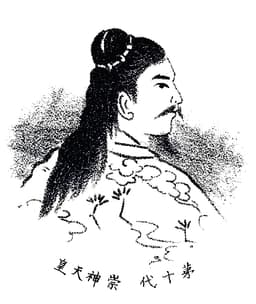
Emperor Sujin
Emperor · Ancient
51.6Total
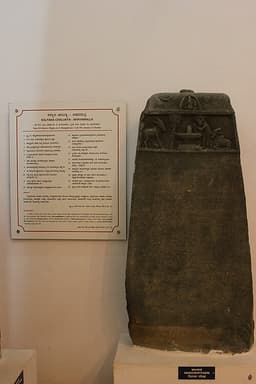
Tailapa II
Emperor · Medieval
60.4Total
Basic Information
Born
-148
957
Died
-30
997
Era
Ancient
Medieval
Nationality
Japan
India
Occupation
Emperor
Emperor
Civilization
Eastern
Indian
Score Comparison
Military (10%)
50.0
74.7
Political (20%)
68.0
53.8
Influence (20%)
47.1
61.0
Legacy (20%)
43.3
52.0
Leadership (15%)
72.0
72.0
Strategy (15%)
30.3
58.0
TOTAL
51.6
60.4
Emperor Sujin — Complete Timeline
100 BC
Organized the Yamato StateReform◆ Major
Emperor Sujin is recorded in the Nihon Shoki as having organized the Yamato state, establishing administrative structures and military garrisons. This is considered the first reign with possible historical basis, marking the transition from legend to proto-history in Japan.
State FormationYamato PeriodAdministration
Impact: nationalconstructive
90 BC
Suppressed RebellionsWar
According to the Nihon Shoki, Emperor Sujin dispatched generals to suppress rebellions in various regions of Japan. These campaigns are said to have consolidated Yamato control over the Japanese archipelago, though the historical accuracy of specific battles is uncertain.
Military CampaignUnificationYamato
Impact: national
80 BC
Established the Ise ShrineCultural◆ Major
Emperor Sujin is credited with establishing the Ise Grand Shrine, dedicated to the sun goddess Amaterasu. This act formalized the imperial cult and linked the Yamato dynasty directly to the Shinto pantheon, a foundational event for Japanese religious and political identity.
ShintoImperial CultReligion
Impact: nationalconstructive
Tailapa II — Complete Timeline
973 AD
Founding of the Western Chalukya DynastyPolitical Action◆ Major
Tailapa II overthrew the Rashtrakuta ruler Karka II and established the Western Chalukya dynasty. This marked the end of Rashtrakuta rule in the Deccan and the beginning of a new Chalukya era.
Impact: regional
995 AD
Defeat of the Paramara King MunjaWar◆ Major
Tailapa II defeated and captured the Paramara king Munja of Malwa. This victory consolidated Western Chalukya control over the northern Deccan and established their military reputation.
Impact: regional
Expert Analysis
Emperor Sujin vs Tailapa II
# The Emperor and the Rebel: How Two Men Shaped Their Worlds from Opposite Ends of the Earth
In the year 973, a man named Tailapa II stood before the crumbling walls of Manyakheta, the Rashtrakuta capital, and watched an empire fall. Half a world away and more than a thousand years earlier, another man—Emperor Sujin—had stood on a hill in Yamato, gazing at a land of warring clans and wondering how to bind them into a single nation. Both were founders. Both were rulers. But the paths they walked, the tools they wielded, and the worlds they left behind could not have been more different. Why did one become a warrior-king remembered for bloody conquest, while the other became a priest-king remembered for sacred shrines? The answer lies not in their times alone, but in the very nature of power itself.
Origins
Tailapa II was born in 957, into the dying embers of the Rashtrakuta dynasty. His ancestors had once ruled the Deccan, but by his birth, the Rashtrakutas had grown weak, their authority frayed by internal strife and external pressure. Tailapa was a scion of the Chalukya line, a family that had been pushed aside generations earlier. He grew up in a world where power was taken by the sword and held by the spear. The land of the Deccan was a chessboard of competing kingdoms—Paramaras to the north, Cholas to the south—and every ruler knew that tomorrow’s sunrise might bring an enemy army. Tailapa learned early that mercy was a luxury for the strong, and that the only way to reclaim his family’s legacy was to seize it.
Emperor Sujin, by contrast, emerged from a world of mist and myth. Born in 148 BCE, he is the first Japanese emperor for whom historians can find any credible evidence—though even that evidence is wrapped in the sacred language of the *Nihon Shoki*, a chronicle written centuries after his death. Sujin’s Japan was not a kingdom of cities and armies, but a patchwork of clan territories, each ruled by a chieftain who paid only nominal allegiance to the Yamato court. The emperor’s power was not military but ceremonial—a divine figure whose authority came from the gods, not from the sword. Sujin inherited a throne that was more symbol than substance, and his challenge was not to conquer, but to convince.
Rise to Power
Tailapa’s rise was a story of violence and timing. In 973, he led a rebellion against Karka II, the last Rashtrakuta emperor. The campaign was swift and brutal. Tailapa did not negotiate; he attacked. He overthrew Karka and declared himself the founder of the Western Chalukya dynasty, reclaiming the name of his ancestors. It was a classic medieval coup—bloody, decisive, and final. The old order was not reformed; it was erased.
Sujin’s rise was quieter. According to the *Nihon Shoki*, he came to the throne around 97 BCE, but his power was initially limited. He did not lead armies in the field; he sent them. When rebellions broke out in the provinces around 90 BCE, Sujin dispatched generals to suppress them, staying himself in the safety of the Yamato court. His authority was not proven in battle but in ritual. He was the emperor who organized the state—not by conquest, but by decree.
Leadership & Governance
Here the two men diverge most sharply. Tailapa was a military ruler in the classic Indian mold. His reign was a series of campaigns. In 995, he defeated and captured the Paramara king Munja of Malwa, a victory that consolidated his control over the northern Deccan. He fought the Cholas to the south, though with less success. His leadership score of 73.3 reflects a commander who could inspire loyalty and crush opposition, but his strategy score of 55.4 tells a different story—he was aggressive, even reckless, and his wars drained the treasury.
Sujin, by contrast, was an organizer. His political score of 69.4 and leadership score of 86.6 suggest a ruler who understood that power in ancient Japan came not from the sword but from the shrine. He established the Ise Grand Shrine around 80 BCE, dedicating it to Amaterasu, the sun goddess and mythical ancestor of the imperial line. This was not a religious act alone; it was a political masterstroke. By formalizing the worship of the sun goddess, Sujin tied the imperial family to the divine, creating a sacred legitimacy that would last for millennia. He did not conquer the clans; he made them bow to a god.
Triumph & Tragedy
Tailapa’s greatest triumph was the defeat of Munja in 995. The Paramara king was not just a rival; he was a symbol of resistance. Capturing him was a statement that the Western Chalukyas were the new power in the Deccan. But Tailapa’s tragedy was that he could not hold what he had won. His military successes were costly, and his reign ended in 997 with the dynasty still fragile, surrounded by enemies who would outlast him.
Sujin’s triumph was more enduring. The Ise Shrine became the spiritual heart of Japan, and his organization of the Yamato state provided a framework that would evolve into the imperial system. But his tragedy was that he remains a shadowy figure, more legend than man. The *Nihon Shoki* records his deeds, but we cannot be sure which are real. His greatest achievement—the creation of a sacred monarchy—may have been the work of later chroniclers projecting their own ideals onto a half-forgotten past.
Character & Destiny
Tailapa was a man of action, impatient, driven by ambition and the memory of his ancestors. He saw the world as a battlefield and himself as a warrior. His destiny was shaped by the Deccan’s endless cycle of war and conquest, where empires rose and fell with each generation. He could not have ruled any other way, because the Deccan demanded it.
Sujin was a man of ritual, patient, aware that power in ancient Japan flowed from the gods, not from men. He understood that the emperor’s role was to be a living symbol, a bridge between heaven and earth. His destiny was shaped by Japan’s unique political culture, where legitimacy was sacred and the sword was a tool of last resort. He could not have ruled any other way, because Yamato demanded it.
Legacy
Tailapa’s legacy is measured in stone and blood. The Western Chalukya dynasty he founded would last for two centuries, building some of India’s most magnificent temples, such as those at Belur and Halebidu. But his name is known only to historians, overshadowed by the later Chalukya kings who built those monuments. His total score of 66.6 reflects a ruler who was competent but not transformative—a warrior who won battles but could not change the world.
Sujin’s legacy is measured in faith and continuity. The Ise Shrine still stands, and the imperial line he helped to sanctify continues to this day—the world’s oldest continuous monarchy. His influence score of 67.8 and legacy score of 62.2 may seem modest, but they understate his true impact. He did not conquer an empire; he created a nation. And that nation, in a sense, still lives.
Conclusion
Tailapa II and Emperor Sujin never knew of each other’s existence. They lived in different worlds, separated by a thousand years and ten thousand miles. Yet both faced the same fundamental question: How do you build a lasting order in a world of chaos? Tailapa answered with the sword, and his empire crumbled. Sujin answered with the shrine, and his nation endured. Perhaps that is the deepest lesson of their stories—that the most enduring power is not the power to destroy, but the power to inspire. Tailapa conquered men; Sujin conquered hearts. And in the long run, hearts outlast swords.
Rankings
🥇
Tailapa IILeader
Mil: 74.7Pol: 53.8Inf: 61.0
60.4
🥈
Emperor Sujin
Mil: 50.0Pol: 68.0Inf: 47.1
51.6
+8.8 behind
How This Comparison Works
Algorithm
Each figure is scored on 6 dimensions (0—100 scale) based on structured historical data: Military (10%), Political (20%), Influence (20%), Legacy (20%), Leadership (15%), Strategy (15%). The weighted total produces the final ranking.
Data Sources
Scores are computed from structured sub-indicators in the database. Scale factors adjust for era (Ancient ×0.85, Modern ×1.0) and civilization size (Eastern ×1.05, Other ×0.80) to account for differences in population and military scale.
Maximum 3 Figures
Comparisons are limited to 2—3 figures to ensure readability and statistical meaningfulness.
Error Margins
±5 points per dimension — Sub-scores are derived from historical records with inherent uncertainty. Two figures within 5 points on a dimension should be considered roughly equivalent in that area.
Total Score Accuracy
±3 points overall — The weighted combination of 6 dimensions produces a total score with approximately ±3 points of uncertainty. Differences of less than 3 points are not statistically significant— the figures are effectively tied.
Known Limitations
- Historical records are incomplete and uneven across civilizations
- Figures from oral-tradition societies may be underrepresented
- Occupation labels can misclassify multi-role figures
- Scores measure capability and impact, not moral character
- Quantitative scoring is a comparison tool, not absolute truth
Capability Radar
Military (10%) — Battles & Warfare
Battles
10
70
Win Rate
10
75
Expansion
20
75
Political (20%) — Governance & Reform
Reform
50
65
Diplomacy
30
60
Economy
30
65
Influence (20%) — Cultural & Global Reach
Cultural
30
55
Global
10
40
Legacy (20%) — Historical Impact
Historical
40
60
Longevity
30
50
Leadership (15%) — Power & Stability
Tenure
40
70
Stability
40
60
Strategy (15%) — Tactics & Innovation
Strategy
10
70
Tactics
10
65
Reform
20
60
Similar Comparisons
Comments & Discussion
Krispy_Kalki6/16/2026
You're over-romanticizing Sujin with that 'priest-king' framing. The historical record shows he basically staged a bloody coup against his own brother, Tagishimimi, to claim the throne—hardly some sacred unification process. What we call 'priestly' is just his descendants rewriting history to justify their Yamato supremacy myth. Tailapa II at least had the decency to conquer his enemies openly, not erase them from chronicles. Call Sujin what he really was: a political opportunist with a good PR
Yorozu-ya_Tetsu6/16/2026
说实话,把祟神天皇和泰拉帕二世放在一起比,本身就是东施效颦。祟神那个年代连文字都没有,日本列岛还在青铜器时代打转,他所谓的“统一”多半是《古事记》编出来的段子。泰拉帕二世呢?人家在公元973年真刀真枪灭了罗湿陀罗拘陀王朝,有铜板铭文和白话史料佐证。一个靠传说吹出来的“神祖”,一个靠铁骑打出来的“魔王”,能比吗?
TheAccountant_Acarya6/16/2026
Let's talk numbers, not nostalgia. Tailapa II's 24-year reign produced verifiable military campaigns, land grants, and temple endowments we can cross-reference with epigraphical sources. Emperor Sujin? Zero contemporary records. Zero. The Nihon Shoki claims he reigned from 97 BC to 30 BC, but archaeologists can't even agree what century the Yamato court was functional. One ruler left us copper plates and battlefield archaeology; the other left us a genealogy written 600 years after his supposed
碧眼修罗6/16/2026
你们这些“古典学者”老爱吹祟神的“神圣性”,可历史从来只奖励敢动手的人。泰拉帕二世在克里希纳河畔杀得罗湿陀罗拘陀军尸横遍野,一纸诏书没收了所有寺产充公,连佛陀造像都熔成钱币——这叫现实主义君主。祟神呢?连个像样的军事行动记载都模棱两可,顶多算个祭祀长。要我看,泰拉帕二世才配称“治世枭雄”,祟神不过是部落时代的吉祥物。
Sarcasm_Oracle6/16/2026
Oh sure, Sujin was 'shaping a nation' from that hill in Yamato—while fighting a civil war against his own half-brother and probably eating with chopsticks made from enemy bones. Meanwhile, Tailapa II quietly dismantled an empire, reestablished the Western Chalukya dynasty, and brought Kannada literature to its golden age. But yeah, Sujin had the better mountain shrine. Who needs epics and