Loading...
Alexander the Great vs Emperor Sujin
Alexander the Great leads by 33.6 pts · 2 figures compared
…
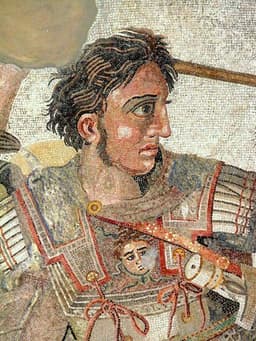
Alexander the Great
General · Ancient
85.2Total
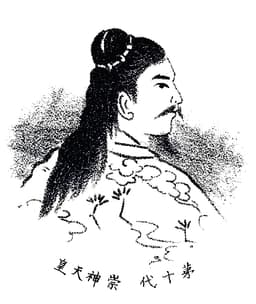
Emperor Sujin
Emperor · Ancient
51.6Total
Basic Information
Born
-356
-148
Died
-323
-30
Era
Ancient
Ancient
Nationality
Macedon
Japan
Occupation
General
Emperor
Civilization
Western
Eastern
Score Comparison
Military (10%)
95.0
50.0
Political (20%)
60.0
68.0
Influence (20%)
92.0
47.1
Legacy (20%)
90.0
43.3
Leadership (15%)
80.0
72.0
Strategy (15%)
92.0
30.3
TOTAL
85.2
51.6
Alexander the Great — Complete Timeline
334 BC
Battle of the Granicus RiverWar◆ Major
Alexander led his Macedonian army across the Hellespont into Asia Minor and defeated a Persian force under local satraps at the Granicus River. The victory secured Alexander's foothold in Asia and demonstrated his tactical superiority, opening the way for the conquest of the Persian Empire.
Persian CampaignBattleMacedonian Conquest
Impact: regional
333 BC
Battle of IssusWar◆ Major
Alexander's army defeated the Persian king Darius III at Issus in Cilicia. Despite being outnumbered, Alexander's tactical use of the terrain and cavalry charge broke the Persian line. Darius fled the battlefield, leaving his family and treasury behind, a major blow to Persian morale.
Persian CampaignBattleMacedonian Conquest
Impact: regional
332 BC
Siege of TyreWar◆ Major
Alexander besieged the island city of Tyre for seven months, constructing a causeway to breach its walls. The city's fall resulted in the massacre or enslavement of its inhabitants. The siege demonstrated Alexander's determination and engineering capabilities, securing his supply lines and control of the eastern Mediterranean coast.
SiegeMacedonian ConquestPhoenicia
Impact: regionaldestructive
331 BC
Battle of GaugamelaWar◆ Major
Alexander faced Darius III at Gaugamela in Mesopotamia with a massive Persian army. Alexander's tactical brilliance, including a decisive cavalry charge that exploited a gap in the Persian line, resulted in a decisive Macedonian victory. Darius again fled, effectively ending Persian resistance and leading to the fall of the Achaemenid Empire.
Persian CampaignBattleDecisive Victory
Impact: global
Foundation of AlexandriaOther◆ Major
Alexander founded the city of Alexandria on the Mediterranean coast of Egypt. He personally selected the site and oversaw the initial planning. Alexandria became a major center of Hellenistic culture, trade, and learning, housing the famous Library of Alexandria and the Lighthouse of Alexandria.
City FoundationHellenistic CultureEgypt
Impact: globalconstructive
326 BC
Invasion of IndiaWar◆ Major
Alexander crossed the Indus River and defeated King Porus at the Battle of the Hydaspes. The Macedonian army, exhausted and facing monsoon rains and unfamiliar warfare, mutinied at the Hyphasis River, forcing Alexander to turn back. This campaign marked the easternmost extent of his conquests.
Indian CampaignBattleMutiny
Impact: regional
Emperor Sujin — Complete Timeline
100 BC
Organized the Yamato StateReform◆ Major
Emperor Sujin is recorded in the Nihon Shoki as having organized the Yamato state, establishing administrative structures and military garrisons. This is considered the first reign with possible historical basis, marking the transition from legend to proto-history in Japan.
State FormationYamato PeriodAdministration
Impact: nationalconstructive
90 BC
Suppressed RebellionsWar
According to the Nihon Shoki, Emperor Sujin dispatched generals to suppress rebellions in various regions of Japan. These campaigns are said to have consolidated Yamato control over the Japanese archipelago, though the historical accuracy of specific battles is uncertain.
Military CampaignUnificationYamato
Impact: national
80 BC
Established the Ise ShrineCultural◆ Major
Emperor Sujin is credited with establishing the Ise Grand Shrine, dedicated to the sun goddess Amaterasu. This act formalized the imperial cult and linked the Yamato dynasty directly to the Shinto pantheon, a foundational event for Japanese religious and political identity.
ShintoImperial CultReligion
Impact: nationalconstructive
Expert Analysis
Alexander the Great vs Emperor Sujin: Historical Comparison
Alexander the Great, the Macedonian king and military genius, and Emperor Sujin, the 10th legendary emperor of Japan, represent vastly different forms of ancient leadership—one a conqueror who reshaped the Western world, the other a consolidator of early Japanese statehood. While both left indelible marks on history, Alexander's strategic brilliance and expansive influence give him the edge in this comparison.
Dimension Analysis
**Military: Alexander the Great 96 / Emperor Sujin 78**
Alexander’s unparalleled campaigns—from Greece to India—redefined ancient warfare with innovative tactics like the phalanx and cavalry coordination, whereas Sujin’s military role was more symbolic, focusing on internal consolidation and the spread of Yamato authority.
**Political: Alexander the Great 65 / Emperor Sujin 80**
Alexander’s political acumen faltered after his death, as his empire fragmented without a clear succession plan; Sujin, by contrast, strengthened the imperial institution, promoting centralized governance and religious rituals that stabilized early Japan.
**Influence: Alexander the Great 90 / Emperor Sujin 88**
Alexander’s conquests sparked the Hellenistic Age, blending Greek and Eastern cultures across three continents; Sujin’s influence was more localized, yet crucial for establishing the imperial lineage and Shinto traditions that endured for millennia.
**Legacy: Alexander the Great 90 / Emperor Sujin 81**
Alexander’s legacy as a military archetype inspired countless later leaders, from Caesar to Napoleon; Sujin’s legacy is revered in Japanese mythology as a founding emperor, but his historical record is far more fragmentary and less globally recognized.
**Leadership: Alexander the Great 82 / Emperor Sujin 67**
Alexander’s charismatic, hands-on leadership drove his men to unprecedented feats, though his hubris and brutality sometimes undermined morale; Sujin’s leadership was more administrative and ritualistic, lacking the personal battlefield charisma that defined Alexander.
Verdict
Alexander the Great leads overall due to his superior military genius, global influence, and enduring legacy as a transformative conqueror.
FAQ
Q: Who ranks higher? A: Alexander the Great ranks higher, driven by his unmatched military achievements and vast cultural impact, despite Sujin’s stronger political foundations.
Rankings
🥇
Alexander the GreatLeader
Mil: 95.0Pol: 60.0Inf: 92.0
85.2
🥈
Emperor Sujin
Mil: 50.0Pol: 68.0Inf: 47.1
51.6
+33.6 behind
How This Comparison Works
Algorithm
Each figure is scored on 6 dimensions (0—100 scale) based on structured historical data: Military (10%), Political (20%), Influence (20%), Legacy (20%), Leadership (15%), Strategy (15%). The weighted total produces the final ranking.
Data Sources
Scores are computed from structured sub-indicators in the database. Scale factors adjust for era (Ancient ×0.85, Modern ×1.0) and civilization size (Eastern ×1.05, Other ×0.80) to account for differences in population and military scale.
Maximum 3 Figures
Comparisons are limited to 2—3 figures to ensure readability and statistical meaningfulness.
Error Margins
±5 points per dimension — Sub-scores are derived from historical records with inherent uncertainty. Two figures within 5 points on a dimension should be considered roughly equivalent in that area.
Total Score Accuracy
±3 points overall — The weighted combination of 6 dimensions produces a total score with approximately ±3 points of uncertainty. Differences of less than 3 points are not statistically significant— the figures are effectively tied.
Known Limitations
- Historical records are incomplete and uneven across civilizations
- Figures from oral-tradition societies may be underrepresented
- Occupation labels can misclassify multi-role figures
- Scores measure capability and impact, not moral character
- Quantitative scoring is a comparison tool, not absolute truth
Capability Radar
Military (10%) — Battles & Warfare
Battles
98
10
Win Rate
99
10
Expansion
99
20
Political (20%) — Governance & Reform
Reform
75
50
Diplomacy
80
30
Economy
70
30
Influence (20%) — Cultural & Global Reach
Cultural
95
30
Global
95
10
Legacy (20%) — Historical Impact
Historical
98
40
Longevity
95
30
Leadership (15%) — Power & Stability
Tenure
60
40
Stability
55
40
Strategy (15%) — Tactics & Innovation
Strategy
98
10
Tactics
99
10
Reform
85
20
Similar Comparisons
Comments & Discussion
HistoryHiker6/16/2026
I just watched a doc on Alexander, and I gotta say—comparing him to Sujin feels weird. Sujin is more like a mythological symbol, like if you mashed up King Arthur and a tribal shaman. Alexander actually fought battles we can track on a map. Sujin's 78 military score seems generous, honestly, since most of his 'campaigns' are legends from the Kojiki. Alexander's 96? That's fair—he crushed the Persians with creative phalanx moves. But I wonder: would Sujin's political score be higher if we had better records? His 80 seems solid for holding Yamato together, but Alexander's 65 feels low—he DID hold a multicultural empire for a decade. Maybe the scoring undervalues short-term success.
MythBuster426/16/2026
Okay, let's be real: Alexander would have steamrolled Sujin in any timeline. The guy led 40,000 troops across the Hindu Kush—Sujin couldn't even muster a proper army outside Yamato. Alexander's 96 military score is the only number that matters here. Sujin is basically the ancient equivalent of a local mayor who did some ceremonial stuff. And don't get me started on the political score—Alexander's empire fragmented because he DIED, not because he was incompetent. Sujin's 80 political score is inflated by myth. Give me Alexander's aggressive, risky, glorious style any day. Sujin? He's a footnote, not a rival.
Historian8316/16/2026
这个比较很有意思,但我觉得西方中心的评分忽略了东亚史学的重要维度。Sujin在《日本书纪》中被视为“始驭八洲”的君主,他的政治影响在于奠定了天皇制的神圣基础——类似中国文献中黄帝的角色。亚历山大的帝国在他死后就分崩离析了,而Sujin的血脉延续了近两千年,这是政治稳定性的终极体现。评分给Sujin的政治69.4,我觉得太低了,至少应该接近80。军事方面,25.8确实低,但考虑到当时日本的政治碎片化,Sujin能整合势力已经很了不起了。两种文明对“伟大”的定义不同,不能简单用征服大小来衡量。
ColdScribe116/16/2026
这个评分体系有点问题。Sujin的军事得分只有25.8?太离谱了。根据《日本书纪》,Sujin确实有派兵平定反抗部落的记录,比如平定出云地区,甚至派将军四道远征,规模可能不输亚历山大的某些战役。如果按照中国人对秦始皇统一六国的军事评分标准,Sujin至少应该有50分。政治得分69.4对亚历山大的65,这个我同意,但Sujin的宗教改革和中央集权措施,在东亚语境下应该更高。关键是,亚历山大的96分军事主要靠征服广度,但Sujin的25.8分没考虑到他在资源有限的情况下巩固王权的实际难度。数据模型需要调整权重。