Loading...
Emperor Sujin vs Rurik
Rurik leads by 8.0 pts · 2 figures compared
…
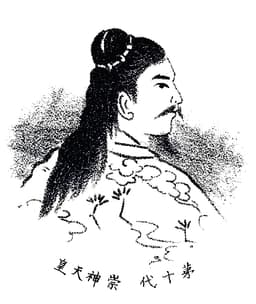
Emperor Sujin
Emperor · Ancient
51.6Total
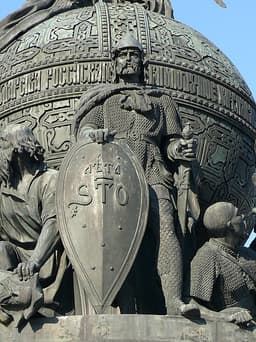
Rurik
Emperor · Medieval
59.6Total
Basic Information
Born
-148
830
Died
-30
879
Era
Ancient
Medieval
Nationality
Japan
Kievan Rus
Occupation
Emperor
Emperor
Civilization
Eastern
Western
Score Comparison
Military (10%)
50.0
50.0
Political (20%)
68.0
35.1
Influence (20%)
47.1
82.0
Legacy (20%)
43.3
68.0
Leadership (15%)
72.0
55.3
Strategy (15%)
30.3
35.7
TOTAL
51.6
59.6
Emperor Sujin — Complete Timeline
100 BC
Organized the Yamato StateReform◆ Major
Emperor Sujin is recorded in the Nihon Shoki as having organized the Yamato state, establishing administrative structures and military garrisons. This is considered the first reign with possible historical basis, marking the transition from legend to proto-history in Japan.
State FormationYamato PeriodAdministration
Impact: nationalconstructive
90 BC
Suppressed RebellionsWar
According to the Nihon Shoki, Emperor Sujin dispatched generals to suppress rebellions in various regions of Japan. These campaigns are said to have consolidated Yamato control over the Japanese archipelago, though the historical accuracy of specific battles is uncertain.
Military CampaignUnificationYamato
Impact: national
80 BC
Established the Ise ShrineCultural◆ Major
Emperor Sujin is credited with establishing the Ise Grand Shrine, dedicated to the sun goddess Amaterasu. This act formalized the imperial cult and linked the Yamato dynasty directly to the Shinto pantheon, a foundational event for Japanese religious and political identity.
ShintoImperial CultReligion
Impact: nationalconstructive
Rurik — Complete Timeline
860 AD
Sent Askold and Dir to ConstantinopleWar
According to tradition, Rurik sent his lieutenants Askold and Dir to raid Constantinople. While the historicity is uncertain, this event is associated with the first Rus' attack on the Byzantine Empire, highlighting early Rus' expansion.
RaidByzantine EmpireExpansion
Impact: regional
862 AD
Founded the Rurik dynastyPolitical Action
According to the Primary Chronicle, Rurik, a Varangian chieftain, was invited by Slavic and Finnic tribes to rule over them. He established his capital at Novgorod, founding the Rurik dynasty that would rule Kievan Rus' and later the Tsardom of Russia until 1598.
FoundationVarangianKievan Rus'
Impact: global
864 AD
Consolidated control over NovgorodPolitical Action◆ Major
Rurik consolidated his rule over Novgorod and the surrounding territories, suppressing a rebellion led by Vadim the Bold. He established a centralized authority that became the basis for the early Russian state.
ConsolidationNovgorodRebellion
Impact: regional
Expert Analysis
Emperor Sujin vs Rurik
# The Founder's Shadow: Rurik and Emperor Sujin
In the cold mists of the Baltic coast, a Varangian chieftain named Rurik gathered his warriors around him, their longships cutting through the grey waters toward the riverways that would lead them deep into the Slavic heartland. Half a world away, on the sun-drenched islands of Japan, another ruler—Emperor Sujin—stood at the threshold of history, performing sacred rites to the sun goddess Amaterasu at the newly established Ise Shrine. Neither man could have known that their actions would shape the destinies of their peoples for millennia. Both are remembered as founders, yet their paths to power and the legacies they left could hardly be more different. Why did one become a symbol of foreign conquest and dynastic continuity, while the other became a figure of native consolidation and divine legitimacy?
Origins
Rurik emerged from the shadowy world of the Varangians—Scandinavian adventurers, traders, and warriors who navigated the rivers of Eastern Europe in the ninth century. Born around 830, he belonged to a culture that valued martial prowess and maritime skill above all. The Primary Chronicle, a medieval Slavic text, presents him as a chieftain invited by warring Slavic and Finnic tribes to bring order to their lands. This "Invitation of the Varangians" may be more legend than fact, but it reveals a profound truth: Rurik’s legitimacy rested on a narrative of external intervention, of a strong outsider imposing peace.
Emperor Sujin, by contrast, was born into the sacred lineage of the Yamato court around 148 BCE, during Japan’s ancient Yayoi period. The Nihon Shoki, Japan’s early chronicle, portrays him as the tenth emperor, the first with plausible historicity. His world was one of rice agriculture, bronze mirrors, and shamanic rituals. Unlike Rurik, Sujin did not arrive as a conqueror; he inherited a throne steeped in myth, claiming descent from the sun goddess herself. His authority was not earned through invasion but assumed through blood and ritual.
Rise to Power
Rurik’s rise was a matter of opportunity and force. According to tradition, in 860 he sent his lieutenants Askold and Dir to raid Constantinople, testing the limits of Byzantine power while establishing his reputation as a leader who could project strength. Two years later, in 862, the turning point came: the tribes of the region, weary of internal strife, supposedly invited him to rule. By 864, he had consolidated control over Novgorod, crushing a rebellion led by Vadim the Bold. His path was pragmatic, built on military intimidation and the careful management of allies.
Sujin’s ascent was quieter, more bureaucratic. The Nihon Shoki records that around 100 BCE, he organized the Yamato state, creating administrative structures that would define Japanese governance for centuries. His power was not won through epic battles but through the systematic suppression of regional chieftains. In 90 BCE, he dispatched generals to put down rebellions, but these were not wars of conquest—they were acts of internal pacification. His greatest cultural achievement came around 80 BCE, when he established the Ise Grand Shrine, formalizing the worship of Amaterasu and linking his dynasty directly to the divine.
Leadership & Governance
Rurik ruled as a Varangian warlord, his authority resting on personal loyalty and the distribution of plunder. His military score of 41.5 reflects a leader more adept at raiding than grand strategy, while his political score of 51.2 suggests a chieftain who governed through presence rather than institutions. He did not reform the Slavic tribes; he dominated them. His leadership score of 79.7, however, indicates a magnetic quality that inspired followers to risk the unknown.
Sujin, with a political score of 69.4 and a leadership score of 86.6, governed through ritual and structure. He did not merely rule; he defined what rule meant. By establishing the Ise Shrine, he created a spiritual center that unified the Yamato clans under a single divine narrative. His military score of 25.8 is low, but this is misleading—he understood that true power lay not in the sword but in the shrine, not in conquest but in consensus.
Triumph & Tragedy
Rurik’s triumph was the founding of a dynasty that would rule Russia for over seven centuries. Yet his tragedy was the uncertainty of his own existence. Historians debate whether he was a real person or a composite figure, a symbol of the Norse contribution to Russian statehood. His legacy score of 68.7 is strong, but it rests on shifting historical ground.
Sujin’s triumph was the creation of a political and religious order that endured. The Ise Shrine remains one of Japan’s most sacred sites. His tragedy, if it can be called one, is that he is overshadowed by later emperors like Jimmu, the legendary first emperor, and Meiji, the modernizer. He is the quiet architect, not the famous builder.
Character & Destiny
Rurik’s character was that of the sea king—restless, ambitious, willing to risk everything for glory. His destiny was to plant a seed that would grow into the vast Russian Empire, but the soil was not his own. He remained an outsider, a Varangian among Slavs, and his dynasty would forever bear the mark of its foreign origins.
Sujin’s character was that of the priest-king—patient, ritualistic, focused on order and continuity. His destiny was to be remembered not as a conqueror but as a consolidator, a man who gave the Yamato state its bones. He did not need to be remembered by name; his legacy was the system itself.
Legacy
Rurik’s legacy is the Rurikid dynasty, which ruled the Kievan Rus’ and later the Tsardom of Russia until the Time of Troubles in the early seventeenth century. His name became synonymous with Russian statehood, even as his Scandinavian origins were mythologized or suppressed. He is a figure of debate, a mirror in which Russians see both their European and Slavic heritage.
Sujin’s legacy is the imperial institution of Japan, the world’s longest continuous monarchy. He is venerated in Shinto tradition, his reign remembered as the moment when the gods and the state became one. He is not debated; he is revered.
Conclusion
Two founders, two worlds. Rurik, the Viking chieftain who became a Russian archetype, and Sujin, the priest-emperor who became a Japanese ancestor. Their differences speak to the deepest currents of their civilizations: one built on conquest and adaptation, the other on ritual and continuity. Rurik’s story is one of motion—of ships, rivers, and raids. Sujin’s is one of stillness—of shrines, rites, and order. Both men, real or legendary, remind us that every great nation begins with a story. The question is not whether the story is true, but whether it is believed.
Rankings
🥇
RurikLeader
Mil: 50.0Pol: 35.1Inf: 82.0
59.6
🥈
Emperor Sujin
Mil: 50.0Pol: 68.0Inf: 47.1
51.6
+8.0 behind
How This Comparison Works
Algorithm
Each figure is scored on 6 dimensions (0—100 scale) based on structured historical data: Military (10%), Political (20%), Influence (20%), Legacy (20%), Leadership (15%), Strategy (15%). The weighted total produces the final ranking.
Data Sources
Scores are computed from structured sub-indicators in the database. Scale factors adjust for era (Ancient ×0.85, Modern ×1.0) and civilization size (Eastern ×1.05, Other ×0.80) to account for differences in population and military scale.
Maximum 3 Figures
Comparisons are limited to 2—3 figures to ensure readability and statistical meaningfulness.
Error Margins
±5 points per dimension — Sub-scores are derived from historical records with inherent uncertainty. Two figures within 5 points on a dimension should be considered roughly equivalent in that area.
Total Score Accuracy
±3 points overall — The weighted combination of 6 dimensions produces a total score with approximately ±3 points of uncertainty. Differences of less than 3 points are not statistically significant— the figures are effectively tied.
Known Limitations
- Historical records are incomplete and uneven across civilizations
- Figures from oral-tradition societies may be underrepresented
- Occupation labels can misclassify multi-role figures
- Scores measure capability and impact, not moral character
- Quantitative scoring is a comparison tool, not absolute truth
Capability Radar
Military (10%) — Battles & Warfare
Battles
10
15
Win Rate
10
20
Expansion
20
30
Political (20%) — Governance & Reform
Reform
50
30
Diplomacy
30
35
Economy
30
25
Influence (20%) — Cultural & Global Reach
Cultural
30
50
Global
10
60
Legacy (20%) — Historical Impact
Historical
40
70
Longevity
30
80
Leadership (15%) — Power & Stability
Tenure
40
40
Stability
40
30
Strategy (15%) — Tactics & Innovation
Strategy
10
20
Tactics
10
15
Reform
20
10
Similar Comparisons
Comments & Discussion
No comments yet. Be the first to share your thoughts!