Loading...
Cyrus the Great vs Rurik
Cyrus the Great leads by 24.3 pts · 2 figures compared
…
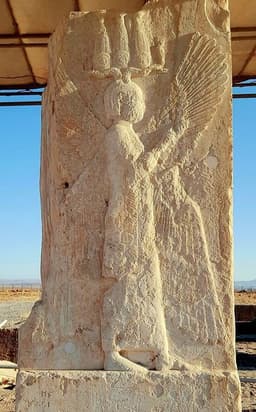
Cyrus the Great
Emperor · Ancient
83.9Total
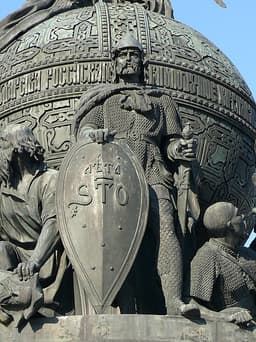
Rurik
Emperor · Medieval
59.6Total
Basic Information
Born
-600
830
Died
-530
879
Era
Ancient
Medieval
Nationality
Persia
Kievan Rus
Occupation
Emperor
Emperor
Civilization
Middle Eastern
Western
Score Comparison
Military (10%)
82.0
50.0
Political (20%)
85.0
35.1
Influence (20%)
85.0
82.0
Legacy (20%)
90.0
68.0
Leadership (15%)
78.0
55.3
Strategy (15%)
75.0
35.7
TOTAL
83.9
59.6
Cyrus the Great — Complete Timeline
550 BC
Founding of the Achaemenid EmpirePolitical Action
Cyrus led a rebellion against the Median Empire, defeating King Astyages and capturing Ecbatana. He then united the Persian and Median tribes, establishing the Achaemenid Empire, which became the largest empire the world had yet seen.
Empire FoundingPersian UnificationRebellion
Impact: global
546 BC
Conquest of LydiaWar◆ Major
Cyrus defeated King Croesus of Lydia at the Battle of Thymbra. The Lydian capital Sardis was captured, and Croesus was taken prisoner. This conquest brought Anatolia under Persian control and secured access to the Aegean coast.
Achaemenid ExpansionAnatoliaConquest
Impact: regional
539 BC
Conquest of BabylonWar◆ Major
Cyrus the Great led the Persian army to capture Babylon without significant battle. The city's gates were opened, and Cyrus entered peacefully. This conquest added Mesopotamia to the Achaemenid Empire and marked the end of the Neo-Babylonian Empire.
Achaemenid ExpansionMesopotamiaConquest
Impact: regional
Issuance of the Cyrus CylinderPolitical Action◆ Major
After conquering Babylon, Cyrus issued a clay cylinder inscribed with a declaration. It described his policy of restoring temples, repatriating displaced peoples, and allowing religious freedom. The cylinder is often cited as an early charter of human rights.
Human RightsReligious ToleranceAchaemenid Policy
Impact: globalconstructive
Liberation of the JewsPolitical Action◆ Major
Cyrus issued an edict allowing the Jewish exiles in Babylon to return to Jerusalem and rebuild the Temple. This event is recorded in the biblical Book of Ezra and is a key moment in Jewish history, ending the Babylonian captivity.
Jewish HistoryReligious FreedomReturn from Exile
Impact: regionalconstructive
Rurik — Complete Timeline
860 AD
Sent Askold and Dir to ConstantinopleWar
According to tradition, Rurik sent his lieutenants Askold and Dir to raid Constantinople. While the historicity is uncertain, this event is associated with the first Rus' attack on the Byzantine Empire, highlighting early Rus' expansion.
RaidByzantine EmpireExpansion
Impact: regional
862 AD
Founded the Rurik dynastyPolitical Action
According to the Primary Chronicle, Rurik, a Varangian chieftain, was invited by Slavic and Finnic tribes to rule over them. He established his capital at Novgorod, founding the Rurik dynasty that would rule Kievan Rus' and later the Tsardom of Russia until 1598.
FoundationVarangianKievan Rus'
Impact: global
864 AD
Consolidated control over NovgorodPolitical Action◆ Major
Rurik consolidated his rule over Novgorod and the surrounding territories, suppressing a rebellion led by Vadim the Bold. He established a centralized authority that became the basis for the early Russian state.
ConsolidationNovgorodRebellion
Impact: regional
Expert Analysis
Cyrus the Great vs Rurik
# The Conqueror and the Chieftain: Cyrus the Great and Rurik
It is a curious trick of history that two of its most pivotal founders should be remembered for opposite reasons: one for what he built, the other for what he began. In the autumn of 539 BCE, Cyrus the Great entered Babylon not through a breach in its walls but through its open gates, welcomed by a populace weary of their own king. He would issue a declaration that proclaimed the dignity of conquered peoples and set a standard for imperial rule that echoes into our own time. Fourteen centuries later, on the misty shores of Lake Ladoga, a Varangian chieftain named Rurik accepted an invitation from warring Slavic tribes to bring order to their lands. He founded no grand empire in his lifetime, left no written decrees, and may not have existed at all. Yet from his shadowy reign would emerge the Rurik dynasty, which ruled the vast lands of Rus’ and Russia for over seven centuries. One man conquered the known world with tolerance; the other was summoned to rule a patch of wilderness. Their stories ask us: what does it mean to be a founder?
Origins
Cyrus was born around 600 BCE into the Persian royal house of the Achaemenids, a vassal kingdom under the Median Empire. The Persians were a proud but subordinate people, and Cyrus grew up hearing tales of Median domination. His grandfather, Astyages, was the Median king—and, if later legends are true, had dreamed that his grandson would overthrow him. The young Cyrus was raised in a world where empire was the only game, where a man’s worth was measured by his ability to command armies and administer provinces. The Persians had no written constitution, but they had a deep sense of order and justice, embodied in the Zoroastrian principle that a good ruler must be truthful and protect the weak.
Rurik, by contrast, emerges from a fog of legend. Born around 830 CE, he was a Varangian—a Norse warrior-trader who plied the rivers of Eastern Europe, exchanging furs and slaves for Byzantine silver. The Primary Chronicle, the earliest Russian history, says he was “invited” by the Slavic and Finnic tribes of the Novgorod region, who had grown tired of their own internal feuds and declared: “Our land is great and abundant, but there is no order in it. Come to rule and reign over us.” Whether this story is fact or political myth, it reveals a world where power was personal, tribal, and precarious. Rurik’s Scandinavia was a patchwork of petty kings and chieftains; the concept of a vast, multicultural empire was as foreign to him as the idea of a written charter.
Rise to Power
Cyrus seized his destiny. In 550 BCE, he led a rebellion against his grandfather Astyages, defeating the Median army at Ecbatana and uniting the Persians and Medes into a new Achaemenid Empire. It was a bold, almost reckless move—a vassal rising against an overlord—but Cyrus had the strategic genius to turn risk into triumph. He did not destroy the Medes; he incorporated them, offering their nobles high positions in his court. This was not mercy but calculation: he understood that loyalty earned is stronger than loyalty demanded.
Rurik’s rise was quieter and more ambiguous. In 862, according to the chronicle, he accepted the invitation to rule Novgorod and consolidated his power by suppressing a rebellion led by a local chieftain named Vadim the Bold. He sent his lieutenants Askold and Dir to raid Constantinople in 860, a venture that may have been more piratical than imperial. Rurik did not conquer; he was invited. He did not unify a people; he imposed a foreign elite over a fractious population. His “empire” was a personal network of warriors and tribute.
Leadership & Governance
Here the two men diverge like rivers flowing to different seas. Cyrus governed through a system of satrapies—provinces ruled by governors who enjoyed considerable autonomy, as long as they paid tribute and kept the peace. He respected local customs and religions, famously allowing the Jews to return to Jerusalem and rebuild their Temple. The Cyrus Cylinder, a clay cylinder inscribed after the conquest of Babylon in 539 BCE, declares that he “restored the cults of all the gods” and “allowed all peoples to live in peace.” This was not idealism; it was a practical strategy for holding together an empire that stretched from the Indus to the Mediterranean. Cyrus understood that a multicultural empire could not be ruled by force alone.
Rurik, by contrast, left no such legacy. He ruled as a Varangian chieftain, relying on personal loyalty and the sword. His “state” was a network of tribute-collecting forts along the rivers. He did not issue laws, build temples, or promote tolerance—he had no need to. His subjects were few, his territory small, and his authority rested on the simple fact that he and his warriors were better armed than anyone else. The Primary Chronicle records no reforms, no administrative innovations, no grand vision. Rurik was a warlord who happened to found a dynasty.
Triumph & Tragedy
Cyrus’s greatest triumph was the conquest of Babylon, which he achieved without a major battle. The city’s gates were opened to him, and he entered as a liberator rather than a conqueror. His tragedy came later: he died around 530 BCE while campaigning against a nomadic tribe in Central Asia, his body reportedly placed in a golden sarcophagus in his capital at Pasargadae. He had built an empire but could not secure its eternal peace; within two centuries, it would fall to Alexander the Great.
Rurik’s triumphs are harder to pin down. He founded a dynasty, but his own reign was brief and obscure. His tragedy is that he remains a cipher—a figure whose historicity is debated, whose deeds are recorded only in a chronicle written two centuries after his death. He may have been a real chieftain, or he may have been a legend invented to legitimize later rulers. His greatest achievement—the Rurik dynasty—was not his doing but the work of his successors, who expanded the tiny principality of Novgorod into the mighty state of Kievan Rus’.
Character & Destiny
Cyrus was a man of vision and calculation, a ruler who understood that power requires legitimacy. He presented himself as a king chosen by the gods, but he also acted as a servant of justice. His character shaped his decisions: he could afford to be magnanimous because he was secure in his strength. Rurik, by contrast, was a creature of circumstance. He took what was offered and held it as long as he could. His character is opaque, his motives unknown. One man shaped history; the other was shaped by it.
Legacy
Cyrus is remembered as a model ruler—the “father” of human rights, a king who respected diversity and ruled with wisdom. His Cylinder is often called the first charter of human rights, and his liberation of the Jews is recorded in the Bible. He set a standard for empire that later conquerors—from Alexander to the British—would claim to emulate, if rarely match.
Rurik’s legacy is more ambiguous. He is the founder of the Rurik dynasty, which ruled Russia until the 16th century, and he is a national symbol, celebrated in Russian historiography as the bringer of order to the Slavic lands. But his legacy is also a source of controversy: did the Varangians “civilize” the Slavs, or did they merely impose themselves as a ruling elite? The question remains open.
Conclusion
Cyrus the Great and Rurik stand at opposite ends of the spectrum of historical founders. One built an empire on tolerance and administration; the other founded a dynasty on personal loyalty and the sword. One left a written record of his ideals; the other left only a legend. Their stories remind us that history is not a ladder of progress but a landscape of possibilities. Some founders shape their world through vision; others shape it simply by being in the right place at the right time. Both, in their own ways, created something that outlasted them—and that, perhaps, is the only measure that matters.
Rankings
🥇
Cyrus the GreatLeader
Mil: 82.0Pol: 85.0Inf: 85.0
83.9
🥈
Rurik
Mil: 50.0Pol: 35.1Inf: 82.0
59.6
+24.3 behind
How This Comparison Works
Algorithm
Each figure is scored on 6 dimensions (0—100 scale) based on structured historical data: Military (10%), Political (20%), Influence (20%), Legacy (20%), Leadership (15%), Strategy (15%). The weighted total produces the final ranking.
Data Sources
Scores are computed from structured sub-indicators in the database. Scale factors adjust for era (Ancient ×0.85, Modern ×1.0) and civilization size (Eastern ×1.05, Other ×0.80) to account for differences in population and military scale.
Maximum 3 Figures
Comparisons are limited to 2—3 figures to ensure readability and statistical meaningfulness.
Error Margins
±5 points per dimension — Sub-scores are derived from historical records with inherent uncertainty. Two figures within 5 points on a dimension should be considered roughly equivalent in that area.
Total Score Accuracy
±3 points overall — The weighted combination of 6 dimensions produces a total score with approximately ±3 points of uncertainty. Differences of less than 3 points are not statistically significant— the figures are effectively tied.
Known Limitations
- Historical records are incomplete and uneven across civilizations
- Figures from oral-tradition societies may be underrepresented
- Occupation labels can misclassify multi-role figures
- Scores measure capability and impact, not moral character
- Quantitative scoring is a comparison tool, not absolute truth
Capability Radar
Military (10%) — Battles & Warfare
Battles
85
15
Win Rate
90
20
Expansion
92
30
Political (20%) — Governance & Reform
Reform
90
30
Diplomacy
95
35
Economy
80
25
Influence (20%) — Cultural & Global Reach
Cultural
90
50
Global
90
60
Legacy (20%) — Historical Impact
Historical
95
70
Longevity
95
80
Leadership (15%) — Power & Stability
Tenure
70
40
Stability
85
30
Strategy (15%) — Tactics & Innovation
Strategy
88
20
Tactics
80
15
Reform
75
10
Similar Comparisons
Comments & Discussion
PersiaPundit6/16/2026
Calling this a contest is like comparing a master architect to a guy who built a shed that people kept living in for 700 years. Cyrus didn't just conquer—he invented imperial governance with the Cyrus Cylinder, literally a charter of human rights carved in clay. Rurik? Legend says he was a Viking invited to rule because the Slavs were too busy fighting. That's not a founder, that's a hired bouncer who forgot to leave.
王朝之影6/16/2026
留里克根本就是个传说包装的幸运赌徒。基辅罗斯的“邀请说”八成是后来编出来美化外来统治的神话,真正的权力获取从来不需要邀请函。倒是居鲁士,他的居鲁士圆筒记录了真实的帝国哲学——尊重本土信仰、保留当地行政,这才叫奠基人。一个靠神话,一个靠政策,高下立判。
VarangianVexer6/16/2026
Rurik's historicity is so shaky he might as well be King Arthur with a fur hat. The Primary Chronicle is our only source, compiled centuries later by pro-Varangian monks. Yet this shadow figure founded a dynasty that lasted until 1598—longer than any Achaemenid lineage. That's the real irony: we know Cyrus existed, conquered, and ruled brilliantly, but his empire crumbled in two centuries. Rurik, if real, sparked a political entity that outlasted his own historical footprint by a millennium.
沙皇先祖6/16/2026
别拿居鲁士的标准来套留里克。居鲁士是帝国设计师,留里克是部族融合的催化剂。他接受的不是波斯那样的成熟文明城邦,而是东欧的沼泽和部落械斗。没有他的“外来秩序”,瓦良格人和斯拉夫人的融合可能要晚几百年。王朝延续七百年不是靠运气,是靠一种务实的吸纳能力——这正是留里克开创的传统。