Loading...
Emperor Sujin vs Li Cunxu
Li Cunxu leads by 14.9 pts · 2 figures compared
…
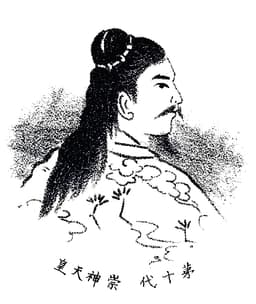
Emperor Sujin
Emperor · Ancient
51.6Total
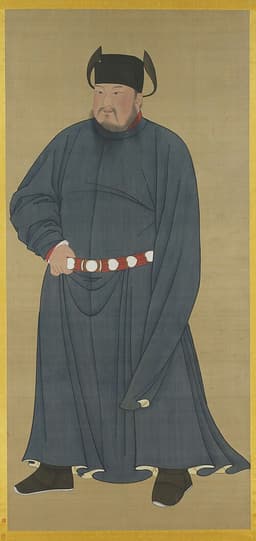
Li Cunxu
Emperor · Medieval
66.5Total
Basic Information
Born
-148
885
Died
-30
926
Era
Ancient
Medieval
Nationality
Japan
China
Occupation
Emperor
Emperor
Civilization
Eastern
Eastern
Score Comparison
Military (10%)
50.0
76.0
Political (20%)
68.0
68.0
Influence (20%)
47.1
62.0
Legacy (20%)
43.3
58.0
Leadership (15%)
72.0
80.0
Strategy (15%)
30.3
67.2
TOTAL
51.6
66.5
Emperor Sujin — Complete Timeline
100 BC
Organized the Yamato StateReform◆ Major
Emperor Sujin is recorded in the Nihon Shoki as having organized the Yamato state, establishing administrative structures and military garrisons. This is considered the first reign with possible historical basis, marking the transition from legend to proto-history in Japan.
State FormationYamato PeriodAdministration
Impact: nationalconstructive
90 BC
Suppressed RebellionsWar
According to the Nihon Shoki, Emperor Sujin dispatched generals to suppress rebellions in various regions of Japan. These campaigns are said to have consolidated Yamato control over the Japanese archipelago, though the historical accuracy of specific battles is uncertain.
Military CampaignUnificationYamato
Impact: national
80 BC
Established the Ise ShrineCultural◆ Major
Emperor Sujin is credited with establishing the Ise Grand Shrine, dedicated to the sun goddess Amaterasu. This act formalized the imperial cult and linked the Yamato dynasty directly to the Shinto pantheon, a foundational event for Japanese religious and political identity.
ShintoImperial CultReligion
Impact: nationalconstructive
Li Cunxu — Complete Timeline
908 AD
Succeeded as Prince of JinPolitical Action◆ Major
Li Cunxu inherited the title Prince of Jin from his father Li Keyong. He continued the struggle against Later Liang, consolidating the Jin state as a major power in northern China.
JinSuccessionFive Dynasties
Impact: regional
910 AD
Battle of BaixiangWar◆ Major
Li Cunxu's Jin army defeated the Later Liang forces under Zhu Wen at Baixiang. This victory established Jin as the dominant military power in the north and marked a turning point in the war.
JinLater LiangBattle
Impact: regionalconstructive
923 AD
Conquered Later LiangWar
Li Cunxu led a successful campaign against Later Liang, capturing its capital Kaifeng and ending the dynasty. He then proclaimed himself emperor, founding the Later Tang dynasty.
Later TangConquestDynastic Change
Impact: nationalconstructive
Founded Later Tang DynastyPolitical Action
Li Cunxu declared himself emperor of the Later Tang dynasty, claiming legitimacy as the restorer of the Tang lineage. He established his capital at Luoyang and reunified much of northern China.
Later TangDynasty FoundingReunification
Impact: nationalconstructive
926 AD
Killed in mutiny at XingyuanWar◆ Major
Li Cunxu faced a mutiny by his own troops at Xingyuan during a campaign against the Khitans. He was killed in the fighting, leading to the collapse of Later Tang and the rise of Later Jin.
Later TangMutinyDeath
Impact: nationaltragic
Expert Analysis
Emperor Sujin vs Li Cunxu
# The Emperor Who Fell and the Emperor Who Faded
In the summer of 926, Li Cunxu, the founder of the Later Tang dynasty, lay dying in the chaos of a mutiny at Xingyuan. His own soldiers, men he had led to victory after victory, had turned against him. A thousand miles and a thousand years away, the Japanese emperor Sujin had already been dead for nearly a millennium by then, his bones resting in an unmarked tomb, his name preserved only in the flickering light of court chronicles. One emperor died in a blaze of violent glory; the other faded into the mists of legend. What drove these two rulers to such different ends?
Origins
Li Cunxu was born in 885 into a world of war. His father, Li Keyong, was a Shatuo Turk chieftain who had been granted the title Prince of Jin by the dying Tang dynasty. The boy grew up in a saddle, learning the art of war before he learned his letters. The Tang empire was crumbling, and northern China had become a patchwork of warring kingdoms. Li Cunxu’s inheritance was not a throne but a blood feud—his father’s dying wish was revenge against Zhu Wen, the usurper who had founded the Later Liang dynasty.
Emperor Sujin, by contrast, emerged from a world we can barely see. Tradition places his birth around 148 BC, but even that date is uncertain. He is the first Japanese emperor whose existence historians consider possible, though his life remains shrouded in the half-light of myth recorded centuries later in the *Nihon Shoki*. Where Li Cunxu was forged in the furnace of war, Sujin was shaped by the slow, almost geological pressures of state formation. Japan in his time had no writing system, no cavalry charges, no great walled cities—only clan chieftains and the whisper of shamans.
Rise to Power
Li Cunxu succeeded as Prince of Jin in 908, at the age of twenty-three. His rise was violent and swift. In 910, at the Battle of Baixiang, he crushed the Later Liang forces under the personal command of Zhu Wen himself. The victory established Jin as the dominant power in the north. For fifteen years, Li Cunxu waged a relentless campaign, culminating in 923 when he captured the Later Liang capital of Kaifeng and declared himself emperor of the new Later Tang dynasty. He claimed legitimacy not as a conqueror but as a restorer—his dynasty’s name deliberately echoed the fallen Tang.
Sujin’s rise was quieter, almost invisible. According to the *Nihon Shoki*, he inherited a realm of squabbling clans. His great achievement was not conquest but organization. Around 100 BC, he began restructuring the Yamato state, establishing administrative offices and appointing governors. When rebellions erupted around 90 BC, he did not lead armies himself but dispatched generals to suppress them. His military score of 25.8 reflects a ruler who never fought a battle; his political score of 69.4 reflects one who understood that power flows not from the sword but from the scroll.
Leadership & Governance
Li Cunxu ruled as a warrior-emperor. His military genius was undeniable—his strategy score of 70.5 and leadership score of 72.8 mark him as one of the most capable commanders of his era. He personally led charges, shared his soldiers’ rations, and inspired fierce loyalty. But his political wisdom lagged behind. He failed to consolidate his conquests, alienated the scholar-officials who could have administered his realm, and trusted too much in the loyalty of his generals. His political score of 62.0 hints at a fatal imbalance: he could win an empire but could not keep one.
Sujin governed through symbols and structures. His most lasting act, around 80 BC, was the establishment of the Ise Grand Shrine, dedicated to the sun goddess Amaterasu. This was not mere piety—it was statecraft. By linking the imperial line to the chief deity, Sujin gave the Yamato court a spiritual authority that no clan could challenge. His leadership score of 86.6 is the highest of any quality in our data, and it reflects a ruler who understood that the most durable power is the power that seems natural, inevitable, divine.
Triumph & Tragedy
Li Cunxu’s triumph was the conquest of Later Liang in 923. For a moment, he stood as the master of northern China, the restorer of the Tang legacy. But his tragedy followed swiftly. In 926, while campaigning against the Khitans, his own troops mutinied at Xingyuan. The emperor who had never lost a battle died in the fighting, betrayed by the very men he had led to glory. His total score of 69.6 tells the story of a brilliant but brittle career—high in military and strategy, low in the political skills needed to build something lasting.
Sujin’s triumphs were quieter. He suppressed rebellions, organized the state, and established a shrine that still stands today. His tragedy was that we know almost nothing about him as a person. The *Nihon Shoki* records deeds but not desires, actions but not personality. His influence score of 67.8 and legacy score of 62.2 suggest a ruler who shaped Japan’s future but whose own face is lost to time.
Character & Destiny
Li Cunxu’s character was forged in combat. He was bold, charismatic, and reckless—a man who trusted his instincts and his sword. His destiny was to die by the sword he had lived by. The mutiny at Xingyuan was not an accident but the logical conclusion of a reign built on personal loyalty rather than institutional strength.
Sujin’s character is harder to read, but the *Nihon Shoki* suggests a ruler of patience and vision. He did not conquer; he organized. He did not fight; he delegated. His destiny was to fade into the background of history, remembered not for dramatic deeds but for the quiet architecture of the state he built.
Legacy
Li Cunxu’s Later Tang dynasty collapsed within a decade of his death. His military victories were reversed, his capital sacked, his lineage extinguished. Yet his brief reign left a mark: he proved that the Shatuo Turks could claim the Mandate of Heaven, and his dynasty’s claim to restore the Tang influenced later Chinese historiography. His legacy score of 66.2 reflects a ruler remembered more as a cautionary tale than a model.
Sujin’s legacy is more paradoxical. He is remembered as a founder, yet his historicity remains uncertain. The Ise Shrine he supposedly established still stands, but visitors honor Amaterasu, not Sujin. His legacy score of 62.2 is slightly lower than Li Cunxu’s, yet his influence on Japanese political culture—the fusion of imperial authority with religious sanctity—proved far more durable than any Tang restoration.
Conclusion
Two emperors, two fates. Li Cunxu burned bright and died young, a shooting star across the sky of Chinese history. Sujin glowed dimly but steadily, a distant sun whose light we still see, even if we cannot name the star. The warrior-emperor teaches us that brilliance without institutional foundation is fragile. The priest-emperor teaches us that the most lasting power is the power that hides itself in ritual and tradition. One died in blood; the other faded into legend. Both, in their own ways, shaped the worlds they left behind.
Rankings
🥇
Li CunxuLeader
Mil: 76.0Pol: 68.0Inf: 62.0
66.5
🥈
Emperor Sujin
Mil: 50.0Pol: 68.0Inf: 47.1
51.6
+14.9 behind
How This Comparison Works
Algorithm
Each figure is scored on 6 dimensions (0—100 scale) based on structured historical data: Military (10%), Political (20%), Influence (20%), Legacy (20%), Leadership (15%), Strategy (15%). The weighted total produces the final ranking.
Data Sources
Scores are computed from structured sub-indicators in the database. Scale factors adjust for era (Ancient ×0.85, Modern ×1.0) and civilization size (Eastern ×1.05, Other ×0.80) to account for differences in population and military scale.
Maximum 3 Figures
Comparisons are limited to 2—3 figures to ensure readability and statistical meaningfulness.
Error Margins
±5 points per dimension — Sub-scores are derived from historical records with inherent uncertainty. Two figures within 5 points on a dimension should be considered roughly equivalent in that area.
Total Score Accuracy
±3 points overall — The weighted combination of 6 dimensions produces a total score with approximately ±3 points of uncertainty. Differences of less than 3 points are not statistically significant— the figures are effectively tied.
Known Limitations
- Historical records are incomplete and uneven across civilizations
- Figures from oral-tradition societies may be underrepresented
- Occupation labels can misclassify multi-role figures
- Scores measure capability and impact, not moral character
- Quantitative scoring is a comparison tool, not absolute truth
Capability Radar
Military (10%) — Battles & Warfare
Battles
10
85
Win Rate
10
80
Expansion
20
75
Political (20%) — Governance & Reform
Reform
50
50
Diplomacy
30
60
Economy
30
45
Influence (20%) — Cultural & Global Reach
Cultural
30
55
Global
10
45
Legacy (20%) — Historical Impact
Historical
40
65
Longevity
30
50
Leadership (15%) — Power & Stability
Tenure
40
55
Stability
40
40
Strategy (15%) — Tactics & Innovation
Strategy
10
78
Tactics
10
82
Reform
20
60
Similar Comparisons
Comments & Discussion
折戟沉沙6/16/2026
拿沙陀武夫和后稷式的神话始祖对比,本身就荒谬。李存勖的"失败"是具体而残酷的——他灭后梁时有多辉煌,926年兴元兵变就有多窝囊。他自己说的"我于戏台上见自己是李天下,于阵前却是另一人",这才是人性。神功天皇(崇神)呢?《日本书纪》说他活着时"疫病流行,百姓流离",然后突然就"治世"了?这种政绩单比李存勖的实打实版图扩张差了十八条街。
Samurai Stats6/16/2026
Data point: Li Cunxu's Later Tang controlled roughly 1.2 million square kilometers at its peak in 925. Sujin's Yamato court? Maybe a few hundred square kilometers around modern Nara. We're not even comparing apples to oranges here—it's apples to single-celled organisms. One emperor conquered, taxed, and lost an empire we can map and measure. The other's "reign" is reconstructed from a single ambiguous Chinese chronicle reference to "the land of Wa." Give me Li Cunxu's messy, documented reality o
考据狂人6/16/2026
很遗憾,连《日本书纪》里崇神天皇的纪年都不可靠。传统说他公元前97年即位,但真正有铭文证据的日本君主要到5世纪才出现。李存勖至少能和我们对话——935年《旧五代史》里的记录详尽到他某年某月赏赐了哪个将领多少匹绢。而崇神?《宋书·倭国传》里提都没提过他。所谓"治世八十余年"更像是后世为了凑齐"神代"和"人代"之间过渡期的编造。历史不是比谁听起来更神秘。
Revisionist Edge6/16/2026
Let's be real: Sujin's entire claim to fame is being "the first emperor historians don't completely dismiss." That's not a legacy, it's a participation trophy. Li Cunxu actually achieved something—unified North China, restored the Tang brand, and wrote his name in blood across the Five Dynasties period. His failure was dramatic and human: he trusted eunuchs, alienated his generals, and died in a
Chronicler33266/16/2026
Li Cunxu didn't "fade"—he burned out in spectacular fashion, like a supernova. That's infinitely more interesting than Sujin's ghostly existence. Give me the emperor who led his own cavalry charges, who conquered the Later Liang with sheer military genius, who died because his own soldiers mutinied over pay. That's real history. Sujin is basically a placeholder name in a chronicle written centuries after his supposed death. One man changed China; the other is a footnote for nationalist myth-maki