Loading...
Cyrus the Great vs Li Cunxu
Cyrus the Great leads by 17.4 pts · 2 figures compared
…
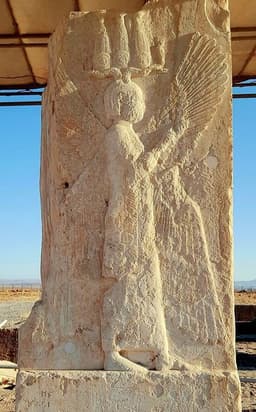
Cyrus the Great
Emperor · Ancient
83.9Total
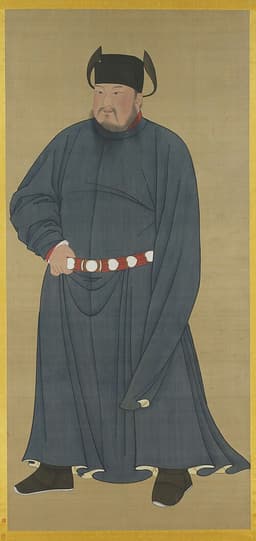
Li Cunxu
Emperor · Medieval
66.5Total
Basic Information
Born
-600
885
Died
-530
926
Era
Ancient
Medieval
Nationality
Persia
China
Occupation
Emperor
Emperor
Civilization
Middle Eastern
Eastern
Score Comparison
Military (10%)
82.0
76.0
Political (20%)
85.0
68.0
Influence (20%)
85.0
62.0
Legacy (20%)
90.0
58.0
Leadership (15%)
78.0
80.0
Strategy (15%)
75.0
67.2
TOTAL
83.9
66.5
Cyrus the Great — Complete Timeline
550 BC
Founding of the Achaemenid EmpirePolitical Action
Cyrus led a rebellion against the Median Empire, defeating King Astyages and capturing Ecbatana. He then united the Persian and Median tribes, establishing the Achaemenid Empire, which became the largest empire the world had yet seen.
Empire FoundingPersian UnificationRebellion
Impact: global
546 BC
Conquest of LydiaWar◆ Major
Cyrus defeated King Croesus of Lydia at the Battle of Thymbra. The Lydian capital Sardis was captured, and Croesus was taken prisoner. This conquest brought Anatolia under Persian control and secured access to the Aegean coast.
Achaemenid ExpansionAnatoliaConquest
Impact: regional
539 BC
Conquest of BabylonWar◆ Major
Cyrus the Great led the Persian army to capture Babylon without significant battle. The city's gates were opened, and Cyrus entered peacefully. This conquest added Mesopotamia to the Achaemenid Empire and marked the end of the Neo-Babylonian Empire.
Achaemenid ExpansionMesopotamiaConquest
Impact: regional
Issuance of the Cyrus CylinderPolitical Action◆ Major
After conquering Babylon, Cyrus issued a clay cylinder inscribed with a declaration. It described his policy of restoring temples, repatriating displaced peoples, and allowing religious freedom. The cylinder is often cited as an early charter of human rights.
Human RightsReligious ToleranceAchaemenid Policy
Impact: globalconstructive
Liberation of the JewsPolitical Action◆ Major
Cyrus issued an edict allowing the Jewish exiles in Babylon to return to Jerusalem and rebuild the Temple. This event is recorded in the biblical Book of Ezra and is a key moment in Jewish history, ending the Babylonian captivity.
Jewish HistoryReligious FreedomReturn from Exile
Impact: regionalconstructive
Li Cunxu — Complete Timeline
908 AD
Succeeded as Prince of JinPolitical Action◆ Major
Li Cunxu inherited the title Prince of Jin from his father Li Keyong. He continued the struggle against Later Liang, consolidating the Jin state as a major power in northern China.
JinSuccessionFive Dynasties
Impact: regional
910 AD
Battle of BaixiangWar◆ Major
Li Cunxu's Jin army defeated the Later Liang forces under Zhu Wen at Baixiang. This victory established Jin as the dominant military power in the north and marked a turning point in the war.
JinLater LiangBattle
Impact: regionalconstructive
923 AD
Conquered Later LiangWar
Li Cunxu led a successful campaign against Later Liang, capturing its capital Kaifeng and ending the dynasty. He then proclaimed himself emperor, founding the Later Tang dynasty.
Later TangConquestDynastic Change
Impact: nationalconstructive
Founded Later Tang DynastyPolitical Action
Li Cunxu declared himself emperor of the Later Tang dynasty, claiming legitimacy as the restorer of the Tang lineage. He established his capital at Luoyang and reunified much of northern China.
Later TangDynasty FoundingReunification
Impact: nationalconstructive
926 AD
Killed in mutiny at XingyuanWar◆ Major
Li Cunxu faced a mutiny by his own troops at Xingyuan during a campaign against the Khitans. He was killed in the fighting, leading to the collapse of Later Tang and the rise of Later Jin.
Later TangMutinyDeath
Impact: nationaltragic
Expert Analysis
Cyrus the Great vs Li Cunxu
# The Conqueror and the Collapsed
History rarely offers such a stark contrast as Cyrus the Great and Li Cunxu. One built an empire that stretched from India to the Mediterranean, ruling with a magnanimity that still echoes in human rights declarations. The other reunified northern China, only to die in a mutiny, his dynasty crumbling within a generation. Both were warriors, both were kings. Yet one left a legacy of light, the other a cautionary tale of fire. What made the difference?
Origins
Cyrus was born around 600 BCE into the Persian vassalage of the Median Empire. He belonged to the Achaemenid clan, a noble family that served the Median king Astyages. His world was one of tribal loyalties, horseback warfare, and the vast, open landscapes of the Iranian plateau. The Persians were a proud but subordinate people, and Cyrus grew up knowing both the weight of subjugation and the memory of independence. His childhood, according to Greek sources, was marked by a legendary prophecy that he would one day overthrow his grandfather—a tale that may be myth, but reveals the ambitions that stirred in his blood.
Li Cunxu was born in 885 CE, deep in the chaos of the Five Dynasties and Ten Kingdoms period. His father, Li Keyong, was a Shatuo Turkic chieftain who had been granted the title Prince of Jin by the faltering Tang dynasty. The boy grew up not in a settled empire, but in the saddle of a warhorse, surrounded by shifting alliances and blood feuds. The Tang had collapsed; northern China was a patchwork of warlords, each claiming legitimacy. Li Cunxu inherited not a throne, but a war—a vendetta against the Later Liang dynasty, which had humiliated his father.
Rise to Power
Cyrus’s path to power began with an act of rebellion. In 550 BCE, he led the Persians against their Median overlords, defeating King Astyages and capturing the Median capital of Ecbatana. This was no mere coup; Cyrus absorbed the Median empire into his own, keeping its nobles in power and adopting its administrative systems. He then turned westward. In 546 BCE, he faced King Croesus of Lydia at the Battle of Thymbra. Croesus was famed for his wealth and his oracles, but Cyrus outmaneuvered him on the battlefield, capturing Sardis and taking the Lydian king alive. Within a decade, Cyrus had united the Medes, Persians, Lydians, and Babylonians under one rule.
Li Cunxu’s rise was more brutal and personal. In 908 CE, at age twenty-three, he succeeded his father as Prince of Jin. The Later Liang emperor, Zhu Wen, had defeated Li Keyong in a bitter war, and the son swore revenge. For fifteen years, Li Cunxu waged a grinding campaign across northern China. His breakthrough came at the Battle of Baixiang in 910 CE, where his Jin army shattered Zhu Wen’s forces, establishing Jin as the dominant power in the north. In 923 CE, he launched a final, decisive campaign, capturing the Later Liang capital of Kaifeng. Zhu Wen’s dynasty fell, and Li Cunxu proclaimed himself emperor of the Later Tang, claiming to restore the legitimate Tang lineage.
Leadership & Governance
Cyrus the Great governed with a vision that was astonishingly modern. After conquering Babylon in 539 BCE, he did not sack the city or enslave its people. Instead, he issued the Cyrus Cylinder, a clay declaration that restored local temples, repatriated displaced peoples, and allowed conquered nations to worship their own gods. Most famously, he freed the Jewish exiles in Babylon, issuing an edict that permitted them to return to Jerusalem and rebuild the Temple—a gesture recorded in the Hebrew Bible with gratitude. His empire was a mosaic of cultures, each allowed its own laws, languages, and leaders, as long as they paid tribute and kept the peace. Cyrus ruled not by terror, but by consent.
Li Cunxu ruled in a very different key. His Later Tang dynasty was a military machine. He had won his throne through the sword, and he trusted the sword to keep it. He appointed generals as governors, rewarded his Shatuo tribesmen with land, and treated the conquered Chinese elite with suspicion. His court was riven by factionalism, his treasury drained by constant campaigns. He lacked Cyrus’s patience for administration or diplomacy. Where Cyrus built roads and encouraged trade, Li Cunxu conscripted peasants and burned fields. The Later Tang was less an empire than a camp—and camps, by their nature, do not endure.
Triumph & Tragedy
Cyrus’s greatest moment was the fall of Babylon. The city’s gates were opened to him without a fight, and he walked through them as a liberator, not a conqueror. The Cyrus Cylinder, unearthed in 1879, stands as a testament to his belief that power could be wielded with mercy. His tragedy, if it can be called one, is that he died in battle around 530 BCE, fighting nomadic tribes on the northeastern frontier. Even his death was a soldier’s death, and his tomb at Pasargadae remains a place of pilgrimage.
Li Cunxu’s triumph was the conquest of Kaifeng in 923 CE. He had avenged his father and reunited northern China under a single banner. But his tragedy came swiftly. In 926 CE, while campaigning against the Khitans, his own troops mutinied at Xingyuan. The emperor who had never lost a battle was killed by his own men. His body was left unburied, and his dynasty collapsed within a decade. The man who had restored the Tang name could not even secure his own succession.
Character & Destiny
Cyrus was a statesman who happened to be a general. He understood that an empire built on fear would fall apart once the conqueror died. His tolerance was not weakness; it was strategy. By respecting local customs, he turned enemies into allies and subjects into stakeholders. His personality—magnanimous, shrewd, patient—matched the needs of his era. The ancient Near East was tired of Assyrian brutality; Cyrus offered a new model.
Li Cunxu was a warrior who happened to become an emperor. He lived for the thrill of the charge, the satisfaction of vengeance. He was brave, charismatic, and ruthless—but he could not govern. His court was a nest of intrigue, his generals were rivals, and his soldiers were loyal only to his success. When he faltered, they turned on him. His personality—proud, impulsive, vengeful—was suited to conquest, not consolidation. The Five Dynasties period needed a unifier who could also build; Li Cunxu could only destroy.
Legacy
Cyrus the Great is remembered as a founder, a liberator, and a model of enlightened rule. The Cyrus Cylinder is often called the first human rights charter. His policies influenced Alexander the Great, the Roman Empire, and even the founders of modern democracies. He is a hero in Iran, a figure of respect in Judaism, and a symbol of what empire can achieve when it respects humanity.
Li Cunxu is a footnote. Historians note him as the founder of the Later Tang, but his dynasty was short-lived, his achievements overshadowed by the chaos that followed. He is remembered, if at all, as a cautionary tale: a brilliant general who could not rule, a conqueror who could not keep. His story is one of fire, not light.
Conclusion
Cyrus and Li Cunxu faced similar challenges: fragmented lands, rebellious nobles, the burden of building something new. One succeeded because he understood that power must be tempered with justice; the other failed because he believed victory was enough. In the end, the difference between an empire that lasts for centuries and a dynasty that dies in a decade is not the size of an army or the brilliance of a strategy. It is the depth of a ruler’s vision. Cyrus saw a world of many peoples, bound by mutual respect. Li Cunxu saw only enemies to crush. History, as always, judged accordingly.
Rankings
🥇
Cyrus the GreatLeader
Mil: 82.0Pol: 85.0Inf: 85.0
83.9
🥈
Li Cunxu
Mil: 76.0Pol: 68.0Inf: 62.0
66.5
+17.4 behind
How This Comparison Works
Algorithm
Each figure is scored on 6 dimensions (0—100 scale) based on structured historical data: Military (10%), Political (20%), Influence (20%), Legacy (20%), Leadership (15%), Strategy (15%). The weighted total produces the final ranking.
Data Sources
Scores are computed from structured sub-indicators in the database. Scale factors adjust for era (Ancient ×0.85, Modern ×1.0) and civilization size (Eastern ×1.05, Other ×0.80) to account for differences in population and military scale.
Maximum 3 Figures
Comparisons are limited to 2—3 figures to ensure readability and statistical meaningfulness.
Error Margins
±5 points per dimension — Sub-scores are derived from historical records with inherent uncertainty. Two figures within 5 points on a dimension should be considered roughly equivalent in that area.
Total Score Accuracy
±3 points overall — The weighted combination of 6 dimensions produces a total score with approximately ±3 points of uncertainty. Differences of less than 3 points are not statistically significant— the figures are effectively tied.
Known Limitations
- Historical records are incomplete and uneven across civilizations
- Figures from oral-tradition societies may be underrepresented
- Occupation labels can misclassify multi-role figures
- Scores measure capability and impact, not moral character
- Quantitative scoring is a comparison tool, not absolute truth
Capability Radar
Military (10%) — Battles & Warfare
Battles
85
85
Win Rate
90
80
Expansion
92
75
Political (20%) — Governance & Reform
Reform
90
50
Diplomacy
95
60
Economy
80
45
Influence (20%) — Cultural & Global Reach
Cultural
90
55
Global
90
45
Legacy (20%) — Historical Impact
Historical
95
65
Longevity
95
50
Leadership (15%) — Power & Stability
Tenure
70
55
Stability
85
40
Strategy (15%) — Tactics & Innovation
Strategy
88
78
Tactics
80
82
Reform
75
60
Similar Comparisons
Comments & Discussion
TheGreatUniter6/16/2026
Cyrus's "human rights" reputation is overblown. He allowed local customs to continue because it was pragmatically cheaper than garrisoning an empire. Compare his famous cylinder—it's propaganda, not policy. Li Cunxu at least tried to rebuild actual institutions, appointing scholar-officials to curb warlord power. He failed, yes, but failure in chaos is more honorable than success through uncontested dominance over sheep. Real leadership means fighting entropy, not just being the nicest warlord.|
ImmediateOverlord6/16/2026
别看居鲁士吹得天花乱坠,他的帝国其实是个脆皮。他出去打仗一次,巴比伦就造反。所谓的宽容,不过是没能力搞集权统治。李存勖八年灭梁,三年亡国,这才是硬核教训——征服≠治理。骑兵围城是本事,但让后唐被自己人抄了家,那叫政治外行。给居鲁士一个五代乱世试试,看他能的。|
SwordAndScaleTactician6/16/2026
Li Cunxu’s downfall isn’t a moral failing—it’s a logistics lesson. He won the Liang campaign by personally leading cavalry raids deep into enemy territory, but never developed a supply train or rear echelon command structure. Cyrus understood that an empire needs roads, governors, and grain depots. Li treated every battle as a final duel. Brilliant tacticians make terrible strategists when they can’t delegate. He died because he insisted on being the tip of every spear.|
历史骰子6/16/2026
数据不会撒谎:居鲁士在位30年,疆域扩大3倍,死后帝国稳定80年。李存勖在位3年,疆域缩水一半,死后三年政权灰飞烟灭。差别不在道德水平,在继承机制。居鲁士用了总督制度,李存勖用了养子制度。养子制度天生不稳定——你信任亲近血亲,就会让其他人觉得可以效仿篡位。这不是性格问题,是系统Bug。|
ClassicsReclaimed6/16/2026
The real irony? Both men had an Achilles’ heel with family. Cyrus’s eldest son Cambyses went mad and massacred temples—the empire endured because Darius rebuilt. Li Cunxu’s adoptive sons turned on him because he executed his own blood brother for insubordination. Loyalty in steppe cultures is transactional, not ideological. Cyrus’s Persians had clan honor; Li’s Shatuo had survival instinct. One code built an empire; the other ate its king. History is cold: it rewards systems, not sentiments.|