Loading...
Julius Caesar vs Li Cunxu
Julius Caesar leads by 16.3 pts · 2 figures compared
…

Julius Caesar
General · Ancient
82.8Total
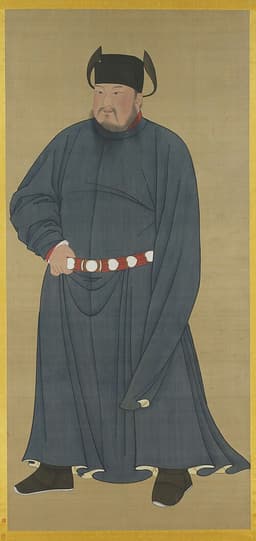
Li Cunxu
Emperor · Medieval
66.5Total
Basic Information
Born
-100
885
Died
-44
926
Era
Ancient
Medieval
Nationality
Roman Republic
China
Occupation
General
Emperor
Civilization
Western
Eastern
Score Comparison
Military (10%)
88.0
76.0
Political (20%)
78.0
68.0
Influence (20%)
85.0
62.0
Legacy (20%)
82.0
58.0
Leadership (15%)
80.0
80.0
Strategy (15%)
85.0
67.2
TOTAL
82.8
66.5
Julius Caesar — Complete Timeline
58 BC
Gallic WarsWar◆ Major
Caesar, as proconsul of Gaul, launched a series of campaigns that conquered all of Gaul (modern France, Belgium, and parts of Switzerland). He fought numerous battles, including against the Helvetii, the Belgae, and the Gallic chieftain Vercingetorix. The wars brought immense wealth and a loyal army to Caesar.
Gallic WarsConquestRoman Expansion
Impact: regional
49 BC
Crossing the RubiconPolitical Action◆ Major
Caesar led Legio XIII across the Rubicon River into Italy, defying the Roman Senate's order to disband his army. This act triggered a civil war against Pompey and the Optimates, ultimately leading to Caesar's dictatorship and the end of the Roman Republic.
Roman Civil WarEnd of RepublicPower Struggle
Impact: global
48 BC
Battle of PharsalusWar◆ Major
Caesar's outnumbered army defeated the larger forces of Pompey the Great at Pharsalus in Greece. Caesar's tactical use of a reserve line to counter Pompey's cavalry charge proved decisive. Pompey fled to Egypt, where he was assassinated, leaving Caesar as the undisputed master of the Roman world.
Roman Civil WarBattleDecisive Victory
Impact: regional
44 BC
Appointment as Dictator for LifePolitical Action◆ Major
The Roman Senate appointed Caesar dictator perpetuo (dictator for life), granting him unprecedented personal power. This move concentrated military, legislative, and judicial authority in one person, effectively ending the Roman Republic's traditional system of checks and balances and alarming many senators.
DictatorshipEnd of RepublicPower Consolidation
Impact: regionaldestructive
Assassination on the Ides of MarchPolitical Action◆ Major
A group of Roman senators, led by Marcus Junius Brutus and Gaius Cassius Longinus, stabbed Caesar to death at a meeting of the Senate in the Theatre of Pompey. The assassination was intended to restore the Republic, but instead triggered another civil war that led to the rise of the Roman Empire.
AssassinationRoman PoliticsEnd of Republic
Impact: globaldestructive
Li Cunxu — Complete Timeline
908 AD
Succeeded as Prince of JinPolitical Action◆ Major
Li Cunxu inherited the title Prince of Jin from his father Li Keyong. He continued the struggle against Later Liang, consolidating the Jin state as a major power in northern China.
JinSuccessionFive Dynasties
Impact: regional
910 AD
Battle of BaixiangWar◆ Major
Li Cunxu's Jin army defeated the Later Liang forces under Zhu Wen at Baixiang. This victory established Jin as the dominant military power in the north and marked a turning point in the war.
JinLater LiangBattle
Impact: regionalconstructive
923 AD
Conquered Later LiangWar
Li Cunxu led a successful campaign against Later Liang, capturing its capital Kaifeng and ending the dynasty. He then proclaimed himself emperor, founding the Later Tang dynasty.
Later TangConquestDynastic Change
Impact: nationalconstructive
Founded Later Tang DynastyPolitical Action
Li Cunxu declared himself emperor of the Later Tang dynasty, claiming legitimacy as the restorer of the Tang lineage. He established his capital at Luoyang and reunified much of northern China.
Later TangDynasty FoundingReunification
Impact: nationalconstructive
926 AD
Killed in mutiny at XingyuanWar◆ Major
Li Cunxu faced a mutiny by his own troops at Xingyuan during a campaign against the Khitans. He was killed in the fighting, leading to the collapse of Later Tang and the rise of Later Jin.
Later TangMutinyDeath
Impact: nationaltragic
Expert Analysis
Julius Caesar vs Li Cunxu
# The Crossing and the Collapse
On a winter day in 49 BCE, Julius Caesar stood at the banks of the Rubicon, a small river that marked the boundary between his province and Italy proper. To cross with his army was treason. To turn back was political oblivion. He crossed. Thirteen centuries later and half a world away, Li Cunxu, the Prince of Jin, faced his own Rubicon: a crumbling Later Liang empire that had tormented his family for two generations. Both men gambled everything on a single throw. One became the father of an empire that would shape the West for five hundred years. The other founded a dynasty that vanished within a decade, his corpse left to rot in a mutineer’s camp. Why did two men of such similar ambition meet such different fates? The answer lies not in their dreams, but in the soil from which they grew.
Origins
Julius Caesar was born into the patrician Julian clan, but his family was hardly wealthy. Rome in the first century BCE was a republic choking on its own success—corrupt senators, landless veterans, and slave-stuffed latifundia. Young Caesar learned early that in such a world, glory and gold were the only currencies that mattered. He was captured by pirates as a young man, laughed at their ransom demand, and later crucified them. That blend of audacity and calculation would define him.
Li Cunxu was born in 885, during the twilight of the Tang dynasty, when China had shattered into a dozen warring kingdoms. His father, Li Keyong, was a Shatuo Turkic chieftain who had been granted the title Prince of Jin by the dying Tang court. The boy grew up in a saddle, learning to ride before he could write, watching his father lose battles and burn with vengeance against Zhu Wen, the usurper who had murdered the last Tang emperor. Where Caesar was a product of Roman civil strife, Li Cunxu was forged in the fire of total war—a world where dynasties rose and fell in a single generation.
Rise to Power
Caesar’s path was a masterclass in patience. He climbed the Roman ladder of offices—quaestor, aedile, praetor—each step lubricated by borrowed money and growing popularity. His real breakthrough came in 58 BCE, when he secured command of Gaul. Over eight years, he conquered a territory larger than Italy, slaughtering perhaps a million people and enslaving another million. The Gallic Wars made him rich, gave him a loyal army, and taught him that speed could shatter any defense. When the Senate ordered him to disband his army, he instead marched on Rome.
Li Cunxu’s rise was far more compressed. He inherited the title Prince of Jin at age twenty-three, in 908, with his father’s dying words ringing in his ears: avenge me against the Later Liang. He had no time for patient ladder-climbing. In 910, at the Battle of Baixiang, he crushed the Later Liang army under the usurper Zhu Wen himself. The victory was decisive, establishing Jin as the dominant power in northern China. But unlike Caesar, who could afford to build alliances and play politics, Li Cunxu had to fight for every inch of ground. His rise was a sprint, not a marathon.
Leadership & Governance
Caesar governed through a combination of clemency and calculation. He pardoned his enemies, reformed the calendar, granted citizenship to provincials, and launched massive public works. His Commentaries on the Gallic War were both history and propaganda—he understood that perception was power. As dictator, he centralized authority, broke the Senate’s grip, and began the transition from republic to empire. His military genius lay in speed and logistics; he once marched his army forty miles in a single day to surprise Pompey’s forces.
Li Cunxu was a different kind of commander. He led from the front, personally charging into battle, his bow and sword as famous as any general’s. In 923, he launched a lightning campaign against Kaifeng, the Later Liang capital, and captured it before the enemy could muster a defense. He then proclaimed himself emperor of the Later Tang, claiming to restore the legitimate Tang lineage. But his political skills lagged far behind his military instincts. He distributed rewards unevenly, alienated his own generals, and failed to build a stable bureaucracy. Where Caesar delegated and cultivated loyalty, Li Cunxu ruled through fear and favoritism.
Triumph & Tragedy
Caesar’s greatest triumph was his conquest of Gaul—a feat that doubled Rome’s territory and filled its treasury. His tragic flaw was his refusal to disguise his power. When he accepted the title “dictator for life” in 44 BCE, he signed his death warrant. On the Ides of March, sixty senators stabbed him to death in the Senate chamber. He fell at the feet of a statue of Pompey, his old rival, bleeding out on the marble floor.
Li Cunxu’s triumph was the destruction of the Later Liang and the founding of the Later Tang in 923. For a brief moment, he ruled all of northern China. But his tragedy came swiftly. In 926, while campaigning against the Khitans, his own troops mutinied at Xingyuan. The reasons were mundane: unpaid wages, exhausted soldiers, and a general who had grown too distant. Li Cunxu was killed in the fighting, his body abandoned. His dynasty would survive only a few more years before collapsing into the chaos of the Five Dynasties and Ten Kingdoms period.
Character & Destiny
Caesar was a man of immense self-control and strategic vision. He knew when to be merciful and when to be ruthless. His affair with Cleopatra was not just passion but policy—an alliance that tied Egypt to Rome. He understood that power required a mask, and he wore his mask perfectly until the very end. His assassination was not a failure of judgment but a testament to the depth of the opposition he faced.
Li Cunxu was a warrior first and an emperor second. He trusted his sword more than his ministers. His generosity was impulsive, his cruelty random. When a general displeased him, he might promote him one day and execute him the next. He never learned that ruling a kingdom requires different skills than conquering one. His personality—brave, impulsive, and proud—was perfectly suited for the battlefield but disastrous for the throne.
Legacy
Julius Caesar’s name became synonymous with imperial power. Every Roman emperor after him called himself “Caesar.” The month of July bears his name. His military tactics are still studied in war colleges. He transformed the Roman Republic into an empire that would endure for centuries, spreading Latin, law, and culture across Europe and the Mediterranean.
Li Cunxu’s legacy is far more modest. He is remembered as one of many short-lived emperors in China’s chaotic Five Dynasties period. His Later Tang dynasty is a footnote in histories of the era. His military achievements, while impressive, were overshadowed by the swift collapse of his rule. In Chinese historiography, he is often cited as a cautionary tale—a man who could conquer but could not govern.
Conclusion
Standing at the Rubicon, Caesar understood that the river was not just a boundary but a symbol. He crossed it knowing that history would remember him either as a traitor or as a liberator. Li Cunxu, charging into battle at Baixiang, saw only the enemy before him. Both men sought to reshape the world in their image. One succeeded because he understood that power is not just won on the battlefield—it is built in the quiet years of governance, in the careful cultivation of loyalty, in the patient art of persuasion. The other failed because he thought that conquest alone was enough. In the end, the difference between founding an empire and merely founding a dynasty is the difference between a man who can rule and a man who can only fight.
Rankings
🥇
Julius CaesarLeader
Mil: 88.0Pol: 78.0Inf: 85.0
82.8
🥈
Li Cunxu
Mil: 76.0Pol: 68.0Inf: 62.0
66.5
+16.3 behind
How This Comparison Works
Algorithm
Each figure is scored on 6 dimensions (0—100 scale) based on structured historical data: Military (10%), Political (20%), Influence (20%), Legacy (20%), Leadership (15%), Strategy (15%). The weighted total produces the final ranking.
Data Sources
Scores are computed from structured sub-indicators in the database. Scale factors adjust for era (Ancient ×0.85, Modern ×1.0) and civilization size (Eastern ×1.05, Other ×0.80) to account for differences in population and military scale.
Maximum 3 Figures
Comparisons are limited to 2—3 figures to ensure readability and statistical meaningfulness.
Error Margins
±5 points per dimension — Sub-scores are derived from historical records with inherent uncertainty. Two figures within 5 points on a dimension should be considered roughly equivalent in that area.
Total Score Accuracy
±3 points overall — The weighted combination of 6 dimensions produces a total score with approximately ±3 points of uncertainty. Differences of less than 3 points are not statistically significant— the figures are effectively tied.
Known Limitations
- Historical records are incomplete and uneven across civilizations
- Figures from oral-tradition societies may be underrepresented
- Occupation labels can misclassify multi-role figures
- Scores measure capability and impact, not moral character
- Quantitative scoring is a comparison tool, not absolute truth
Capability Radar
Military (10%) — Battles & Warfare
Battles
95
85
Win Rate
92
80
Expansion
97
75
Political (20%) — Governance & Reform
Reform
90
50
Diplomacy
85
60
Economy
82
45
Influence (20%) — Cultural & Global Reach
Cultural
88
55
Global
94
45
Legacy (20%) — Historical Impact
Historical
95
65
Longevity
96
50
Leadership (15%) — Power & Stability
Tenure
75
55
Stability
60
40
Strategy (15%) — Tactics & Innovation
Strategy
94
78
Tactics
96
82
Reform
88
60
Similar Comparisons
Comments & Discussion
GladiatorGuru6/16/2026
Caesar gets too much credit for “crossing the Rubicon.” That was just a dramatic political stunt. His real genius? Turning Gaul’s endless wars into personal wealth and a loyal army of veterans—that’s how he bought Rome. Li Cunxu had actual military brilliance, defeating Liang with creative tactics. But he lacked Caesar’s coldblooded fiscal sense. In the end, one died emperor, the other drowned in mutiny—money, not glory, builds dynasties.
铁血守夜人6/16/2026
说凯撒是军事天才?别开玩笑了。他打仗全靠收买人心和运气,高卢那堆部落根本不算正规军。李存勖才是真正手里有活儿的猛人,柏乡之战八千破三万,把朱温的儿子打出心理阴影。可凯撒倒台了有养子屋大维续命,李存勖死了后唐说散就散。王朝命脉不在将军多能打,在继承人的储备库里。
RevisionistRonin6/16/2026
Let’s stop romanticizing Caesar’s rise. He crossed the Rubicon as a desperate criminal—already condemned by the Senate for corruption in Gaul. The man was running from his own mess. Li Cunxu, by contrast, was a legitimate claimant fighting a rightful war of revenge against the Later Liang usurpers. Caesar’s empire became a template for autocrats; Li’s vanished because he actually believed in restoring the Tang dynasty, not just his own power. One was a pragmatic warlord, the other a tragic ideal
史海钓客6/16/2026
你们都在比谁更牛,我就不一样了。我看这两人输的地方一样:都没管好后院。凯撒跨过卢比孔时,元老院在罗马给他捣乱;李存勖攻破开封时,后方自己人已经商量着叛变了。他们赢在战场,输在办公室政治。可惜那时没有打卡机,不然谁知道凯撒迟到多少次?历史对这两个加班狂魔倒是一视同仁。
DataSkepticDan6/16/2026
Numbers don’t lie: Caesar ruled for five years after crossing, Li Cunxu for three. But Caesar’s successors lasted centuries; Li’s dynasty collapsed in four years. The difference isn’t ambition—it’s infrastructure. Caesar inherited Rome’s tax system and bureaucracy; Li inherited a war-torn Shatuo tribal network with zero administrative capacity. You can’t build an empire on sackings and loot. Need a census, tax rolls, and at least one guy who knows how to fill out a form.