Loading...
Emperor Sujin vs Kirtivarman II
Emperor Sujin leads by 15.2 pts · 2 figures compared
…
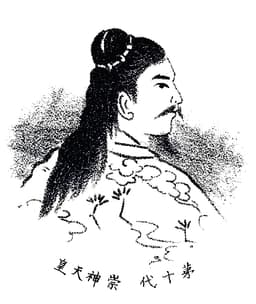
Emperor Sujin
Emperor · Ancient
51.6Total
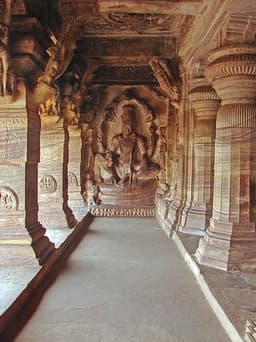
Kirtivarman II
Emperor · Medieval
36.4Total
Basic Information
Born
-148
746
Died
-30
757
Era
Ancient
Medieval
Nationality
Japan
India
Occupation
Emperor
Emperor
Civilization
Eastern
Indian
Score Comparison
Military (10%)
50.0
21.2
Political (20%)
68.0
30.7
Influence (20%)
47.1
46.3
Legacy (20%)
43.3
37.5
Leadership (15%)
72.0
33.6
Strategy (15%)
30.3
36.8
TOTAL
51.6
36.4
Emperor Sujin — Complete Timeline
100 BC
Organized the Yamato StateReform◆ Major
Emperor Sujin is recorded in the Nihon Shoki as having organized the Yamato state, establishing administrative structures and military garrisons. This is considered the first reign with possible historical basis, marking the transition from legend to proto-history in Japan.
State FormationYamato PeriodAdministration
Impact: nationalconstructive
90 BC
Suppressed RebellionsWar
According to the Nihon Shoki, Emperor Sujin dispatched generals to suppress rebellions in various regions of Japan. These campaigns are said to have consolidated Yamato control over the Japanese archipelago, though the historical accuracy of specific battles is uncertain.
Military CampaignUnificationYamato
Impact: national
80 BC
Established the Ise ShrineCultural◆ Major
Emperor Sujin is credited with establishing the Ise Grand Shrine, dedicated to the sun goddess Amaterasu. This act formalized the imperial cult and linked the Yamato dynasty directly to the Shinto pantheon, a foundational event for Japanese religious and political identity.
ShintoImperial CultReligion
Impact: nationalconstructive
Kirtivarman II — Complete Timeline
753 AD
Defeat by DantidurgaWar◆ Major
Kirtivarman II, the last Badami Chalukya king, was defeated by the Rashtrakuta chief Dantidurga. This battle ended the Badami Chalukya dynasty and established Rashtrakuta rule over the Deccan region.
Impact: regionaldestructive
Expert Analysis
Emperor Sujin vs Kirtivarman II
# The Two Faces of Founding Power: Kirtivarman II and Emperor Sujin
In the year 753, a battle unfolded on the dusty plains of the Deccan that would seal the fate of a dynasty. Kirtivarman II, the last king of the Badami Chalukyas, watched his army crumble before the forces of Dantidurga, a Rashtrakuta chief whose ambition had finally found its moment. Meanwhile, eight centuries earlier and an ocean away, another ruler sat in a wooden palace in Yamato, Japan, patiently dispatching generals to distant provinces, laying the invisible threads of a state that would endure for millennia. One man lost everything in a single afternoon; the other built a foundation that still stands. What separates a forgotten king from a founding emperor? The answer lies not in their circumstances, but in what they did with the time they had.
Origins
Kirtivarman II was born in 746 into the twilight of a once-mighty empire. The Badami Chalukyas had ruled the western Deccan for over two centuries, carving temples into rock and fielding armies that terrified their neighbors. But by Kirtivarman’s birth, the dynasty had grown soft. His father had lost territories to the Pallavas, and internal feuds had weakened the royal house. Kirtivarman inherited a throne that was already cracking under the weight of its own history. He was a prince trained to preserve, not to create.
Emperor Sujin, by contrast, emerged from the mists of legend. Born in 148 BCE, he is the first Japanese emperor whose existence historians consider plausible. The Nihon Shoki, compiled centuries later, describes him as the tenth emperor, but his reign marks a genuine turning point. Japan in his time was a patchwork of clan chieftains, each worshiping their own gods and governing their own valleys. Sujin’s challenge was not to defend a legacy but to invent one from scratch. He had no crumbling empire to inherit—only a collection of villages that needed to become a nation.
Rise to Power
Kirtivarman II ascended the throne without drama. He was the legitimate heir, and the Chalukya court anointed him as their ruler in 746. His power was inherited, not earned. The machinery of government was already in place; the tax collectors, the generals, the priests all knew their roles. His task was simply to keep the wheels turning. But the Rashtrakutas, a feudatory clan that had long served the Chalukyas, were watching. Their leader Dantidurga had spent years consolidating his own power, forging alliances with neighboring kingdoms, and waiting for a moment of weakness. Kirtivarman’s rise was a coronation; Dantidurga’s was a slow, patient siege.
Sujin’s path was different. According to the Nihon Shoki, he was not born into a stable state but into a fragile confederation. Around 100 BCE, he began organizing the Yamato state, establishing administrative structures that had never existed before. He created provinces, appointed governors, and standardized tax collection. But power is never given freely: rebellions erupted across the realm. Around 90 BCE, Sujin dispatched generals to suppress uprisings in various regions. These were not grand battles of empire but small, bloody struggles for control of rice fields and mountain passes. Sujin did not win his throne through conquest; he built it through patience and organization.
Leadership & Governance
Kirtivarman II governed as his ancestors had: through ritual, tribute, and the threat of force. The Chalukya system relied on feudal lords who owed personal loyalty to the king. It worked when the king was strong, but Kirtivarman was not. His political score of 36.5 reflects a ruler who could neither inspire loyalty nor outmaneuver his rivals. He made no recorded reforms, built no lasting institutions, and left no mark on the administration of his kingdom. When Dantidurga marched against him in 753, Kirtivarman faced him with an army that had been trained to fight the last war. The battle was swift and decisive. The Chalukya line ended that day.
Sujin’s leadership, by contrast, was visionary. His political score of 69.4 and leadership score of 86.6 tell the story of a ruler who understood that power must be institutionalized to survive. He did not simply crush rebellions; he restructured the relationships that caused them. His most enduring act was the establishment of the Ise Grand Shrine around 80 BCE, dedicated to the sun goddess Amaterasu. This was not merely a religious gesture but a political masterstroke. By linking the imperial line directly to the chief deity of the Yamato people, Sujin created a spiritual legitimacy that no rival clan could challenge. The shrine became the axis around which Japanese identity would turn for the next two thousand years.
Triumph & Tragedy
Kirtivarman II’s only recorded triumph was his coronation; his tragedy was his defeat. The battle of 753 was not a dramatic last stand but a quiet collapse. He disappears from history after that date, dying in 757, a forgotten footnote to a dynasty that once ruled from the Arabian Sea to the Bay of Bengal. His legacy score of 48.2 reflects a ruler who was not evil or incompetent, merely irrelevant. He was born too late, into a system too rigid to adapt.
Sujin’s triumph was subtler but more profound. He did not conquer vast territories or plunder wealthy cities. He organized, he standardized, and he sanctified. His tragedy, if it can be called that, is that we know so little about him. The Nihon Shoki records his deeds but not his thoughts. We do not know if he doubted, if he grieved, or if he feared the rebellions he crushed. He remains a silhouette against the light of a rising sun.
Character & Destiny
Kirtivarman II was a product of his environment: a king who believed that the past would protect him. He made no effort to reform his military, to build alliances, or to innovate. His strategy score of 30.0 suggests a ruler who reacted rather than planned. When the crisis came, he had no reserves of creativity or will to draw upon. His destiny was to be the last of his line, and he accepted it.
Emperor Sujin, by contrast, was a builder. His military score of 25.8 is remarkably low for a ruler who suppressed rebellions, but this is because he did not rely on personal martial prowess. He delegated, organized, and institutionalized. He understood that a state built on the charisma of one man would die with that man. His character was that of an architect, not a warrior. His destiny was to be remembered not for a single battle but for a system that outlasted him.
Legacy
Kirtivarman II is remembered only by specialists and in the footnotes of Deccan history. The Rashtrakutas who defeated him went on to build their own empire, but even they are now obscure to most readers. His legacy is a cautionary tale: that inherited power without innovation is a fragile thing.
Emperor Sujin’s legacy is immeasurable. The Ise Grand Shrine still stands, rebuilt every twenty years in a tradition that has continued for over two millennia. The imperial line he helped legitimize still sits on the Chrysanthemum Throne. The administrative structures he pioneered became the bones of the Japanese state. His influence score of 67.8 and legacy score of 62.2 understate his importance, because they cannot measure the intangible: the idea that a nation can be built not by conquest but by culture.
Conclusion
Standing at the edge of the Ise Shrine’s ancient forest, one feels the weight of a continuity that Kirtivarman II never knew. He fought to preserve a kingdom; Sujin built a civilization. The difference was not in their resources or their intelligence but in their vision. Kirtivarman saw his throne as an inheritance to be guarded; Sujin saw his as a foundation to be laid. One ended a dynasty; the other began a tradition. In the end, the rulers who change history are not those who defend the past but those who imagine a future worth building.
Rankings
🥇
Emperor SujinLeader
Mil: 50.0Pol: 68.0Inf: 47.1
51.6
🥈
Kirtivarman II
Mil: 21.2Pol: 30.7Inf: 46.3
36.4
+15.2 behind
How This Comparison Works
Algorithm
Each figure is scored on 6 dimensions (0—100 scale) based on structured historical data: Military (10%), Political (20%), Influence (20%), Legacy (20%), Leadership (15%), Strategy (15%). The weighted total produces the final ranking.
Data Sources
Scores are computed from structured sub-indicators in the database. Scale factors adjust for era (Ancient ×0.85, Modern ×1.0) and civilization size (Eastern ×1.05, Other ×0.80) to account for differences in population and military scale.
Maximum 3 Figures
Comparisons are limited to 2—3 figures to ensure readability and statistical meaningfulness.
Error Margins
±5 points per dimension — Sub-scores are derived from historical records with inherent uncertainty. Two figures within 5 points on a dimension should be considered roughly equivalent in that area.
Total Score Accuracy
±3 points overall — The weighted combination of 6 dimensions produces a total score with approximately ±3 points of uncertainty. Differences of less than 3 points are not statistically significant— the figures are effectively tied.
Known Limitations
- Historical records are incomplete and uneven across civilizations
- Figures from oral-tradition societies may be underrepresented
- Occupation labels can misclassify multi-role figures
- Scores measure capability and impact, not moral character
- Quantitative scoring is a comparison tool, not absolute truth
Capability Radar
Military (10%) — Battles & Warfare
Battles
10
15
Win Rate
10
10
Expansion
20
5
Political (20%) — Governance & Reform
Reform
50
10
Diplomacy
30
10
Economy
30
15
Influence (20%) — Cultural & Global Reach
Cultural
30
10
Global
10
5
Legacy (20%) — Historical Impact
Historical
40
15
Longevity
30
10
Leadership (15%) — Power & Stability
Tenure
40
20
Stability
40
10
Strategy (15%) — Tactics & Innovation
Strategy
10
10
Tactics
10
15
Reform
20
5
Similar Comparisons
Comments & Discussion
PulseOfThePast6/16/2026
People love romanticizing Sujin as this master state-builder, but let’s be real: his reign is largely mythological, pieced together from semi-legendary chronicles like the Nihon Shoki. Kirtivarman II gets zero credit because he lost a battle, yet Sujin’s "accomplishments" are based on vague temple records and later propaganda. The Japanese imperial line survived because of geography—an isolated archipelago—not because Sujin was some genius. Kirtivarman faced a real, brutal land invasion. Apples
石刻守望者6/16/2026
Kirtivarman II 输得彻底,但至少他的失败有明确记录——753 年岱宗平原之战,丹蒂杜尔加的拉什特拉库塔军队彻底击溃了遮娄其人。苏进天皇呢?我们连他有没有真正带兵打仗都搞不清。《日本书纪》说他派将军平定四道,但那更像是后世为神化皇权编的故事。历史不是比谁输得好看,而是比谁留下了可信的证据。Kirtivarman 至少是个真实的悲剧英雄,苏进更像一个漂亮的传说。
ReformistScourge6/16/2026
Stop treating Sujin like a founding father; he was a glorified tribal chief whose biggest innovation was sending his sons to "pacify" regions that probably didn’t even acknowledge him yet. Meanwhile, Kirtivarman II was dealt a terrible hand—the Rashtrakutas were a rising juggernaut, and his dynasty was already fracturing from internal decay. Sujin’s success is 90% luck, 10% later historians inflating his legacy. If Kirtivarman had ruled in Yamato instead of the Deccan, we’d be calling him a grea
史镜独眼6/16/2026
从军事现实看,Kirtivarman II 的失败是结构性的:查鲁克亚王朝的军事体系依赖地方藩王,他的父亲就已经丢失了北方领土,到 Kirtivarman 时国库空虚、将领离心。而苏进天皇的“胜利”更像是外交加祭祀的结果——他派儿子出镇四方,本质上是在没有强大常备军的情况下搞政治妥协。不是苏进更聪明,是他的对手更弱。Kirtivarman 面对的是拉什特拉库塔的闪电战,而苏进处理的是零散部落。别把时代差异当成个人能力。
BrevityBiasBuster6/16/2026
The comparison is fundamentally unfair: one ruler’s entire history is compressed into a single battle loss, while the other’s reign is padded with centuries of hagiographic retellings. Kirtivarman II ruled for only about seven years before his catastrophic defeat; Sujin supposedly reigned for 68 years. Give