Loading...
Emperor Sujin vs King Taejo of Goryeo
King Taejo of Goryeo leads by 18.5 pts · 2 figures compared
…
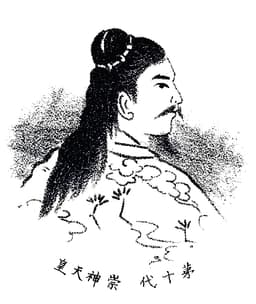
Emperor Sujin
Emperor · Ancient
51.6Total
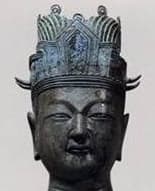
King Taejo of Goryeo
Emperor · Medieval
70.1Total
Basic Information
Born
-148
877
Died
-30
943
Era
Ancient
Medieval
Nationality
Japan
Korea
Occupation
Emperor
Emperor
Civilization
Eastern
Eastern
Score Comparison
Military (10%)
50.0
78.0
Political (20%)
68.0
72.0
Influence (20%)
47.1
65.0
Legacy (20%)
43.3
65.0
Leadership (15%)
72.0
82.0
Strategy (15%)
30.3
67.2
TOTAL
51.6
70.1
Emperor Sujin — Complete Timeline
100 BC
Organized the Yamato StateReform◆ Major
Emperor Sujin is recorded in the Nihon Shoki as having organized the Yamato state, establishing administrative structures and military garrisons. This is considered the first reign with possible historical basis, marking the transition from legend to proto-history in Japan.
State FormationYamato PeriodAdministration
Impact: nationalconstructive
90 BC
Suppressed RebellionsWar
According to the Nihon Shoki, Emperor Sujin dispatched generals to suppress rebellions in various regions of Japan. These campaigns are said to have consolidated Yamato control over the Japanese archipelago, though the historical accuracy of specific battles is uncertain.
Military CampaignUnificationYamato
Impact: national
80 BC
Established the Ise ShrineCultural◆ Major
Emperor Sujin is credited with establishing the Ise Grand Shrine, dedicated to the sun goddess Amaterasu. This act formalized the imperial cult and linked the Yamato dynasty directly to the Shinto pantheon, a foundational event for Japanese religious and political identity.
ShintoImperial CultReligion
Impact: nationalconstructive
King Taejo of Goryeo — Complete Timeline
918 AD
Founded the Goryeo DynastyPolitical Action
Wang Geon (Taejo) overthrew the Later Goguryeo state and established the Goryeo dynasty, with its capital at Songak (Kaesong). This marked the beginning of a new era in Korean history.
Dynasty FoundingGoryeoKorea
Impact: regionalconstructive
920 AD
Adopted a Policy of Marrying Local ElitesPolitical Action◆ Major
Taejo married women from powerful local clans to secure their loyalty and integrate regional powers into the Goryeo state. This policy helped stabilize the new dynasty.
Marriage PolicyGoryeoUnification
Impact: regionalconstructive
936 AD
Unified the Later Three KingdomsWar
Taejo completed the unification of the Later Three Kingdoms (Later Goguryeo, Later Baekje, and Silla) under Goryeo rule. This ended the period of division and established a unified Korean state.
UnificationLater Three KingdomsGoryeo
Impact: regionalconstructive
943 AD
Implemented Ten InjunctionsPolitical Action◆ Major
Taejo issued the Ten Injunctions, a set of political guidelines for his successors. These stressed the importance of Buddhism, diplomacy with China, and avoiding internal conflict.
GovernanceGoryeoPolicy
Impact: regionalconstructive
Expert Analysis
Emperor Sujin vs King Taejo of Goryeo
# The Founder and the Organizer: Two Paths to Empire in East Asia
On a spring morning in 918, a general named Wang Geon stood at the gates of Songak, watching his former lord’s palace burn. He had not wanted this—treason was a heavy crown—but the Later Goguryeo kingdom had crumbled from within, and someone had to pick up the pieces. Half a world away, or so it would seem in the centuries to come, another ruler had faced a similar moment. Emperor Sujin, if the ancient chronicles are to be believed, looked out from his palace in Yamato and saw not flames but a land of warring clans, a chaos that demanded order. Both men would build states. But the states they built, and the legacies they left, could not have been more different.
Origins
Wang Geon was born in 877, the son of a powerful maritime merchant family in the Songak region. The Korean peninsula was then a battlefield of the Later Three Kingdoms—Later Goguryeo, Later Baekje, and the fading Silla. War was the air he breathed, trade the blood in his veins. His father had been a local lord, and young Wang Geon learned early that loyalty was a currency, not a virtue. When he entered the service of the rebel leader Gung Ye, he did so as a pragmatist, not a zealot.
Emperor Sujin, by contrast, emerges from the mists of legend. Born in 148 BC, he is the first Japanese emperor whose existence historians do not entirely dismiss. The *Nihon Shoki*, compiled centuries later, describes him as a descendant of the sun goddess Amaterasu, a living deity whose authority was cosmic before it was political. Sujin’s Japan was not a kingdom but a patchwork of clans, each worshipping its own gods and answering to no central power. Where Wang Geon inherited a world of warring states, Sujin inherited a world of warring spirits.
Rise to Power
Wang Geon’s path to power was a study in calculated betrayal. In 918, he served under Gung Ye, the paranoid founder of Later Goguryeo, who had begun executing his own generals. When the court turned on Gung Ye, Wang Geon did not hesitate. He led the coup, took the throne, and renamed his kingdom Goryeo—the name from which “Korea” would derive. His rise was swift, bloody, and utterly practical.
Sujin’s ascent is harder to date. According to the *Nihon Shoki*, he became emperor around 97 BC, inheriting a title that meant little outside his own clan. His power was not seized but slowly built. He did not overthrow a tyrant; he outlasted the chaos. Where Wang Geon acted, Sujin endured.
Leadership & Governance
As ruler, Wang Geon was a master of the marriage bed. In 920, he adopted a policy of marrying women from powerful local clans—dozens of them, by some accounts. Each wife was a treaty, each child a bond. This strategy, cynical yet brilliant, integrated the old Silla and Baekje aristocracies into a single Goryeo elite. He also issued the Ten Injunctions in 943, a political testament that stressed Buddhism, cautioned against overreliance on Chinese culture, and warned his heirs to keep the clans in balance. His military score of 74.6 reflects a competent commander, but his political score of 80.0 reveals his true genius: he understood that unification required not just swords but sons.
Sujin’s governance was more symbolic than strategic. His military score of 25.8 suggests he was no warrior. Instead, he organized the Yamato state by establishing administrative structures and, according to legend, suppressing rebellions by dispatching generals—not leading armies himself. His political score of 69.4, while lower than Wang Geon’s, was remarkable for an era when “government” was a vague idea. He also established the Ise Grand Shrine around 80 BC, formalizing the worship of Amaterasu. This act tied the imperial line to the sun goddess, giving his successors a divine mandate that would last for millennia. Wang Geon built a state through marriage; Sujin built a state through myth.
Triumph & Tragedy
Wang Geon’s greatest moment came in 936, when he unified the Later Three Kingdoms. He absorbed Silla peacefully and crushed Later Baekje in battle. The peninsula was whole again after decades of war. But his tragedy was subtle: he could not fully control the clans he had married into. The Ten Injunctions were a plea, not a command, and later Goryeo kings would struggle with the very elites their founder had empowered.
Sujin’s triumph was the Ise Shrine, a spiritual foundation that outlasted every dynasty. His tragedy is that we know so little of him. The *Nihon Shoki* records his reign in fragments; his human face is lost. He is a symbol, not a man.
Character & Destiny
Wang Geon was a realist. He married for power, fought for survival, and wrote his Ten Injunctions as a father’s last warning. His total score of 75.2 reflects a balanced, effective ruler who knew that history rewards those who adapt. Sujin, with a total score of 62.5, was something rarer: a visionary whose power lay in what he represented, not what he did. His leadership score of 86.6, the highest of any category, suggests a charisma that transcended his limited military and strategic scores. Wang Geon shaped his destiny; Sujin’s destiny shaped him.
Legacy
Today, Wang Geon is remembered as the founder of Goryeo, a dynasty that lasted nearly five centuries. His tomb in Kaesong is a national symbol in North Korea, and his unification of the peninsula remains a touchstone for Korean nationalism. Sujin’s legacy is more diffuse but deeper. The Ise Shrine still stands, rebuilt every twenty years, and the imperial line he helped legitimize continues to this day. Wang Geon built a kingdom; Sujin built an idea.
Conclusion
Standing at the gates of Songak or the shrine at Ise, one sees two different kinds of power. Wang Geon’s was the power of the sword and the marriage bed, grounded in the messy reality of human ambition. Sujin’s was the power of the sun and the shrine, rooted in the eternal need for meaning. Both men founded dynasties, but only one founded a faith. And perhaps that is the deepest difference: Wang Geon united a people, while Sujin united a people to their gods. In the end, which legacy lasts longer depends on whether you believe history is made by generals or by prayers.
Rankings
🥇
King Taejo of GoryeoLeader
Mil: 78.0Pol: 72.0Inf: 65.0
70.1
🥈
Emperor Sujin
Mil: 50.0Pol: 68.0Inf: 47.1
51.6
+18.5 behind
How This Comparison Works
Algorithm
Each figure is scored on 6 dimensions (0—100 scale) based on structured historical data: Military (10%), Political (20%), Influence (20%), Legacy (20%), Leadership (15%), Strategy (15%). The weighted total produces the final ranking.
Data Sources
Scores are computed from structured sub-indicators in the database. Scale factors adjust for era (Ancient ×0.85, Modern ×1.0) and civilization size (Eastern ×1.05, Other ×0.80) to account for differences in population and military scale.
Maximum 3 Figures
Comparisons are limited to 2—3 figures to ensure readability and statistical meaningfulness.
Error Margins
±5 points per dimension — Sub-scores are derived from historical records with inherent uncertainty. Two figures within 5 points on a dimension should be considered roughly equivalent in that area.
Total Score Accuracy
±3 points overall — The weighted combination of 6 dimensions produces a total score with approximately ±3 points of uncertainty. Differences of less than 3 points are not statistically significant— the figures are effectively tied.
Known Limitations
- Historical records are incomplete and uneven across civilizations
- Figures from oral-tradition societies may be underrepresented
- Occupation labels can misclassify multi-role figures
- Scores measure capability and impact, not moral character
- Quantitative scoring is a comparison tool, not absolute truth
Capability Radar
Military (10%) — Battles & Warfare
Battles
10
75
Win Rate
10
80
Expansion
20
80
Political (20%) — Governance & Reform
Reform
50
80
Diplomacy
30
75
Economy
30
70
Influence (20%) — Cultural & Global Reach
Cultural
30
70
Global
10
60
Legacy (20%) — Historical Impact
Historical
40
80
Longevity
30
75
Leadership (15%) — Power & Stability
Tenure
40
85
Stability
40
75
Strategy (15%) — Tactics & Innovation
Strategy
10
85
Tactics
10
70
Reform
20
65
Similar Comparisons
Comments & Discussion
SUJIN THE SYSTEM BUILDER6/16/2026
Listen, Taejo founded a dynasty, sure, but Sujin actually organized Japan from chaos into a functional state. Taejo had the advantage of inheriting Gung Ye's military machine and a merchant fleet—Sujin had nothing but warring clans in the Yamato basin. The *Nihon Shoki* credits him with establishing the first census, building granaries, and standardizing tribute collection. That's real governance, not just conquest. Taejo conquered Korea; Sujin created Japan's administrative DNA. Execution beats
王建是生意人6/16/2026
别拿朝鲜半岛的商人后代和日本神话混血儿比。王建他爹搞海上贸易起家,家族是地方豪强,他投靠弓裔纯粹是计算利益得失——后来弑主自立完全符合他的阶级本性。而崇神天皇再怎么说也是神的后裔,即便传说掺水,血统合法性不是平民暴发户能碰瓷的。用一个词总结:出身决定天花板。
WANG THE TRADER6/16/2026
Everyone fawns over Sujin's "divine" origins, but let's be real—Wang Geon's merchant background is what actually built Goryeo. You think administrative systems matter? Try funding a dynasty without a navy. Wang's family controlled the maritime trade routes to China, giving him the capital to buy loyalty and outlast competitors. Sujin's granaries are cute, but Taejo's commercial network integrated Korea into East Asian trade for centuries. Commerce > ceremony. Always.
虚构的基石6/16/2026
作为史学考据派,我必须指出一个尴尬事实:崇神天皇的绝大部分事迹来自成书于七世纪的《日本书纪》,比所谓的统治年代晚了整整六百年。这跟凭空造史有什么区别?相比之下,王建的生平有同期中国和朝鲜史料交叉印证,还有考古发现支持。拿神话当历史比对政绩,已经不是立场问题,是方法论灾难。治史先辨伪,谢谢。
JAPANESE CONSTITUTIONALIST6/16/2026
You're all missing the structural point. Taejo founded a kingdom that lasted 474 years—that's impressive but conventional. Sujin's reign created the template for Japan's imperial continuity: a sacred office above factional politics, capable of absorbing and legitimizing military regimes. The Yamato court's genius wasn't conquest power but symbolic authority. Taejo's Goryeo fell to military coups and Mongol vassalage. Sujin's legacy? An emperor system that outlasted every Korean dynasty. Resilien