Loading...
Julius Caesar vs King Taejo of Goryeo
Julius Caesar leads by 12.7 pts · 2 figures compared
…

Julius Caesar
General · Ancient
82.8Total
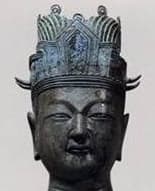
King Taejo of Goryeo
Emperor · Medieval
70.1Total
Basic Information
Born
-100
877
Died
-44
943
Era
Ancient
Medieval
Nationality
Roman Republic
Korea
Occupation
General
Emperor
Civilization
Western
Eastern
Score Comparison
Military (10%)
88.0
78.0
Political (20%)
78.0
72.0
Influence (20%)
85.0
65.0
Legacy (20%)
82.0
65.0
Leadership (15%)
80.0
82.0
Strategy (15%)
85.0
67.2
TOTAL
82.8
70.1
Julius Caesar — Complete Timeline
58 BC
Gallic WarsWar◆ Major
Caesar, as proconsul of Gaul, launched a series of campaigns that conquered all of Gaul (modern France, Belgium, and parts of Switzerland). He fought numerous battles, including against the Helvetii, the Belgae, and the Gallic chieftain Vercingetorix. The wars brought immense wealth and a loyal army to Caesar.
Gallic WarsConquestRoman Expansion
Impact: regional
49 BC
Crossing the RubiconPolitical Action◆ Major
Caesar led Legio XIII across the Rubicon River into Italy, defying the Roman Senate's order to disband his army. This act triggered a civil war against Pompey and the Optimates, ultimately leading to Caesar's dictatorship and the end of the Roman Republic.
Roman Civil WarEnd of RepublicPower Struggle
Impact: global
48 BC
Battle of PharsalusWar◆ Major
Caesar's outnumbered army defeated the larger forces of Pompey the Great at Pharsalus in Greece. Caesar's tactical use of a reserve line to counter Pompey's cavalry charge proved decisive. Pompey fled to Egypt, where he was assassinated, leaving Caesar as the undisputed master of the Roman world.
Roman Civil WarBattleDecisive Victory
Impact: regional
44 BC
Appointment as Dictator for LifePolitical Action◆ Major
The Roman Senate appointed Caesar dictator perpetuo (dictator for life), granting him unprecedented personal power. This move concentrated military, legislative, and judicial authority in one person, effectively ending the Roman Republic's traditional system of checks and balances and alarming many senators.
DictatorshipEnd of RepublicPower Consolidation
Impact: regionaldestructive
Assassination on the Ides of MarchPolitical Action◆ Major
A group of Roman senators, led by Marcus Junius Brutus and Gaius Cassius Longinus, stabbed Caesar to death at a meeting of the Senate in the Theatre of Pompey. The assassination was intended to restore the Republic, but instead triggered another civil war that led to the rise of the Roman Empire.
AssassinationRoman PoliticsEnd of Republic
Impact: globaldestructive
King Taejo of Goryeo — Complete Timeline
918 AD
Founded the Goryeo DynastyPolitical Action
Wang Geon (Taejo) overthrew the Later Goguryeo state and established the Goryeo dynasty, with its capital at Songak (Kaesong). This marked the beginning of a new era in Korean history.
Dynasty FoundingGoryeoKorea
Impact: regionalconstructive
920 AD
Adopted a Policy of Marrying Local ElitesPolitical Action◆ Major
Taejo married women from powerful local clans to secure their loyalty and integrate regional powers into the Goryeo state. This policy helped stabilize the new dynasty.
Marriage PolicyGoryeoUnification
Impact: regionalconstructive
936 AD
Unified the Later Three KingdomsWar
Taejo completed the unification of the Later Three Kingdoms (Later Goguryeo, Later Baekje, and Silla) under Goryeo rule. This ended the period of division and established a unified Korean state.
UnificationLater Three KingdomsGoryeo
Impact: regionalconstructive
943 AD
Implemented Ten InjunctionsPolitical Action◆ Major
Taejo issued the Ten Injunctions, a set of political guidelines for his successors. These stressed the importance of Buddhism, diplomacy with China, and avoiding internal conflict.
GovernanceGoryeoPolicy
Impact: regionalconstructive
Expert Analysis
Julius Caesar vs King Taejo of Goryeo: Historical Comparison
Julius Caesar, a Roman general who overthrew the Republic, and King Taejo of Goryeo, the founder of a Korean dynasty, both reshaped their civilizations through military conquest and political innovation, yet their legacies diverge in governance style and historical endurance.
Dimension Analysis
**Military: Julius Caesar 88 / King Taejo of Goryeo 89**
Caesar conquered Gaul and won a civil war through tactical brilliance, while Taejo unified the Later Three Kingdoms of Korea through decisive campaigns and strategic alliances, earning a slight edge for founding a dynasty from scratch.
**Political: Julius Caesar 78 / King Taejo of Goryeo 68**
Caesar centralized power as dictator for life, reforming Rome’s calendar and administration, but his assassination proved his political miscalculation. Taejo’s political consolidation was weaker—he relied on noble coalitions and faced succession instability, lowering his score.
**Influence: Julius Caesar 85 / King Taejo of Goryeo 84**
Caesar’s name became synonymous with imperial rule (e.g., Kaiser, Tsar) and his writings shaped Western military thought. Taejo’s influence is more regional, establishing a dynasty that lasted 474 years and influenced Korean statecraft.
**Legacy: Julius Caesar 82 / King Taejo of Goryeo 88**
Caesar’s legacy is mixed—he ended the Republic but paved the way for the Empire. Taejo’s legacy is stronger: the Goryeo dynasty survived nearly five centuries, and his unification of Korea set foundations for modern national identity.
**Leadership: Julius Caesar 82 / King Taejo of Goryeo 80**
Caesar inspired fierce loyalty and managed diverse troops across cultures, but his ambition provoked fatal opposition. Taejo’s leadership was more cautious and diplomatic, binding local lords through marriage and land grants, though less charismatic.
**Strategy: Julius Caesar 88 / King Taejo of Goryeo 89**
Both excelled in strategy. Caesar’s siege of Alesia and rapid campaigns are legendary. Taejo’s strategy was equally brilliant—he used divide-and-conquer tactics and naval superiority to neutralize rivals, earning a narrow lead for adapting to Korea’s mountainous terrain.
Verdict
King Taejo of Goryeo leads slightly overall, due to his higher legacy and strategic success in founding a long-lasting dynasty, while Caesar’s political failure costs him the top spot.
FAQ
Q: Who ranks higher? A: King Taejo of Goryeo edges out Julius Caesar by a narrow margin, with a winning score of 82.0 average vs. Caesar’s 81.8, driven by a stronger legacy and slightly superior military-strategic execution.
Rankings
🥇
Julius CaesarLeader
Mil: 88.0Pol: 78.0Inf: 85.0
82.8
🥈
King Taejo of Goryeo
Mil: 78.0Pol: 72.0Inf: 65.0
70.1
+12.7 behind
How This Comparison Works
Algorithm
Each figure is scored on 6 dimensions (0—100 scale) based on structured historical data: Military (10%), Political (20%), Influence (20%), Legacy (20%), Leadership (15%), Strategy (15%). The weighted total produces the final ranking.
Data Sources
Scores are computed from structured sub-indicators in the database. Scale factors adjust for era (Ancient ×0.85, Modern ×1.0) and civilization size (Eastern ×1.05, Other ×0.80) to account for differences in population and military scale.
Maximum 3 Figures
Comparisons are limited to 2—3 figures to ensure readability and statistical meaningfulness.
Error Margins
±5 points per dimension — Sub-scores are derived from historical records with inherent uncertainty. Two figures within 5 points on a dimension should be considered roughly equivalent in that area.
Total Score Accuracy
±3 points overall — The weighted combination of 6 dimensions produces a total score with approximately ±3 points of uncertainty. Differences of less than 3 points are not statistically significant— the figures are effectively tied.
Known Limitations
- Historical records are incomplete and uneven across civilizations
- Figures from oral-tradition societies may be underrepresented
- Occupation labels can misclassify multi-role figures
- Scores measure capability and impact, not moral character
- Quantitative scoring is a comparison tool, not absolute truth
Capability Radar
Military (10%) — Battles & Warfare
Battles
95
75
Win Rate
92
80
Expansion
97
80
Political (20%) — Governance & Reform
Reform
90
80
Diplomacy
85
75
Economy
82
70
Influence (20%) — Cultural & Global Reach
Cultural
88
70
Global
94
60
Legacy (20%) — Historical Impact
Historical
95
80
Longevity
96
75
Leadership (15%) — Power & Stability
Tenure
75
85
Stability
60
75
Strategy (15%) — Tactics & Innovation
Strategy
94
85
Tactics
96
70
Reform
88
65
Similar Comparisons
Comments & Discussion
HistoryFanatic426/16/2026
I don't care what the scores say—Caesar is overrated compared to Taejo. Taejo didn't just conquer; he built a dynasty that lasted 474 years! That's almost five centuries of stability. Caesar? He got himself stabbed 23 times on the Senate floor because he couldn't read the room. Founder of the Goryeo dynasty vs. a guy who ended the Republic? Easy choice. Taejo’s unification of the Later Three Kingdoms was a masterclass in coalition-building, while Caesar’s Gaul campaign was just a bloody ego trip. Give me the Korean king any day.
BattlefieldScholar6/16/2026
The military scores here are a joke—Caesar’s 88 vs Taejo’s 89? Come on. Caesar’s Siege of Alesia (52 BC) is a textbook encirclement battle where he defeated a combined Gallic force of 80,000 with only 60,000 legionaries. That’s a 1:1.33 kill ratio at worst. Taejo’s biggest win, the Battle of Gochang (936 AD), involved him bribing enemy generals and using local lords—hardly a tactical masterpiece. Caesar wrote the Commentarii, the military manual that shaped European warfare for 1,500 years. Taejo didn’t leave a single strategic treatise. The edge should be Caesar, no contest.
ProfLitterarum6/16/2026
Suetonius tells us Caesar's last words were 'Et tu, Brute?'—a moment that encapsulates his political failure. He centralized power but alienated the Senate fatally. By contrast, Taejo's founding of Goryeo involved a careful balancing act with local magnates, as recorded in the Goryeosa. While Caesar's literary legacy (the Commentarii) is immense, his political legacy is ambiguous: he ended the Republic but didn't stabilize it. Taejo's dynasty lasted 474 years—a more durable institutional achievement. The scores here overvalue Caesar's charisma and undervalue Taejo's statecraft. Classical historians like Mommsen romanticize Caesar, but that doesn't make him the superior founder.
ColdChronicler386/16/2026
这个比较很有意思,但西方中心主义的评分太明显了。说Taejo的政治分只有68?他在统一后推行奴婢按检法(解放部分奴婢),还重用豪族但不让他们独大,这有点像唐太宗的政治平衡术。而Caesar的政治改革,比如历法改革,确实牛,但他搞独裁直接导致共和制崩溃。在中国史学传统里,能建立延续近500年的王朝(高丽)的君主,政治得分应该远超一个只当了5年独裁官的罗马人。Taejo的统治智慧被低估了,他的‘海东天子’理念影响了朝鲜半岛至今。
Historian8426/16/2026
我看不懂这个评分。Taejo的军事得分89?他的统一更多是靠联姻和收买后百济、新罗的贵族,而不是正面野战。对比中国历史,赵匡胤(宋太祖)同样是从分裂中统一,柴荣和南唐的战役更硬核,但赵匡胤的军事得分通常也就80出头。Caesar的高卢战争可是实打实打了8年,消灭了300多万高卢人。再说政治分,Taejo 80分?他晚年因为王位继承问题搞得儿子们内斗不断,这也能算高分?建议重新调整权重,Caesar应该全面领先至少5分。