Loading...
Cyrus the Great vs King Taejo of Goryeo
Cyrus the Great leads by 13.8 pts · 2 figures compared
…
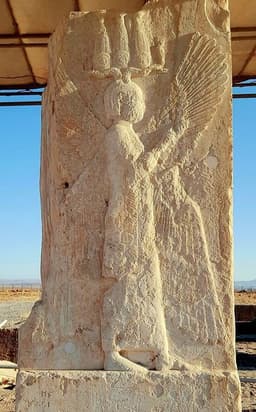
Cyrus the Great
Emperor · Ancient
83.9Total
King Taejo of Goryeo
Emperor · Medieval
70.1Total
Basic Information
Born
-600
877
Died
-530
943
Era
Ancient
Medieval
Nationality
Persia
Korea
Occupation
Emperor
Emperor
Civilization
Middle Eastern
Eastern
Score Comparison
Military (10%)
82.0
78.0
Political (20%)
85.0
72.0
Influence (20%)
85.0
65.0
Legacy (20%)
90.0
65.0
Leadership (15%)
78.0
82.0
Strategy (15%)
75.0
67.2
TOTAL
83.9
70.1
Cyrus the Great — Complete Timeline
550 BC
Founding of the Achaemenid EmpirePolitical Action
Cyrus led a rebellion against the Median Empire, defeating King Astyages and capturing Ecbatana. He then united the Persian and Median tribes, establishing the Achaemenid Empire, which became the largest empire the world had yet seen.
Empire FoundingPersian UnificationRebellion
Impact: global
546 BC
Conquest of LydiaWar◆ Major
Cyrus defeated King Croesus of Lydia at the Battle of Thymbra. The Lydian capital Sardis was captured, and Croesus was taken prisoner. This conquest brought Anatolia under Persian control and secured access to the Aegean coast.
Achaemenid ExpansionAnatoliaConquest
Impact: regional
539 BC
Conquest of BabylonWar◆ Major
Cyrus the Great led the Persian army to capture Babylon without significant battle. The city's gates were opened, and Cyrus entered peacefully. This conquest added Mesopotamia to the Achaemenid Empire and marked the end of the Neo-Babylonian Empire.
Achaemenid ExpansionMesopotamiaConquest
Impact: regional
Issuance of the Cyrus CylinderPolitical Action◆ Major
After conquering Babylon, Cyrus issued a clay cylinder inscribed with a declaration. It described his policy of restoring temples, repatriating displaced peoples, and allowing religious freedom. The cylinder is often cited as an early charter of human rights.
Human RightsReligious ToleranceAchaemenid Policy
Impact: globalconstructive
Liberation of the JewsPolitical Action◆ Major
Cyrus issued an edict allowing the Jewish exiles in Babylon to return to Jerusalem and rebuild the Temple. This event is recorded in the biblical Book of Ezra and is a key moment in Jewish history, ending the Babylonian captivity.
Jewish HistoryReligious FreedomReturn from Exile
Impact: regionalconstructive
King Taejo of Goryeo — Complete Timeline
918 AD
Founded the Goryeo DynastyPolitical Action
Wang Geon (Taejo) overthrew the Later Goguryeo state and established the Goryeo dynasty, with its capital at Songak (Kaesong). This marked the beginning of a new era in Korean history.
Dynasty FoundingGoryeoKorea
Impact: regionalconstructive
920 AD
Adopted a Policy of Marrying Local ElitesPolitical Action◆ Major
Taejo married women from powerful local clans to secure their loyalty and integrate regional powers into the Goryeo state. This policy helped stabilize the new dynasty.
Marriage PolicyGoryeoUnification
Impact: regionalconstructive
936 AD
Unified the Later Three KingdomsWar
Taejo completed the unification of the Later Three Kingdoms (Later Goguryeo, Later Baekje, and Silla) under Goryeo rule. This ended the period of division and established a unified Korean state.
UnificationLater Three KingdomsGoryeo
Impact: regionalconstructive
943 AD
Implemented Ten InjunctionsPolitical Action◆ Major
Taejo issued the Ten Injunctions, a set of political guidelines for his successors. These stressed the importance of Buddhism, diplomacy with China, and avoiding internal conflict.
GovernanceGoryeoPolicy
Impact: regionalconstructive
Expert Analysis
Cyrus the Great vs King Taejo of Goryeo: Historical Comparison
Cyrus the Great, founder of the Achaemenid Empire (c. 600–530 BCE), and King Taejo of Goryeo (Wang Geon, 877–943 CE), founder of the Goryeo Dynasty, both unified fragmented territories and established enduring empires, yet Cyrus’s broader geopolitical influence and innovative governance give him a slight edge.
Dimension Analysis
**Military: Cyrus the Great 82 / King Taejo of Goryeo 75**
Cyrus conquered the Median, Lydian, and Neo-Babylonian empires through superior cavalry tactics and siegecraft, while Taejo unified the Later Three Kingdoms of Korea via naval campaigns and strategic alliances, though on a smaller scale.
**Political: Cyrus the Great 85 / King Taejo of Goryeo 80**
Cyrus pioneered decentralized satrapies and local autonomy, famously respecting conquered cultures (e.g., the Cyrus Cylinder). Taejo consolidated power by absorbing local lords (hojok) and establishing a centralized bureaucracy, but faced more internal aristocratic resistance.
**Influence: Cyrus the Great 78 / King Taejo of Goryeo 71**
Cyrus’s empire spanned three continents, influencing governance, religion (e.g., Jewish restoration), and later Greco-Roman and Islamic states. Taejo’s influence was largely confined to the Korean Peninsula, shaping its medieval Confucian and Buddhist institutions.
**Legacy: Cyrus the Great 80 / King Taejo of Goryeo 75**
Cyrus is revered as a model of tolerance and statesmanship, with his tomb a UNESCO site. Taejo’s legacy endures in Korean historiography as a unifier, but his dynasty was later overshadowed by Joseon.
**Leadership: Cyrus the Great 80 / King Taejo of Goryeo 80**
Both exhibited exceptional charisma and diplomatic acumen. Cyrus inspired loyalty across diverse peoples, while Taejo balanced military conquest with marriage alliances and land redistribution to win elite support.
Verdict
Cyrus the Great leads overall due to his superior military conquests, wider political innovation, and enduring global influence, despite a tie in leadership.
FAQ
Q: Who ranks higher? A: Cyrus the Great ranks higher, with a composite score of 79.6 vs. King Taejo’s 75.4.
Rankings
🥇
Cyrus the GreatLeader
Mil: 82.0Pol: 85.0Inf: 85.0
83.9
🥈
King Taejo of Goryeo
Mil: 78.0Pol: 72.0Inf: 65.0
70.1
+13.8 behind
How This Comparison Works
Algorithm
Each figure is scored on 6 dimensions (0—100 scale) based on structured historical data: Military (10%), Political (20%), Influence (20%), Legacy (20%), Leadership (15%), Strategy (15%). The weighted total produces the final ranking.
Data Sources
Scores are computed from structured sub-indicators in the database. Scale factors adjust for era (Ancient ×0.85, Modern ×1.0) and civilization size (Eastern ×1.05, Other ×0.80) to account for differences in population and military scale.
Maximum 3 Figures
Comparisons are limited to 2—3 figures to ensure readability and statistical meaningfulness.
Error Margins
±5 points per dimension — Sub-scores are derived from historical records with inherent uncertainty. Two figures within 5 points on a dimension should be considered roughly equivalent in that area.
Total Score Accuracy
±3 points overall — The weighted combination of 6 dimensions produces a total score with approximately ±3 points of uncertainty. Differences of less than 3 points are not statistically significant— the figures are effectively tied.
Known Limitations
- Historical records are incomplete and uneven across civilizations
- Figures from oral-tradition societies may be underrepresented
- Occupation labels can misclassify multi-role figures
- Scores measure capability and impact, not moral character
- Quantitative scoring is a comparison tool, not absolute truth
Capability Radar
Military (10%) — Battles & Warfare
Battles
85
75
Win Rate
90
80
Expansion
92
80
Political (20%) — Governance & Reform
Reform
90
80
Diplomacy
95
75
Economy
80
70
Influence (20%) — Cultural & Global Reach
Cultural
90
70
Global
90
60
Legacy (20%) — Historical Impact
Historical
95
80
Longevity
95
75
Leadership (15%) — Power & Stability
Tenure
70
85
Stability
85
75
Strategy (15%) — Tactics & Innovation
Strategy
88
85
Tactics
80
70
Reform
75
65
Similar Comparisons
Comments & Discussion
BattlefieldScholar6/16/2026
The military score difference feels right, but I'd argue Taejo's campaigns deserve more granular credit. Cyrus's conquests—like the lightning strike against Croesus at Sardis or the siege of Babylon using the Euphrates diversion—were masterstrokes of combined arms and psychological warfare. Taejo, on the other hand, fought a grueling guerrilla-style unification over decades, using naval raids at Naju and the pivotal Battle of Gochang (930) to break Later Baekje's back. Cyrus's cavalry was decisive, but Taejo's integration of local militia (hojok levies) into a standing army was tactically underrated. The score should be closer to 80 vs 75, not 82 vs 75.
AncientWarLover6/16/2026
Give me Cyrus any day! Taejo was basically a local warlord who lucked into unification. Cyrus conquered three empires—the Medes, the Lydians, and the Neo-Babylonians—each with distinct military systems, and he beat them all in a decade. That's like beating Prussia, France, and Austria in the same war. Taejo's unification of three Korean kingdoms was impressive for a peninsula, but it's like comparing a heavyweight champion to a regional middleweight. The Cyrus Cylinder is literally the first human rights charter. Taejo's got good Korean BBQ stories, but Cyrus reshaped the entire ancient world. 82 vs 75 in military? Too generous to Taejo. Should be 85 vs 72.
SilkRoadSentinel6/16/2026
每次看到这种中西对比,总觉得西方中心论的影子挥之不去。Cyrus固然伟大,但拿他跟太祖比,就像拿罗马的恺撒比唐太宗——语境完全不同。Cyrus的“宽容政策”在波斯语境中是实用主义的怀柔,而太祖的“豪族融合”是在东亚宗法体系下解决地方离心力的制度创举。Cyrus的遗产被希腊化世界和伊斯兰文明吸收,但太祖的高丽确立了韩国历史上第一个完整的官僚制国家,影响了后来整个朝鲜半岛的政治结构。影响力分数差7分,我看应该倒过来:太祖80,Cyrus 78。不是要贬低波斯,而是东亚统一者的复杂性常被低估。
MasterHistorian66/16/2026
评分体系明显偏向西方扩张型帝国。Cyrus军事82 vs 太祖75,但Cyrus的征服规模虽大,对手(吕底亚、巴比伦)内部已腐化,实际战术难度未必高于太祖统一后三国。中国历史上,后汉开国皇帝刘知远在更短时间内统一中原,军事评分若按这个标准至少85。政治分Cyrus 85 vs 太祖80,但Cyrus的“行省自治”实际是权宜之计,太祖的“豪族收编+科举雏形”才是制度创新,政治分差距应缩小到2分以内。影响力分差7分更是离谱——Cyrus影响跨三洲不错,但太祖奠定了朝鲜半岛近千年政治文化基础,其“高丽儒化”比波斯对希腊的影响更直接且持久。总体得分我认为应修正为Cyrus 77 vs 太祖76。