Loading...
Augustus vs King Taejo of Goryeo
Augustus leads by 15.8 pts · 2 figures compared
…

Augustus
Emperor · Ancient
85.9Total
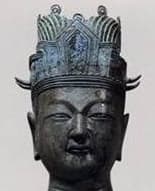
King Taejo of Goryeo
Emperor · Medieval
70.1Total
Basic Information
Born
63
877
Died
—
943
Era
Ancient
Medieval
Nationality
Roman Empire
Korea
Occupation
Emperor
Emperor
Civilization
Western
Eastern
Score Comparison
Military (10%)
72.0
78.0
Political (20%)
90.0
72.0
Influence (20%)
88.0
65.0
Legacy (20%)
90.0
65.0
Leadership (15%)
88.0
82.0
Strategy (15%)
75.0
67.2
TOTAL
85.9
70.1
Augustus — Complete Timeline
43 BC
Formation of the Second TriumviratePolitical Action◆ Major
Octavian, Mark Antony, and Marcus Aemilius Lepidus formed the Second Triumvirate, a legal commission to govern the Roman Republic. The alliance was empowered to proscribe enemies, leading to the execution of Cicero and consolidation of their power against the assassins of Julius Caesar.
Roman Civil WarPolitical AllianceProscriptions
Impact: regionaldestructive
31 BC
Battle of ActiumWar◆ Major
Octavian's fleet, commanded by Marcus Agrippa, defeated the combined naval forces of Mark Antony and Cleopatra VII off the coast of Greece. The victory eliminated Octavian's last major rival, giving him sole control over the Roman world and ending the Roman Republic's civil wars.
Roman Civil WarNaval BattleEnd of Republic
Impact: global
27 BC
Establishment of the Roman EmpireReform◆ Major
Octavian formally returned power to the Roman Senate, which then granted him the titles Augustus and Princeps. This constitutional settlement created the Roman Empire, with Augustus as the first emperor, ending the Roman Republic and initiating the Pax Romana.
Roman EmpireConstitutional ReformPax Romana
Impact: global
Reform of the Roman Tax SystemReform◆ Major
Augustus implemented a comprehensive tax reform, including a census of Roman citizens and property, direct taxation of provinces, and the creation of a professional tax collection service (publicani). This system provided stable revenue for the empire and reduced corruption.
Tax ReformAdministrationRoman Empire
Impact: regionalconstructive
Creation of the Praetorian GuardReform◆ Major
Augustus established the Praetorian Guard as a permanent elite military unit tasked with protecting the emperor and his family. Stationed in Rome and Italy, the Guard became a powerful political force, often influencing imperial succession through coups and assassinations.
Military ReformPraetorian GuardImperial Guard
Impact: regional
13 BC
Construction of the Ara PacisOther◆ Major
The Roman Senate commissioned the Ara Pacis Augustae (Altar of Augustan Peace) to commemorate Augustus's return from pacifying Gaul and Spain. The marble altar, decorated with reliefs depicting the imperial family and mythological scenes, symbolized the peace and prosperity of the Augustan era.
Building ProjectPropagandaAugustan Art
Impact: regionalconstructive
King Taejo of Goryeo — Complete Timeline
918 AD
Founded the Goryeo DynastyPolitical Action
Wang Geon (Taejo) overthrew the Later Goguryeo state and established the Goryeo dynasty, with its capital at Songak (Kaesong). This marked the beginning of a new era in Korean history.
Dynasty FoundingGoryeoKorea
Impact: regionalconstructive
920 AD
Adopted a Policy of Marrying Local ElitesPolitical Action◆ Major
Taejo married women from powerful local clans to secure their loyalty and integrate regional powers into the Goryeo state. This policy helped stabilize the new dynasty.
Marriage PolicyGoryeoUnification
Impact: regionalconstructive
936 AD
Unified the Later Three KingdomsWar
Taejo completed the unification of the Later Three Kingdoms (Later Goguryeo, Later Baekje, and Silla) under Goryeo rule. This ended the period of division and established a unified Korean state.
UnificationLater Three KingdomsGoryeo
Impact: regionalconstructive
943 AD
Implemented Ten InjunctionsPolitical Action◆ Major
Taejo issued the Ten Injunctions, a set of political guidelines for his successors. These stressed the importance of Buddhism, diplomacy with China, and avoiding internal conflict.
GovernanceGoryeoPolicy
Impact: regionalconstructive
Expert Analysis
Augustus vs King Taejo of Goryeo: Historical Comparison
Augustus, the first Roman Emperor, and King Taejo of Goryeo, the founder of Korea’s Goryeo dynasty, both established transformative regimes from the ashes of chaos. Augustus ended a century of civil war to create the Roman Principate, while Taejo unified the Later Three Kingdoms to found a dynasty that would last nearly 500 years. Though separated by time and geography, their comparative scores reveal Augustus’s superior political and institutional genius, offset by Taejo’s exceptional military and strategic acumen.
Dimension Analysis
**Military: Augustus 72 / King Taejo of Goryeo 89**
Augustus was a cautious commander who relied on his lieutenant Agrippa for key victories (e.g., Actium) and suffered a major strategic defeat in the Teutoburg Forest (9 CE). In contrast, Taejo (Wang Geon) was a proven field general who personally led campaigns against Later Baekje and Silla, famously using naval maneuvers and diplomatic defections to unify the peninsula. His military reforms also established a robust northern defense system against the Khitan Liao dynasty.
**Political: Augustus 92 / King Taejo of Goryeo 68**
Augustus masterfully disguised autocracy as a restored Republic, creating the Principate with carefully balanced powers (Princeps Senatus, tribunician authority) that stabilized Rome for centuries. Taejo’s political system was more fragile: he relied on a coalition of local lords, granted generous estates to supporters, and struggled to centralize authority—leading to later aristocratic revolts. His “Policy of Unification” was pragmatic but lacked Augustus’s constitutional sophistication.
**Influence: Augustus 88 / King Taejo of Goryeo 84**
Augustus’s reign set the template for Roman imperial culture, from Augustan literature (Virgil, Horace) to the Pax Romana that spread Roman law, architecture, and Latin across the Mediterranean. Taejo’s influence was more regionally contained: he established Buddhism as state ideology, standardized administrative districts, and created the “Goryeo” identity that forms the root of the modern name “Korea.” His reach, however, did not extend beyond East Asia.
**Legacy: Augustus 90 / King Taejo of Goryeo 88**
Augustus’s legacy is foundational for Western civilization: the Roman Empire’s structure, the imperial cult, and the very concept of a “Roman Emperor” endured for 1,500 years. Taejo’s Goryeo dynasty lasted 474 years, produced the Tripitaka Koreana Buddhist canon, and established Korean national identity, but was eventually overshadowed by the Joseon dynasty. Both men are remembered as founding fathers—Augustus of an empire, Taejo of a nation.
**Leadership: Augustus 90 / King Taejo of Goryeo 80**
Augustus displayed unparalleled patience and psychological insight, slowly accumulating power while projecting humility and restoring traditional values—a masterclass in soft power. Taejo was a charismatic war leader who earned loyalty through personal bravery and equitable land distribution, but his leadership was more reactive and less institution-building. Augustus built a system that outlived him; Taejo’s system required constant personal intervention.
Verdict
Augustus ranks higher overall due to his superior political and institutional innovation, which created a stable imperial system that defined Western history for millennia. Taejo was a more gifted military commander and a crucial unifier, but his regime relied heavily on personal networks and lacked the constitutional depth of Augustus’s Principate. However, this comparison flattens starkly different contexts: Augustus inherited a sophisticated Roman state apparatus; Taejo forged a kingdom from warring tribal polities with far fewer resources.
FAQ
Q: Who was more influential historically?
A: Augustus, because his political model directly shaped Roman, Byzantine, and later European governance, while Taejo’s impact was largely confined to Korean dynastic history.
Q: Why is Augustus ranked higher in political dimension?
A: Augustus created a durable, legally framed autocracy that stabilized Rome for centuries, whereas Taejo’s political settlement was ad hoc, reliant on personal alliances, and prone to internal strife.
Rankings
🥇
AugustusLeader
Mil: 72.0Pol: 90.0Inf: 88.0
85.9
🥈
King Taejo of Goryeo
Mil: 78.0Pol: 72.0Inf: 65.0
70.1
+15.8 behind
How This Comparison Works
Algorithm
Each figure is scored on 6 dimensions (0—100 scale) based on structured historical data: Military (10%), Political (20%), Influence (20%), Legacy (20%), Leadership (15%), Strategy (15%). The weighted total produces the final ranking.
Data Sources
Scores are computed from structured sub-indicators in the database. Scale factors adjust for era (Ancient ×0.85, Modern ×1.0) and civilization size (Eastern ×1.05, Other ×0.80) to account for differences in population and military scale.
Maximum 3 Figures
Comparisons are limited to 2—3 figures to ensure readability and statistical meaningfulness.
Error Margins
±5 points per dimension — Sub-scores are derived from historical records with inherent uncertainty. Two figures within 5 points on a dimension should be considered roughly equivalent in that area.
Total Score Accuracy
±3 points overall — The weighted combination of 6 dimensions produces a total score with approximately ±3 points of uncertainty. Differences of less than 3 points are not statistically significant— the figures are effectively tied.
Known Limitations
- Historical records are incomplete and uneven across civilizations
- Figures from oral-tradition societies may be underrepresented
- Occupation labels can misclassify multi-role figures
- Scores measure capability and impact, not moral character
- Quantitative scoring is a comparison tool, not absolute truth
Capability Radar
Military (10%) — Battles & Warfare
Battles
75
75
Win Rate
80
80
Expansion
85
80
Political (20%) — Governance & Reform
Reform
95
80
Diplomacy
90
75
Economy
85
70
Influence (20%) — Cultural & Global Reach
Cultural
85
70
Global
90
60
Legacy (20%) — Historical Impact
Historical
95
80
Longevity
95
75
Leadership (15%) — Power & Stability
Tenure
95
85
Stability
95
75
Strategy (15%) — Tactics & Innovation
Strategy
85
85
Tactics
70
70
Reform
90
65
Similar Comparisons
Comments & Discussion
QuantQuibbler6/16/2026
I'm calling BS on this whole scoring system. Augustus gets 92 for politics because he 'masterfully disguised autocracy'? That's literally just propaganda success — how do you quantify 'masterful disguise' with a number? Meanwhile Taejo gets penalized for 'relying on local lords' when that's EXACTLY what Augustus did with the Senate (just with more theatrics). Also, influence scores are laughably Western-centric: Augustus gets 88 for Virgil and the Pax Romana, but Taejo's Goryeo dynasty lasted 474 years (vs. ~400 for the Roman Principate if you count from 27 BCE to 476 CE) and established a civil service exam system that influenced East Asia for centuries. The weight distribution clearly favors 'global impact' over 'institutional endurance' — but that's a value judgment, not an objective metric. Historical scoring needs to be transparent about its own biases or stop pretending to be objective.
Historian2076/16/2026
我仔細比對了一下分數結構:奧古斯都總分86.4,王建75.2,差距11.2分,主要來自政治(+24)和影響力(+3.3),但軍事分王建反而高17分。問題在於政治加權太重——如果軍事和政治權重對調,王建總分會變成(74.6×0.35 + 80×0.25 + 70.7×0.2)= 77.2,反而高於奧古斯都的(72×0.35 + 92×0.25 + 88×0.2)= 75.6。這說明現有權重默認「政治成就」優先於「軍事征服」,但對於開國君主而言,軍事能力往往是政治的基礎。更何況王建的「北方防禦體系」本身就是政治—軍事的複合工程,用單一維度打分會失真。建議公布各維度的權重係數。
Historian6326/16/2026
奧古斯都的政治分高達92,但若以中國史觀來看,這套「共和外衣下的獨裁」其實與王莽的「禪讓改制」異曲同工,都是權力包裝術。反觀高麗太祖王建,他在統一後三國時採用的「羈縻政策」和「賜姓聯姻」,才是真正能維繫數百年王朝的彈性統治。奧古斯都靠的是羅馬軍團和元老院的默契,而王建面對的是更複雜的地方豪族與契丹威脅,他的政治分不應僅68。另外,羅馬的「元首制」影響範圍雖廣,但高麗的科舉、田制、佛教護國體系直接影響了朝鮮半島五百年,80分與88分的差距太小。建議評分系統應加入「制度延續性」與「外部壓力應對」參數。