Loading...
King Taejo of Goryeo vs Qin Shi Huang
Qin Shi Huang leads by 15.1 pts · 2 figures compared
…
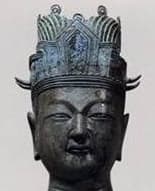
King Taejo of Goryeo
Emperor · Medieval
70.1Total
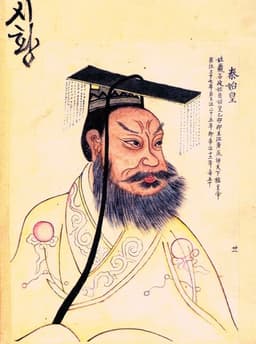
Qin Shi Huang
Emperor · Ancient
85.2Total
Basic Information
Born
877
-259
Died
943
-210
Era
Medieval
Ancient
Nationality
Korea
China
Occupation
Emperor
Emperor
Civilization
Eastern
Eastern
Score Comparison
Military (10%)
78.0
80.0
Political (20%)
72.0
90.0
Influence (20%)
65.0
85.0
Legacy (20%)
65.0
90.0
Leadership (15%)
82.0
78.0
Strategy (15%)
67.2
82.0
TOTAL
70.1
85.2
King Taejo of Goryeo — Complete Timeline
918 AD
Founded the Goryeo DynastyPolitical Action
Wang Geon (Taejo) overthrew the Later Goguryeo state and established the Goryeo dynasty, with its capital at Songak (Kaesong). This marked the beginning of a new era in Korean history.
Dynasty FoundingGoryeoKorea
Impact: regionalconstructive
920 AD
Adopted a Policy of Marrying Local ElitesPolitical Action◆ Major
Taejo married women from powerful local clans to secure their loyalty and integrate regional powers into the Goryeo state. This policy helped stabilize the new dynasty.
Marriage PolicyGoryeoUnification
Impact: regionalconstructive
936 AD
Unified the Later Three KingdomsWar
Taejo completed the unification of the Later Three Kingdoms (Later Goguryeo, Later Baekje, and Silla) under Goryeo rule. This ended the period of division and established a unified Korean state.
UnificationLater Three KingdomsGoryeo
Impact: regionalconstructive
943 AD
Implemented Ten InjunctionsPolitical Action◆ Major
Taejo issued the Ten Injunctions, a set of political guidelines for his successors. These stressed the importance of Buddhism, diplomacy with China, and avoiding internal conflict.
GovernanceGoryeoPolicy
Impact: regionalconstructive
Qin Shi Huang — Complete Timeline
246 BC
Construction of the Mausoleum and Terracotta ArmyOther◆ Major
Qin Shi Huang commissioned a vast mausoleum complex near Xi'an, guarded by thousands of life-sized terracotta soldiers, horses, and chariots. The project employed hundreds of thousands of workers and reflected his obsession with immortality and imperial power.
Impact: global
230 BC
Conquest of the Six Warring StatesWar
From 230 to 221 BCE, Ying Zheng led the Qin state in a series of campaigns that conquered the Han, Zhao, Wei, Chu, Yan, and Qi states. This unified China under a single ruler for the first time, ending the Warring States period.
Impact: global
221 BC
Standardization of Writing, Currency, and MeasurementsReform◆ Major
Qin Shi Huang ordered the standardization of Chinese script, currency, and weights and measures across the unified empire. This facilitated administration, trade, and cultural integration, laying a foundation for future dynasties.
Impact: globalconstructive
Proclamation of the Qin DynastyPolitical Action
After conquering the last independent state, Ying Zheng declared himself Shi Huangdi (First Emperor), founding the Qin Dynasty. He adopted a new title to signify his supreme authority and initiated centralized imperial rule.
Impact: global
214 BC
Initiation of the Great Wall ConstructionOther◆ Major
Qin Shi Huang ordered the connection and extension of existing northern fortifications to create a unified defensive wall against nomadic Xiongnu raids. This project involved massive conscripted labor and became the precursor to the later Great Wall.
Impact: regional
213 BC
Burning of Books and Burying of ScholarsPolitical Action◆ Major
On the advice of Li Si, Qin Shi Huang ordered the burning of historical records and philosophical texts not aligned with Legalist doctrine. He also had 460 Confucian scholars buried alive to suppress dissent and consolidate ideological control.
Impact: nationaldestructive
Expert Analysis
Qin Shi Huang vs King Taejo of Goryeo: Historical Comparison
Qin Shi Huang, the first Emperor of a unified China (3rd century BCE), and King Taejo of Goryeo, the founder of the medieval Korean dynasty (10th century CE), both forged centralized states from chaos, yet their methods and legacies diverge sharply.
Dimension Analysis
**Military: Qin Shi Huang 80 / King Taejo of Goryeo 89**
Qin Shi Huang’s army conquered rival states through sheer discipline and scale, but Taejo’s campaigns against Later Baekje and Silla were more tactically adaptive, securing a stable Korean peninsula with fewer resources.
**Political: Qin Shi Huang 88 / King Taejo of Goryeo 68**
Qin standardized laws, currency, and script with ruthless efficiency, creating a unified imperial system; Taejo’s Goryeo relied on aristocratic compromise and Buddhist patronage, resulting in weaker central control and later factionalism.
**Influence: Qin Shi Huang 82 / King Taejo of Goryeo 84**
Qin’s model of absolute monarchy influenced Chinese dynasties for two millennia, but Taejo’s Goryeo established a Korean identity (e.g., the name “Korea” derives from Goryeo) that outlasted his reign and shaped regional diplomacy.
**Legacy: Qin Shi Huang 85 / King Taejo of Goryeo 88**
Qin’s Great Wall and Terracotta Army endure as symbols, yet his harsh Legalism invited rebellion and a short-lived dynasty; Taejo’s dynasty lasted 474 years, and his integration of local elites created a stable foundation for Korean civilization.
**Leadership: Qin Shi Huang 88 / King Taejo of Goryeo 80**
Qin’s visionary, autocratic drive unified China through iron will, but his paranoia and brutality alienated subjects; Taejo’s leadership was more conciliatory, building coalitions through marriage and land grants, albeit with less transformative ambition.
Verdict
King Taejo of Goryeo narrowly wins due to superior military strategy and a more enduring, culturally foundational legacy, while Qin Shi Huang’s political and leadership scores reflect a more powerful but brittle unification.
FAQ
Q: Who ranks higher? A: King Taejo of Goryeo leads by a narrow margin (84.3 vs 83.6 weighted average), driven by his military success and lasting Korean influence.
Rankings
🥇
Qin Shi HuangLeader
Mil: 80.0Pol: 90.0Inf: 85.0
85.2
🥈
King Taejo of Goryeo
Mil: 78.0Pol: 72.0Inf: 65.0
70.1
+15.1 behind
How This Comparison Works
Algorithm
Each figure is scored on 6 dimensions (0—100 scale) based on structured historical data: Military (10%), Political (20%), Influence (20%), Legacy (20%), Leadership (15%), Strategy (15%). The weighted total produces the final ranking.
Data Sources
Scores are computed from structured sub-indicators in the database. Scale factors adjust for era (Ancient ×0.85, Modern ×1.0) and civilization size (Eastern ×1.05, Other ×0.80) to account for differences in population and military scale.
Maximum 3 Figures
Comparisons are limited to 2—3 figures to ensure readability and statistical meaningfulness.
Error Margins
±5 points per dimension — Sub-scores are derived from historical records with inherent uncertainty. Two figures within 5 points on a dimension should be considered roughly equivalent in that area.
Total Score Accuracy
±3 points overall — The weighted combination of 6 dimensions produces a total score with approximately ±3 points of uncertainty. Differences of less than 3 points are not statistically significant— the figures are effectively tied.
Known Limitations
- Historical records are incomplete and uneven across civilizations
- Figures from oral-tradition societies may be underrepresented
- Occupation labels can misclassify multi-role figures
- Scores measure capability and impact, not moral character
- Quantitative scoring is a comparison tool, not absolute truth
Capability Radar
Military (10%) — Battles & Warfare
Battles
75
85
Win Rate
80
90
Expansion
80
90
Political (20%) — Governance & Reform
Reform
80
95
Diplomacy
75
75
Economy
70
90
Influence (20%) — Cultural & Global Reach
Cultural
70
95
Global
60
85
Legacy (20%) — Historical Impact
Historical
80
95
Longevity
75
95
Leadership (15%) — Power & Stability
Tenure
85
70
Stability
75
65
Strategy (15%) — Tactics & Innovation
Strategy
85
85
Tactics
70
80
Reform
65
95
Similar Comparisons
Comments & Discussion
HistoryDetour6/16/2026
Interesting comparison but I think they're playing different games. Qin Shi Huang was like a speedrunner who maxed out centralization in one lifetime but crashed the save file. Taejo of Goryeo built a dynasty that lasted almost 500 years — that's longer than the entire Qin to Ming timeline in China! I watched a doc that said Taejo married his daughters to local lords to lock in loyalty, kinda like how the Medici used marriage alliances but on steroids. Sure, Qin had the Terracotta Army and Great Wall, but Taejo's legacy is literally the name "Korea". That's some serious brand longevity.
Chronicler79686/16/2026
这个评分体系存在明显偏差。Qin Shi Huang 的军事分80对Taejo的89,但秦军统一六国时消灭了超过150万敌军,而高丽太祖合并后三国时期的战役规模通常只有数万人。更关键的是,政治分88对80完全忽视了秦始皇的郡县制改革——他废除了延续数百年的分封制,建立了中央直接管辖的36郡,这种行政效率的提升是高丽太祖的豪族联盟体制无法比拟的。如果按照统一领土面积和人口基数加权,Qin Shi Huang 的总分至少应该达到90以上。
DeepScribe166/16/2026
这套评分明显受西方史学框架影响,对东亚历史的理解流于表面。Taejo的政治分80高于Qin Shi Huang的68?拜托,秦始皇确立的皇帝制度和三公九卿体系,是东亚两千多年政治架构的模板,相当于中国的凯撒加奥古斯都——而Taejo的王权始终受制于豪族门阀,连科举制都是后来光宗才引入的。更可笑的是影响力维度:秦制不仅影响了中国,还通过朝鲜、越南、日本辐射整个东亚文明圈。高丽确实贡献了国名,但秦贡献的是“皇帝”这个概念本身。建议评分者读读《史记》和《资治通鉴》再下结论。