Loading...
Emperor Sujin vs Kamehameha V
Emperor Sujin leads by 6.6 pts · 2 figures compared
…
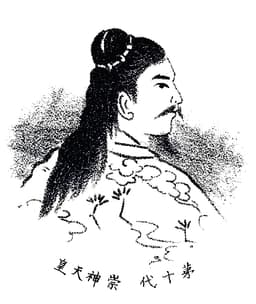
Emperor Sujin
Emperor · Ancient
51.6Total
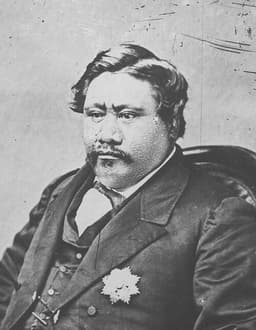
Kamehameha V
Emperor · Modern
45.0Total
Basic Information
Born
-148
1830
Died
-30
1872
Era
Ancient
Modern
Nationality
Japan
Hawaii
Occupation
Emperor
Emperor
Civilization
Eastern
Other
Score Comparison
Military (10%)
50.0
11.3
Political (20%)
68.0
46.6
Influence (20%)
47.1
50.2
Legacy (20%)
43.3
42.5
Leadership (15%)
72.0
74.0
Strategy (15%)
30.3
26.5
TOTAL
51.6
45.0
Emperor Sujin — Complete Timeline
100 BC
Organized the Yamato StateReform◆ Major
Emperor Sujin is recorded in the Nihon Shoki as having organized the Yamato state, establishing administrative structures and military garrisons. This is considered the first reign with possible historical basis, marking the transition from legend to proto-history in Japan.
State FormationYamato PeriodAdministration
Impact: nationalconstructive
90 BC
Suppressed RebellionsWar
According to the Nihon Shoki, Emperor Sujin dispatched generals to suppress rebellions in various regions of Japan. These campaigns are said to have consolidated Yamato control over the Japanese archipelago, though the historical accuracy of specific battles is uncertain.
Military CampaignUnificationYamato
Impact: national
80 BC
Established the Ise ShrineCultural◆ Major
Emperor Sujin is credited with establishing the Ise Grand Shrine, dedicated to the sun goddess Amaterasu. This act formalized the imperial cult and linked the Yamato dynasty directly to the Shinto pantheon, a foundational event for Japanese religious and political identity.
ShintoImperial CultReligion
Impact: nationalconstructive
Kamehameha V — Complete Timeline
1863 AD
Ascended to the Throne as Kamehameha VPolitical Action◆ Major
Lot Kapuāiwa became King Kamehameha V after the death of his brother Kamehameha IV. He was the last monarch of the Kamehameha dynasty.
Impact: national
1864 AD
Promulgated the 1864 ConstitutionReform◆ Major
Kamehameha V abrogated the 1852 constitution and promulgated a new one that increased royal power. The 1864 constitution abolished the office of kuhina nui (premier), gave the king veto power, and restricted suffrage to property owners.
Impact: national
1865 AD
Oversaw Economic Growth and Public WorksReform
Kamehameha V promoted economic development, including the expansion of the sugar industry, construction of roads and harbors, and the establishment of the Hawaiian Board of Health. His reign saw increased foreign investment and trade.
Impact: nationalconstructive
1867 AD
Refused to Sign the Reciprocity TreatyPolitical Action◆ Major
Kamehameha V refused to sign a reciprocity treaty with the United States that would have reduced tariffs on Hawaiian sugar. He believed the treaty would compromise Hawaiian sovereignty and lead to American domination.
Impact: national
1872 AD
Died Without an HeirOther◆ Major
Kamehameha V died without naming an heir, ending the Kamehameha dynasty. His death triggered a succession crisis that led to the election of Lunalilo as the next king.
Impact: nationaltragic
Expert Analysis
Emperor Sujin vs Kamehameha V
# The Monarch and the Myth-Maker
On a December morning in 1864, King Kamehameha V of Hawaii stood before his cabinet and tore up the constitution that his predecessor had signed just twelve years earlier. Across the Pacific, nearly two millennia before, another monarch—Emperor Sujin of Japan—was reportedly organizing a fledgling state out of warring clans, establishing the very patterns of governance that would define a civilization. Both men wore crowns. Both sought to consolidate power. But the worlds they inhabited, and the legacies they left, could not have been more different. Why did one king’s assertion of authority lead to the end of his dynasty, while another’s became the foundation of an empire that would endure for centuries?
Origins
Kamehameha V was born Lot Kapuāiwa in 1830, a prince of the Kamehameha dynasty that had unified the Hawaiian Islands through conquest and diplomacy. He was educated by American missionaries, traveled to the West, and inherited a kingdom already transformed by foreign contact—sugar plantations, Christian churches, and a constitutional monarchy that limited royal power. His brother Kamehameha IV had reigned with a gentle hand, but Lot believed the monarchy had ceded too much authority. He was a man of the nineteenth century, grappling with the pressures of colonialism and economic dependency.
Emperor Sujin, by contrast, belongs to the misty dawn of Japanese history. According to the *Nihon Shoki*, compiled centuries later, he was born around 148 BCE and reigned in the age of myth. The chronicles describe him as the tenth emperor, but modern historians consider him the first with plausible historicity—a figure who emerges from legend into the dim light of record. His Japan was a land of clan chieftains, rice cultivation, and Shinto rituals, with no written language and no centralized state. His challenge was not foreign encroachment but internal chaos.
Rise to Power
Kamehameha V ascended to the throne in 1863 upon the death of his brother. There was no war, no coup—simply the orderly succession of a constitutional monarchy. But the young king brought with him a simmering resentment. He had watched the 1852 constitution strip the crown of its veto power and grant sweeping rights to commoners. Within a year of his coronation, he called a constitutional convention, then dismissed it when delegates refused to bend to his will. In a bold stroke, he simply abrogated the old constitution and promulgated his own—the 1864 Constitution—which concentrated power in the monarchy, abolished the elected lower house, and made the king the supreme executive.
Emperor Sujin’s rise is shrouded in the same mist as his birth. The *Nihon Shoki* records that he was installed as emperor after his father’s death, but his early reign was marked by plague and rebellion. The chronicles claim that divine oracles instructed him to worship the sun goddess Amaterasu separately from other kami—a decision that led to the establishment of the Ise Grand Shrine around 80 BCE. This act was not merely religious; it was political. By centralizing worship of the imperial clan’s tutelary deity, Sujin began to weave the spiritual authority of the throne into the fabric of the state.
Leadership & Governance
Kamehameha V governed with a heavy hand and a clear vision. He oversaw economic growth, expanding the sugar industry and building roads and harbors that connected the islands. He modernized Honolulu and encouraged foreign investment. Yet he refused to sign a reciprocity treaty with the United States in 1867 that would have reduced tariffs on Hawaiian sugar—a decision driven by fear of American political influence. His leadership was autocratic but not reckless; he understood that economic dependency could lead to political subjugation. His strategy was to strengthen the kingdom from within, even if it meant alienating powerful foreign interests.
Emperor Sujin’s governance was, by necessity, more symbolic than administrative. The *Nihon Shoki* credits him with dispatching generals to suppress rebellions around 90 BCE, establishing military control over outlying regions. He organized the Yamato state—a loose confederation of clans under imperial suzerainty. But his greatest contribution was the creation of a sacred geography. By establishing the Ise Shrine and formalizing the imperial cult, he gave the throne a spiritual legitimacy that transcended military might. In a world without bureaucracies or standing armies, the emperor’s power was the power of myth.
Triumph & Tragedy
Kamehameha V’s greatest triumph was the 1864 Constitution itself—a document that restored the monarchy to what he believed was its rightful place. For nearly a decade, he ruled as a true sovereign, shaping Hawaii’s destiny. But his greatest failure was also his greatest achievement: he died in 1872 without naming an heir. The Kamehameha dynasty ended with him. The succession crisis that followed led to a contested election, foreign interference, and ultimately, the annexation of Hawaii by the United States in 1898. His refusal to compromise on royal authority had preserved the monarchy’s dignity—but at the cost of its future.
Emperor Sujin’s triumph was more enduring. He suppressed the rebellions, established the shrine, and organized the state. But his tragedy is the tragedy of all ancient figures: we cannot know him. The *Nihon Shoki* was compiled in the eighth century, nearly nine hundred years after his supposed reign. His deeds are likely embellished, his person half-legend. He may not have existed at all in the form we imagine. Yet the myth of Sujin proved more powerful than any historical reality. It provided the template for imperial rule that would last until 1945.
Character & Destiny
Kamehameha V was proud, stubborn, and deeply conscious of his heritage. He once said, “The monarchy is the life of the nation.” His personality drove him to reject compromise, even when compromise might have saved his dynasty. He saw himself as the guardian of Hawaiian sovereignty, not merely a constitutional figurehead. That conviction was noble—but it blinded him to the realities of a changing world. His destiny was to be the last of his line, a tragic king who chose principle over pragmatism.
Emperor Sujin, if the chronicles are to be believed, was a unifier and a visionary. He understood that power in ancient Japan depended not on force alone but on the allegiance of the gods. His character is less recorded than inferred: a ruler who saw that to command men, one must first command their beliefs. His destiny was to become the ancestor of an unbroken line of emperors—a lineage that, though often powerless in practice, retained a sacred authority that no warlord could usurp.
Legacy
Kamehameha V is remembered today as a strong-willed monarch who fought to preserve Hawaiian independence. His 1864 Constitution remained in effect until the overthrow of the monarchy in 1893. Historians rate his leadership at 78.5, his political acumen at 50.2—a telling gap between his vision and his effectiveness. His legacy is one of noble failure, a warning about the limits of royal power in an age of empires.
Emperor Sujin’s legacy is the opposite: a success so complete that it became invisible. The Ise Shrine still stands, rebuilt every twenty years as tradition demands. The imperial institution he helped create survived wars, revolutions, and modernization. His total score of 62.5 reflects not his individual achievements but the weight of a tradition he helped inaugurate. He is remembered not as a man but as a cornerstone.
Conclusion
The Hawaiian king and the Japanese emperor never met, never could have met. One lived in the glare of recorded history, the other in the twilight of legend. Yet both faced the same fundamental question: how does a ruler secure his throne? Kamehameha V answered with law and will, and his dynasty crumbled. Sujin answered with myth and ritual, and his dynasty endured for two thousand years. Perhaps the lesson is not that one path was right and the other wrong, but that power, in the end, belongs not to those who hold it most tightly, but to those who weave it into the stories that outlive them.
Rankings
🥇
Emperor SujinLeader
Mil: 50.0Pol: 68.0Inf: 47.1
51.6
🥈
Kamehameha V
Mil: 11.3Pol: 46.6Inf: 50.2
45.0
+6.6 behind
How This Comparison Works
Algorithm
Each figure is scored on 6 dimensions (0—100 scale) based on structured historical data: Military (10%), Political (20%), Influence (20%), Legacy (20%), Leadership (15%), Strategy (15%). The weighted total produces the final ranking.
Data Sources
Scores are computed from structured sub-indicators in the database. Scale factors adjust for era (Ancient ×0.85, Modern ×1.0) and civilization size (Eastern ×1.05, Other ×0.80) to account for differences in population and military scale.
Maximum 3 Figures
Comparisons are limited to 2—3 figures to ensure readability and statistical meaningfulness.
Error Margins
±5 points per dimension — Sub-scores are derived from historical records with inherent uncertainty. Two figures within 5 points on a dimension should be considered roughly equivalent in that area.
Total Score Accuracy
±3 points overall — The weighted combination of 6 dimensions produces a total score with approximately ±3 points of uncertainty. Differences of less than 3 points are not statistically significant— the figures are effectively tied.
Known Limitations
- Historical records are incomplete and uneven across civilizations
- Figures from oral-tradition societies may be underrepresented
- Occupation labels can misclassify multi-role figures
- Scores measure capability and impact, not moral character
- Quantitative scoring is a comparison tool, not absolute truth
Capability Radar
Military (10%) — Battles & Warfare
Battles
10
4
Win Rate
10
9
Expansion
20
11
Political (20%) — Governance & Reform
Reform
50
20
Diplomacy
30
30
Economy
30
35
Influence (20%) — Cultural & Global Reach
Cultural
30
30
Global
10
10
Legacy (20%) — Historical Impact
Historical
40
35
Longevity
30
20
Leadership (15%) — Power & Stability
Tenure
40
40
Stability
40
25
Strategy (15%) — Tactics & Innovation
Strategy
10
15
Tactics
10
15
Reform
20
21
Similar Comparisons
Comments & Discussion
洛城刀客6/16/2026
我也是醉了,把日本神话编年史里的虚构角色和卡美哈梅哈五世放一起比?《日本书纪》里记载的神武天皇东征都有考古证据了吗?苏神应神这些早期天皇的坟墓连准确年代都定不了,而夏威夷国王的画像、政令、建筑都摆在那里。这就好比拿《山海经》里的皇帝和拿破仑比治国,太离谱了。拿考古真实存在的天皇,比如仁德天皇,再来比吧。
古字迷踪6/16/2026
作为文献学者,我必须指出这比较本身就有问题。卡美哈梅哈五世撕毁宪法有明确的历史档案支持,而苏神天皇的记载完全依赖《日本书纪》——这部史书本身就是为了给大和朝廷正名而编的官方宣传品。更别提那里面记录的苏神在位年份,连日本学者自己都承认那是经过篡改的。把神话和现实放在天平两端,这分析从方法论上就不成立。
RepublicReader6/16/2026
As a military historian, I gotta call this comparison bunk. You're comparing a real king who actually commanded armies to a myth. Kamehameha V personally led Hawaiian troops, built fortifications at Diamond Head, and modernized his military with Western arms. Sujin is basically a placeholder name in a chronicle written 500 years later. The *Nihon Shoki* says he conquered the four directions? That's propaganda, not history. One man left artillery manuals; the other left kami worship rituals. Choo
ScoreboardScholar6/16/2026
Classics scholar chimes in to note the profound irony here. Kamehameha V, a Christian-educated monarch, literally ripped up a Western-style constitution to restore absolute power. Sujin, a pre-Buddhist kami figure, supposedly established ritual hierarchy that would blend with imported Chinese bureaucracy. Both were reacting to external pressure—Hawaii to colonialism, Japan to Korean and Chinese influence. The Hawaiian monarchy fell within 30 years of Lot's power grab. The Yamato court Sujin alle
SamuraiScroll6/16/2026
Data skeptic here, and the analysis is deeply flawed. We're comparing a ruler with zero verifiable contemporary records against a 19th-century monarch whose correspondence fills archives. Emperor Sujin wouldn't appear in any reliable chronology until the *Nihon Shoki* was compiled in 720 CE—nearly two millennia after his supposed reign. Kamehameha V's 1864 constitutional coup has newspaper coverage, eyewitness accounts, and legislative records. You can't quantify "consolidation of power" when on