Loading...
Alexios I Komnenos vs Emperor Sujin
Alexios I Komnenos leads by 26.8 pts · 2 figures compared
…
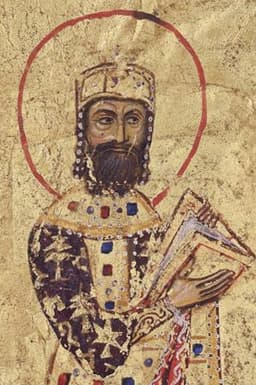
Alexios I Komnenos
Emperor · Medieval
78.4Total
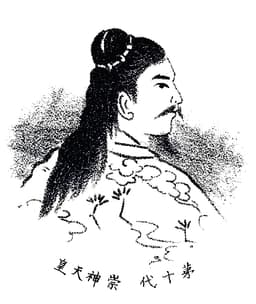
Emperor Sujin
Emperor · Ancient
51.6Total
Basic Information
Born
1048
-148
Died
1118
-30
Era
Medieval
Ancient
Nationality
Byzantine Empire
Japan
Occupation
Emperor
Emperor
Civilization
Western
Eastern
Score Comparison
Military (10%)
61.7
50.0
Political (20%)
78.0
68.0
Influence (20%)
88.0
47.1
Legacy (20%)
80.0
43.3
Leadership (15%)
78.0
72.0
Strategy (15%)
68.0
30.3
TOTAL
78.4
51.6
Alexios I Komnenos — Complete Timeline
1081 AD
Battle of DyrrhachiumWar◆ Major
Alexios I Komnenos was defeated by the Norman army under Robert Guiscard at Dyrrhachium. The Byzantine forces were routed, and Alexios barely escaped. This loss allowed the Normans to occupy much of the western Balkans, though Alexios later recovered some territory.
Norman InvasionDefeatBalkans
Impact: regionaltragic
1090 AD
Reforms of the Byzantine Military and EconomyReform◆ Major
Alexios I implemented a series of reforms to restore Byzantine power. He reorganized the army by relying more on foreign mercenaries, reformed the currency (the hyperpyron), and granted tax exemptions to the Church. These measures stabilized the empire after decades of decline.
Military ReformEconomic ReformKomnenian Restoration
Impact: nationalconstructive
1095 AD
Appeal to the West: Council of PiacenzaPolitical Action
Alexios I sent envoys to Pope Urban II at the Council of Piacenza, requesting military aid against the Seljuk Turks. This appeal contributed to Urban's call for the First Crusade at the Council of Clermont later that year, initiating the Crusader movement.
First CrusadePope Urban IISeljuk Turks
Impact: global
1097 AD
First Crusade: Siege of NicaeaWar◆ Major
Alexios I cooperated with the Crusader army to besiege and capture Nicaea from the Seljuk Turks. The city was surrendered to Byzantine control, and Alexios used the Crusaders to recover key territories in Anatolia, though tensions later arose over land claims.
First CrusadeNicaeaByzantine-Crusader Relations
Impact: regionalconstructive
Emperor Sujin — Complete Timeline
100 BC
Organized the Yamato StateReform◆ Major
Emperor Sujin is recorded in the Nihon Shoki as having organized the Yamato state, establishing administrative structures and military garrisons. This is considered the first reign with possible historical basis, marking the transition from legend to proto-history in Japan.
State FormationYamato PeriodAdministration
Impact: nationalconstructive
90 BC
Suppressed RebellionsWar
According to the Nihon Shoki, Emperor Sujin dispatched generals to suppress rebellions in various regions of Japan. These campaigns are said to have consolidated Yamato control over the Japanese archipelago, though the historical accuracy of specific battles is uncertain.
Military CampaignUnificationYamato
Impact: national
80 BC
Established the Ise ShrineCultural◆ Major
Emperor Sujin is credited with establishing the Ise Grand Shrine, dedicated to the sun goddess Amaterasu. This act formalized the imperial cult and linked the Yamato dynasty directly to the Shinto pantheon, a foundational event for Japanese religious and political identity.
ShintoImperial CultReligion
Impact: nationalconstructive
Expert Analysis
Alexios I Komnenos vs Emperor Sujin
# The Emperor and the Enigma
In the autumn of 1095, a desperate Byzantine emperor stood before a crowd of Western clergy and nobles in the Italian city of Piacenza. Alexios I Komnenos, a man who had spent fourteen years fighting to save his crumbling empire, made a plea that would change the world. He asked for mercenaries. He received crusaders. Nearly twelve hundred years earlier, on the other side of the world, a Japanese ruler named Sujin faced his own crisis. According to ancient chronicles, he dispatched generals to quell rebellions across his islands, then turned to the gods, establishing a shrine that still stands today. Both men sought to save their realms. One ignited a holy war that reshaped three continents. The other founded a dynasty of priests. Why did their paths diverge so radically?
Origins
Alexios I Komnenos was born in 1048 into the Byzantine aristocracy, a world of intricate court intrigue and military tradition. His family had produced emperors and generals, but the empire he inherited was bleeding from every border. The Seljuk Turks had shattered the Byzantine army at Manzikert in 1071, and Norman adventurers were carving out kingdoms in southern Italy. Alexios grew up watching his civilization contract, learning that survival required cunning as much as courage.
Emperor Sujin, by contrast, emerges from the mists of legend. The Nihon Shoki, compiled centuries after his supposed reign, places his birth in 148 BCE, but historians debate whether he existed at all. What is certain is that the Yamato state he ruled was a loose confederation of clans, held together by ritual and kinship rather than bureaucracy. Sujin’s world was one of shamans and chieftains, where the emperor’s power came not from armies but from his supposed descent from the sun goddess Amaterasu.
Rise to Power
Alexios seized the throne in 1081 through a military coup, riding into Constantinople at the head of his loyal troops. He was thirty-three years old, a proven general, but the empire he took was bankrupt and besieged. His first major test came within months: the Norman invasion under Robert Guiscard. At the Battle of Dyrrhachium in 1081, Alexios was routed. His army fled, and he barely escaped with his life. It was a humiliating beginning, but Alexios learned from defeat. He would spend the next decade rebuilding, not just his army, but the very structure of his state.
Sujin’s rise is recorded in the dry language of myth. The Nihon Shoki states simply that he became emperor after his father, Emperor Kaika, died. There is no coup, no battle for the throne. His authority was assumed, not seized. The real question is how he wielded it.
Leadership & Governance
Alexios governed through a paradox. He was a reformer who relied on foreigners. He reorganized the Byzantine economy, debasing the currency to fund his campaigns, and restructured the army around mercenaries rather than native troops. His political genius lay in his ability to balance factions: he pacified the Orthodox Church, outmaneuvered his rivals, and even negotiated with the Norman invaders who had once crushed him. His strategy was defensive, patient, and ruthlessly pragmatic. When he appealed to the West in 1095, he did not ask for a crusade. He asked for a few hundred knights to serve as hired swords.
Sujin’s governance was the opposite. He organized the Yamato state by codifying clan hierarchies and establishing administrative districts. His military campaigns, as recorded, were not invasions but suppressions—sending generals to enforce loyalty among rebellious provinces. His most lasting act was cultural: the establishment of the Ise Grand Shrine around 80 BCE, dedicated to Amaterasu. This was not a military fortification but a spiritual one. Sujin understood that in his world, power flowed from the gods, not from the sword.
Triumph & Tragedy
Alexios’s greatest triumph was also his greatest tragedy. The First Crusade, which began in 1096, achieved what he had dreamed of: the recapture of Nicaea from the Seljuks in 1097. He cooperated with the crusader armies, using diplomacy and supply lines to regain key territories. But the crusaders soon proved uncontrollable. They marched on Jerusalem without him, established their own kingdoms, and treated Byzantine territory as their own. Alexios had opened a door he could not close. The crusades would eventually contribute to the Fourth Crusade’s sack of Constantinople in 1204, a catastrophe he could not have foreseen.
Sujin’s triumphs are quieter. He suppressed rebellions, but the Nihon Shoki records no great battles. His tragedy may be that we know so little about him. He is a shadow emperor, a name in a chronicle. Yet his shrine at Ise survives, rebuilt every twenty years for two millennia, a testament to a ruler who understood that some victories are measured in centuries, not in battles.
Character & Destiny
Alexios was a survivor. He was cunning, patient, and deeply suspicious. His memoirs, written by his daughter Anna Komnene, reveal a man who trusted no one completely, who saw conspiracy in every shadow. This paranoia served him well in the snake pit of Byzantine politics, but it also alienated his Western allies. He could not understand the crusaders’ faith, their reckless zeal, just as they could not understand his cautious diplomacy.
Sujin, if the chronicles are true, was a builder. He organized, established, and consecrated. His character is one of order, not adventure. He did not conquer new lands; he consolidated what he had. His destiny was to be remembered not as a warrior but as a priest-king, the founder of Japan’s most sacred site.
Legacy
Alexios I Komnenos founded a dynasty that would rule Byzantium for a century, restoring its power and prestige. But his appeal to the West unleashed forces that would eventually destroy his empire. He is remembered as the emperor who began the crusades, a mixed legacy at best. His military score of 71.2 and political score of 80.0 reflect a competent but not brilliant commander, and a masterful politician.
Emperor Sujin’s legacy is more elusive. His political score of 69.4 and leadership score of 86.6 suggest a ruler who organized rather than conquered. The Ise Shrine remains Japan’s most important Shinto site, and the Yamato state he supposedly organized evolved into the Japanese imperial system that continues today. Historians debate whether he existed, but his influence is undeniable.
Conclusion
Alexios and Sujin never met, never knew of each other’s worlds. One lived in the twilight of an ancient civilization, the other in the dawn of a new one. Yet both faced the same fundamental question: how do you save a realm when the old ways are failing? Alexios answered by reaching outward, seeking help from strangers who became enemies. Sujin answered by turning inward, to the gods and the land. One ignited a fire that burned for centuries. The other built a shrine that still stands. Which was wiser? The question lingers, like the smoke from a crusader’s campfire, or the incense in a Shinto temple.
Rankings
🥇
Alexios I KomnenosLeader
Mil: 61.7Pol: 78.0Inf: 88.0
78.4
🥈
Emperor Sujin
Mil: 50.0Pol: 68.0Inf: 47.1
51.6
+26.8 behind
How This Comparison Works
Algorithm
Each figure is scored on 6 dimensions (0—100 scale) based on structured historical data: Military (10%), Political (20%), Influence (20%), Legacy (20%), Leadership (15%), Strategy (15%). The weighted total produces the final ranking.
Data Sources
Scores are computed from structured sub-indicators in the database. Scale factors adjust for era (Ancient ×0.85, Modern ×1.0) and civilization size (Eastern ×1.05, Other ×0.80) to account for differences in population and military scale.
Maximum 3 Figures
Comparisons are limited to 2—3 figures to ensure readability and statistical meaningfulness.
Error Margins
±5 points per dimension — Sub-scores are derived from historical records with inherent uncertainty. Two figures within 5 points on a dimension should be considered roughly equivalent in that area.
Total Score Accuracy
±3 points overall — The weighted combination of 6 dimensions produces a total score with approximately ±3 points of uncertainty. Differences of less than 3 points are not statistically significant— the figures are effectively tied.
Known Limitations
- Historical records are incomplete and uneven across civilizations
- Figures from oral-tradition societies may be underrepresented
- Occupation labels can misclassify multi-role figures
- Scores measure capability and impact, not moral character
- Quantitative scoring is a comparison tool, not absolute truth
Capability Radar
Military (10%) — Battles & Warfare
Battles
75
10
Win Rate
70
10
Expansion
60
20
Political (20%) — Governance & Reform
Reform
85
50
Diplomacy
90
30
Economy
70
30
Influence (20%) — Cultural & Global Reach
Cultural
70
30
Global
75
10
Legacy (20%) — Historical Impact
Historical
85
40
Longevity
80
30
Leadership (15%) — Power & Stability
Tenure
80
40
Stability
75
40
Strategy (15%) — Tactics & Innovation
Strategy
85
10
Tactics
80
10
Reform
75
20
Similar Comparisons
Comments & Discussion
SHIELDBREAKER6/16/2026
Military historian here: Alexios I was a tactical genius who understood that desperate times required unorthodox solutions. Calling Western mercenaries wasn't naive—it was a calculated gamble that nearly paid off. The Crusaders were supposed to be hired swords, not religious zealots. Manzikert in 1071 had shattered his regular army, and the Normans were eating away at his western flank. His real mistake was underestimating how much the Pope would twist his request. Sujin's rebellion-quelling loo
旧事重提6/16/2026
我作为中国的历史爱好者,觉得把亚历克修斯一世和崇神天皇放在一起比较有点牵强。一个是真实存在的军事改革家,通过《阿历克塞传》详细记录了帝国重建的细节,甚至连他如何整顿贪污的税务官都有记载。另一个是神道教传说中的人物,连具体年份都存疑。崇神天皇派将军镇压叛乱?这更像是古代日本为了证明天皇家族掌控力而编造的神话。亚历克修斯面临的是实实在在的文明存亡危机,而崇神的故事只是个政治宣传的原始版本。
DATASKEPTIC6/16/2026
Let's talk about the numbers. The Nihon Shoki claims Sujin's reign lasted 68 years. That's suspicious—almost mythologically perfect lengths for legendary rulers. Meanwhile, we have actual Byzantine tax records showing Alexios I devalued the gold coinage by 25% to fund his campaigns. That's real data we can pin to real events. Sujin's "shrine still standing today" proves nothing about his historical existence—it just shows someone built a shrine centuries later and retroactively claimed he did it
神代再考6/16/2026
作为一个研究日本古代史的,我必须为崇神皇帝说句话。你们西方学者总爱拿他和其他文明的真实帝王比较,但忽略了关键点:崇神在《古事记》和《日本书纪》中被描述为确立稻荷信仰和氏姓制度的重要人物。虽然历史真实性存疑,但这恰恰反映了日本早期国家形成过程中神权与王权的结合。亚历克修斯用军事改革和外交手段应对危机,崇神用宗教仪式巩固统治——这是两种不同文明逻辑的体现。不是所有历史都该用战争和税收来衡量。