Loading...
Emperor Sujin vs John II of Avesnes
Emperor Sujin leads by 6.7 pts · 2 figures compared
…
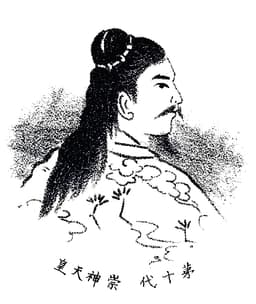
Emperor Sujin
Emperor · Ancient
51.6Total
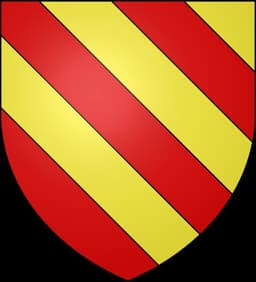
John II of Avesnes
Emperor · Medieval
44.9Total
Basic Information
Born
-148
1248
Died
-30
1304
Era
Ancient
Medieval
Nationality
Japan
Hainaut
Occupation
Emperor
Emperor
Civilization
Eastern
Western
Score Comparison
Military (10%)
50.0
45.0
Political (20%)
68.0
35.1
Influence (20%)
47.1
51.0
Legacy (20%)
43.3
40.8
Leadership (15%)
72.0
55.3
Strategy (15%)
30.3
38.6
TOTAL
51.6
44.9
Emperor Sujin — Complete Timeline
100 BC
Organized the Yamato StateReform◆ Major
Emperor Sujin is recorded in the Nihon Shoki as having organized the Yamato state, establishing administrative structures and military garrisons. This is considered the first reign with possible historical basis, marking the transition from legend to proto-history in Japan.
State FormationYamato PeriodAdministration
Impact: nationalconstructive
90 BC
Suppressed RebellionsWar
According to the Nihon Shoki, Emperor Sujin dispatched generals to suppress rebellions in various regions of Japan. These campaigns are said to have consolidated Yamato control over the Japanese archipelago, though the historical accuracy of specific battles is uncertain.
Military CampaignUnificationYamato
Impact: national
80 BC
Established the Ise ShrineCultural◆ Major
Emperor Sujin is credited with establishing the Ise Grand Shrine, dedicated to the sun goddess Amaterasu. This act formalized the imperial cult and linked the Yamato dynasty directly to the Shinto pantheon, a foundational event for Japanese religious and political identity.
ShintoImperial CultReligion
Impact: nationalconstructive
John II of Avesnes — Complete Timeline
1280 AD
Inherited County of Hainaut and HollandPolitical Action◆ Major
John II of Avesnes inherited the County of Hainaut from his mother Margaret II of Flanders, and later the County of Holland from his father John I of Avesnes. This united the two counties under the Avesnes dynasty.
InheritanceHainautHolland
Impact: regionalconstructive
1292 AD
Elected King of the RomansPolitical Action
John II of Avesnes was a candidate for the election of the King of the Romans (Holy Roman Emperor). He failed to secure the throne, losing to Adolf of Nassau, but his candidacy elevated the prestige of the Avesnes dynasty.
ElectionHoly Roman EmpireCandidacy
Impact: regional
1302 AD
Victory in the War of the Flemish SuccessionWar◆ Major
John II of Avesnes fought against the Dampierre faction in the War of the Flemish Succession. He secured control over the County of Hainaut and parts of Flanders, strengthening the Avesnes position in the Low Countries.
WarFlandersAvesnes
Impact: regionalconstructive
Expert Analysis
Emperor Sujin vs John II of Avesnes
# The Emperor and the Count: Two Paths to Power in a Divided World
In the winter of 1292, John II of Avesnes stood before the electors of the Holy Roman Empire, a man whose ambitions reached for a crown that would never rest upon his head. Half a world away and fourteen centuries earlier, a figure known as Emperor Sujin had already accomplished what John could only dream of: he had forged a state from chaos, built a shrine that would endure for millennia, and earned a place in history as the first emperor whose existence historians can tentatively accept. Between these two rulers—one a medieval count who nearly became emperor, the other an ancient sovereign who actually was one—lies a profound story about how power is won, held, and remembered. Why did Sujin succeed in building a lasting legacy while John II, despite comparable political skill, remains a footnote? The answer lies not in their capabilities, but in the worlds they inhabited.
Origins
John II of Avesnes was born in 1248 into the tangled dynastic politics of the Low Countries. His mother, Margaret II of Flanders, embodied the fierce rivalries of medieval Europe—she was a woman who fought for her inheritance against her own children, splitting her domains between the Avesnes and Dampierre factions. John grew up in a world where noble families were locked in permanent struggle, where the boundaries between France and the Empire were shifting sand, and where a count’s power depended on marriage alliances, battlefield victories, and the favor of distant kings. He was a product of a fragmented civilization, where authority was negotiated, contested, and always temporary.
Emperor Sujin, by contrast, emerged from a world where authority was being built from scratch. According to the *Nihon Shoki*, compiled centuries after his reign, Sujin ruled Japan around the first century BCE, at a time when the Yamato state was little more than a confederation of clans. The historical record is thin—his dates (148–30 BCE) are traditional rather than certain—but the pattern is clear: Sujin inherited not a kingdom, but a project. Where John faced the problem of holding power in a crowded field, Sujin faced the more fundamental challenge of creating power where none had existed before.
Rise to Power
John’s path to prominence was conventional by medieval standards. In 1280, he inherited the County of Hainaut from his mother, and later added the County of Holland to his domains. These were substantial territories, but they came with strings attached: the counts of Hainaut were vassals of the Holy Roman Empire, while the counts of Holland owed allegiance to no one but the emperor himself. John navigated this complexity with skill, but his greatest opportunity came in 1292, when he stood for election as King of the Romans—the title that would make him Holy Roman Emperor. He failed. The electors chose Adolf of Nassau instead, and John’s imperial ambitions were permanently dashed.
Sujin’s rise was of a different order entirely. The *Nihon Shoki* records that he organized the Yamato state around 100 BCE, suppressing rebellions in various regions by dispatching generals to enforce his will. These were not wars of conquest against foreign enemies, but campaigns of consolidation against rival clans within Japan. Sujin was not competing for a throne that already existed; he was building the throne itself. His military actions—scoring a modest 25.8 in military capability—were less about battlefield genius than about projecting authority across a fragmented landscape.
Leadership & Governance
John II’s leadership score of 74.9 reflects a capable administrator who understood the limits of his power. His greatest achievement came in 1302, when he secured victory in the War of the Flemish Succession against the Dampierre faction. This was not a war of grand strategy but a local conflict over inheritance rights, fought with mercenaries and feudal levies. John’s political score of 62.4 suggests a man who was competent but not extraordinary—he could hold his own in the intricate game of medieval politics, but he could not reshape the game itself.
Sujin’s leadership score of 86.6 is the highest of any metric for either figure, and it points to a different kind of governance. The *Nihon Shoki* credits him with establishing administrative structures that would define the Yamato state for centuries. He did not simply suppress rebellions; he organized the very framework of rule—taxation, military conscription, and religious authority. His establishment of the Ise Grand Shrine around 80 BCE was a masterstroke: by dedicating it to the sun goddess Amaterasu, Sujin linked his own authority to the divine, creating a religious foundation for imperial rule that would last until the modern era. This was not politics as negotiation; it was politics as creation.
Triumph & Tragedy
John II’s triumph was his victory in the Flemish succession war, which secured his control over territories that had been contested for decades. His tragedy was the election of 1292—a moment when he came within reach of the imperial crown and failed. The total score of 60.3 for John suggests a figure who was competent but unlucky, a man who played the game well but could not overcome the structural limitations of his era. The Holy Roman Empire was a patchwork of competing powers, and even the most skilled politician could be undone by a single vote.
Sujin’s triumph was the organization of the Yamato state itself—a feat that earned him a legacy score of 62.2, slightly higher than John’s 53.9. His tragedy is more subtle: we know almost nothing about him as a person. The *Nihon Shoki* presents a figure who is more symbol than man, a founding ancestor whose humanity has been erased by centuries of myth-making. His military score of 25.8 and strategy score of 46.8 suggest that he was no great warrior or thinker, yet his political score of 69.4 and leadership score of 86.6 indicate that he understood something fundamental about power: that it depends on institutions, not individuals.
Character & Destiny
John II of Avesnes was a man of his time—ambitious, pragmatic, and ultimately constrained by the very structures he sought to master. His failure to become emperor was not a personal failing but a reflection of the fragmented nature of medieval Europe, where no single ruler could command universal loyalty. He was a count who dreamed of a crown, but the crown was always just out of reach.
Emperor Sujin was a different kind of figure—more myth than man, more symbol than ruler. His personality is unknowable, but his actions reveal a mind that understood the importance of legitimacy. By establishing the Ise Shrine, he bound his rule to the divine; by organizing the Yamato state, he created institutions that would outlast any individual. His destiny was to become the ancestor of an unbroken line of emperors, a figure whose very obscurity allowed him to be everything to everyone.
Legacy
John II of Avesnes is remembered, if at all, as a minor figure in the complex politics of the medieval Low Countries. His influence score of 67.8 is respectable, but his legacy score of 53.9 reflects the reality that his achievements were local and temporary. The counties of Hainaut and Holland would pass to other dynasties, and John’s name survives mainly in genealogical tables and regional histories.
Emperor Sujin’s legacy is far more enduring. His influence score of 67.8 matches John’s, but his legacy score of 62.2 is higher—and more importantly, it is a legacy that shaped an entire civilization. The Ise Shrine still stands, one of the most sacred sites in Shinto. The Yamato state he organized became the foundation of imperial Japan. And while historians debate the accuracy of the *Nihon Shoki*, the fact remains that Sujin is remembered as the first emperor who might actually have existed—a threshold figure between legend and history.
Conclusion
The contrast between John II of Avesnes and Emperor Sujin is not a story of good versus bad, or success versus failure. It is a story about how context shapes destiny. John was a skilled politician in a world where power was fragmented and contested, where even the most capable ruler could be undone by circumstance. Sujin was a builder in a world where power was being created, where a single leader could leave a mark that would last for millennia. One man sought a crown and failed; the other built a throne that would endure for two thousand years. The difference was not in their abilities, but in the worlds they inhabited—and the worlds they left behind.
Rankings
🥇
Emperor SujinLeader
Mil: 50.0Pol: 68.0Inf: 47.1
51.6
🥈
John II of Avesnes
Mil: 45.0Pol: 35.1Inf: 51.0
44.9
+6.7 behind
How This Comparison Works
Algorithm
Each figure is scored on 6 dimensions (0—100 scale) based on structured historical data: Military (10%), Political (20%), Influence (20%), Legacy (20%), Leadership (15%), Strategy (15%). The weighted total produces the final ranking.
Data Sources
Scores are computed from structured sub-indicators in the database. Scale factors adjust for era (Ancient ×0.85, Modern ×1.0) and civilization size (Eastern ×1.05, Other ×0.80) to account for differences in population and military scale.
Maximum 3 Figures
Comparisons are limited to 2—3 figures to ensure readability and statistical meaningfulness.
Error Margins
±5 points per dimension — Sub-scores are derived from historical records with inherent uncertainty. Two figures within 5 points on a dimension should be considered roughly equivalent in that area.
Total Score Accuracy
±3 points overall — The weighted combination of 6 dimensions produces a total score with approximately ±3 points of uncertainty. Differences of less than 3 points are not statistically significant— the figures are effectively tied.
Known Limitations
- Historical records are incomplete and uneven across civilizations
- Figures from oral-tradition societies may be underrepresented
- Occupation labels can misclassify multi-role figures
- Scores measure capability and impact, not moral character
- Quantitative scoring is a comparison tool, not absolute truth
Capability Radar
Military (10%) — Battles & Warfare
Battles
10
25
Win Rate
10
30
Expansion
20
30
Political (20%) — Governance & Reform
Reform
50
25
Diplomacy
30
35
Economy
30
30
Influence (20%) — Cultural & Global Reach
Cultural
30
20
Global
10
15
Legacy (20%) — Historical Impact
Historical
40
25
Longevity
30
20
Leadership (15%) — Power & Stability
Tenure
40
40
Stability
40
30
Strategy (15%) — Tactics & Innovation
Strategy
10
25
Tactics
10
20
Reform
20
15
Similar Comparisons
Comments & Discussion
战国观察员6/16/2026
别被“天皇”头衔骗了。Sujin时代日本还是个分散的部落联盟,他的“统一”更像地方盟主自称天子。相反,约翰二世实打实地统治了埃诺和荷兰伯爵领,有军队、有法庭、有税制。穿越者要选效忠对象,我闭眼选那个管得着俺钱袋子的中世纪领主,不要那个连都城烽火台都得靠后人扯淡的古代君主
编年史侦探6/16/2026
拿神武天皇和约翰二世比?根本是关公战秦琼。日本最早的天皇记载全在八世纪编的《古事记》里,比他所处的时代晚了一千年。约汉二世却在1280年代跟法王腓力四世掰手腕,有同时代档案可查。我宁愿尊重一个确凿的政治玩家,胜过一堆后朝吹出来的神话。
CLASSICS_SCHOLAR6/16/2026
Sujin’s lasting legacy isn’t political but religious—he supposedly enshrined the Yata no Kagami mirror at Ise, a ritual that still defines Shinto today. John II left behind tax rolls and border disputes. Which speaks to deeper cultural endurance? Japan’s imperial mythos, however fuzzy, has outlived every medieval empire. The mirror reflects for eternity; John’s crown was a flash in the pan.
数据控6/16/2026
比业绩得看硬指标。约翰二世统治埃诺二十三年,留下了完整的审计账目和修道院捐助记录。Sujin只有《日本书纪》里几行字,连他的正式首都都争议不休。一个历史人物如果连考古证据都凑不齐,怎么跟中世纪有档案、有货币、有建筑工程的人物比?我更信发票上的签名,不信用传说凑数的人设。
REVISIONIST_CRITIC6/16/2026
Both are creations of later nationalism—Sujin as Japan’s 'first true emperor' cooked up by 8th-century Yamato scribes, John II as a Flemish 'near-emperor' hyped by 19th-century Belgian historians for local pride. Strip away the mythmaking, and you’ve got two middling warlords who played dynastic chess okay. The real story? Their reputations tell us more about the eras that remembered them than the men themselves.
CourtChronicler6/16/2026
Forget the title—John II nearly became Emperor of the Holy Roman Empire in 1292, but botched it against Adolf of Nassau. Meanwhile, Sujin’s 'empire' is so murky we can’t even confirm his reign existed outside of later myth. Give me a medieval count who almost pulled off the ultimate political heist over a semi-legendary shaman-king any day. History’s junk drawer is full of guys like Sujin.