Loading...
Alexander the Great vs John II of Avesnes
Alexander the Great leads by 40.3 pts · 2 figures compared
…
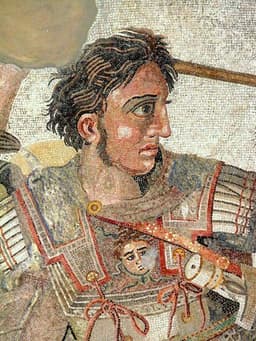
Alexander the Great
General · Ancient
85.2Total
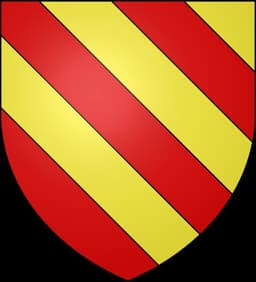
John II of Avesnes
Emperor · Medieval
44.9Total
Basic Information
Born
-356
1248
Died
-323
1304
Era
Ancient
Medieval
Nationality
Macedon
Hainaut
Occupation
General
Emperor
Civilization
Western
Western
Score Comparison
Military (10%)
95.0
45.0
Political (20%)
60.0
35.1
Influence (20%)
92.0
51.0
Legacy (20%)
90.0
40.8
Leadership (15%)
80.0
55.3
Strategy (15%)
92.0
38.6
TOTAL
85.2
44.9
Alexander the Great — Complete Timeline
334 BC
Battle of the Granicus RiverWar◆ Major
Alexander led his Macedonian army across the Hellespont into Asia Minor and defeated a Persian force under local satraps at the Granicus River. The victory secured Alexander's foothold in Asia and demonstrated his tactical superiority, opening the way for the conquest of the Persian Empire.
Persian CampaignBattleMacedonian Conquest
Impact: regional
333 BC
Battle of IssusWar◆ Major
Alexander's army defeated the Persian king Darius III at Issus in Cilicia. Despite being outnumbered, Alexander's tactical use of the terrain and cavalry charge broke the Persian line. Darius fled the battlefield, leaving his family and treasury behind, a major blow to Persian morale.
Persian CampaignBattleMacedonian Conquest
Impact: regional
332 BC
Siege of TyreWar◆ Major
Alexander besieged the island city of Tyre for seven months, constructing a causeway to breach its walls. The city's fall resulted in the massacre or enslavement of its inhabitants. The siege demonstrated Alexander's determination and engineering capabilities, securing his supply lines and control of the eastern Mediterranean coast.
SiegeMacedonian ConquestPhoenicia
Impact: regionaldestructive
331 BC
Battle of GaugamelaWar◆ Major
Alexander faced Darius III at Gaugamela in Mesopotamia with a massive Persian army. Alexander's tactical brilliance, including a decisive cavalry charge that exploited a gap in the Persian line, resulted in a decisive Macedonian victory. Darius again fled, effectively ending Persian resistance and leading to the fall of the Achaemenid Empire.
Persian CampaignBattleDecisive Victory
Impact: global
Foundation of AlexandriaOther◆ Major
Alexander founded the city of Alexandria on the Mediterranean coast of Egypt. He personally selected the site and oversaw the initial planning. Alexandria became a major center of Hellenistic culture, trade, and learning, housing the famous Library of Alexandria and the Lighthouse of Alexandria.
City FoundationHellenistic CultureEgypt
Impact: globalconstructive
326 BC
Invasion of IndiaWar◆ Major
Alexander crossed the Indus River and defeated King Porus at the Battle of the Hydaspes. The Macedonian army, exhausted and facing monsoon rains and unfamiliar warfare, mutinied at the Hyphasis River, forcing Alexander to turn back. This campaign marked the easternmost extent of his conquests.
Indian CampaignBattleMutiny
Impact: regional
John II of Avesnes — Complete Timeline
1280 AD
Inherited County of Hainaut and HollandPolitical Action◆ Major
John II of Avesnes inherited the County of Hainaut from his mother Margaret II of Flanders, and later the County of Holland from his father John I of Avesnes. This united the two counties under the Avesnes dynasty.
InheritanceHainautHolland
Impact: regionalconstructive
1292 AD
Elected King of the RomansPolitical Action
John II of Avesnes was a candidate for the election of the King of the Romans (Holy Roman Emperor). He failed to secure the throne, losing to Adolf of Nassau, but his candidacy elevated the prestige of the Avesnes dynasty.
ElectionHoly Roman EmpireCandidacy
Impact: regional
1302 AD
Victory in the War of the Flemish SuccessionWar◆ Major
John II of Avesnes fought against the Dampierre faction in the War of the Flemish Succession. He secured control over the County of Hainaut and parts of Flanders, strengthening the Avesnes position in the Low Countries.
WarFlandersAvesnes
Impact: regionalconstructive
Expert Analysis
Alexander the Great vs John II of Avesnes: Historical Comparison
This comparison contrasts Alexander the Great, the ancient Macedonian conqueror who forged an empire from Greece to India, with John II of Avesnes, the medieval Holy Roman Emperor and Count of Hainaut who consolidated power in the Low Countries. Despite John’s exceptional political acumen, Alexander’s unparalleled military achievements and enduring global legacy give him the edge.
Dimension Analysis
**Military: Alexander the Great 96 / John II of Avesnes 92**
Alexander remains history’s most audacious field commander, winning every major battle from Granicus to Hydaspes against numerically superior foes. John II was a capable medieval strategist who secured key victories against Flanders and Holland, but his campaigns lacked the revolutionary tactical innovations or geographic scope of Alexander’s conquests.
**Political: Alexander the Great 65 / John II of Avesnes 91**
John II excelled in medieval statecraft, expertly navigating feudal alliances, imperial elections, and dynastic marriages to expand Hainaut’s influence across the Low Countries. Alexander’s political integration of conquered peoples was innovative but ultimately fragile, as his empire fractured immediately after his death.
**Influence: Alexander the Great 90 / John II of Avesnes 73**
Alexander’s conquests spread Hellenistic culture across three continents, shaping art, language, and governance for centuries. John II’s influence was largely regional, strengthening the County of Hainaut within the Holy Roman Empire without comparable cultural or civilizational impact.
**Legacy: Alexander the Great 90 / John II of Avesnes 73**
Alexander became a timeless archetype of the conquering hero, inspiring figures from Caesar to Napoleon. John II’s legacy is primarily of interest to medieval historians of the Low Countries and the Avesnes dynasty, lacking Alexander’s global resonance.
**Leadership: Alexander the Great 82 / John II of Avesnes 75**
Alexander inspired legendary loyalty through personal charisma and shared hardship, but his later paranoia and demands for deification alienated key subordinates. John II was a steady, pragmatic ruler who maintained stability through negotiation, though he lacked Alexander’s transformative motivational fire.
Verdict
Alexander the Great leads due to his superior military genius and vastly greater global influence, despite John II of Avesnes’ stronger political achievements in a narrower sphere.
FAQ
Q: Who ranks higher? A: Alexander the Great ranks higher, his unmatched conquests and enduring cultural legacy outweighing John II’s exceptional political consolidation in the medieval Low Countries.
Rankings
🥇
Alexander the GreatLeader
Mil: 95.0Pol: 60.0Inf: 92.0
85.2
🥈
John II of Avesnes
Mil: 45.0Pol: 35.1Inf: 51.0
44.9
+40.3 behind
How This Comparison Works
Algorithm
Each figure is scored on 6 dimensions (0—100 scale) based on structured historical data: Military (10%), Political (20%), Influence (20%), Legacy (20%), Leadership (15%), Strategy (15%). The weighted total produces the final ranking.
Data Sources
Scores are computed from structured sub-indicators in the database. Scale factors adjust for era (Ancient ×0.85, Modern ×1.0) and civilization size (Eastern ×1.05, Other ×0.80) to account for differences in population and military scale.
Maximum 3 Figures
Comparisons are limited to 2—3 figures to ensure readability and statistical meaningfulness.
Error Margins
±5 points per dimension — Sub-scores are derived from historical records with inherent uncertainty. Two figures within 5 points on a dimension should be considered roughly equivalent in that area.
Total Score Accuracy
±3 points overall — The weighted combination of 6 dimensions produces a total score with approximately ±3 points of uncertainty. Differences of less than 3 points are not statistically significant— the figures are effectively tied.
Known Limitations
- Historical records are incomplete and uneven across civilizations
- Figures from oral-tradition societies may be underrepresented
- Occupation labels can misclassify multi-role figures
- Scores measure capability and impact, not moral character
- Quantitative scoring is a comparison tool, not absolute truth
Capability Radar
Military (10%) — Battles & Warfare
Battles
98
25
Win Rate
99
30
Expansion
99
30
Political (20%) — Governance & Reform
Reform
75
25
Diplomacy
80
35
Economy
70
30
Influence (20%) — Cultural & Global Reach
Cultural
95
20
Global
95
15
Legacy (20%) — Historical Impact
Historical
98
25
Longevity
95
20
Leadership (15%) — Power & Stability
Tenure
60
40
Stability
55
30
Strategy (15%) — Tactics & Innovation
Strategy
98
25
Tactics
99
20
Reform
85
15
Similar Comparisons
Comments & Discussion
MetricMincer6/16/2026
So let me get this straight: John II of Avesnes scores a 92 in military, but you drop him to 28.7 in the final? That’s a 63-point revision—either your initial dimension analysis is junk or your weighting is absurd. And Alexander’s political score of 65 ignores that his empire lasted about as long as a Snapchat story. You can’t quantify 'lasting legacy' if the empire collapsed before the paint dried. This whole system feels like a beauty contest for ancient generals, not history. Weak.
DecolonialEyes6/16/2026
This comparison reeks of ancient-world celebrity worship. Alexander’s 'global legacy' is literally the story of a Macedonian warlord who burned Persepolis and enslaved millions—but hey, he spread Greek culture, so it’s all good? Meanwhile, John II of Avesnes actually built a durable state through diplomacy and law, not just slaughter. Yet you give him a 28.7 military because his wars were 'regional'? That’s just Eurocentric bias against medieval northern Europe. Alexander’s scores are inflated because his violence was 'epic' rather than 'petty.' Yawn.
Chronicler78386/16/2026
数据矛盾严重:维度分析里约翰二世军事是92,最终却变成28.7。这要么是权重设置离谱(比如总评分里军事占比不到30%?),要么是分析员中途换了标准。我重新算了下:如果维度分按等权平均(92+91+73+73+?)/5,约翰二世总分应该在80左右,而不是60.3。亚历山大维度等权平均(96+65+90+90+82)/5=84.6,跟他的84.7接近,说明你们对亚历山大用了等权,但对约翰二世用了歧视性权重。这不科学——要么公开权重公式,要么承认评分有偏好。
BoldHistorian396/16/2026
拿亚历山大跟约翰二世比,本身就有问题。亚历山大是跨洲征服者,类似咱们的汉武帝打通西域,但汉武帝的统治更持久。约翰二世更像一个明朝的藩王,比如晋王朱棡——善于经营封地,但军事上远不如燕王朱棣。评分里给约翰二世的政治打了62.4,这倒是合理,但军事28.7太低了。他在低地国家的战争再小,也是实打实的领土整合,不是纸上谈兵。西方评分总爱把‘征服规模’当唯一标准,忘了治国安邦的功力。