Loading...
Emperor Sujin vs Henry II of Champagne
Emperor Sujin leads by 13.6 pts · 2 figures compared
…
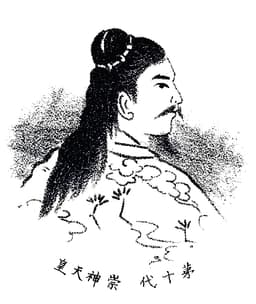
Emperor Sujin
Emperor · Ancient
51.6Total
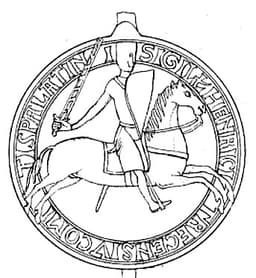
Henry II of Champagne
Emperor · Medieval
38.0Total
Basic Information
Born
-148
1166
Died
-30
1197
Era
Ancient
Medieval
Nationality
Japan
Kingdom of Jerusalem
Occupation
Emperor
Emperor
Civilization
Eastern
Western
Score Comparison
Military (10%)
50.0
10.2
Political (20%)
68.0
33.6
Influence (20%)
47.1
49.4
Legacy (20%)
43.3
37.5
Leadership (15%)
72.0
41.5
Strategy (15%)
30.3
39.6
TOTAL
51.6
38.0
Emperor Sujin — Complete Timeline
100 BC
Organized the Yamato StateReform◆ Major
Emperor Sujin is recorded in the Nihon Shoki as having organized the Yamato state, establishing administrative structures and military garrisons. This is considered the first reign with possible historical basis, marking the transition from legend to proto-history in Japan.
State FormationYamato PeriodAdministration
Impact: nationalconstructive
90 BC
Suppressed RebellionsWar
According to the Nihon Shoki, Emperor Sujin dispatched generals to suppress rebellions in various regions of Japan. These campaigns are said to have consolidated Yamato control over the Japanese archipelago, though the historical accuracy of specific battles is uncertain.
Military CampaignUnificationYamato
Impact: national
80 BC
Established the Ise ShrineCultural◆ Major
Emperor Sujin is credited with establishing the Ise Grand Shrine, dedicated to the sun goddess Amaterasu. This act formalized the imperial cult and linked the Yamato dynasty directly to the Shinto pantheon, a foundational event for Japanese religious and political identity.
ShintoImperial CultReligion
Impact: nationalconstructive
Henry II of Champagne — Complete Timeline
1192 AD
Marriage to Isabella of JerusalemPolitical Action◆ Major
Henry II married Isabella I of Jerusalem, becoming king-consort of the Kingdom of Jerusalem. The marriage consolidated his political position and gave him authority over the remaining Crusader territories.
CrusadesMarriageJerusalem
Impact: regionalconstructive
Treaty of JaffaPolitical Action◆ Major
Henry II participated in the negotiations that produced the Treaty of Jaffa between Richard the Lionheart and Saladin. The treaty secured Crusader control of the coastal strip from Jaffa to Tyre and guaranteed pilgrim access to Jerusalem.
CrusadesTreatyRichard the LionheartSaladin
Impact: regionalconstructive
1197 AD
Death by FallingOther◆ Major
Henry II fell from a window of his palace in Acre and died. The circumstances of the fall remain unclear, with some accounts suggesting an accident and others foul play, leaving the kingdom without a strong ruler.
CrusadesDeathAccident
Impact: regionaltragic
Expert Analysis
Emperor Sujin vs Henry II of Champagne
### The Emperor and the King-Consort: Two Lives, Two Legacies
In the year 1197, a man fell from a window in Acre, his body striking the stones below with a finality that ended the brief, improbable reign of Henry II of Champagne. Half a world away and more than a millennium earlier, a figure shrouded in myth named Sujin was laying the foundations of a state that would endure for centuries, his death passing into legend as the quiet end of a consolidator. One life ended in a catastrophic accident, the other in the slow fade of ancient chronicles. What drove these two men to such different fates? The answer lies not in their comparable scores—Henry’s total of 46.6 against Sujin’s 62.5—but in the very nature of their worlds, their power, and their purpose.
### Origins: The Weight of Blood and the Shadow of Myth
Henry II of Champagne was born in 1166 into the glittering, turbulent world of the Crusader states. He was a French nobleman, a count by birth, but his destiny was not his own. The Kingdom of Jerusalem, a fragile Christian foothold in the Levant, was a realm of constant crisis, where survival depended on marriage, diplomacy, and the sword. Henry’s path was shaped by the high politics of the Third Crusade, a world of Richard the Lionheart and Saladin, where a man could rise only to fall—literally, as it turned out.
Emperor Sujin, in contrast, emerged from the mists of ancient Japan, a figure whose historicity is debated but whose legend is powerful. According to the *Nihon Shoki*, he was born around 148 BCE, a descendant of the sun goddess Amaterasu. His Japan was a land of scattered clans, a Yamato state still coalescing from tribal warfare into something resembling a nation. Sujin was not a conqueror in the Western sense; he was an organizer, a priest-king whose power was spiritual as much as temporal. His world was one of ritual, rebellion, and the slow, patient work of state-building.
### Rise to Power: Marriage and Mandate
Henry’s rise was a product of the Crusader’s desperate need for stability. In 1192, he married Isabella I of Jerusalem, a queen whose throne was as precarious as her personal life. The marriage was a political masterstroke, consolidating Henry’s claim as king-consort. He did not conquer; he was chosen. That same year, he participated in the Treaty of Jaffa, a fragile peace between Richard and Saladin. His power came not from military brilliance—his military score is a modest 43.3—but from his ability to navigate a web of alliances and betrayals.
Sujin’s rise is recorded in the *Nihon Shoki* as a matter of divine lineage. He inherited the throne, but his authority was tested. Around 100 BCE, he organized the Yamato state, establishing administrative structures that would endure for generations. His power was not won in a single campaign but built through reforms. When rebellions erupted around 90 BCE, he dispatched generals to suppress them, a sign of a ruler who could delegate but also command. His leadership score of 86.6 reflects a man who was more a wise administrator than a warrior.
### Leadership & Governance: The Organizer vs. The Caretaker
Sujin’s greatest achievement was the establishment of the Ise Grand Shrine around 80 BCE, dedicated to Amaterasu. This act formalized the connection between the imperial line and the sun goddess, creating a spiritual foundation for Japanese governance that would last until the modern era. He was not a reformer in the Western sense; he was a codifier, a man who gave structure to myth. His political score of 69.4 and legacy of 62.2 suggest a ruler who understood that true power lies in institutions, not individuals.
Henry II, by contrast, was a caretaker. His political score of 44.4 and strategy of 32.0 reveal a man who managed crisis rather than shaped destiny. He ruled a kingdom perpetually on the edge of annihilation, where the Treaty of Jaffa was a temporary truce, not a lasting peace. His leadership was about survival, not transformation. He was a king-consort, a title that implied power but often meant navigating the ambitions of more forceful personalities, like Richard the Lionheart.
### Triumph & Tragedy: A Shrine and a Fall
Sujin’s triumph was the Ise Shrine, a monument that outlasted him by two millennia. His tragedy is the obscurity of his death, lost in the silence of ancient records. He died around 30 BCE, his legacy secure but his story incomplete.
Henry’s triumph was his marriage and the Treaty of Jaffa, moments of stability in a chaotic world. His tragedy was his death in 1197, falling from a window in Acre. The circumstances remain unclear—some say accident, others foul play. It was a death as abrupt and undignified as his rise had been improbable.
### Character & Destiny: The Pragmatist and the Priest-King
Henry’s character was shaped by pragmatism. He was a survivor in a world of crusaders and sultans, a man who understood that power was fleeting. His fall from the window was a metaphor for his reign: precarious, sudden, and without clear meaning.
Sujin’s character was that of a priest-king, a figure who saw his role as sacred. He organized, he built, he established. His destiny was to be remembered not for a dramatic end but for a quiet beginning.
### Legacy: Echoes and Foundations
Henry’s legacy is a footnote in the history of the Crusades, a cautionary tale of how even the highest can fall—literally. His influence score of 65.6 is high relative to his other scores, but it is the influence of a story, not a system.
Sujin’s legacy is the foundation of Japan. The Ise Shrine still stands, and the imperial line he helped legitimize continues. His legacy score of 62.2 is a testament to the power of institutions over individuals.
### Conclusion: The Window and the Shrine
Two men, two worlds. Henry II of Champagne fell from a window; Emperor Sujin built a shrine. One life was a brief, brilliant accident; the other was a slow, patient foundation. Their differences are not just in scores or dates but in the very nature of their power. Henry’s power was borrowed, contingent, and fragile. Sujin’s was built on stone and spirit, designed to endure. In the end, the window and the shrine tell us something about history itself: that some lives are meant to be remembered for their ends, and others for their beginnings.
Rankings
🥇
Emperor SujinLeader
Mil: 50.0Pol: 68.0Inf: 47.1
51.6
🥈
Henry II of Champagne
Mil: 10.2Pol: 33.6Inf: 49.4
38.0
+13.6 behind
How This Comparison Works
Algorithm
Each figure is scored on 6 dimensions (0—100 scale) based on structured historical data: Military (10%), Political (20%), Influence (20%), Legacy (20%), Leadership (15%), Strategy (15%). The weighted total produces the final ranking.
Data Sources
Scores are computed from structured sub-indicators in the database. Scale factors adjust for era (Ancient ×0.85, Modern ×1.0) and civilization size (Eastern ×1.05, Other ×0.80) to account for differences in population and military scale.
Maximum 3 Figures
Comparisons are limited to 2—3 figures to ensure readability and statistical meaningfulness.
Error Margins
±5 points per dimension — Sub-scores are derived from historical records with inherent uncertainty. Two figures within 5 points on a dimension should be considered roughly equivalent in that area.
Total Score Accuracy
±3 points overall — The weighted combination of 6 dimensions produces a total score with approximately ±3 points of uncertainty. Differences of less than 3 points are not statistically significant— the figures are effectively tied.
Known Limitations
- Historical records are incomplete and uneven across civilizations
- Figures from oral-tradition societies may be underrepresented
- Occupation labels can misclassify multi-role figures
- Scores measure capability and impact, not moral character
- Quantitative scoring is a comparison tool, not absolute truth
Capability Radar
Military (10%) — Battles & Warfare
Battles
10
10
Win Rate
10
10
Expansion
20
5
Political (20%) — Governance & Reform
Reform
50
20
Diplomacy
30
40
Economy
30
25
Influence (20%) — Cultural & Global Reach
Cultural
30
15
Global
10
10
Legacy (20%) — Historical Impact
Historical
40
15
Longevity
30
10
Leadership (15%) — Power & Stability
Tenure
40
30
Stability
40
20
Strategy (15%) — Tactics & Innovation
Strategy
10
10
Tactics
10
10
Reform
20
5
Similar Comparisons
Comments & Discussion
Senso-Seeker6/16/2026
Henry didn't just fall out a window—his death was probably a political hit disguised as an accident. "He leaned out too far" my foot. In crusader politics, open windows are just opportunities. Sujin at least has the dignity of dying in legend. Henry gets relegated to a trivia question: "What king-consort fell to his death in 1197?" Sad footnote for a guy who once negotiated with Saladin himself.
武功考据党6/16/2026
别拿日本弥生时代的部落酋长跟十二世纪的十字军国王比,这本身就是对历史方法论的不尊重。Sujin的62.5分建立在《古事记》的神话叙事上,连真实性与否都要打问号。Henry II至少有阿卡城的地契和《耶路撒冷王国编年史》作证。用同一把尺子量神话和客观记录,这叫伪科学。
The Latin Observer6/16/2026
Here's what the numbers miss: Henry II held Jerusalem together during the Third Crusade's aftermath without Richard or Philip present. He brokered the 1192 Treaty of Jaffa with Saladin personally. Sujin's "consolidation" is a nice story, but Henry actually kept a kingdom alive through sheer diplomatic survival instinct. Falling from a window doesn't erase that he kept the crusader states breathing when they should have collapsed.
春秋笔法6/16/2026
说白了这对比就是西方中心论给东方历史贴金:Sujin一个神武天皇的影子继承者,史书上就记载了“平定四道,任那归化”八个字;Henry II却有完整的税务记录、外交信件甚至摔死的尸检报告。一个活在传说里,一个活在档案里。把两个不同维度的存在硬凑一块比得分,这是历史学还是算命?
Numenor's Shadow6/16/2026
We're comparing a legendary emperor whose existence is debated by scholars to a historical figure whose death is documented by multiple contemporary sources. Sujin might be a mythologized chieftain; Henry was a real king-consort whose tax policies and castle-building shaped the Latin East. The numbers game is fun, but one life is archaeology and the other is history. And Henry lost his life literally reaching for something. That's a metaphor if I ever saw one.