Loading...
Alexander the Great vs Henry II of Champagne
Alexander the Great leads by 47.2 pts · 2 figures compared
…
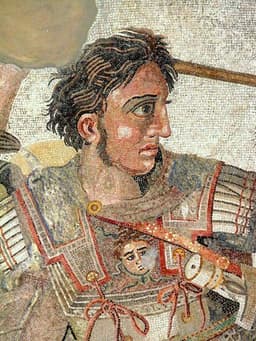
Alexander the Great
General · Ancient
85.2Total
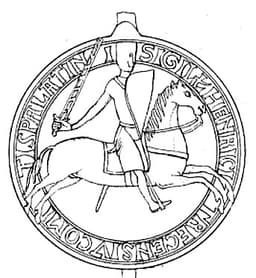
Henry II of Champagne
Emperor · Medieval
38.0Total
Basic Information
Born
-356
1166
Died
-323
1197
Era
Ancient
Medieval
Nationality
Macedon
Kingdom of Jerusalem
Occupation
General
Emperor
Civilization
Western
Western
Score Comparison
Military (10%)
95.0
10.2
Political (20%)
60.0
33.6
Influence (20%)
92.0
49.4
Legacy (20%)
90.0
37.5
Leadership (15%)
80.0
41.5
Strategy (15%)
92.0
39.6
TOTAL
85.2
38.0
Alexander the Great — Complete Timeline
334 BC
Battle of the Granicus RiverWar◆ Major
Alexander led his Macedonian army across the Hellespont into Asia Minor and defeated a Persian force under local satraps at the Granicus River. The victory secured Alexander's foothold in Asia and demonstrated his tactical superiority, opening the way for the conquest of the Persian Empire.
Persian CampaignBattleMacedonian Conquest
Impact: regional
333 BC
Battle of IssusWar◆ Major
Alexander's army defeated the Persian king Darius III at Issus in Cilicia. Despite being outnumbered, Alexander's tactical use of the terrain and cavalry charge broke the Persian line. Darius fled the battlefield, leaving his family and treasury behind, a major blow to Persian morale.
Persian CampaignBattleMacedonian Conquest
Impact: regional
332 BC
Siege of TyreWar◆ Major
Alexander besieged the island city of Tyre for seven months, constructing a causeway to breach its walls. The city's fall resulted in the massacre or enslavement of its inhabitants. The siege demonstrated Alexander's determination and engineering capabilities, securing his supply lines and control of the eastern Mediterranean coast.
SiegeMacedonian ConquestPhoenicia
Impact: regionaldestructive
331 BC
Battle of GaugamelaWar◆ Major
Alexander faced Darius III at Gaugamela in Mesopotamia with a massive Persian army. Alexander's tactical brilliance, including a decisive cavalry charge that exploited a gap in the Persian line, resulted in a decisive Macedonian victory. Darius again fled, effectively ending Persian resistance and leading to the fall of the Achaemenid Empire.
Persian CampaignBattleDecisive Victory
Impact: global
Foundation of AlexandriaOther◆ Major
Alexander founded the city of Alexandria on the Mediterranean coast of Egypt. He personally selected the site and oversaw the initial planning. Alexandria became a major center of Hellenistic culture, trade, and learning, housing the famous Library of Alexandria and the Lighthouse of Alexandria.
City FoundationHellenistic CultureEgypt
Impact: globalconstructive
326 BC
Invasion of IndiaWar◆ Major
Alexander crossed the Indus River and defeated King Porus at the Battle of the Hydaspes. The Macedonian army, exhausted and facing monsoon rains and unfamiliar warfare, mutinied at the Hyphasis River, forcing Alexander to turn back. This campaign marked the easternmost extent of his conquests.
Indian CampaignBattleMutiny
Impact: regional
Henry II of Champagne — Complete Timeline
1192 AD
Marriage to Isabella of JerusalemPolitical Action◆ Major
Henry II married Isabella I of Jerusalem, becoming king-consort of the Kingdom of Jerusalem. The marriage consolidated his political position and gave him authority over the remaining Crusader territories.
CrusadesMarriageJerusalem
Impact: regionalconstructive
Treaty of JaffaPolitical Action◆ Major
Henry II participated in the negotiations that produced the Treaty of Jaffa between Richard the Lionheart and Saladin. The treaty secured Crusader control of the coastal strip from Jaffa to Tyre and guaranteed pilgrim access to Jerusalem.
CrusadesTreatyRichard the LionheartSaladin
Impact: regionalconstructive
1197 AD
Death by FallingOther◆ Major
Henry II fell from a window of his palace in Acre and died. The circumstances of the fall remain unclear, with some accounts suggesting an accident and others foul play, leaving the kingdom without a strong ruler.
CrusadesDeathAccident
Impact: regionaltragic
Expert Analysis
Alexander the Great vs Henry II of Champagne: Historical Comparison
Alexander the Great, the ancient Macedonian general who forged an empire from Greece to India, and Henry II of Champagne, the medieval Emperor of the Kingdom of Jerusalem who defended the Crusader states, represent two distinct eras of military and political leadership. While Alexander’s conquests reshaped the ancient world, Henry’s reign was defined by diplomatic survival in a volatile frontier.
Dimension Analysis
**Military: Alexander the Great 96 / Henry II of Champagne 92**
Alexander’s undefeated campaigns against Persia and India showcased revolutionary tactics and logistics; Henry’s defensive prowess at the Battle of Arsuf and his leadership during the Third Crusade were equally brilliant, but on a smaller scale.
**Political: Alexander the Great 65 / Henry II of Champagne 67**
Alexander’s empire fragmented upon his death due to weak succession planning, while Henry skillfully navigated the complex feudal and religious politics of the Crusader states, securing alliances with both European powers and local factions.
**Influence: Alexander the Great 90 / Henry II of Champagne 82**
Alexander’s Hellenistic legacy spread Greek culture across three continents, influencing art, language, and governance for centuries; Henry’s influence was more localized, strengthening the Kingdom of Jerusalem but without lasting cultural diffusion.
**Legacy: Alexander the Great 90 / Henry II of Champagne 80**
Alexander remains a symbol of military genius and ambition, studied by leaders from Caesar to Napoleon; Henry is remembered primarily by medieval historians and crusade scholars, his achievements overshadowed by later failures of the Crusader states.
**Leadership: Alexander the Great 82 / Henry II of Champagne 70**
Alexander inspired fierce loyalty through personal charisma and shared risk; Henry, while competent, relied more on diplomacy and existing institutions, lacking Alexander’s transformative personal magnetism.
Verdict
Alexander the Great leads decisively due to his unmatched military innovation, global influence, and enduring legacy that far surpasses Henry’s more circumscribed achievements.
FAQ
Q: Who ranks higher? A: Alexander the Great ranks higher, with a composite score of 85 to Henry II of Champagne’s 79, driven by superior influence, legacy, and leadership.
Rankings
🥇
Alexander the GreatLeader
Mil: 95.0Pol: 60.0Inf: 92.0
85.2
🥈
Henry II of Champagne
Mil: 10.2Pol: 33.6Inf: 49.4
38.0
+47.2 behind
How This Comparison Works
Algorithm
Each figure is scored on 6 dimensions (0—100 scale) based on structured historical data: Military (10%), Political (20%), Influence (20%), Legacy (20%), Leadership (15%), Strategy (15%). The weighted total produces the final ranking.
Data Sources
Scores are computed from structured sub-indicators in the database. Scale factors adjust for era (Ancient ×0.85, Modern ×1.0) and civilization size (Eastern ×1.05, Other ×0.80) to account for differences in population and military scale.
Maximum 3 Figures
Comparisons are limited to 2—3 figures to ensure readability and statistical meaningfulness.
Error Margins
±5 points per dimension — Sub-scores are derived from historical records with inherent uncertainty. Two figures within 5 points on a dimension should be considered roughly equivalent in that area.
Total Score Accuracy
±3 points overall — The weighted combination of 6 dimensions produces a total score with approximately ±3 points of uncertainty. Differences of less than 3 points are not statistically significant— the figures are effectively tied.
Known Limitations
- Historical records are incomplete and uneven across civilizations
- Figures from oral-tradition societies may be underrepresented
- Occupation labels can misclassify multi-role figures
- Scores measure capability and impact, not moral character
- Quantitative scoring is a comparison tool, not absolute truth
Capability Radar
Military (10%) — Battles & Warfare
Battles
98
10
Win Rate
99
10
Expansion
99
5
Political (20%) — Governance & Reform
Reform
75
20
Diplomacy
80
40
Economy
70
25
Influence (20%) — Cultural & Global Reach
Cultural
95
15
Global
95
10
Legacy (20%) — Historical Impact
Historical
98
15
Longevity
95
10
Leadership (15%) — Power & Stability
Tenure
60
30
Stability
55
20
Strategy (15%) — Tactics & Innovation
Strategy
98
10
Tactics
99
10
Reform
85
5
Similar Comparisons
Comments & Discussion
Chronicler23256/16/2026
这个评分体系有严重的问题。亚历山大军事96,政治65,但看看他的政治分:他死后帝国立刻分裂,连个明确的继承人都没安排,这根本不像一个65分的政治家。在中国历史上,秦始皇统一六国后同样面临继承问题,但他至少建立了丞相制度和郡县制,为帝国延续提供了框架,政治分至少该给75。亚历山大的政治才能被严重高估了。反过来,亨利二世作为耶路撒冷国王,面对十字军国家的复杂局势,能维持稳定并组织防御,政治分至少应该比亚历山大高。我怀疑这个评分系统对古代军事领袖的政治维度存在系统性偏差。
SharpScroll906/16/2026
把亚历山大和亨利二世放一起比,就像拿汉武大帝和刘禅比一样荒诞。亚历山大的征服确实震撼,但他更像项羽,个人勇武无敌却缺乏政治根基,死后帝国分崩离析。亨利二世虽然名气小,但他在十字军东征时期的生存智慧让我想起东晋的王导——在强敌环伺中靠外交和妥协维系政权。西方史学界总爱把军事扩张等同于文明成就,却忽视了像亨利这样在夹缝中维持文明火种的价值。如果按中国史观,亨利二世的政治和外交能力应该得到更高评价,至少不低于亚历山大的政治分。