Loading...
Emperor Shirakawa vs Ferdinand I of Leon
Emperor Shirakawa leads by 0.2 pts · 2 figures compared
…
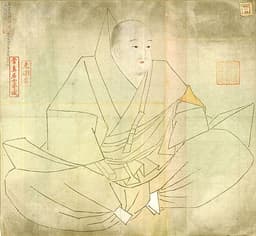
Emperor Shirakawa
Emperor · Medieval
59.4Total
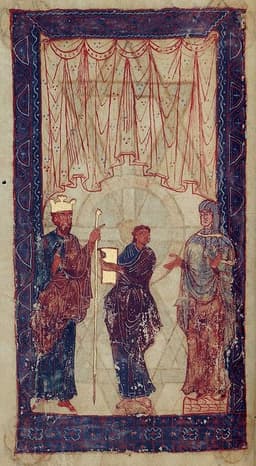
Ferdinand I of Leon
Emperor · Medieval
59.2Total
Basic Information
Born
1053
1015
Died
1129
1065
Era
Medieval
Medieval
Nationality
Japan
Leon
Occupation
Emperor
Emperor
Civilization
Eastern
Western
Score Comparison
Military (10%)
51.4
70.0
Political (20%)
65.0
68.0
Influence (20%)
61.0
56.4
Legacy (20%)
52.0
49.2
Leadership (15%)
62.0
66.0
Strategy (15%)
70.0
57.5
TOTAL
59.4
59.2
Emperor Shirakawa — Complete Timeline
1086 AD
Establishment of the cloistered government (Insei) systemPolitical Action
Shirakawa abdicated the throne but continued to rule from a monastery as a cloistered emperor, creating the Insei system. This allowed retired emperors to wield real political power, bypassing the Fujiwara regents and dominating court politics for decades.
Insei SystemImperial PoliticsHeian Period
Impact: nationalconstructive
Conflict with the Fujiwara over successionPolitical Action◆ Major
Shirakawa forced his son Horikawa to succeed him, overriding Fujiwara preferences. This conflict solidified the cloistered emperor's control over succession and reduced Fujiwara influence, leading to decades of political tension.
Fujiwara RegencySuccessionImperial Politics
Impact: national
1091 AD
Appointment of Taira no Masamori as military governorPolitical Action◆ Major
Shirakawa appointed Taira no Masamori as military governor of Ise Province, elevating the Taira clan's status. This move strengthened the imperial court's military capacity and laid the foundation for the Taira's later rise to power.
Taira ClanMilitary PoliticsHeian Period
Impact: national
1100 AD
Patronage of Buddhist templesCultural
Shirakawa sponsored the construction and renovation of numerous Buddhist temples, including the Hossho-ji and Ensho-ji. This patronage strengthened the imperial family's religious authority and influenced Heian-period Buddhist art and architecture.
BuddhismTemple ConstructionHeian Period
Impact: nationalconstructive
Ferdinand I of Leon — Complete Timeline
1029 AD
Inheritance of the County of CastilePolitical Action◆ Major
Ferdinand I inherited the County of Castile from his father Sancho III of Navarre. He later expanded his territory through conquest and marriage, laying the foundation for the Kingdom of Castile.
Impact: regionalconstructive
1037 AD
Conquest of LeónWar◆ Major
Ferdinand I defeated and killed King Bermudo III of Le
Impact: regional
1056 AD
First Emperor of SpainPolitical Action◆ Major
Ferdinand I was crowned 'Imperator totius Hispaniae' (Emperor of all Spain) in 1056, claiming suzerainty over all Christian and Muslim rulers in Iberia. This title reflected his military dominance and political ambition.
Impact: regional
1065 AD
Division of the kingdomPolitical Action◆ Major
Upon his death, Ferdinand I divided his kingdom among his sons: Sancho II received Castile, Alfonso VI received Le
Impact: regionaldestructive
Expert Analysis
Ferdinand I of Leon vs Emperor Shirakawa
# The Emperor Who Ruled From the Shadows, and the King Who Divided a Kingdom
On a winter morning in 1086, two very different emperors faced pivotal moments that would define their legacies. In the cold stone halls of León, Ferdinand I had been dead for twenty-one years, his kingdom already torn apart by the very sons he had tried to provide for. Across the world in Kyoto, Emperor Shirakawa performed an act of radical innovation: he abdicated the Chrysanthemum Throne, retired to a Buddhist monastery, and from that quiet cloister proceeded to rule Japan with an iron grip for the next four decades. One emperor had divided his realm in death; the other had discovered how to concentrate power in retirement. Their stories, separated by oceans and cultures, reveal the deepest truths about how leadership, ambition, and the accidents of history shape entire civilizations.
Origins
Ferdinand I was born in 1015 into the violent, fluid world of Iberian frontier politics. His father, Sancho III of Navarre, had carved out a formidable kingdom through war and marriage, and bequeathed to his son the County of Castile in 1029. This was no peaceful inheritance. The young count grew up in a land where Christian kingdoms warred against each other as fiercely as they fought the Moors, where a man’s worth was measured by his sword arm and his cunning. Ferdinand learned early that power was something you took, not something you waited for.
Emperor Shirakawa, born in 1053, entered a world of exquisite refinement and suffocating constraint. The Heian court in Kyoto was a place of poetry contests, Buddhist rituals, and elaborate ceremonies—but also of ruthless political maneuvering conducted through whispers and marriage alliances. The Fujiwara clan had dominated the imperial family for centuries, reducing emperors to ceremonial figureheads. Young Shirakawa watched his father and grandfather struggle against this velvet prison, and he absorbed a bitter lesson: direct confrontation would never break the Fujiwara grip. Only indirection, patience, and the strategic use of tradition could free an emperor.
Rise to Power
Ferdinand’s path to supremacy was written in blood. In 1037, he faced King Bermudo III of León at the Battle of Tamarón. The clash was decisive: Bermudo fell in battle, and Ferdinand simply claimed his kingdom. He did not wait for legitimacy or papal approval; he took León because he could. This was the medieval Iberian way—power flowed from victory, and victory flowed from the willingness to kill your rivals.
Shirakawa’s rise was more subtle. He became emperor in 1073 at age twenty, but real power eluded him for over a decade. The Fujiwara regents controlled appointments, land grants, and even the succession. In 1086, Shirakawa made his move: he abdicated in favor of his eight-year-old son Horikawa, then retired to a monastery. This was the birth of the *insei* system—cloistered government. From his monastery, Shirakawa issued decrees, controlled temple lands, and appointed military governors. The Fujiwara found themselves outmaneuvered by a man who had supposedly renounced the world.
Leadership & Governance
Ferdinand I governed as a medieval warrior-king. His military campaigns against the Moors were relentless, extracting tribute and expanding Christian territory. In 1056, he had himself crowned *Imperator totius Hispaniae*—Emperor of all Spain—a title that reflected his ambition to unite the peninsula under his rule. His leadership score of 78.0 reflects a commander who inspired loyalty through victory, but his strategy score of 45.7 suggests a man who thought in terms of conquest rather than consolidation. He was a hammer, not a scalpel.
Shirakawa governed from the shadows, and his leadership score of 82.1 reflects a master of political chess. He appointed Taira no Masamori as military governor of Ise Province in 1091, deliberately elevating a warrior clan to counterbalance the Fujiwara. He lavished patronage on Buddhist temples, building Hossho-ji and Ensho-ji, creating a network of religious institutions loyal to him personally. Every move was calculated to weaken his rivals without ever appearing to attack them directly. His political score of 76.1 and strategy score of 57.5 suggest a man who understood that in the Heian court, the indirect path was often the most direct.
Triumph & Tragedy
Ferdinand’s greatest triumph was his coronation as Emperor of Spain, a moment that crystallized centuries of Christian ambition. But his greatest tragedy came at his deathbed in 1065. Following the old Iberian custom, he divided his kingdom among his three sons: Sancho received Castile, Alfonso received León, and García received Galicia. The division was catastrophic. Within years, the brothers warred against each other, and the dream of a united Spain collapsed into fratricidal chaos. Ferdinand’s legacy was a kingdom shattered by his own hand.
Shirakawa’s triumph was the *insei* system itself, which allowed retired emperors to dominate Japanese politics for nearly a century. But his tragedy was more personal. He outlived his son Horikawa, then his grandson, and saw the system he created become a source of new conflicts. The cloistered emperors and reigning emperors would eventually clash, and the warrior clans he had elevated—the Taira and Minamoto—would grow strong enough to destroy the old order entirely. Shirakawa had built a machine he could not control.
Character & Destiny
Ferdinand I was a man of his time—direct, martial, and bound by the customs of inheritance that had shaped his world. He could not conceive of a kingdom as something unified and permanent; it was a personal possession to be divided like land or treasure. His personality was forged in battle, and it was battle that defined his limits.
Shirakawa was a creature of the court, a man who understood that power in Japan flowed not through armies but through rituals, appointments, and the careful manipulation of symbols. He saw that the throne was a cage, and he escaped it by appearing to abandon it. His personality was shaped by a world where direct action was impossible, and so he became a master of the oblique.
Legacy
Ferdinand I is remembered today as a foundational figure in Spanish history, the first to claim the title Emperor of Spain. But his legacy is deeply ambiguous. His division of the kingdom delayed unification for generations, and his sons’ wars became the stuff of epic poetry. His legacy score of 65.2 reflects a figure honored but also mourned—a man who reached for greatness but could not hold it.
Shirakawa’s legacy is more profound. The *insei* system he created reshaped Japanese governance, shifting power from the court nobility to retired emperors and, eventually, to the warrior clans they empowered. His patronage of Buddhism left a lasting cultural imprint. His legacy score of 70.1 acknowledges a figure who changed the architecture of power itself. Yet he also set the stage for the Genpei War and the rise of the samurai, a transformation he could not have foreseen.
Conclusion
Two emperors, two civilizations, two very different answers to the same question: how does a ruler hold power? Ferdinand I answered with the sword, dividing his kingdom as he had taken it—by force of arms. Shirakawa answered with the shadow, retreating into a monastery to rule more absolutely than any emperor on the throne. One broke his kingdom apart; the other built a system that would eventually break the old order entirely. Their stories remind us that leadership is never just about strength or cunning, but about understanding the world you inhabit. Ferdinand saw a world of war and inheritance; Shirakawa saw a world of ritual and indirection. Both were right, and both were wrong—and history, as always, delivered its verdict without mercy.
Rankings
🥇
Emperor ShirakawaLeader
Mil: 51.4Pol: 65.0Inf: 61.0
59.4
🥈
Ferdinand I of Leon
Mil: 70.0Pol: 68.0Inf: 56.4
59.2
+0.2 behind
How This Comparison Works
Algorithm
Each figure is scored on 6 dimensions (0—100 scale) based on structured historical data: Military (10%), Political (20%), Influence (20%), Legacy (20%), Leadership (15%), Strategy (15%). The weighted total produces the final ranking.
Data Sources
Scores are computed from structured sub-indicators in the database. Scale factors adjust for era (Ancient ×0.85, Modern ×1.0) and civilization size (Eastern ×1.05, Other ×0.80) to account for differences in population and military scale.
Maximum 3 Figures
Comparisons are limited to 2—3 figures to ensure readability and statistical meaningfulness.
Error Margins
±5 points per dimension — Sub-scores are derived from historical records with inherent uncertainty. Two figures within 5 points on a dimension should be considered roughly equivalent in that area.
Total Score Accuracy
±3 points overall — The weighted combination of 6 dimensions produces a total score with approximately ±3 points of uncertainty. Differences of less than 3 points are not statistically significant— the figures are effectively tied.
Known Limitations
- Historical records are incomplete and uneven across civilizations
- Figures from oral-tradition societies may be underrepresented
- Occupation labels can misclassify multi-role figures
- Scores measure capability and impact, not moral character
- Quantitative scoring is a comparison tool, not absolute truth
Capability Radar
Military (10%) — Battles & Warfare
Battles
43
55
Win Rate
51
60
Expansion
54
60
Political (20%) — Governance & Reform
Reform
85
50
Diplomacy
70
55
Economy
50
45
Influence (20%) — Cultural & Global Reach
Cultural
55
40
Global
40
30
Legacy (20%) — Historical Impact
Historical
70
45
Longevity
65
40
Leadership (15%) — Power & Stability
Tenure
60
65
Stability
65
50
Strategy (15%) — Tactics & Innovation
Strategy
54
55
Tactics
58
50
Reform
59
40
Similar Comparisons
Comments & Discussion
ShadowRegent6/16/2026
Shirakawa was the real power player here. While Ferdinand is celebrated as a conqueror, his greatest blunder was dividing his kingdom among his sons—a classic medieval failure that doomed Leon to a century of fratricidal chaos. Shirakawa, by contrast, pioneered the "cloistered rule" system, abdicating but ruling from a Buddhist monastery for 43 years. That’s tactical genius: he neutralized ceremonial expectations while retaining absolute control. Ferdinand divided his realm; Shirakawa divided th
幕府克星6/16/2026
斐迪南一世那一套分封制纯粹是欧洲中世纪的糟粕,把自己的王国像切蛋糕一样切给儿子们,结果就是莱昂王国陷入了整整一代人的内战。而白河天皇用退位掌权的方式,直接打脸中国那句“天无二日”——他证明了天皇可以有两个影子,但权力只能有一只手。斐迪南到死都没搞明白,权力不是土地,不能一分就完事。
DataDredger6/16/2026
Let’s look at the numbers: Ferdinand reigned 38 years, from 1037 to 1065, and his kingdom was so balkanized after his death that his sons spent nearly two decades fighting. Shirakawa reigned as emperor 14 years (1073–1087), then ruled as cloistered emperor for 43 more years, until 1129. That’s nearly three times the effective rule, with no succession crisis. Ferdinand’s “glorious” conquests collapsed under their own weight; Shirakawa built a system that lasted generations. Efficiency speaks loud
古典辩士6/16/2026
白河天皇的退位统治,其实暗合了中国法家的精髓:名实分离。他保留了天皇的名分,却把实权牢牢攥在手里,这比斐迪南一世那种硬碰硬的武力征服高明太多了。斐迪南收复的失地,最后被儿子们败光;白河建立的院政,却让日本皇室在幕府崛起前多撑了两百年。权力的艺术,从来不在刀尖上,而在那份隐忍和算计里。