Loading...
Emperor Seiwa vs King Wonjong of Goryeo
Emperor Seiwa leads by 4.4 pts · 2 figures compared
…
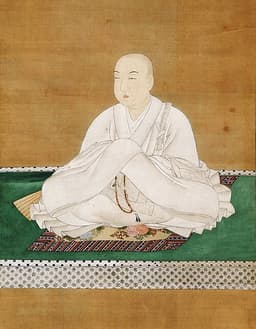
Emperor Seiwa
Emperor · Medieval
49.2Total

King Wonjong of Goryeo
Emperor · Medieval
44.8Total
Basic Information
Born
850
1219
Died
881
1274
Era
Medieval
Medieval
Nationality
Japan
Korea
Occupation
Emperor
Emperor
Civilization
Eastern
Eastern
Score Comparison
Military (10%)
54.6
21.2
Political (20%)
27.9
40.8
Influence (20%)
54.9
53.3
Legacy (20%)
52.0
45.0
Leadership (15%)
51.9
55.3
Strategy (15%)
50.0
36.8
TOTAL
49.2
44.8
Emperor Seiwa — Complete Timeline
858 AD
Reign During Fujiwara RegencyPolitical Action◆ Major
Emperor Seiwa ascended the throne at age 9, with his maternal grandfather Fujiwara no Yoshifusa serving as regent. Yoshifusa became the first person not of imperial blood to hold the title of regent (sessho), solidifying Fujiwara control over the throne.
FujiwaraRegencyYoshifusa
Impact: national
876 AD
Abdication and Buddhist RetirementPolitical Action
Emperor Seiwa abdicated at age 26 to become a Buddhist monk. He took the name Nyudo Saki no Mikado. His early abdication was influenced by the Fujiwara regents and set a pattern for emperors to retire and take Buddhist vows.
AbdicationBuddhismMonk
Impact: national
880 AD
Ancestor of the Seiwa GenjiPolitical Action◆ Major
Emperor Seiwa's grandson, Minamoto no Tsunemoto, was granted the surname Minamoto and founded the Seiwa Genji lineage. This samurai clan became one of the most powerful in Japanese history, producing shoguns and shaping medieval Japan.
Seiwa GenjiMinamotoSamurai
Impact: national
King Wonjong of Goryeo — Complete Timeline
1259 AD
Accepted Mongol SuzeraintyPolitical Action
King Wonjong sent his son (future King Chungnyeol) as a hostage to the Mongol court and agreed to Goryeo becoming a vassal state of the Mongol Empire. This ended decades of military resistance and established a tributary relationship that lasted for nearly a century.
Mongol InvasionDiplomacyVassalage
Impact: national
Returned to Goryeo as KingPolitical Action◆ Major
After the death of King Gojong, Wonjong returned from the Mongol court where he had been held as a hostage. He was installed as king with Mongol approval, marking the beginning of direct Mongol influence over Goryeo's throne.
SuccessionMongol Influence
Impact: national
1270 AD
Suppressed Military RebellionWar◆ Major
King Wonjong ordered the dissolution of the Sambyeolcho, a elite military unit that resisted Mongol domination. The Sambyeolcho rebelled and held out on Jeju Island until 1273, when Mongol-Goryeo forces crushed them, ending organized military opposition to Mongol rule.
RebellionMongol CooperationMilitary
Impact: nationaldestructive
Expert Analysis
Origins
Emperor Seiwa was born in 850 CE as the fourth son of Emperor Montoku. His mother, Fujiwara no Akirakeiko, was a daughter of Fujiwara no Yoshifusa, placing him at the center of Fujiwara clan politics. He ascended the throne at age 9, with his grandfather as regent. In contrast, King Wonjong of Goryeo was born in 1219 CE as the son of King Gojong. His early life was overshadowed by the Mongol invasions, which began in 1231. He spent years as a hostage at the Mongol court, shaping his later policies.
Rise to Power
Emperor Seiwa became emperor in 858 CE following his father's death, but real power rested with Fujiwara no Yoshifusa, who became the first regent not of imperial blood. Seiwa's reign (858-876) was largely ceremonial, with the Fujiwara clan consolidating control. King Wonjong's rise was more tumultuous. After his father Gojong's death in 1259, he returned from Mongol captivity and was installed as king with Mongol approval. His reign (1259-1274) began under the shadow of Mongol demands for submission.
Leadership & Governance
Seiwa's leadership was passive; he abdicated at 26 to become a Buddhist monk, allowing the Fujiwara regents to dominate. His main legacy came posthumously: his grandson Minamoto no Tsunemoto founded the Seiwa Genji, a samurai clan that would shape Japanese history. Wonjong, by contrast, actively negotiated with the Mongols. He accepted suzerainty in 1259, sending his son as hostage, but secured Goryeo's autonomy and cultural preservation. He also suppressed the Sambyeolcho rebellion (1270-1273), an elite military unit resisting Mongol rule. Politically, Wonjong scored 40.8, significantly higher than Seiwa's 27.9.
Triumph & Tragedy
Seiwa's triumph was inadvertently founding the Seiwa Genji lineage, which would produce shoguns like Minamoto no Yoritomo. However, his reign itself was weak, and he abdicated early, possibly due to Fujiwara pressure. His legacy score is 52.0. Wonjong's triumph was preserving Goryeo's identity under Mongol hegemony; his influence score is 53.3. His tragedy was the loss of sovereignty and the brutal suppression of the Sambyeolcho, which cost many lives. His military score of 21.2 reflects his reliance on Mongol forces.
Character & Destiny
Seiwa was a figurehead, his destiny shaped by the Fujiwara regency. His abdication to a monastic life suggests a passive character. In contrast, Wonjong was pragmatic, willing to submit to the Mongols to save his kingdom. His leadership score of 55.3 reflects his ability to navigate vassalage. Both were constrained by larger forces—Seiwa by the Fujiwara, Wonjong by the Mongols.
Legacy
Seiwa's legacy is immense through the Seiwa Genji, which dominated samurai culture and led to the Kamakura shogunate. His total score is 49.2. Wonjong's legacy is more ambiguous: he set a precedent for Goryeo's submission to the Mongols, but also ensured its survival. His total score is 44.8. The Seiwa Genji's impact on Japanese history is arguably greater than Wonjong's on Korea, as the Genji shaped the samurai era for centuries.
Conclusion
Emperor Seiwa had a greater long-term impact due to his descendants, the Seiwa Genji, who shaped medieval Japan. While Wonjong's diplomatic pragmatism preserved Goryeo, his influence was more immediate and less transformative. Seiwa's score of 49.2 versus Wonjong's 44.8 reflects this. Seiwa's legacy as a progenitor outweighs Wonjong's as a vassal king.
Rankings
🥇
Emperor SeiwaLeader
Mil: 54.6Pol: 27.9Inf: 54.9
49.2
🥈
King Wonjong of Goryeo
Mil: 21.2Pol: 40.8Inf: 53.3
44.8
+4.4 behind
How This Comparison Works
Algorithm
Each figure is scored on 6 dimensions (0—100 scale) based on structured historical data: Military (10%), Political (20%), Influence (20%), Legacy (20%), Leadership (15%), Strategy (15%). The weighted total produces the final ranking.
Data Sources
Scores are computed from structured sub-indicators in the database. Scale factors adjust for era (Ancient ×0.85, Modern ×1.0) and civilization size (Eastern ×1.05, Other ×0.80) to account for differences in population and military scale.
Maximum 3 Figures
Comparisons are limited to 2—3 figures to ensure readability and statistical meaningfulness.
Error Margins
±5 points per dimension — Sub-scores are derived from historical records with inherent uncertainty. Two figures within 5 points on a dimension should be considered roughly equivalent in that area.
Total Score Accuracy
±3 points overall — The weighted combination of 6 dimensions produces a total score with approximately ±3 points of uncertainty. Differences of less than 3 points are not statistically significant— the figures are effectively tied.
Known Limitations
- Historical records are incomplete and uneven across civilizations
- Figures from oral-tradition societies may be underrepresented
- Occupation labels can misclassify multi-role figures
- Scores measure capability and impact, not moral character
- Quantitative scoring is a comparison tool, not absolute truth
Capability Radar
Military (10%) — Battles & Warfare
Battles
45
10
Win Rate
47
10
Expansion
53
10
Political (20%) — Governance & Reform
Reform
20
30
Diplomacy
25
50
Economy
20
30
Influence (20%) — Cultural & Global Reach
Cultural
40
20
Global
30
30
Legacy (20%) — Historical Impact
Historical
60
40
Longevity
70
30
Leadership (15%) — Power & Stability
Tenure
30
40
Stability
35
30
Strategy (15%) — Tactics & Innovation
Strategy
53
10
Tactics
58
10
Reform
57
10
Similar Comparisons
Comments & Discussion
No comments yet. Be the first to share your thoughts!