Loading...
King Wonjong of Goryeo vs Napoleon Bonaparte
Napoleon Bonaparte leads by 26.1 pts · 2 figures compared
…
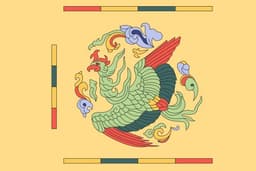
King Wonjong of Goryeo
Emperor · Medieval
44.8Total

Napoleon Bonaparte
General · Modern
70.9Total
Basic Information
Born
1219
1769
Died
1274
1821
Era
Medieval
Modern
Nationality
Korea
France
Occupation
Emperor
General
Civilization
Eastern
Western
Score Comparison
Military (10%)
21.2
94.0
Political (20%)
40.8
72.0
Influence (20%)
53.3
40.0
Legacy (20%)
45.0
80.0
Leadership (15%)
55.3
78.0
Strategy (15%)
36.8
90.0
TOTAL
44.8
70.9
King Wonjong of Goryeo — Complete Timeline
1259 AD
Accepted Mongol SuzeraintyPolitical Action
King Wonjong sent his son (future King Chungnyeol) as a hostage to the Mongol court and agreed to Goryeo becoming a vassal state of the Mongol Empire. This ended decades of military resistance and established a tributary relationship that lasted for nearly a century.
Mongol InvasionDiplomacyVassalage
Impact: national
Returned to Goryeo as KingPolitical Action◆ Major
After the death of King Gojong, Wonjong returned from the Mongol court where he had been held as a hostage. He was installed as king with Mongol approval, marking the beginning of direct Mongol influence over Goryeo's throne.
SuccessionMongol Influence
Impact: national
1270 AD
Suppressed Military RebellionWar◆ Major
King Wonjong ordered the dissolution of the Sambyeolcho, a elite military unit that resisted Mongol domination. The Sambyeolcho rebelled and held out on Jeju Island until 1273, when Mongol-Goryeo forces crushed them, ending organized military opposition to Mongol rule.
RebellionMongol CooperationMilitary
Impact: nationaldestructive
Napoleon Bonaparte — Complete Timeline
1799 AD
Coup of 18 BrumaireOther◆ Major
Napoleon Bonaparte, with support from his brother Lucien and key political figures, overthrew the Directory in a bloodless coup. He established the Consulate with himself as First Consul, effectively becoming the ruler of France. This event ended the French Revolution's most unstable period.
French RevolutionCoupRise to Power
Impact: regional
1804 AD
Promulgation of the Napoleonic CodeOther◆ Major
Napoleon enacted the Civil Code of the French, known as the Napoleonic Code, a comprehensive set of laws that replaced the fragmented feudal legal systems. The code established legal equality, protected property rights, and secularized law. It became the basis for legal systems in many European and world countries.
Legal ReformNapoleonic CodeCivil Law
Impact: globalconstructive
1805 AD
Battle of AusterlitzWar◆ Major
Napoleon's Grande Arm
Napoleonic WarsBattleDecisive Victory
Impact: global
1812 AD
Invasion of RussiaWar◆ Major
Napoleon led the Grande Arm
Napoleonic WarsInvasionDisaster
Impact: globaldestructive
1815 AD
Battle of WaterlooWar◆ Major
Napoleon's French army was defeated by the combined forces of the Duke of Wellington's Anglo-Allied army and Gebhard Leberecht von Bl
Napoleonic WarsBattleFinal Defeat
Impact: globaldestructive
Expert Analysis
king-wonjong-of-goryeo-vs-napoleon-bonaparte
### The Emperor and the King: Two Paths Through the Storm
On a June morning in 1815, Napoleon Bonaparte watched the rain-soaked fields of Waterloo and prepared for the battle that would seal his fate. He had conquered Europe, crowned himself emperor, and rewritten the laws of a continent. Thirty-four years earlier, on the other side of the world, a different ruler faced an equally impossible choice. King Wonjong of Goryeo, standing before the envoys of the Mongol Empire, made a decision that would define his reign not through glory, but through survival. One man chose to fight until the very earth beneath him was soaked in blood. The other chose to bow. Why did they take such different paths, and what drove their outcomes?
### Origins
Napoleon Bonaparte was born in 1769 on the island of Corsica, a place that had only recently become French. His family was minor nobility, but his education at French military academies shaped him into a child of the Enlightenment. He devoured the works of Rousseau and Voltaire, studied the campaigns of Alexander and Caesar, and emerged into a world in revolutionary upheaval. The old order was collapsing, and for a man of ambition and talent, the vacuum was an invitation.
King Wonjong, born in 1219, entered a world already in crisis. The Goryeo dynasty had ruled the Korean peninsula for nearly three centuries, but the Mongol Empire, under Genghis Khan and his successors, had begun its relentless expansion. Wonjong was not a soldier by training. He was a prince raised in the Confucian court tradition, where the ideal ruler was a sage who maintained harmony, not a general who waged war. His kingdom was small, surrounded by a power that had already crushed the Jin dynasty of northern China and was now knocking on Goryeo’s gates.
### Rise to Power
Napoleon’s rise was meteoric. At 24, he crushed a royalist uprising in Paris with a "whiff of grapeshot," earning the gratitude of the revolutionary government. At 26, he led a ragged army across the Alps into Italy and defeated the Austrians in a series of lightning campaigns. By 30, he had made himself First Consul of France. By 35, he crowned himself Emperor. His path was built on audacity, speed, and the willingness to gamble everything on a single battle.
Wonjong’s rise was slower, more painful, and shaped by forces he could not control. He spent years as a hostage at the Mongol court, a pawn in the negotiations between his father, King Gojong, and the Mongol khans. When Gojong died in 1259, Wonjong was allowed to return to Goryeo as king, but only after agreeing to Mongol suzerainty. He did not seize power; power was handed to him, weighed down with conditions. His first act was not a conquest but a surrender.
### Leadership & Governance
As a ruler, Napoleon was a whirlwind of energy and reform. He centralized the French state, created the Napoleonic Code—a legal system that influenced much of Europe—and reorganized education, banking, and the military. His political genius lay in his ability to blend revolutionary ideals with authoritarian control. He was a master of propaganda, presenting himself as the savior of the Revolution while crushing its democratic impulses. His military genius is beyond dispute: at Austerlitz in 1805, he destroyed a combined Russian and Austrian army with a masterful feint and flank attack that is still studied in war colleges today. His strategy score of 93 reflects a mind that could see the battlefield as a chessboard.
Wonjong governed in the shadow of the Mongols. His political score of 63.5 and leadership score of 75.2 suggest a man who was not a visionary but a pragmatist. His greatest achievement was not a conquest but a negotiation: by accepting Mongol suzerainty, he ended the devastating invasions that had ravaged Goryeo for decades. He ordered the dissolution of the Sambyeolcho, the elite military unit that resisted Mongol domination, in 1270, crushing a rebellion that threatened his fragile peace. It was an act of political survival, not glory. Where Napoleon expanded, Wonjong preserved.
### Triumph & Tragedy
Napoleon’s greatest triumph was the Empire at its height in 1810—from Spain to Poland, from the Baltic to the Adriatic, his family sat on thrones and his code governed courts. His greatest tragedy was the invasion of Russia in 1812. He marched with 600,000 men into a frozen wasteland and returned with fewer than 40,000. The disaster broke his aura of invincibility and set the stage for his first abdication in 1814.
Wonjong’s triumph was more subtle: he kept his kingdom alive. The Mongols had destroyed the Jin, the Khwarezm, and the Song; Goryeo survived. His tragedy was that survival came at a terrible cost. He became the first Goryeo king to accept Mongol suzerainty, a decision that would bind Korea to the Mongol Yuan dynasty for nearly a century. His son, King Chungnyeol, was sent as a hostage to the Mongol court—a humiliation that echoed through Korean history. Wonjong never led an army into battle; his military score of 14 is a stark reminder that his war was fought in council chambers, not on fields.
### Character & Destiny
Napoleon was driven by an insatiable hunger for glory. "I live only for posterity," he once said, and he believed that history would judge him by his victories. His character was a paradox: a brilliant administrator who could not stop conquering, a man who codified equality before the law while making himself a hereditary emperor. His destiny was shaped by his refusal to accept limits. He could have consolidated his empire after Tilsit in 1807; instead, he invaded Spain, then Russia, then fought until the end.
Wonjong was driven by a different hunger: the desire to preserve. He understood that Goryeo could not defeat the Mongols, so he chose submission over annihilation. His character was shaped by patience and realism, not ambition. He was a diplomat in an age of conquerors. His destiny was to be remembered not as a warrior, but as the king who bowed—and in bowing, saved his people.
### Legacy
Napoleon’s legacy is carved into the bedrock of modern Europe. The Napoleonic Code influenced civil law across the continent and beyond. He restructured the map of Europe, spreading the ideals of nationalism and meritocracy. He is remembered as a military genius and a tyrant, a liberator and a conqueror. His total score of 82.4 reflects a figure of immense impact, for good and ill.
Wonjong’s legacy is quieter but no less real. He set the template for Korea’s relationship with China for centuries—a relationship of vassalage that preserved Korean identity even under foreign dominance. He is remembered in Korean history as a realist who chose survival over pride. His total score of 59.0 reflects a different kind of greatness: not the greatness of conquest, but the greatness of endurance.
### Conclusion
Napoleon and Wonjong stand at opposite ends of the spectrum of power. One conquered the world and lost it; the other surrendered a kingdom and saved it. Their lives ask us a question that has no easy answer: What is the measure of a leader? Is it the height of his ambition or the depth of his wisdom? Napoleon’s tragedy is that he could not stop fighting; Wonjong’s triumph is that he knew when to stop. In the end, both men faced the same storm—the storm of history—and chose different paths through it. One left a trail of fire; the other, a path of peace. History remembers both, but it judges them by different standards.
Rankings
🥇
Napoleon BonaparteLeader
Mil: 94.0Pol: 72.0Inf: 40.0
70.9
🥈
King Wonjong of Goryeo
Mil: 21.2Pol: 40.8Inf: 53.3
44.8
+26.1 behind
How This Comparison Works
Algorithm
Each figure is scored on 6 dimensions (0—100 scale) based on structured historical data: Military (10%), Political (20%), Influence (20%), Legacy (20%), Leadership (15%), Strategy (15%). The weighted total produces the final ranking.
Data Sources
Scores are computed from structured sub-indicators in the database. Scale factors adjust for era (Ancient ×0.85, Modern ×1.0) and civilization size (Eastern ×1.05, Other ×0.80) to account for differences in population and military scale.
Maximum 3 Figures
Comparisons are limited to 2—3 figures to ensure readability and statistical meaningfulness.
Error Margins
±5 points per dimension — Sub-scores are derived from historical records with inherent uncertainty. Two figures within 5 points on a dimension should be considered roughly equivalent in that area.
Total Score Accuracy
±3 points overall — The weighted combination of 6 dimensions produces a total score with approximately ±3 points of uncertainty. Differences of less than 3 points are not statistically significant— the figures are effectively tied.
Known Limitations
- Historical records are incomplete and uneven across civilizations
- Figures from oral-tradition societies may be underrepresented
- Occupation labels can misclassify multi-role figures
- Scores measure capability and impact, not moral character
- Quantitative scoring is a comparison tool, not absolute truth
Capability Radar
Military (10%) — Battles & Warfare
Battles
10
95
Win Rate
10
90
Expansion
10
95
Political (20%) — Governance & Reform
Reform
30
95
Diplomacy
50
80
Economy
30
85
Influence (20%) — Cultural & Global Reach
Cultural
20
85
Global
30
90
Legacy (20%) — Historical Impact
Historical
40
95
Longevity
30
90
Leadership (15%) — Power & Stability
Tenure
40
85
Stability
30
70
Strategy (15%) — Tactics & Innovation
Strategy
10
95
Tactics
10
98
Reform
10
92
Similar Comparisons
Comments & Discussion
WaterlooWeeps6/17/2026
Napoleon fought because he could. Wonjong bowed because he had to. One had cannons, a Grande Armée, and the momentum of revolutionary Europe. The other faced the Mongol war machine that had already steamrolled Central Asia and Eastern Europe. Napoleon's defeat was personal ambition meeting its limit. Wonjong's "surrender" kept Goryeo's identity intact for eighty more years under Mongol suzerainty. Survival isn't cowardice—it's a different kind of strategy.
汉史硬汉6/17/2026
说拿破仑伟大,可他治国靠的是征服,死后国家四分五裂;说元宗软弱,可他联姻蒙古、保留高丽国号,让半岛避免了全境屠城。历史只看谁打得狠,不看谁活得更久。拿破仑败就败在不知道什么该放手,元宗懂。这叫政治智慧,不是窝囊。