Loading...
Alfred the Great vs King Wonjong of Goryeo
Alfred the Great leads by 23.9 pts · 2 figures compared
…
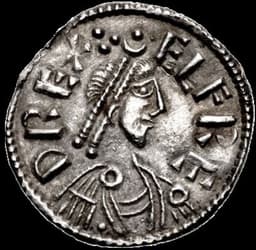
Alfred the Great
Emperor · Medieval
68.7Total

King Wonjong of Goryeo
Emperor · Medieval
44.8Total
Basic Information
Born
849
1219
Died
899
1274
Era
Medieval
Medieval
Nationality
England
Korea
Occupation
Emperor
Emperor
Civilization
Western
Eastern
Score Comparison
Military (10%)
52.5
21.2
Political (20%)
70.0
40.8
Influence (20%)
65.0
53.3
Legacy (20%)
80.0
45.0
Leadership (15%)
66.0
55.3
Strategy (15%)
68.1
36.8
TOTAL
68.7
44.8
Alfred the Great — Complete Timeline
878 AD
Battle of EdingtonWar
Alfred defeated the Viking Great Heathen Army led by Guthrum at Edington. The victory forced Guthrum to accept baptism and the Treaty of Wedmore, establishing a boundary between Wessex and the Danelaw.
VikingsDanelawGuthrumWessex
Impact: regionalconstructive
880 AD
Establishment of the Burghal SystemReform◆ Major
Alfred created a network of fortified towns (burhs) across Wessex, each with a garrison and tax system for maintenance. This defensive system protected against Viking attacks and promoted urban development.
FortificationsDefenseUrbanization
Impact: nationalconstructive
890 AD
Translation of Latin Works into Old EnglishCultural◆ Major
Alfred commissioned translations of key Latin texts, including Boethius's Consolation of Philosophy and Gregory the Great's Pastoral Care, into Old English. He also initiated the Anglo-Saxon Chronicle, promoting literacy and education.
TranslationEducationAnglo-Saxon Chronicle
Impact: nationalconstructive
King Wonjong of Goryeo — Complete Timeline
1259 AD
Accepted Mongol SuzeraintyPolitical Action
King Wonjong sent his son (future King Chungnyeol) as a hostage to the Mongol court and agreed to Goryeo becoming a vassal state of the Mongol Empire. This ended decades of military resistance and established a tributary relationship that lasted for nearly a century.
Mongol InvasionDiplomacyVassalage
Impact: national
Returned to Goryeo as KingPolitical Action◆ Major
After the death of King Gojong, Wonjong returned from the Mongol court where he had been held as a hostage. He was installed as king with Mongol approval, marking the beginning of direct Mongol influence over Goryeo's throne.
SuccessionMongol Influence
Impact: national
1270 AD
Suppressed Military RebellionWar◆ Major
King Wonjong ordered the dissolution of the Sambyeolcho, a elite military unit that resisted Mongol domination. The Sambyeolcho rebelled and held out on Jeju Island until 1273, when Mongol-Goryeo forces crushed them, ending organized military opposition to Mongol rule.
RebellionMongol CooperationMilitary
Impact: nationaldestructive
Expert Analysis
Origins
Alfred the Great (849–899) was born in Wantage, Berkshire, the fifth son of King Æthelwulf of Wessex. His mother, Osburh, instilled in him a love of learning, and he was taught Latin and Anglo-Saxon poetry. Alfred's early exposure to the instability of Viking raids shaped his defensive mindset. He was not initially expected to rule, but the deaths of his four older brothers left him king in 871 at age 22.
King Wonjong (1219–1274), born Wang Sik, was the son of King Gojong of Goryeo. He grew up during the Mongol invasions of Korea (1231–1259), which devastated the peninsula. The Goryeo court had fled to Ganghwa Island, and Wonjong was educated in Confucian classics and military strategy. Unlike Alfred, his formative years were marked by a defensive posture against an overwhelming external power.
Rise to Power
Alfred became king in 871 after the death of his brother Æthelred. His early reign was a series of defeats by the Viking Great Heathen Army. In 878, after a surprise Viking attack forced him to flee to the marshes of Athelney, Alfred rallied forces and defeated Guthrum at the Battle of Edington. This victory led to the Treaty of Wedmore, establishing a boundary between Wessex and the Danelaw. Alfred's military score of 52.5 reflects his defensive successes rather than offensive campaigns.
Wonjong's path to power was shaped by Mongol dominance. In 1259, King Gojong died, and Wonjong, who had been a hostage in the Mongol court for over a decade, was installed as king by Kublai Khan. His reign began under Mongol supervision, with his son Chungnyeol sent as a hostage. Wonjong's political score of 40.8 indicates his constrained authority.
Leadership & Governance
Alfred's governance was transformative. He established the Burghal System, a network of fortified towns (burhs) with garrisons and tax systems, detailed in the Burghal Hidage. These burhs protected against Viking raids and became centers of trade and administration. He also reformed the military, creating a standing army (fyrd) and a navy. Alfred's legal code, the Doom Book, combined Mosaic, Mercian, and West Saxon laws, emphasizing justice and impartiality. His leadership score of 66.0 reflects his innovative administrative reforms.
Wonjong's governance was defined by Mongol suzerainty. He accepted Goryeo as a vassal state, sending tributes and hostages. He ordered the dissolution of the Sambyeolcho, an elite military unit that resisted Mongol rule. The Sambyeolcho rebelled (1270–1273), and Wonjong suppressed them with Mongol help, leading to their defeat on Jeju Island. His strategy score of 36.8 indicates limited autonomy.
Triumph & Tragedy
Alfred's greatest triumph was the Battle of Edington (878), which secured Wessex's survival and paved the way for English unification. He also promoted education, translating Latin works such as Boethius's *Consolation of Philosophy* and Gregory the Great's *Pastoral Care* into Old English, fostering vernacular literature. His legacy score of 80.0 reflects his enduring impact. However, Alfred's failure to fully expel the Vikings allowed the Danelaw to persist, and his later campaigns had mixed results.
Wonjong's triumph was preserving the Goryeo dynasty under Mongol domination; he secured his throne and avoided outright conquest. His legacy score of 45.0 is modest. His tragedy was the loss of sovereignty: Goryeo became a Mongol vassal, and Korean kings were required to marry Mongol princesses. The Sambyeolcho rebellion, though suppressed, demonstrated internal resistance to his policies.
Character & Destiny
Alfred was pragmatic, resilient, and learned. He suffered from chronic illness (possibly Crohn's disease), yet he personally led armies and oversaw administrative reforms. His character shaped his destiny: his determination to defend Wessex and promote learning created a legacy of English identity. Historians like Asser praised his piety and wisdom.
Wonjong was a realist, choosing submission over destruction. His character was shaped by the Mongol threat; he prioritized survival over independence. This pragmatism preserved the dynasty but tarnished his reputation. Korean historiography often views him as a weak king who capitulated to foreign powers.
Legacy
Alfred's legacy is foundational. He is the only English monarch called 'the Great.' The Burghal System evolved into a network of towns, and his legal codes influenced English common law. His promotion of English literacy helped shape the language. Alfred's total score of 68.7 reflects his multidimensional impact.
Wonjong's legacy is mixed. He set a precedent for Mongol influence in Korea, which continued for decades. The Sambyeolcho rebellion became a symbol of resistance. His reign marked the beginning of Goryeo's subordination, which ended only with the fall of the Mongol Yuan dynasty. His influence score of 53.3 indicates regional impact but limited global reach.
Conclusion
Alfred the Great had a greater impact than King Wonjong of Goryeo. Alfred's score of 68.7 versus Wonjong's 44.8 reflects his superior political, military, and cultural achievements. Alfred defended his realm and laid the foundations for a unified England, while Wonjong submitted to Mongol rule, preserving his dynasty at the cost of sovereignty. Alfred's innovations in governance, education, and military defense created enduring institutions, whereas Wonjong's legacy is defined by subordination. In the balance of history, Alfred's proactive leadership contrasts sharply with Wonjong's reactive pragmatism. The data supports a clear position: Alfred the Great's influence and legacy far exceed Wonjong's.
Rankings
🥇
Alfred the GreatLeader
Mil: 52.5Pol: 70.0Inf: 65.0
68.7
🥈
King Wonjong of Goryeo
Mil: 21.2Pol: 40.8Inf: 53.3
44.8
+23.9 behind
How This Comparison Works
Algorithm
Each figure is scored on 6 dimensions (0—100 scale) based on structured historical data: Military (10%), Political (20%), Influence (20%), Legacy (20%), Leadership (15%), Strategy (15%). The weighted total produces the final ranking.
Data Sources
Scores are computed from structured sub-indicators in the database. Scale factors adjust for era (Ancient ×0.85, Modern ×1.0) and civilization size (Eastern ×1.05, Other ×0.80) to account for differences in population and military scale.
Maximum 3 Figures
Comparisons are limited to 2—3 figures to ensure readability and statistical meaningfulness.
Error Margins
±5 points per dimension — Sub-scores are derived from historical records with inherent uncertainty. Two figures within 5 points on a dimension should be considered roughly equivalent in that area.
Total Score Accuracy
±3 points overall — The weighted combination of 6 dimensions produces a total score with approximately ±3 points of uncertainty. Differences of less than 3 points are not statistically significant— the figures are effectively tied.
Known Limitations
- Historical records are incomplete and uneven across civilizations
- Figures from oral-tradition societies may be underrepresented
- Occupation labels can misclassify multi-role figures
- Scores measure capability and impact, not moral character
- Quantitative scoring is a comparison tool, not absolute truth
Capability Radar
Military (10%) — Battles & Warfare
Battles
55
10
Win Rate
60
10
Expansion
50
10
Political (20%) — Governance & Reform
Reform
85
30
Diplomacy
75
50
Economy
70
30
Influence (20%) — Cultural & Global Reach
Cultural
75
20
Global
60
30
Legacy (20%) — Historical Impact
Historical
80
40
Longevity
85
30
Leadership (15%) — Power & Stability
Tenure
70
40
Stability
65
30
Strategy (15%) — Tactics & Innovation
Strategy
75
10
Tactics
70
10
Reform
80
10
Similar Comparisons
Comments & Discussion
No comments yet. Be the first to share your thoughts!