Loading...
Emperor Kanmu vs Kenneth MacAlpin
Emperor Kanmu leads by 11.9 pts · 2 figures compared
…
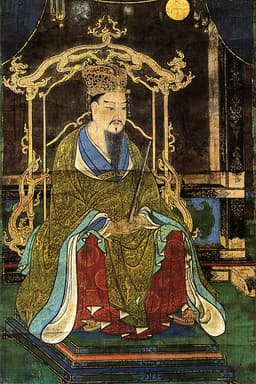
Emperor Kanmu
Emperor · Medieval
61.7Total
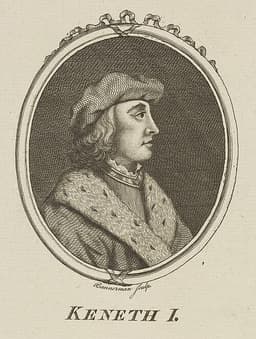
Kenneth MacAlpin
Emperor · Medieval
49.8Total
Basic Information
Born
737
810
Died
806
858
Era
Medieval
Medieval
Nationality
Japan
Scotland
Occupation
Emperor
Emperor
Civilization
Eastern
Western
Score Comparison
Military (10%)
22.6
35.0
Political (20%)
72.0
42.3
Influence (20%)
72.0
54.9
Legacy (20%)
65.0
50.0
Leadership (15%)
72.0
65.7
Strategy (15%)
35.7
38.6
TOTAL
61.7
49.8
Emperor Kanmu — Complete Timeline
784 AD
Abandonment of Nagaoka-kyoPolitical Action
Emperor Kanmu abandoned the new capital at Nagaoka-kyo after only ten years, following a series of disasters and political intrigues, including the assassination of the chief architect. The move to Heian-kyo was motivated by a desire for a fresh start.
Nagaoka-kyoAbandonmentCapital
Impact: national
789 AD
Campaigns Against the EmishiWar◆ Major
Emperor Kanmu launched military campaigns to subdue the Emishi tribes in northern Honshu. Led by generals like Sakanoue no Tamuramaro, the campaigns expanded Japanese control into the Tohoku region. The Emishi were eventually defeated or assimilated.
EmishiNorthern ExpansionTohoku
Impact: national
794 AD
Transfer of the Capital to Heian-kyoPolitical Action◆ Major
Emperor Kanmu moved the imperial capital from Nagaoka-kyo to Heian-kyo (modern Kyoto). The new city was laid out on a grid pattern modeled after Chang'an. This move established Kyoto as the imperial capital for over a thousand years.
CapitalHeian-kyoKyoto
Impact: nationalconstructive
Kenneth MacAlpin — Complete Timeline
839 AD
Battle of FortriuWar◆ Major
Kenneth MacAlpin's predecessor, E
VikingsPictsSuccession
Impact: regional
843 AD
Unification of Picts and ScotsPolitical Action
Kenneth MacAlpin became king of both the Picts and the Scots, traditionally dated to 843. He united the two peoples under his rule, creating the Kingdom of Alba. This unification is considered the foundation of the medieval Scottish kingdom.
UnificationScotlandAlba
Impact: regionalconstructive
849 AD
Transfer of Relics to DunkeldCultural◆ Major
Kenneth MacAlpin transferred the relics of Saint Columba from Iona to Dunkeld for safekeeping from Viking raids. This act established Dunkeld as a major religious center and reinforced the link between the Scottish monarchy and the Columban church.
ReligionRelicsDunkeld
Impact: regionalconstructive
850 AD
Invasion of NorthumbriaWar
Kenneth MacAlpin led a raid into Northumbria, burning the monastery at Lindisfarne and attacking the region. This was part of a pattern of Scottish expansion southward, though the raid did not result in permanent territorial gains.
NorthumbriaRaidExpansion
Impact: regionaldestructive
Expert Analysis
Origins
Emperor Kanmu (737-806 CE) was born as Yamabe, the son of Prince Shirakabe, who later became Emperor Kōnin. His mother was from the Yamato clan, a powerful noble family. Kanmu received a traditional education in Chinese classics and Confucianism, preparing him for eventual rule. He ascended the throne in 781 CE after his father's death.
Kenneth MacAlpin (810-858 CE), known as Cináed mac Ailpín, was born into the ruling dynasty of the kingdom of Dál Riata in western Scotland. His father, Alpín mac Echdach, was king of Dál Riata. Kenneth's early life was shaped by the constant threat of Viking raids and the rivalry with the Pictish kingdom to the east.
Rise to Power
Emperor Kanmu became emperor after his father's abdication in 781 CE. His early reign was marked by political maneuvering against the powerful Buddhist clergy and noble factions. In 784 CE, he moved the capital from Heijō-kyō (Nara) to Nagaoka-kyō to escape clerical influence. However, after a series of disasters and the assassination of his chief minister, he abandoned Nagaoka-kyō in 794 CE and established Heian-kyō (Kyoto). This move solidified his authority and began the Heian period.
Kenneth MacAlpin rose to power amid the collapse of the Pictish kingdom. After the death of King Eóganán of the Picts at the Battle of Fortriu in 839 CE, the Pictish nobility was decimated. Kenneth, as king of Dál Riata, claimed the Pictish throne through his mother's lineage. He is traditionally said to have united the Picts and Scots in 843 CE, creating the Kingdom of Alba. The exact events are obscure, but he likely used both military force and diplomatic marriage to secure his rule.
Leadership & Governance
Emperor Kanmu ruled with a focus on centralization and reform. He reduced the power of Buddhist monasteries by moving the capital and limiting their political influence. He also reorganized the imperial bureaucracy, appointing officials based on merit rather than birth. His governance scores 72.0 in political skill, reflecting his ability to navigate court intrigues. However, his military score is low at 22.6, as his campaigns against the Emishi in northern Honshu were delegated to generals like Sakanoue no Tamuramaro.
Kenneth MacAlpin's leadership style was more martial and pragmatic. He scored 65.7 in leadership and 35.0 in military, indicating a hands-on approach to warfare. He led raids into Northumbria, burning Lindisfarne in 849 CE, and consolidated power by transferring relics of Saint Columba to Dunkeld, establishing a new religious center. His political score of 42.3 reflects the challenges of unifying disparate peoples without a centralized bureaucracy.
Triumph & Tragedy
Emperor Kanmu's greatest triumph was establishing Heian-kyō, which became the imperial capital for over a millennium and remains a cultural heart of Japan. His campaigns against the Emishi extended Japanese control over northern Honshu. However, his tragedy was the failure of Nagaoka-kyō, which he abandoned after a decade due to floods, plagues, and the assassination of his cousin, Wake no Kiyomaro. This setback cost him resources and prestige.
Kenneth MacAlpin's triumph was the unification of the Picts and Scots, creating the foundation for the medieval Kingdom of Scotland. His transfer of relics to Dunkeld strengthened the church's role in his realm. His tragedy was the constant Viking threat; despite his raids, the Norse continued to ravage Scottish coasts. His invasion of Northumbria also provoked retaliation, and his kingdom remained vulnerable to external attacks.
Character & Destiny
Emperor Kanmu was a cautious, methodical ruler who prioritized stability and cultural development. He was influenced by Confucian ideals of governance and sought to reduce the influence of Buddhism in state affairs. His decision to move the capital twice shows both his determination and his willingness to adapt to circumstances. However, his reliance on generals for military matters limited his direct impact on warfare.
Kenneth MacAlpin was a more aggressive and opportunistic leader. He exploited the power vacuum after the Pictish defeat at Fortriu and used a combination of diplomacy and force to unite the kingdoms. His character was shaped by the harsh realities of Viking-age warfare; he was both a warrior and a political strategist. His destiny was to be remembered as the first king of Scots, though the exact nature of his unification is debated by historians.
Legacy
Emperor Kanmu's legacy is immense: Heian-kyō (Kyoto) became the center of Japanese culture and politics for centuries. The Heian period saw the flourishing of classical Japanese literature, art, and courtly culture. His scores reflect this: influence 72.0, legacy 65.0. The capital's grid layout influenced later city planning in Japan.
Kenneth MacAlpin's legacy is foundational for Scotland: he is traditionally considered the first king of a united Scotland. The Kingdom of Alba laid the groundwork for the medieval Scottish nation. His scores are lower: influence 54.9, legacy 50.0. However, his unification myth has been central to Scottish national identity.
Conclusion
Emperor Kanmu had a greater impact on history than Kenneth MacAlpin, as reflected in his total score of 61.7 versus 49.8. Kanmu's creation of Kyoto shaped Japanese civilization for over a millennium, while MacAlpin's unification, though significant, was less transformative. Kyoto became a global cultural center, whereas MacAlpin's kingdom was a precursor to a nation that would take centuries to consolidate. The gap of 11.9 points is justified by the enduring influence of Kanmu's capital and reforms.
Rankings
🥇
Emperor KanmuLeader
Mil: 22.6Pol: 72.0Inf: 72.0
61.7
🥈
Kenneth MacAlpin
Mil: 35.0Pol: 42.3Inf: 54.9
49.8
+11.9 behind
How This Comparison Works
Algorithm
Each figure is scored on 6 dimensions (0—100 scale) based on structured historical data: Military (10%), Political (20%), Influence (20%), Legacy (20%), Leadership (15%), Strategy (15%). The weighted total produces the final ranking.
Data Sources
Scores are computed from structured sub-indicators in the database. Scale factors adjust for era (Ancient ×0.85, Modern ×1.0) and civilization size (Eastern ×1.05, Other ×0.80) to account for differences in population and military scale.
Maximum 3 Figures
Comparisons are limited to 2—3 figures to ensure readability and statistical meaningfulness.
Error Margins
±5 points per dimension — Sub-scores are derived from historical records with inherent uncertainty. Two figures within 5 points on a dimension should be considered roughly equivalent in that area.
Total Score Accuracy
±3 points overall — The weighted combination of 6 dimensions produces a total score with approximately ±3 points of uncertainty. Differences of less than 3 points are not statistically significant— the figures are effectively tied.
Known Limitations
- Historical records are incomplete and uneven across civilizations
- Figures from oral-tradition societies may be underrepresented
- Occupation labels can misclassify multi-role figures
- Scores measure capability and impact, not moral character
- Quantitative scoring is a comparison tool, not absolute truth
Capability Radar
Military (10%) — Battles & Warfare
Battles
10
20
Win Rate
10
25
Expansion
15
35
Political (20%) — Governance & Reform
Reform
75
40
Diplomacy
60
45
Economy
65
30
Influence (20%) — Cultural & Global Reach
Cultural
75
40
Global
60
30
Legacy (20%) — Historical Impact
Historical
80
55
Longevity
85
50
Leadership (15%) — Power & Stability
Tenure
70
50
Stability
70
35
Strategy (15%) — Tactics & Innovation
Strategy
15
25
Tactics
10
20
Reform
20
15
Similar Comparisons
Comments & Discussion
No comments yet. Be the first to share your thoughts!