Loading...
Amoghavarsha vs Kenneth MacAlpin
Amoghavarsha leads by 10.5 pts · 2 figures compared
…
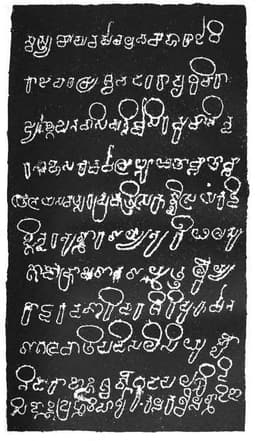
Amoghavarsha
Emperor · Medieval
60.3Total
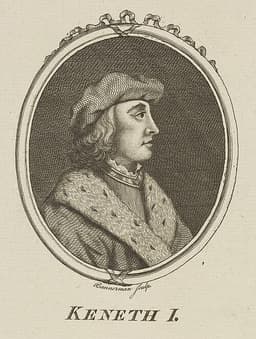
Kenneth MacAlpin
Emperor · Medieval
49.8Total
Basic Information
Born
800
810
Died
878
858
Era
Medieval
Medieval
Nationality
India
Scotland
Occupation
Emperor
Emperor
Civilization
Indian
Western
Score Comparison
Military (10%)
55.0
35.0
Political (20%)
59.3
42.3
Influence (20%)
62.0
54.9
Legacy (20%)
58.0
50.0
Leadership (15%)
78.0
65.7
Strategy (15%)
41.7
38.6
TOTAL
60.3
49.8
Amoghavarsha — Complete Timeline
820 AD
Conversion to JainismCultural◆ Major
Amoghavarsha converted from Hinduism to Jainism under the influence of the Jain acharya Jinasena. He became a devout patron of Jainism, building temples and supporting Jain monasteries. This shaped his policies of religious tolerance.
Religious ConversionJainismPatronage
Impact: nationalconstructive
850 AD
Composition of the KavirajamargaCultural◆ Major
Amoghavarsha, with assistance from the scholar Srivijaya, composed the Kavirajamarga, the earliest extant work on Kannada poetics. This text standardized Kannada literary conventions and promoted the language as a medium for high culture.
LiteratureKannada LanguagePoetics
Impact: regionalconstructive
860 AD
Construction of the Jain Basadi at ShravanabelagolaCultural
Amoghavarsha commissioned the construction of Jain temples (basadi) at Shravanabelagola, a major Jain pilgrimage site. He also erected a statue of the Jain tirthankara Mahavira. This solidified his legacy as a Jain patron.
Temple BuildingJain PilgrimageArchitecture
constructive
878 AD
Abdication and AsceticismPolitical Action◆ Major
Amoghavarsha abdicated the throne in favor of his son Krishna II. He then adopted the life of a Jain ascetic, practicing sallekhana (fasting unto death) at Shravanabelagola. This act reflected his deep religious devotion.
AbdicationAsceticismJain Practice
Impact: national
Kenneth MacAlpin — Complete Timeline
839 AD
Battle of FortriuWar◆ Major
Kenneth MacAlpin's predecessor, E
VikingsPictsSuccession
Impact: regional
843 AD
Unification of Picts and ScotsPolitical Action
Kenneth MacAlpin became king of both the Picts and the Scots, traditionally dated to 843. He united the two peoples under his rule, creating the Kingdom of Alba. This unification is considered the foundation of the medieval Scottish kingdom.
UnificationScotlandAlba
Impact: regionalconstructive
849 AD
Transfer of Relics to DunkeldCultural◆ Major
Kenneth MacAlpin transferred the relics of Saint Columba from Iona to Dunkeld for safekeeping from Viking raids. This act established Dunkeld as a major religious center and reinforced the link between the Scottish monarchy and the Columban church.
ReligionRelicsDunkeld
Impact: regionalconstructive
850 AD
Invasion of NorthumbriaWar
Kenneth MacAlpin led a raid into Northumbria, burning the monastery at Lindisfarne and attacking the region. This was part of a pattern of Scottish expansion southward, though the raid did not result in permanent territorial gains.
NorthumbriaRaidExpansion
Impact: regionaldestructive
Expert Analysis
Origins
Amoghavarsha I (c. 800–878 CE) was born into the Rashtrakuta dynasty of India. His father, Emperor Govinda III, was a powerful conqueror, and Amoghavarsha inherited a vast empire stretching from central India to the Deccan. He was educated in statecraft and literature, showing early promise as a scholar. At age 14, he ascended the throne after his father's death, facing immediate rebellions from feudatories and rival kingdoms.
Kenneth MacAlpin (c. 810–858 CE) was born into the Cenél nGabráin, a royal line of the Scots of Dál Riata. His father, Alpín mac Echdach, was a king of Dál Riata, but the region was under pressure from Pictish and Viking incursions. Kenneth grew up amid warfare and political fragmentation, learning the arts of war and diplomacy. He claimed descent from the legendary Fergus Mór, linking him to both Irish and Pictish royal lines.
Rise to Power
Amoghavarsha's early reign was marked by revolts from his own ministers and relatives. The powerful feudatory Karka Suvarnavarsha rebelled, and Amoghavarsha had to rely on loyal generals to restore order. By 821, he had consolidated power, partly through strategic marriages and alliances. His military score of 55.0 reflects his ability to suppress rebellions but not expand the empire significantly. He focused on administrative stability and cultural patronage.
Kenneth MacAlpin's rise is shrouded in legend, but the traditional date for his unification of the Picts and Scots is 843 CE. After the death of the Pictish king Eóganán in battle against Vikings at Fortriu (c. 839), the Pictish nobility was weakened. Kenneth, already king of Dál Riata, claimed the Pictish throne through his mother's Pictish lineage. He defeated rival claimants and established himself as king of both peoples, creating the Kingdom of Alba. His political score of 42.3 reflects his opportunistic but effective maneuvering.
Leadership & Governance
Amoghavarsha ruled for 64 years, one of the longest reigns in Indian history. He decentralized administration, granting autonomy to feudatories while maintaining loyalty through patronage. He was a patron of Jainism, converting under the acharya Jinasena, and funded the construction of Jain temples at Shravanabelagola. He also composed the Kavirajamarga, the earliest extant work on Kannada poetics, standardizing the language. His leadership score of 78.0 reflects his emphasis on culture and religion over military expansion.
Kenneth MacAlpin's reign was shorter (c. 843–858) and focused on consolidation. He moved the relics of Saint Columba from Iona to Dunkeld, establishing a new religious center safe from Vikings. He also raided Northumbria, burning Lindisfarne (875, though often attributed to his son), to assert Scottish power. His governance was pragmatic, blending Pictish and Gaelic customs. His strategy score of 38.6 indicates limited strategic vision beyond immediate survival.
Triumph & Tragedy
Amoghavarsha's greatest success was his cultural legacy: the Kavirajamarga influenced Kannada literature for centuries, and his patronage made Shravanabelagola a major Jain center. He also maintained peace and prosperity in his realm. However, his abdication to become a Jain ascetic and practice sallekhana (fasting to death) in 878 was a personal triumph but left the empire to his son Krishna II, who faced rebellions and decline.
Kenneth MacAlpin's triumph was the unification of the Picts and Scots, laying the foundation for the Kingdom of Scotland. His transfer of relics to Dunkeld secured a religious identity. However, his invasion of Northumbria was costly and failed to gain lasting territory. His greatest failure was the lack of a stable succession; after his death, his brother and sons fought for power, weakening the kingdom.
Character & Destiny
Amoghavarsha was a scholarly, introspective ruler who valued religion and literature over conquest. His conversion to Jainism and eventual renunciation show a spiritual depth rare among monarchs. This character led him to prioritize cultural patronage, but also to neglect military expansion, as reflected in his military score of 55.0.
Kenneth MacAlpin was a pragmatic and ambitious warrior-king. He seized opportunities created by Viking attacks and Pictish weakness. His character was decisive but ruthless, as seen in the legendary (though possibly apocryphal) story of him tricking the Pictish nobles into a trap. His destiny was to create a unified kingdom, but his methods sowed seeds of future conflict.
Legacy
Amoghavarsha's legacy endures in Kannada literature and Jain architecture. The Kavirajamarga remains a foundational text, and Shravanabelagola is a pilgrimage site. His influence score of 62.0 reflects his cultural impact, though his political and military contributions were limited.
Kenneth MacAlpin is remembered as the first king of Scots, the founder of the nation. The Kingdom of Alba evolved into Scotland, and his dynasty ruled for centuries. His legacy score of 50.0 acknowledges his foundational role, but his inability to secure lasting stability reduced his overall impact.
Conclusion
Amoghavarsha had a greater overall impact, with a total score of 60.3 compared to Kenneth MacAlpin's 49.8. While Kenneth's unification was politically significant, Amoghavarsha's cultural contributions to literature and religion have endured for over a millennium, influencing a broader geographic and cultural sphere. Kenneth's legacy is limited to Scotland, whereas Amoghavarsha's works shaped Kannada identity and Jain practice across India. Therefore, Amoghavarsha is the more influential figure.
Rankings
🥇
AmoghavarshaLeader
Mil: 55.0Pol: 59.3Inf: 62.0
60.3
🥈
Kenneth MacAlpin
Mil: 35.0Pol: 42.3Inf: 54.9
49.8
+10.5 behind
How This Comparison Works
Algorithm
Each figure is scored on 6 dimensions (0—100 scale) based on structured historical data: Military (10%), Political (20%), Influence (20%), Legacy (20%), Leadership (15%), Strategy (15%). The weighted total produces the final ranking.
Data Sources
Scores are computed from structured sub-indicators in the database. Scale factors adjust for era (Ancient ×0.85, Modern ×1.0) and civilization size (Eastern ×1.05, Other ×0.80) to account for differences in population and military scale.
Maximum 3 Figures
Comparisons are limited to 2—3 figures to ensure readability and statistical meaningfulness.
Error Margins
±5 points per dimension — Sub-scores are derived from historical records with inherent uncertainty. Two figures within 5 points on a dimension should be considered roughly equivalent in that area.
Total Score Accuracy
±3 points overall — The weighted combination of 6 dimensions produces a total score with approximately ±3 points of uncertainty. Differences of less than 3 points are not statistically significant— the figures are effectively tied.
Known Limitations
- Historical records are incomplete and uneven across civilizations
- Figures from oral-tradition societies may be underrepresented
- Occupation labels can misclassify multi-role figures
- Scores measure capability and impact, not moral character
- Quantitative scoring is a comparison tool, not absolute truth
Capability Radar
Military (10%) — Battles & Warfare
Battles
30
20
Win Rate
35
25
Expansion
25
35
Political (20%) — Governance & Reform
Reform
70
40
Diplomacy
75
45
Economy
80
30
Influence (20%) — Cultural & Global Reach
Cultural
70
40
Global
40
30
Legacy (20%) — Historical Impact
Historical
65
55
Longevity
60
50
Leadership (15%) — Power & Stability
Tenure
80
50
Stability
85
35
Strategy (15%) — Tactics & Innovation
Strategy
30
25
Tactics
25
20
Reform
20
15
Similar Comparisons
Comments & Discussion
No comments yet. Be the first to share your thoughts!