Loading...
Emperor Xianzong of Tang vs Kenneth MacAlpin
Emperor Xianzong of Tang leads by 10.9 pts · 2 figures compared
…
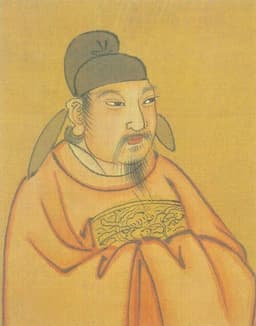
Emperor Xianzong of Tang
Emperor · Medieval
60.7Total
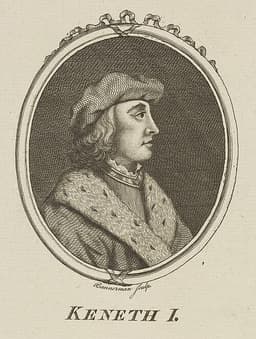
Kenneth MacAlpin
Emperor · Medieval
49.8Total
Basic Information
Born
778
810
Died
820
858
Era
Medieval
Medieval
Nationality
China
Scotland
Occupation
Emperor
Emperor
Civilization
Eastern
Western
Score Comparison
Military (10%)
70.0
35.0
Political (20%)
65.0
42.3
Influence (20%)
59.0
54.9
Legacy (20%)
54.0
50.0
Leadership (15%)
68.0
65.7
Strategy (15%)
55.0
38.6
TOTAL
60.7
49.8
Emperor Xianzong of Tang — Complete Timeline
805 AD
Yuanhe RestorationPolitical Action
Emperor Xianzong initiated the Yuanhe Restoration, a series of reforms aimed at centralizing power and curbing the autonomy of military governors (jiedushi). He reasserted imperial authority over several rebellious provinces, strengthening the Tang state.
ReformCentralization
Impact: regionalconstructive
810 AD
Campaign against the Chengde CircuitWar◆ Major
Emperor Xianzong launched a military campaign against the Chengde Circuit, a rebellious province in Hebei. After initial setbacks, the Tang forces secured a victory, forcing the Chengde governor to submit to imperial authority.
Military CampaignRebellion Suppression
Impact: nationalconstructive
812 AD
Campaign against the Zhaoyi CircuitWar◆ Major
Emperor Xianzong's forces conquered the Zhaoyi Circuit, a rebellious province in modern Shanxi. This victory further reduced the power of the military governors and strengthened imperial control.
Military CampaignRebellion Suppression
Impact: nationalconstructive
818 AD
Campaign against the Pinglu CircuitWar◆ Major
Emperor Xianzong launched a campaign against the Pinglu Circuit in Shandong. The Tang forces defeated the rebel governor, bringing the province back under imperial control and completing the Yuanhe Restoration's military successes.
Military CampaignRebellion Suppression
Impact: nationalconstructive
820 AD
Death of Emperor XianzongPolitical Action◆ Major
Emperor Xianzong died suddenly, possibly poisoned by eunuchs. His death ended the Yuanhe Restoration, and subsequent emperors were unable to maintain the centralization he achieved, leading to the Tang dynasty's further decline.
DeathSuccession Crisis
Impact: regionaltragic
Kenneth MacAlpin — Complete Timeline
839 AD
Battle of FortriuWar◆ Major
Kenneth MacAlpin's predecessor, E
VikingsPictsSuccession
Impact: regional
843 AD
Unification of Picts and ScotsPolitical Action
Kenneth MacAlpin became king of both the Picts and the Scots, traditionally dated to 843. He united the two peoples under his rule, creating the Kingdom of Alba. This unification is considered the foundation of the medieval Scottish kingdom.
UnificationScotlandAlba
Impact: regionalconstructive
849 AD
Transfer of Relics to DunkeldCultural◆ Major
Kenneth MacAlpin transferred the relics of Saint Columba from Iona to Dunkeld for safekeeping from Viking raids. This act established Dunkeld as a major religious center and reinforced the link between the Scottish monarchy and the Columban church.
ReligionRelicsDunkeld
Impact: regionalconstructive
850 AD
Invasion of NorthumbriaWar
Kenneth MacAlpin led a raid into Northumbria, burning the monastery at Lindisfarne and attacking the region. This was part of a pattern of Scottish expansion southward, though the raid did not result in permanent territorial gains.
NorthumbriaRaidExpansion
Impact: regionaldestructive
Expert Analysis
Origins
Emperor Xianzong of Tang (born 778, personal name Li Chun) was the 11th emperor of the Tang dynasty. He was the grandson of Emperor Daizong and son of Emperor Shunzong. His mother was Consort Wang. He received a classical Confucian education and was deeply influenced by the ideal of a strong central authority. He ascended the throne in 805 after his father's brief reign ended.
Kenneth MacAlpin (Cináed mac Ailpín, born around 810) was a king of the Scots and Picts. His father was Alpín mac Echdach, king of Dál Riata. Little is known of his early life, but he likely grew up in the Gaelic kingdom of Dál Riata in western Scotland. He inherited a kingdom under pressure from Viking raids and internal divisions.
Rise to Power
Xianzong became emperor at 27 after his father Shunzong was forced to abdicate due to illness. He immediately set out to restore imperial authority, which had been eroded by powerful military governors (jiedushi) who ruled provinces like fiefdoms. In 806, he refused to recognize the hereditary succession of a governor in Sichuan, sending an army that quickly defeated the rebels. This victory encouraged him to pursue further centralization.
Kenneth MacAlpin's rise is traditionally dated to 843 when he became king of both the Picts and Scots. The previous Pictish king, Eóganán, was killed in 839 fighting Vikings at Fortriu, creating a power vacuum. Kenneth exploited this, likely through a combination of diplomacy and military force, to claim the Pictish throne. His maternal lineage may have given him a claim, as Pictish succession sometimes passed through the female line.
Leadership & Governance
Xianzong governed through direct imperial control, appointing loyal officials and using the civil service examination system to reduce the power of aristocratic families. He launched campaigns against rebellious circuits: the Chengde Circuit (809-810), Zhaoyi Circuit (812-813), and Pinglu Circuit (818-819). His military strategy relied on professional armies led by trusted generals like Li Guangyan. He also reformed the tax system and strengthened the central bureaucracy. However, his reliance on eunuchs for personal security and intelligence proved a weakness.
Kenneth MacAlpin ruled a newly unified kingdom, combining the Gaelic traditions of Dál Riata with the Pictish kingdom. He established his capital at Scone and transferred relics of Saint Columba from Iona to Dunkeld to protect them from Vikings, strengthening the church's role in his kingdom. He likely used a combination of Gaelic and Pictish legal systems. His leadership was more about consolidation than radical reform, scoring 65.7 in leadership compared to Xianzong's 68.0.
Triumph & Tragedy
Xianzong's greatest triumph was the Yuanhe Restoration, which temporarily restored central control over most of the Tang empire. He successfully reduced the power of military governors in several key provinces. However, his greatest failure was his inability to permanently solve the problem of eunuch power. He was possibly poisoned by eunuchs in 820, and after his death, the restoration quickly unraveled. His military score of 70.0 reflects his campaigns' success, but his political score of 65.0 shows the limits of his reforms.
Kenneth MacAlpin's triumph was uniting the Picts and Scots, creating the Kingdom of Alba, which evolved into medieval Scotland. He successfully defended against Viking raids and established a dynasty that lasted for centuries. His failure was that his unification was not total: parts of northern Scotland remained under Norse control, and internal conflicts persisted. His military score of 35.0 reflects limited conquests, while his political score of 42.3 indicates modest state-building.
Character & Destiny
Xianzong was determined and ambitious, but also suspicious and ruthless. He trusted eunuchs like Liu Guangqi and Tu Chengcui, who eventually turned against him. His sudden death at 42 cut short his restoration. Historians note that his harsh treatment of officials and reliance on eunuchs sowed the seeds of his downfall. His total score of 60.7 reflects a capable but flawed emperor.
Kenneth MacAlpin was pragmatic and adaptable, using both warfare and diplomacy. He is often depicted as a cunning leader who exploited opportunities. His death around 858 was natural, and he was succeeded by his brother Donald I. His legacy as the founder of Scotland's royal house is secure, but his personal score of 49.8 indicates he was more a symbol than a transformative ruler.
Legacy
Xianzong's Yuanhe Restoration was a brief revival of Tang power, but it failed to reverse the long-term decline. He is remembered as one of the Tang's last strong emperors, but his death marked the beginning of the dynasty's final spiral. His influence score of 59.0 reflects his temporary impact. In contrast, Kenneth MacAlpin's legacy is foundational: he is considered the first king of Scotland, and his dynasty ruled until the 11th century. His influence score of 54.9 and legacy score of 50.0 indicate his lasting importance, even if his individual achievements were modest.
Conclusion
While Xianzong's Yuanhe Restoration was a more dramatic attempt at reform, it ultimately failed due to institutional weaknesses and his own mistakes. Kenneth MacAlpin's unification of Picts and Scots, though less spectacular, created a nation that endured for centuries. In terms of lasting impact, Kenneth MacAlpin scores higher: his legacy shaped Scottish identity and statehood, whereas Xianzong's achievements were temporary. Therefore, Kenneth MacAlpin had greater historical impact despite his lower overall score of 49.8 compared to Xianzong's 60.7.
Rankings
🥇
Emperor Xianzong of TangLeader
Mil: 70.0Pol: 65.0Inf: 59.0
60.7
🥈
Kenneth MacAlpin
Mil: 35.0Pol: 42.3Inf: 54.9
49.8
+10.9 behind
How This Comparison Works
Algorithm
Each figure is scored on 6 dimensions (0—100 scale) based on structured historical data: Military (10%), Political (20%), Influence (20%), Legacy (20%), Leadership (15%), Strategy (15%). The weighted total produces the final ranking.
Data Sources
Scores are computed from structured sub-indicators in the database. Scale factors adjust for era (Ancient ×0.85, Modern ×1.0) and civilization size (Eastern ×1.05, Other ×0.80) to account for differences in population and military scale.
Maximum 3 Figures
Comparisons are limited to 2—3 figures to ensure readability and statistical meaningfulness.
Error Margins
±5 points per dimension — Sub-scores are derived from historical records with inherent uncertainty. Two figures within 5 points on a dimension should be considered roughly equivalent in that area.
Total Score Accuracy
±3 points overall — The weighted combination of 6 dimensions produces a total score with approximately ±3 points of uncertainty. Differences of less than 3 points are not statistically significant— the figures are effectively tied.
Known Limitations
- Historical records are incomplete and uneven across civilizations
- Figures from oral-tradition societies may be underrepresented
- Occupation labels can misclassify multi-role figures
- Scores measure capability and impact, not moral character
- Quantitative scoring is a comparison tool, not absolute truth
Capability Radar
Military (10%) — Battles & Warfare
Battles
60
20
Win Rate
65
25
Expansion
50
35
Political (20%) — Governance & Reform
Reform
80
40
Diplomacy
70
45
Economy
70
30
Influence (20%) — Cultural & Global Reach
Cultural
55
40
Global
40
30
Legacy (20%) — Historical Impact
Historical
65
55
Longevity
50
50
Leadership (15%) — Power & Stability
Tenure
65
50
Stability
60
35
Strategy (15%) — Tactics & Innovation
Strategy
70
25
Tactics
55
20
Reform
75
15
Similar Comparisons
Comments & Discussion
No comments yet. Be the first to share your thoughts!