Loading...
Emperor Jito vs Ghazan Khan
Ghazan Khan leads by 14.4 pts · 2 figures compared
…
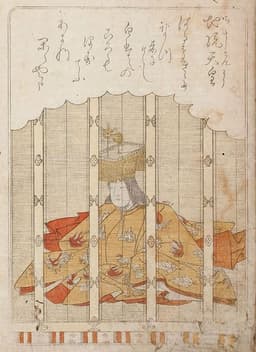
Emperor Jito
Emperor · Medieval
48.8Total
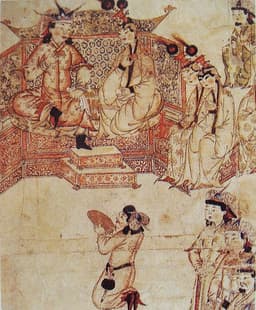
Ghazan Khan
Emperor · Medieval
63.2Total
Basic Information
Born
645
1271
Died
703
1304
Era
Medieval
Medieval
Nationality
Japan
Ilkhanate
Occupation
Emperor
Emperor
Civilization
Eastern
Middle Eastern
Score Comparison
Military (10%)
54.3
50.0
Political (20%)
46.6
70.0
Influence (20%)
51.8
72.0
Legacy (20%)
48.3
58.0
Leadership (15%)
42.2
68.0
Strategy (15%)
50.0
50.0
TOTAL
48.8
63.2
Emperor Jito — Complete Timeline
694 AD
Establishment of the Fujiwara CapitalPolitical Action◆ Major
Empress Jito moved the imperial capital to Fujiwara-kyo in Yamato Province. This was Japan's first capital built on a Chinese grid pattern. The move symbolized the centralization of power and the adoption of Chinese-style governance.
CapitalFujiwara-kyoUrban Planning
Impact: nationalconstructive
697 AD
Abdication in Favor of Emperor MonmuPolitical Action
Empress Jito abdicated the throne in favor of her grandson, Emperor Monmu. She continued to wield influence as a retired emperor (daijo tenno). This set a precedent for retired emperors to maintain power behind the scenes.
AbdicationSuccessionMonmu
Impact: national
701 AD
Completion of the Taiho CodeReform◆ Major
Empress Jito oversaw the completion and promulgation of the Taiho Code, a comprehensive legal code that systematized the ritsuryo system. It defined administrative structure, penal laws, and court ranks. The code remained the basis of Japanese law for centuries.
Taiho CodeLegal SystemRitsuryo
Impact: nationalconstructive
Ghazan Khan — Complete Timeline
1295 AD
Reforms of the Ilkhanate (Ghazan's Reforms)Reform◆ Major
Ghazan implemented a comprehensive reform program including tax reform, standardization of weights and measures, land redistribution, and the establishment of a new legal code. He also reformed the military and postal system, stabilizing the Ilkhanate after decades of instability.
ReformIlkhanateAdministration
Impact: regionalconstructive
Conversion to IslamCultural
Ghazan converted to Islam upon ascending the throne, becoming the first Ilkhan to adopt the faith. He publicly declared Islam the state religion, ordered the destruction of Buddhist temples and churches, and adopted the name Mahmud. This transformed the Ilkhanate's identity.
ReligionIlkhanateIslam
Impact: regionalconstructive
1297 AD
Patronage of Science and CultureCultural
Ghazan patronized scholars, historians, and scientists, including the vizier Rashid al-Din, who wrote the Jami' al-tawarikh, a world history. Ghazan also built observatories, hospitals, and mosques, contributing to the cultural flowering of the Ilkhanate.
CulturePatronageIlkhanate
Impact: regionalconstructive
1299 AD
Campaigns against the MamluksWar◆ Major
Ghazan led three major invasions of Mamluk Syria, capturing Damascus and Aleppo in 1299
Mongol InvasionSyriaMamluk Sultanate
Impact: regional
Battle of Wadi al-KhaznadarWar
Ghazan's Mongol army defeated the Mamluks under Sultan Al-Nasir Muhammad at Wadi al-Khaznadar near Homs. The victory allowed the Mongols to occupy Damascus and Aleppo, but they withdrew after a few months due to logistical problems and the need to return to Persia.
BattleMongol VictorySyria
Impact: regional
Expert Analysis
Origins
Empress Jito (645–703) was born Princess Uno-no-sarara, daughter of Emperor Tenji. She was educated in Chinese classics and governance, marrying her nephew Emperor Tenmu. After Tenmu's death, she served as regent for her son Prince Kusakabe, then ascended the throne herself in 690. Her background was steeped in the Yamato court's efforts to centralize power using Chinese models.
Ghazan Khan (1271–1304) was born into the Mongol Ilkhanate, grandson of Hulagu. He was raised as a Buddhist but exposed to Christianity and Islam. His father Arghun and uncle Gaykhatu ruled before him. Ghazan was trained in warfare and administration, but his early years were marked by factional struggles. He converted to Islam in 1295 to secure support from the Muslim majority.
Rise to Power
Jito became empress after Tenmu's death, initially as regent. She faced opposition from rival princes but consolidated power by appointing loyal officials. Her decisive move was completing the Taiho Code in 701, which codified the ritsuryo system. She also moved the capital to Fujiwara-kyo in 694, Japan's first grid-pattern city. She abdicated in 697 in favor of her grandson Monmu, but continued to rule as retired emperor.
Ghazan rose after a coup against his uncle Baydu. He converted to Islam publicly, gaining support from Muslim nobles and the populace. He defeated Baydu in 1295 and became Ilkhan. His conversion was a turning point, ending the Ilkhanate's traditional Mongol shamanism and aligning with the Islamic world. He then launched campaigns against the Mamluks to assert dominance.
Leadership & Governance
Jito's governance was methodical and legalistic. She oversaw the completion of the Taiho Code, which defined administrative ranks, tax systems, and criminal law. This code remained the basis of Japanese governance for centuries. She also moved the capital, symbolizing a new era. Her leadership score of 42.2 reflects a cautious, consensus-building style rather than bold military action (military score 54.3).
Ghazan was a reformer and military leader. His political score of 70.0 and leadership of 68.0 indicate decisive action. He introduced Ghazan's Reforms: tax simplification, standardized weights, land redistribution to curb corruption, and established a postal system. He also patronized science, commissioning Rashid al-Din's world history. His military campaigns (score 50.0) were ambitious but ultimately failed to hold Syria.
Triumph & Tragedy
Jito's greatest triumph was the Taiho Code, which unified Japan's legal system. Her move to Fujiwara-kyo also set a precedent for capital planning. However, her abdication and continued influence created a precedent for retired emperors wielding power, leading to future political instability. She scored 48.3 in legacy.
Ghazan's triumph was converting the Ilkhanate to Islam, which integrated the Mongols into the Islamic world and stabilized the realm. His reforms improved administration and culture. His tragedy was the failure to conquer Syria; despite winning at Wadi al-Khaznadar (1299), he could not hold territory due to supply issues and Mamluk resilience. His influence score of 72.0 reflects his religious and cultural impact.
Character & Destiny
Jito was patient and strategic, using legal codes to shape society. Her character favored stability over expansion. She was willing to step down to ensure succession, but retained control. This reflected the Japanese court's preference for indirect authority. Her destiny was to be a transitional figure, bridging the Asuka and Nara periods.
Ghazan was pragmatic and ambitious. His conversion was a calculated move to secure power, but he genuinely embraced Islam. He was a patron of learning and a capable administrator. However, his military ambitions exceeded his resources, leading to overreach. His early death at 32 cut short his reforms, leaving the Ilkhanate to decline.
Legacy
Jito's legacy is the Taiho Code, which influenced Japanese law until the Meiji Restoration. Fujiwara-kyo set the pattern for later capitals like Heijo-kyo and Heian-kyo. She is remembered as a capable ruler who completed her husband's work. Her legacy score of 48.3 reflects her foundational but limited role.
Ghazan's legacy is profound: he made the Ilkhanate a Muslim state, which shaped the region's history. His reforms influenced later Persian administrations. The Jami' al-tawarikh remains a key historical source. However, his military failures meant the Ilkhanate never expanded westward. His legacy score of 58.0 is higher than Jito's, reflecting broader impact.
Conclusion
Ghazan Khan had greater impact. His total score of 63.2 vs Jito's 48.8 reflects his transformative role in religion, governance, and culture across a vast empire. Jito's achievements were significant for Japan, but confined to a single island nation. Ghazan's conversion of the Ilkhanate to Islam altered the course of Middle Eastern history, while his reforms had lasting administrative effects. In terms of scale and enduring influence, Ghazan surpasses Jito.
Rankings
🥇
Ghazan KhanLeader
Mil: 50.0Pol: 70.0Inf: 72.0
63.2
🥈
Emperor Jito
Mil: 54.3Pol: 46.6Inf: 51.8
48.8
+14.4 behind
How This Comparison Works
Algorithm
Each figure is scored on 6 dimensions (0—100 scale) based on structured historical data: Military (10%), Political (20%), Influence (20%), Legacy (20%), Leadership (15%), Strategy (15%). The weighted total produces the final ranking.
Data Sources
Scores are computed from structured sub-indicators in the database. Scale factors adjust for era (Ancient ×0.85, Modern ×1.0) and civilization size (Eastern ×1.05, Other ×0.80) to account for differences in population and military scale.
Maximum 3 Figures
Comparisons are limited to 2—3 figures to ensure readability and statistical meaningfulness.
Error Margins
±5 points per dimension — Sub-scores are derived from historical records with inherent uncertainty. Two figures within 5 points on a dimension should be considered roughly equivalent in that area.
Total Score Accuracy
±3 points overall — The weighted combination of 6 dimensions produces a total score with approximately ±3 points of uncertainty. Differences of less than 3 points are not statistically significant— the figures are effectively tied.
Known Limitations
- Historical records are incomplete and uneven across civilizations
- Figures from oral-tradition societies may be underrepresented
- Occupation labels can misclassify multi-role figures
- Scores measure capability and impact, not moral character
- Quantitative scoring is a comparison tool, not absolute truth
Capability Radar
Military (10%) — Battles & Warfare
Battles
45
55
Win Rate
50
60
Expansion
50
45
Political (20%) — Governance & Reform
Reform
70
85
Diplomacy
30
70
Economy
30
75
Influence (20%) — Cultural & Global Reach
Cultural
30
70
Global
20
55
Legacy (20%) — Historical Impact
Historical
50
65
Longevity
40
60
Leadership (15%) — Power & Stability
Tenure
11
60
Stability
40
65
Strategy (15%) — Tactics & Innovation
Strategy
52
55
Tactics
57
50
Reform
60
65
Similar Comparisons
Comments & Discussion
No comments yet. Be the first to share your thoughts!