Loading...
Emperor Go-Toba vs Otto II
Otto II leads by 2.3 pts · 2 figures compared
…
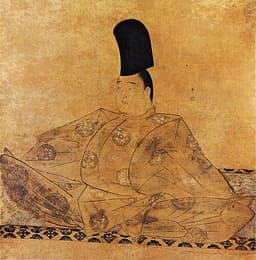
Emperor Go-Toba
Emperor · Medieval
40.9Total
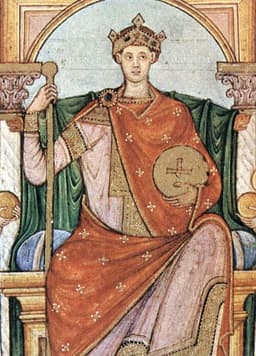
Otto II
Emperor · Medieval
43.2Total
Basic Information
Born
1180
955
Died
1239
983
Era
Medieval
Medieval
Nationality
Japan
Holy Roman Empire
Occupation
Emperor
Emperor
Civilization
Eastern
Western
Score Comparison
Military (10%)
21.2
10.0
Political (20%)
27.9
36.5
Influence (20%)
53.3
54.1
Legacy (20%)
46.7
44.2
Leadership (15%)
34.6
51.9
Strategy (15%)
43.7
43.3
TOTAL
40.9
43.2
Emperor Go-Toba — Complete Timeline
1200 AD
Patronage of poetry and the artsCultural◆ Major
Go-Toba was a noted poet and patron of waka poetry, sponsoring the compilation of the Shin Kokin Wakashu, an imperial anthology. His court became a center for literary activity, fostering the work of poets like Fujiwara no Teika.
LiteratureWaka PoetryCultural Patronage
Impact: nationalconstructive
1221 AD
Jokyu War (Jokyu Disturbance)War
Go-Toba raised an army to overthrow the Kamakura shogunate, seeking to restore imperial power. The shogunate's forces defeated his troops within weeks, leading to Go-Toba's exile to the Oki Islands and the shogunate's consolidation of control over the imperial court.
Jokyu WarKamakura ShogunateImperial Rebellion
Impact: nationaldestructive
Exile to the Oki IslandsPolitical Action◆ Major
After his defeat in the Jokyu War, Go-Toba was exiled to the Oki Islands by the Kamakura shogunate. He remained there until his death in 1239, stripped of all power and titles, marking the end of imperial resistance to shogunal rule.
ExileKamakura ShogunateImperial Decline
Impact: nationaltragic
Otto II — Complete Timeline
967 AD
Imperial Coronation (967)Cultural◆ Major
Otto II was crowned Holy Roman Emperor by Pope John XIII on December 25, 967, in Rome. He was co-emperor with his father, Otto I, until the latter's death in 973. This coronation confirmed the Ottonian dynasty's control over the imperial title.
CoronationEmperorOttonian
Impact: regionalconstructive
972 AD
Marriage to Theophanu (972)Political Action◆ Major
Otto II married Theophanu, a Byzantine princess, in Rome on April 14, 972. This marriage was a diplomatic triumph, symbolizing the recognition of the Ottonian dynasty by the Byzantine Empire. Theophanu later served as regent for their son, Otto III.
MarriageDiplomacyByzantine
Impact: regionalconstructive
980 AD
Campaign in Italy (980-983)War◆ Major
Otto II launched a major campaign in Italy to assert imperial control over the south and counter Byzantine influence. He captured Taranto and Benevento but faced resistance from local Lombard and Muslim forces. The campaign ended in disaster at Stilo.
CampaignItalyImperial Ambition
Impact: regional
982 AD
Battle of Stilo (982)War◆ Major
Otto II led a campaign against the Byzantine Empire and the Emirate of Sicily in southern Italy. At the Battle of Stilo (or Cape Colonna), his army was ambushed and defeated by a Muslim coalition. Otto barely escaped, and the defeat weakened imperial authority in Italy.
BattleDefeatItaly
Impact: regionaldestructive
983 AD
Death of Otto IIOther◆ Major
Otto II died unexpectedly on December 7, 983, in Rome, possibly from malaria. He was only 28 years old. His death left his three-year-old son, Otto III, as heir, leading to a regency and a period of instability in the Holy Roman Empire.
DeathSuccessionRegency
Impact: regionaltragic
Expert Analysis
Origins
Emperor Go-Toba (born 1180) was the 82nd emperor of Japan, ascending the throne at age four. He was the son of Emperor Antoku, who died in the Genpei War. Go-Toba's early life was shaped by the decline of imperial authority under the Kamakura shogunate. He was a noted poet and patron of the arts, deeply involved in the compilation of the Shin Kokin Wakashu. In contrast, Otto II (born 955) was the son of Otto I, the first Holy Roman Emperor, and Adelaide of Italy. He was raised in a court that emphasized imperial unity and expansion. Otto II was crowned co-emperor at age 12 and received a thorough education in governance and warfare, preparing him for his role as emperor.
Rise to Power
Go-Toba became emperor in 1183 after the death of his father, but real power lay with the Minamoto clan and later the Hojo regents. He abdicated in 1198 but continued to exert influence as a retired emperor (cloistered rule). His attempt to reclaim power culminated in the Jokyu War of 1221, when he mobilized forces against the shogunate. The rebellion failed within weeks. Otto II's rise was more straightforward: he was crowned co-emperor in 967 and became sole ruler upon his father's death in 973. He quickly moved to assert control over Italy, facing opposition from local nobles and the Byzantine Empire.
Leadership & Governance
Go-Toba's leadership was characterized by a focus on cultural patronage rather than military or political reforms. He sponsored poetry contests and anthologies, but his governance was weak, relying on the support of disaffected samurai. Otto II, on the other hand, pursued an aggressive expansionist policy. He campaigned in Italy to secure imperial authority, capturing Taranto and Benevento. His marriage to Theophanu, a Byzantine princess, was a diplomatic success that enhanced his prestige. However, his military ventures were often poorly planned, leading to the disastrous Battle of Stilo in 982, where his army was decimated by a coalition of Byzantine and Muslim forces.
Triumph & Tragedy
Go-Toba's greatest triumph was his cultural legacy: the Shin Kokin Wakashu remains a masterpiece of Japanese poetry. His tragedy was the Jokyu War, which ended in his exile to the Oki Islands, where he died in 1239. His failure permanently weakened the imperial house. Otto II's triumph was his imperial coronation and the diplomatic marriage to Theophanu, which symbolized the recognition of his empire by Byzantium. His tragedy was his premature death at age 28, possibly from malaria, leaving a three-year-old heir and a succession crisis. The Battle of Stilo was a major military defeat that shattered his ambitions in southern Italy.
Character & Destiny
Go-Toba was a cultured and ambitious emperor who underestimated the military power of the shogunate. His decision to rebel was impulsive and poorly coordinated. Otto II was energetic and determined, but his aggressive tactics often backfired. He was unable to consolidate his gains in Italy due to his early death. Both men were shaped by their environments: Go-Toba by the fading imperial tradition, Otto II by the rising Holy Roman Empire.
Legacy
Go-Toba's legacy is primarily cultural: he is remembered as a poet and patron, not as a political leader. His failed rebellion reinforced the shogunate's control for centuries. Otto II's legacy is more complex: he expanded imperial influence but left an unstable realm. His son, Otto III, would later continue his policies. In terms of influence scores, Go-Toba scores 53.3 and Otto II 54.1, reflecting their comparable but limited impacts. However, Otto II's political score (36.5) is higher than Go-Toba's (27.9), indicating a more effective governance approach.
Conclusion
While both emperors failed to achieve their primary goals, Otto II had a greater impact on European history through his expansionist policies and diplomatic marriage. His death at a young age left a power vacuum, but his son eventually restored imperial authority. Go-Toba's rebellion, conversely, marked the end of imperial resistance and solidified shogunal rule. Otto II's total score of 43.2 slightly edges Go-Toba's 40.9, but more importantly, his actions shaped the political landscape of medieval Europe, whereas Go-Toba's failure reinforced the status quo in Japan. Therefore, Otto II had a greater historical impact.
Rankings
🥇
Otto IILeader
Mil: 10.0Pol: 36.5Inf: 54.1
43.2
🥈
Emperor Go-Toba
Mil: 21.2Pol: 27.9Inf: 53.3
40.9
+2.3 behind
How This Comparison Works
Algorithm
Each figure is scored on 6 dimensions (0—100 scale) based on structured historical data: Military (10%), Political (20%), Influence (20%), Legacy (20%), Leadership (15%), Strategy (15%). The weighted total produces the final ranking.
Data Sources
Scores are computed from structured sub-indicators in the database. Scale factors adjust for era (Ancient ×0.85, Modern ×1.0) and civilization size (Eastern ×1.05, Other ×0.80) to account for differences in population and military scale.
Maximum 3 Figures
Comparisons are limited to 2—3 figures to ensure readability and statistical meaningfulness.
Error Margins
±5 points per dimension — Sub-scores are derived from historical records with inherent uncertainty. Two figures within 5 points on a dimension should be considered roughly equivalent in that area.
Total Score Accuracy
±3 points overall — The weighted combination of 6 dimensions produces a total score with approximately ±3 points of uncertainty. Differences of less than 3 points are not statistically significant— the figures are effectively tied.
Known Limitations
- Historical records are incomplete and uneven across civilizations
- Figures from oral-tradition societies may be underrepresented
- Occupation labels can misclassify multi-role figures
- Scores measure capability and impact, not moral character
- Quantitative scoring is a comparison tool, not absolute truth
Capability Radar
Military (10%) — Battles & Warfare
Battles
15
45
Win Rate
10
40
Expansion
5
35
Political (20%) — Governance & Reform
Reform
15
35
Diplomacy
20
30
Economy
10
30
Influence (20%) — Cultural & Global Reach
Cultural
40
30
Global
20
25
Legacy (20%) — Historical Impact
Historical
45
35
Longevity
35
30
Leadership (15%) — Power & Stability
Tenure
30
40
Stability
10
25
Strategy (15%) — Tactics & Innovation
Strategy
25
40
Tactics
20
35
Reform
10
30
Similar Comparisons
Comments & Discussion
No comments yet. Be the first to share your thoughts!