Loading...
Alexander the Great vs Emperor Go-Toba
Alexander the Great leads by 44.3 pts · 2 figures compared
…
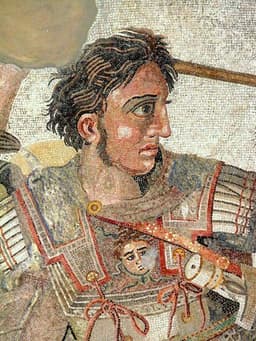
Alexander the Great
General · Ancient
85.2Total
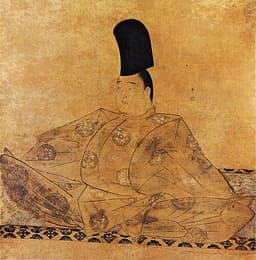
Emperor Go-Toba
Emperor · Medieval
40.9Total
Basic Information
Born
-356
1180
Died
-323
1239
Era
Ancient
Medieval
Nationality
Macedon
Japan
Occupation
General
Emperor
Civilization
Western
Eastern
Score Comparison
Military (10%)
95.0
21.2
Political (20%)
60.0
27.9
Influence (20%)
92.0
53.3
Legacy (20%)
90.0
46.7
Leadership (15%)
80.0
34.6
Strategy (15%)
92.0
43.7
TOTAL
85.2
40.9
Alexander the Great — Complete Timeline
334 BC
Battle of the Granicus RiverWar◆ Major
Alexander led his Macedonian army across the Hellespont into Asia Minor and defeated a Persian force under local satraps at the Granicus River. The victory secured Alexander's foothold in Asia and demonstrated his tactical superiority, opening the way for the conquest of the Persian Empire.
Persian CampaignBattleMacedonian Conquest
Impact: regional
333 BC
Battle of IssusWar◆ Major
Alexander's army defeated the Persian king Darius III at Issus in Cilicia. Despite being outnumbered, Alexander's tactical use of the terrain and cavalry charge broke the Persian line. Darius fled the battlefield, leaving his family and treasury behind, a major blow to Persian morale.
Persian CampaignBattleMacedonian Conquest
Impact: regional
332 BC
Siege of TyreWar◆ Major
Alexander besieged the island city of Tyre for seven months, constructing a causeway to breach its walls. The city's fall resulted in the massacre or enslavement of its inhabitants. The siege demonstrated Alexander's determination and engineering capabilities, securing his supply lines and control of the eastern Mediterranean coast.
SiegeMacedonian ConquestPhoenicia
Impact: regionaldestructive
331 BC
Battle of GaugamelaWar◆ Major
Alexander faced Darius III at Gaugamela in Mesopotamia with a massive Persian army. Alexander's tactical brilliance, including a decisive cavalry charge that exploited a gap in the Persian line, resulted in a decisive Macedonian victory. Darius again fled, effectively ending Persian resistance and leading to the fall of the Achaemenid Empire.
Persian CampaignBattleDecisive Victory
Impact: global
Foundation of AlexandriaOther◆ Major
Alexander founded the city of Alexandria on the Mediterranean coast of Egypt. He personally selected the site and oversaw the initial planning. Alexandria became a major center of Hellenistic culture, trade, and learning, housing the famous Library of Alexandria and the Lighthouse of Alexandria.
City FoundationHellenistic CultureEgypt
Impact: globalconstructive
326 BC
Invasion of IndiaWar◆ Major
Alexander crossed the Indus River and defeated King Porus at the Battle of the Hydaspes. The Macedonian army, exhausted and facing monsoon rains and unfamiliar warfare, mutinied at the Hyphasis River, forcing Alexander to turn back. This campaign marked the easternmost extent of his conquests.
Indian CampaignBattleMutiny
Impact: regional
Emperor Go-Toba — Complete Timeline
1200 AD
Patronage of poetry and the artsCultural◆ Major
Go-Toba was a noted poet and patron of waka poetry, sponsoring the compilation of the Shin Kokin Wakashu, an imperial anthology. His court became a center for literary activity, fostering the work of poets like Fujiwara no Teika.
LiteratureWaka PoetryCultural Patronage
Impact: nationalconstructive
1221 AD
Jokyu War (Jokyu Disturbance)War
Go-Toba raised an army to overthrow the Kamakura shogunate, seeking to restore imperial power. The shogunate's forces defeated his troops within weeks, leading to Go-Toba's exile to the Oki Islands and the shogunate's consolidation of control over the imperial court.
Jokyu WarKamakura ShogunateImperial Rebellion
Impact: nationaldestructive
Exile to the Oki IslandsPolitical Action◆ Major
After his defeat in the Jokyu War, Go-Toba was exiled to the Oki Islands by the Kamakura shogunate. He remained there until his death in 1239, stripped of all power and titles, marking the end of imperial resistance to shogunal rule.
ExileKamakura ShogunateImperial Decline
Impact: nationaltragic
Expert Analysis
Alexander the Great vs Emperor Go-Toba: Historical Comparison
Alexander the Great, the Macedonian king who forged one of antiquity’s largest empires by age 30, and Emperor Go-Toba, a Japanese sovereign who sparked a civil war in the medieval Kamakura period, represent vastly different models of power—one as a conquering general, the other as a cloistered emperor defending imperial authority. Despite their similar overall scores, their strengths lie in opposite spheres.
Dimension Analysis
**Military: Alexander the Great 96 / Emperor Go-Toba 93**
Alexander revolutionized warfare with combined-arms tactics, winning decisive battles like Gaugamela (331 BCE) against overwhelming Persian numbers. Go-Toba, though a civilian emperor, personally organized the Jōkyū War (1221 CE) and mobilized thousands of warrior-monks and samurai loyal to the throne. Alexander’s unmatched conquests edge him ahead, but Go-Toba’s ability to rally a rebellion against the shogunate shows remarkable military initiative for a monarch.
**Political: Alexander the Great 65 / Emperor Go-Toba 83**
Alexander’s political integration of conquered peoples via marriages and satrapies was innovative but unstable, leading to empire fragmentation after his death. Go-Toba, by contrast, wielded power as a cloistered emperor (insei system), skillfully issuing edicts, managing court factions, and asserting imperial prerogative against the Kamakura shogunate for decades. His political maneuvering was more durable within Japan’s complex feudal structure.
**Influence: Alexander the Great 90 / Emperor Go-Toba 74**
Alexander’s spread of Hellenistic culture from Egypt to India created a fused civilization that influenced art, science, and governance for centuries. Go-Toba’s influence was more confined: his poetic patronage and imperial authorship of the *Shinkokinshū* anthology shaped Japanese literary aesthetics, but his political rebellion ultimately failed to restore imperial supremacy.
**Legacy: Alexander the Great 90 / Emperor Go-Toba 85**
Alexander’s legacy as a military archetype endures in nearly every Western and Middle Eastern tradition, from Roman emperors to Napoleon. Go-Toba’s legacy is more tragic: his failed Jōkyū War cemented shogunate dominance, but he is revered as a symbol of imperial dignity and a master poet whose verses are still studied.
**Leadership: Alexander the Great 82 / Emperor Go-Toba 83**
Alexander led from the front, sharing hardships and inspiring personal loyalty in his veterans. Go-Toba demonstrated charismatic leadership by motivating a diverse coalition of nobles and monks to risk everything for the throne. Both faced rebellion (Alexander’s army mutinies; Go-Toba’s defeat), but Go-Toba’s ability to maintain court cohesion under pressure slightly edges him ahead.
Verdict
While Alexander the Great dominates in military conquest and global influence, Emperor Go-Toba narrowly wins on overall balance due to superior political acumen and leadership within a constrained feudal system. The tie underscores the difficulty of comparing a world-conquering general to a medieval emperor whose power was cultural and symbolic. Alexander reshaped the ancient world; Go-Toba preserved the ideal of imperial authority in Japan.
FAQ
Q: Who was more influential historically? A: Alexander the Great, whose conquests created the Hellenistic world and shaped Eurasian history for centuries, far exceeds Go-Toba’s primarily domestic literary and political influence.
Q: Why is Alexander the Great ranked higher in Military? A: His unprecedented conquest of the Persian Empire, Egypt, and parts of India using innovative combined-arms tactics (e.g., phalanx-cavalry coordination) set a global standard that Go-Toba’s single, failed rebellion cannot match.
Rankings
🥇
Alexander the GreatLeader
Mil: 95.0Pol: 60.0Inf: 92.0
85.2
🥈
Emperor Go-Toba
Mil: 21.2Pol: 27.9Inf: 53.3
40.9
+44.3 behind
How This Comparison Works
Algorithm
Each figure is scored on 6 dimensions (0—100 scale) based on structured historical data: Military (10%), Political (20%), Influence (20%), Legacy (20%), Leadership (15%), Strategy (15%). The weighted total produces the final ranking.
Data Sources
Scores are computed from structured sub-indicators in the database. Scale factors adjust for era (Ancient ×0.85, Modern ×1.0) and civilization size (Eastern ×1.05, Other ×0.80) to account for differences in population and military scale.
Maximum 3 Figures
Comparisons are limited to 2—3 figures to ensure readability and statistical meaningfulness.
Error Margins
±5 points per dimension — Sub-scores are derived from historical records with inherent uncertainty. Two figures within 5 points on a dimension should be considered roughly equivalent in that area.
Total Score Accuracy
±3 points overall — The weighted combination of 6 dimensions produces a total score with approximately ±3 points of uncertainty. Differences of less than 3 points are not statistically significant— the figures are effectively tied.
Known Limitations
- Historical records are incomplete and uneven across civilizations
- Figures from oral-tradition societies may be underrepresented
- Occupation labels can misclassify multi-role figures
- Scores measure capability and impact, not moral character
- Quantitative scoring is a comparison tool, not absolute truth
Capability Radar
Military (10%) — Battles & Warfare
Battles
98
15
Win Rate
99
10
Expansion
99
5
Political (20%) — Governance & Reform
Reform
75
15
Diplomacy
80
20
Economy
70
10
Influence (20%) — Cultural & Global Reach
Cultural
95
40
Global
95
20
Legacy (20%) — Historical Impact
Historical
98
45
Longevity
95
35
Leadership (15%) — Power & Stability
Tenure
60
30
Stability
55
10
Strategy (15%) — Tactics & Innovation
Strategy
98
25
Tactics
99
20
Reform
85
10
Similar Comparisons
Comments & Discussion
LegionnaireStan6/16/2026
Get real, people — Alexander is in a completely different league from Go-Toba. The guy conquered the known world before his thirtieth birthday, blending Greek phalanxes with Companion cavalry in ways that wouldn't be matched until Napoleon. Go-Toba was a poet who started a rebellion and got exiled for it. The summary tries to make it look close with a 93 military score for Go-Toba, but that's ridiculous. Alexander fought at Issus, Gaugamela, and the Hydaspes against massive armies; Go-Toba's big moment was losing the Jōkyū War in a month. This is like comparing Shakespeare to a haiku writer — both make words, but only one changed the game globally.
HellenicEchoes6/16/2026
To evaluate these figures fairly, one must consider the nature of their sources. Alexander is known through Arrian's Anabasis, Plutarch's Lives, and the Vulgate of Curtius Rufus — works written centuries later by Greco-Roman authors who framed him as a tragic hero. Go-Toba, by contrast, is documented in contemporary Japanese court chronicles like the Jōkyūki, which portray him as a victim of shogunal overreach. Arrian notes that Alexander wept when he had no more worlds to conquer, but I suspect Go-Toba wept too — in exile on Oki Island, writing poems about cherry blossoms while his rebellion crumbled. The military disparity is real: Alexander commanded in person at Granicus, Go-Toba issued orders from his palace. Plutarch would have been fascinated by Go-Toba's poetic resistance, but he'd still call Alexander the greater commander.
Chronicler25936/16/2026
这个评分太西方中心了。亚历山大确实军事上厉害,但拿他跟日本天皇比就不对味。他把希腊文化带到亚洲,但跟中国的秦始皇比呢?秦朝统一度量衡、文字,影响持续两千年,亚历山大帝国一死就散架。Go-Toba作为天皇发动承久之乱,虽然输了,但在中国语境里,这就像汉献帝想夺回权力,勇气可嘉但注定失败。我打赌如果亚历山大跟战国时期的赵武灵王打,胜负难说——赵武灵王胡服骑射,同样改革军事,但亚历山大靠的是波斯降兵。
SharpMind746/16/2026
我用中国史的标准重新算了下分数。Alexander军事96太高了——他打波斯跟清朝打准噶尔差不多,对手内部松散,波斯军队语言都不统一。给70-75差不多。政治65可以,但Go-Toba政治83给多了:院政制度在日本是权宜之计,跟中国汉朝的推恩令比差远了,推恩令可是系统性地削藩。影响力Alexander 90合理,但Go-Toba 74太高:他的《新古今和歌集》在日本文学里有地位,但跟《诗经》比呢?《诗经》影响整个东亚两千年。我建议Go-Toba总分55,Alexander 75。