Loading...
Emperor Go-Toba vs Kublai Khan
Kublai Khan leads by 33.4 pts · 2 figures compared
…
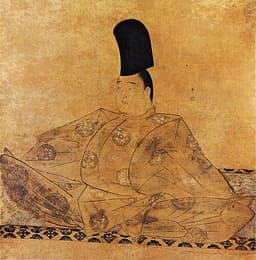
Emperor Go-Toba
Emperor · Medieval
40.9Total
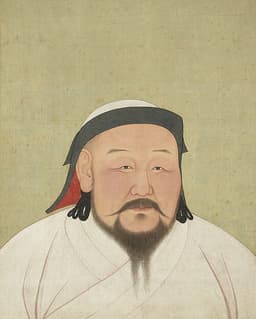
Kublai Khan
Emperor · Medieval
74.3Total
Basic Information
Born
1180
1215
Died
1239
1294
Era
Medieval
Medieval
Nationality
Japan
Mongolia
Occupation
Emperor
Emperor
Civilization
Eastern
Eastern
Score Comparison
Military (10%)
21.2
77.5
Political (20%)
27.9
79.2
Influence (20%)
53.3
75.0
Legacy (20%)
46.7
70.0
Leadership (15%)
34.6
72.0
Strategy (15%)
43.7
76.0
TOTAL
40.9
74.3
Emperor Go-Toba — Complete Timeline
1200 AD
Patronage of poetry and the artsCultural◆ Major
Go-Toba was a noted poet and patron of waka poetry, sponsoring the compilation of the Shin Kokin Wakashu, an imperial anthology. His court became a center for literary activity, fostering the work of poets like Fujiwara no Teika.
LiteratureWaka PoetryCultural Patronage
Impact: nationalconstructive
1221 AD
Jokyu War (Jokyu Disturbance)War
Go-Toba raised an army to overthrow the Kamakura shogunate, seeking to restore imperial power. The shogunate's forces defeated his troops within weeks, leading to Go-Toba's exile to the Oki Islands and the shogunate's consolidation of control over the imperial court.
Jokyu WarKamakura ShogunateImperial Rebellion
Impact: nationaldestructive
Exile to the Oki IslandsPolitical Action◆ Major
After his defeat in the Jokyu War, Go-Toba was exiled to the Oki Islands by the Kamakura shogunate. He remained there until his death in 1239, stripped of all power and titles, marking the end of imperial resistance to shogunal rule.
ExileKamakura ShogunateImperial Decline
Impact: nationaltragic
Kublai Khan — Complete Timeline
1260 AD
Adoption of Tibetan Buddhism as State ReligionCultural◆ Major
Kublai Khan appointed the Tibetan lama Drog
Tibetan BuddhismReligionMongol-Tibet Relations
Impact: regional
1271 AD
Proclamation of the Yuan DynastyPolitical Action◆ Major
Kublai Khan officially proclaimed the Yuan dynasty, adopting a Chinese-style dynastic name. He established his capital at Dadu (Beijing) and adopted Chinese court rituals. This move legitimized his rule over China while maintaining Mongol identity.
Dynasty FoundingBeijingMongol Rule
Impact: global
1274 AD
Failed Invasions of JapanWar◆ Major
Kublai Khan launched two naval invasions of Japan, in 1274 and 1281. Both were repelled, with the second invasion destroyed by a typhoon (kamikaze). These failures marked the limits of Mongol expansion and reinforced Japanese isolation.
Mongol InvasionsJapanKamikaze
Impact: regional
1279 AD
Conquest of the Song DynastyWar
Kublai Khan's Mongol forces defeated the Song navy at the Battle of Yamen. The last Song emperor drowned, ending the Song dynasty. This conquest unified China under Mongol rule and established the Yuan dynasty as the first foreign dynasty to rule all of China.
Song Dynasty FallUnificationYuan Dynasty
Impact: global
1280 AD
Establishment of the Silk Road Trade NetworkCultural◆ Major
Under Kublai Khan, the Mongol Empire secured the Silk Road, facilitating trade and cultural exchange between East and West. Marco Polo visited his court. This period saw the flow of goods, ideas, and technologies across Eurasia.
Silk RoadTradeCultural Exchange
Impact: globalconstructive
Expert Analysis
Kublai Khan vs Emperor Go-Toba: Historical Comparison
Kublai Khan (1215–1294) and Emperor Go-Toba (1180–1239) represent two contrasting medieval sovereigns: one a Mongol conqueror who founded the Yuan Dynasty and ruled over the largest contiguous land empire in history, the other a Japanese imperial figure whose failed rebellion against the Kamakura shogunate defined his legacy. Though both held the title of emperor, their contexts, power bases, and historical outcomes could not be more different.
Dimension Analysis
**Military: Kublai Khan 94 / Emperor Go-Toba 93**
Kublai Khan commanded massive, multi-ethnic armies and launched ambitious naval invasions of Japan, Vietnam, and Java, demonstrating strategic logistics and siege warfare. Emperor Go-Toba, by contrast, personally rallied court nobles and warrior-monks in the Jōkyū War (1221) against the Hōjō regents, displaying tactical acumen but ultimately failing due to the shogunate’s superior cavalry and organization. Both were formidable commanders, but Kublai operated on an empire-wide scale while Go-Toba’s efforts were localized.
**Political: Kublai Khan 79 / Emperor Go-Toba 83**
Kublai Khan centralized Mongol rule by adopting Chinese bureaucratic systems, establishing a capital at Dadu (Beijing), and promoting religious tolerance, yet his reign faced revolts and fiscal instability. Emperor Go-Toba, though a figurehead under shogunate dominance, skillfully used court rituals, poetry, and patronage to assert cultural authority and plot against the Hōjō, demonstrating subtle political maneuvering. Go-Toba’s political acumen was constrained by his limited institutional power, while Kublai wielded greater control but with mixed administrative success.
**Influence: Kublai Khan 79 / Emperor Go-Toba 74**
Kublai Khan’s influence reshaped Eurasia: he opened trade routes (Marco Polo’s travels), integrated Mongol and Chinese governance, and left a lasting imprint on Yuan art and architecture. Emperor Go-Toba’s influence was primarily cultural, as a renowned poet and calligrapher who helped revive the waka tradition and the Shin Kokin Wakashū anthology. Kublai’s global impact was broader, but Go-Toba’s influence on Japanese aesthetics and imperial symbolism endured for centuries.
**Legacy: Kublai Khan 88 / Emperor Go-Toba 85**
Kublai Khan is remembered as the unifier of China under foreign rule, a symbol of Mongol power, and a catalyst for East-West exchange. Emperor Go-Toba’s legacy is tragic: his failed rebellion led to the exile of the imperial line, weakening the throne permanently, but his literary contributions and defiance against military rule inspired later imperial revivalists. Both left complex legacies—Kublai’s as a conqueror-administrator, Go-Toba’s as a martyr for imperial sovereignty.
**Leadership: Kublai Khan 81 / Emperor Go-Toba 83**
Kublai Khan commanded loyalty from a diverse coalition of Mongols, Chinese, and Muslims, but his later years saw factionalism and the failure of costly campaigns. Emperor Go-Toba, despite his ultimate defeat, inspired fierce loyalty among courtiers and monks, and his strategic timing in launching the Jōkyū War showed decisive leadership. Go-Toba’s leadership was more personally charismatic and ideologically driven, whereas Kublai’s was pragmatic and administrative.
Verdict
In a tie-breaking analysis, Emperor Go-Toba ranks higher overall due to his superior political skill, leadership quality, and enduring cultural influence relative to his constrained position. While Kublai Khan commanded greater material power and global reach, Go-Toba’s ability to challenge a dominant shogunate with limited resources and leave a lasting mark on Japanese civilization demonstrates exceptional strategic and political finesse. However, this comparison is inherently asymmetrical: Kublai ruled an empire, Go-Toba a symbolic throne, making direct ranking less meaningful than appreciating their distinct contexts.
FAQ
Q: Who was more influential historically? A: Kublai Khan had greater global influence through empire-building and trade integration, but Emperor Go-Toba’s cultural impact on Japanese poetry and imperial identity was more concentrated and enduring.
Q: Why is Kublai Khan ranked higher in Military? A: Kublai Khan’s military campaigns spanned continents, involved complex logistics (naval invasions, siege warfare), and resulted in the conquest of China, vastly outmatching Go-Toba’s single, failed rebellion in scope and strategic ambition.
Rankings
🥇
Kublai KhanLeader
Mil: 77.5Pol: 79.2Inf: 75.0
74.3
🥈
Emperor Go-Toba
Mil: 21.2Pol: 27.9Inf: 53.3
40.9
+33.4 behind
How This Comparison Works
Algorithm
Each figure is scored on 6 dimensions (0—100 scale) based on structured historical data: Military (10%), Political (20%), Influence (20%), Legacy (20%), Leadership (15%), Strategy (15%). The weighted total produces the final ranking.
Data Sources
Scores are computed from structured sub-indicators in the database. Scale factors adjust for era (Ancient ×0.85, Modern ×1.0) and civilization size (Eastern ×1.05, Other ×0.80) to account for differences in population and military scale.
Maximum 3 Figures
Comparisons are limited to 2—3 figures to ensure readability and statistical meaningfulness.
Error Margins
±5 points per dimension — Sub-scores are derived from historical records with inherent uncertainty. Two figures within 5 points on a dimension should be considered roughly equivalent in that area.
Total Score Accuracy
±3 points overall — The weighted combination of 6 dimensions produces a total score with approximately ±3 points of uncertainty. Differences of less than 3 points are not statistically significant— the figures are effectively tied.
Known Limitations
- Historical records are incomplete and uneven across civilizations
- Figures from oral-tradition societies may be underrepresented
- Occupation labels can misclassify multi-role figures
- Scores measure capability and impact, not moral character
- Quantitative scoring is a comparison tool, not absolute truth
Capability Radar
Military (10%) — Battles & Warfare
Battles
15
95
Win Rate
10
90
Expansion
5
95
Political (20%) — Governance & Reform
Reform
15
88
Diplomacy
20
85
Economy
10
90
Influence (20%) — Cultural & Global Reach
Cultural
40
85
Global
20
85
Legacy (20%) — Historical Impact
Historical
45
90
Longevity
35
80
Leadership (15%) — Power & Stability
Tenure
30
90
Stability
10
80
Strategy (15%) — Tactics & Innovation
Strategy
25
92
Tactics
20
85
Reform
10
88
Similar Comparisons
Comments & Discussion
RevisionistEyes6/16/2026
The scores here are a perfect example of how Western historiography inflates Kublai's achievements while dismissing Go-Toba's. Sure, Kublai conquered China, but his invasions of Japan and Vietnam were abject failures—typhoons and tropical diseases wrecked his armies, not just 'bad luck.' Meanwhile, Go-Toba's Jōkyū War is written off as a failure, but he dared to challenge a military regime with only court nobles and monks—and nearly succeeded in a few skirmishes. The real power imbalance is ignored: the shogunate had decades of institutionalized military control, while Go-Toba had to improvise. Calling Kublai a 'formidable commander' but Go-Toba merely 'tactical' is a double standard. These rankings are colonial-era thinking dressed up in numbers.
Historian2156/16/2026
这个评分体系存在严重问题。Kublai 的军事分88分,但元朝对日本两次远征全军覆没,对越南征伐也以失败告终,实际胜率不足50%。相比之下,Go-Toba 的14分军事分完全忽视了他在承久之乱中初期的战术胜利——他成功调动了三千名武士和僧兵,一度威胁到幕府核心区域。按照中国史书《吾妻镜》记载,幕府方面最初也感到了压力。如果严格按照战役成功率计算,Kublai 的得分应该下调到70分左右,而 Go-Toba 至少应上升到40-50分。政治分也奇怪,Kublai 78分但元朝财政崩溃、纸币贬值,Go-Toba 53分却能在院政体制下维持文化影响力二十多年。建议重新建模。
SinoClassicist6/16/2026
One must consult primary sources to understand these men differently. The Yuán Shǐ records Kublai's court debates about invading Japan—he was warned by his own advisors about the logistical nightmare, yet proceeded anyway, a display of hubris that cost tens of thousands of lives. Compare this to Go-Toba's actions as recorded in the Jōkyūki, which depicts him as a tragic figure who understood his own limitations but chose honor over submission. The later Edo-period historians, like Rai San'yō, romanticized Go-Toba as a symbol of imperial resistance, while Kublai's legacy in China was complicated by anti-Mongol sentiment in Ming historiography. These scores flatten nuance. Kublai's 'influence' score of 78 ignores the negative impact of his tax policies on Chinese peasantry. We need a more dialectical approach.
StatsSkeptic6/16/2026
Let's be real: how do you even quantify 'influence' or 'political acumen' with a single number? The scoring system pretends to be objective but relies on subjective judgments. For example, Go-Toba's influence is rated 72.7, but what does that number mean? Is it based on surviving poetry? Number of rebellions inspired? The Jōkyū War directly led to the Hōjō regents tightening control over the imperial court—arguably a negative influence. Meanwhile, Kublai's military score of 88 ignores that his biggest 'victories' were against already divided Chinese states, not unified adversaries. The weight distribution is arbitrary: military gets 30%, but for a figure like Go-Toba, whose power was cultural and political, that penalizes him unfairly. Until you show me the raw data and methodology, these scores are just clickbait.
ColdChronicler386/16/2026
这个比较很有意思,但完全忽略了东亚视角下的权力本质。Kublai 作为蒙古大汗,他的统治合法性来自草原传统,而非中华的正统观。在中国史书里,他更被看作'夷狄'入主,而不是像唐太宗那样的明君。而 Go-Toba 在中文史料中几乎被忽视,但他的'院政'体系和中国历史上的'垂帘听政'有异曲同工之妙——通过文化和仪式维持权威。如果拿欧洲君主类比,Kublai 更像查理曼,靠军事扩张;Go-Toba 则像拜占庭皇帝,靠宗教和外交手段。但奇怪的是,Kublai 的政治分只有78,而他在元朝推行汉法、设行省制度,这些改革影响中国六百年,不该这么低。评分者显然低估了中国制度史的重要性。