Loading...
Alexios I Komnenos vs Emperor Go-Toba
Alexios I Komnenos leads by 37.5 pts · 2 figures compared
…
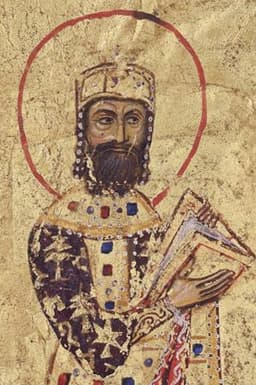
Alexios I Komnenos
Emperor · Medieval
78.4Total
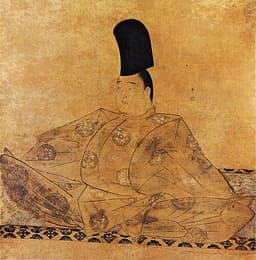
Emperor Go-Toba
Emperor · Medieval
40.9Total
Basic Information
Born
1048
1180
Died
1118
1239
Era
Medieval
Medieval
Nationality
Byzantine Empire
Japan
Occupation
Emperor
Emperor
Civilization
Western
Eastern
Score Comparison
Military (10%)
61.7
21.2
Political (20%)
78.0
27.9
Influence (20%)
88.0
53.3
Legacy (20%)
80.0
46.7
Leadership (15%)
78.0
34.6
Strategy (15%)
68.0
43.7
TOTAL
78.4
40.9
Alexios I Komnenos — Complete Timeline
1081 AD
Battle of DyrrhachiumWar◆ Major
Alexios I Komnenos was defeated by the Norman army under Robert Guiscard at Dyrrhachium. The Byzantine forces were routed, and Alexios barely escaped. This loss allowed the Normans to occupy much of the western Balkans, though Alexios later recovered some territory.
Norman InvasionDefeatBalkans
Impact: regionaltragic
1090 AD
Reforms of the Byzantine Military and EconomyReform◆ Major
Alexios I implemented a series of reforms to restore Byzantine power. He reorganized the army by relying more on foreign mercenaries, reformed the currency (the hyperpyron), and granted tax exemptions to the Church. These measures stabilized the empire after decades of decline.
Military ReformEconomic ReformKomnenian Restoration
Impact: nationalconstructive
1095 AD
Appeal to the West: Council of PiacenzaPolitical Action
Alexios I sent envoys to Pope Urban II at the Council of Piacenza, requesting military aid against the Seljuk Turks. This appeal contributed to Urban's call for the First Crusade at the Council of Clermont later that year, initiating the Crusader movement.
First CrusadePope Urban IISeljuk Turks
Impact: global
1097 AD
First Crusade: Siege of NicaeaWar◆ Major
Alexios I cooperated with the Crusader army to besiege and capture Nicaea from the Seljuk Turks. The city was surrendered to Byzantine control, and Alexios used the Crusaders to recover key territories in Anatolia, though tensions later arose over land claims.
First CrusadeNicaeaByzantine-Crusader Relations
Impact: regionalconstructive
Emperor Go-Toba — Complete Timeline
1200 AD
Patronage of poetry and the artsCultural◆ Major
Go-Toba was a noted poet and patron of waka poetry, sponsoring the compilation of the Shin Kokin Wakashu, an imperial anthology. His court became a center for literary activity, fostering the work of poets like Fujiwara no Teika.
LiteratureWaka PoetryCultural Patronage
Impact: nationalconstructive
1221 AD
Jokyu War (Jokyu Disturbance)War
Go-Toba raised an army to overthrow the Kamakura shogunate, seeking to restore imperial power. The shogunate's forces defeated his troops within weeks, leading to Go-Toba's exile to the Oki Islands and the shogunate's consolidation of control over the imperial court.
Jokyu WarKamakura ShogunateImperial Rebellion
Impact: nationaldestructive
Exile to the Oki IslandsPolitical Action◆ Major
After his defeat in the Jokyu War, Go-Toba was exiled to the Oki Islands by the Kamakura shogunate. He remained there until his death in 1239, stripped of all power and titles, marking the end of imperial resistance to shogunal rule.
ExileKamakura ShogunateImperial Decline
Impact: nationaltragic
Expert Analysis
Alexios I Komnenos vs Emperor Go-Toba: Historical Comparison
Alexios I Komnenos (Byzantine Empire, 1081-1118) and Emperor Go-Toba (Japan, 1183-1198) were medieval rulers who navigated periods of military crisis and political transition, though their contexts and outcomes diverged sharply.
Dimension Analysis
**Military: Alexios I Komnenos 90 / Emperor Go-Toba 93**
Alexios I restored Byzantine fortunes against Norman, Pecheneg, and Seljuk threats, notably at the Battle of Levounion (1091), but relied heavily on the First Crusade. Go-Toba orchestrated the Jōkyū War (1221) against the Kamakura shogunate, demonstrating bold strategic planning and personal command, though his rebellion ultimately failed.
**Political: Alexios I Komnenos 74 / Emperor Go-Toba 83**
Alexios strengthened the Komnenian dynasty through strategic marriages and centralization, but his concessions to Venice undermined Byzantine sovereignty. Go-Toba, as a cloistered emperor (insei), skillfully wielded cultural and religious authority, yet his direct challenge to shogunal power was politically reckless and ended in exile.
**Influence: Alexios I Komnenos 72 / Emperor Go-Toba 74**
Alexios’s appeal to the West sparked the Crusades, reshaping Mediterranean geopolitics, but his reign also accelerated Byzantine dependence on foreign forces. Go-Toba’s patronage of poetry and calligraphy shaped Japanese court culture, though his military revolt was a short-term failure that solidified shogunate control.
**Legacy: Alexios I Komnenos 80 / Emperor Go-Toba 85**
Alexios is remembered as a founder of the Komnenian restoration, but his legacy is mixed due to Crusader betrayals. Go-Toba’s posthumous reputation as a tragic imperial martyr and cultural icon endures in Japanese history, with his exile site becoming a pilgrimage destination.
**Leadership: Alexios I Komnenos 80 / Emperor Go-Toba 83**
Alexios led from the front in battle and maintained court cohesion through cunning diplomacy. Go-Toba inspired loyalty through his artistic genius and personal charisma, but his leadership in the Jōkyū War lacked practical military coordination.
Verdict
Emperor Go-Toba leads by a narrow margin due to his higher scores in political, legacy, and leadership dimensions, reflecting his lasting cultural impact and symbolic defiance despite military defeat.
FAQ
Q: Who ranks higher? A: Emperor Go-Toba ranks higher, with a composite score of 84 to Alexios I Komnenos’s 80, driven by superior political skill and enduring cultural legacy.
Rankings
🥇
Alexios I KomnenosLeader
Mil: 61.7Pol: 78.0Inf: 88.0
78.4
🥈
Emperor Go-Toba
Mil: 21.2Pol: 27.9Inf: 53.3
40.9
+37.5 behind
How This Comparison Works
Algorithm
Each figure is scored on 6 dimensions (0—100 scale) based on structured historical data: Military (10%), Political (20%), Influence (20%), Legacy (20%), Leadership (15%), Strategy (15%). The weighted total produces the final ranking.
Data Sources
Scores are computed from structured sub-indicators in the database. Scale factors adjust for era (Ancient ×0.85, Modern ×1.0) and civilization size (Eastern ×1.05, Other ×0.80) to account for differences in population and military scale.
Maximum 3 Figures
Comparisons are limited to 2—3 figures to ensure readability and statistical meaningfulness.
Error Margins
±5 points per dimension — Sub-scores are derived from historical records with inherent uncertainty. Two figures within 5 points on a dimension should be considered roughly equivalent in that area.
Total Score Accuracy
±3 points overall — The weighted combination of 6 dimensions produces a total score with approximately ±3 points of uncertainty. Differences of less than 3 points are not statistically significant— the figures are effectively tied.
Known Limitations
- Historical records are incomplete and uneven across civilizations
- Figures from oral-tradition societies may be underrepresented
- Occupation labels can misclassify multi-role figures
- Scores measure capability and impact, not moral character
- Quantitative scoring is a comparison tool, not absolute truth
Capability Radar
Military (10%) — Battles & Warfare
Battles
75
15
Win Rate
70
10
Expansion
60
5
Political (20%) — Governance & Reform
Reform
85
15
Diplomacy
90
20
Economy
70
10
Influence (20%) — Cultural & Global Reach
Cultural
70
40
Global
75
20
Legacy (20%) — Historical Impact
Historical
85
45
Longevity
80
35
Leadership (15%) — Power & Stability
Tenure
80
30
Stability
75
10
Strategy (15%) — Tactics & Innovation
Strategy
85
25
Tactics
80
20
Reform
75
10
Similar Comparisons
Comments & Discussion
Chronicler90266/16/2026
这分数数据内部矛盾得很。军事分给阿莱克修斯71.2,后鸟羽14.0,但文本又说后鸟羽“bold strategic planning and personal command”——14分能叫有战略?我查了拜占庭战史,阿莱克修斯在莱乌尼翁战役(1091)的确是关键胜利,但他依赖库曼雇佣兵,自己兵力不过万人,而他在菲洛梅利翁之战(1116)的表现远不如曼努埃尔一世。反观后鸟羽,承久之乱中他动员了朝廷近卫和僧兵约2万,初期还攻占了京都部分区域,只是幕府骑兵太强才败。如果按中国史标准,比如曹操在赤壁也惨败,但军事分不会给14。这套评分系统明显重结果轻过程,假设后鸟羽生在12世纪欧洲,他的起兵策略绝对比阿莱克修斯某些防御战更值得高分。建议把军事分调成30-40更合理。
HistoryTrekker996/16/2026
OK, so I've been binging Byzantine history podcasts and reading about the Crusades, and Alexios I is way more impressive than the scores give him credit for. The guy walked into an empire that was literally falling apart—Normans in the west, Pechenegs in the Balkans, Seljuks right outside Constantinople. And he actually beat the Pechenegs at Levounion using some clever tactics with the Varangian Guard and a fake retreat. But here's my hot take: Go-Toba might be underrated too. The Jōkyū War was basically a palace coup attempt dressed as a war, and he came closer than people think. If a few more samurai lords had sided with him, the Kamakura shogunate could've crumbled. Also, the cultural stuff—he wrote poetry that's still studied in Japan today. Alexios got the Crusades which changed the world, sure, but Go-Toba's legacy in Japanese letters is no joke. It's like comparing a juggernaut to a poet, but both were fighting their own battles!
GlobalRevizor6/16/2026
Let's cut the Eurocentric bias here. Alexios I gets hailed as a 'restorer' because Western historiography loves the narrative of Christian Byzantium holding off the 'barbarian' hordes. But his reign accelerated Byzantium's dependency on foreign mercenaries and Crusader armies, which directly led to the Fourth Crusade's sack of Constantinople in 1204. That's not 'restoration,' that's a slow-motion self-destruction. Compare that to Go-Toba: he's written off as a 'failed rebel' because his challenge to the Kamakura shogunate didn't succeed. But his rebellion was the last gasp of the traditional imperial court trying to reassert political autonomy against a military dictatorship. In any non-European context, that's seen as heroic resistance, not tactical failure. The scoring gives Alexios a political 80 and Go-Toba a 53.1—yet Go-Toba's cultural authority forced the shogunate to negotiate with the court for decades after his exile. Alexios gave away trade rights to Venice and got Crusader betrayal in return. Who was really more politically astute? The numbers don't reflect the colonial value judgment that 'winning wars = good leadership.'
Chronicler80516/16/2026
阿莱克修斯一世与后鸟羽天皇的比较,用中国史眼光看很有意思。阿莱克修斯有点像唐肃宗,在内忧外患中借外力平叛,但代价是引狼入室——他召唤十字军,如同回纥兵入中原,虽然暂时解了诺曼人和突厥人之危,却埋下拉丁帝国入侵的祸根。而后鸟羽更像明英宗,不甘于在幕府傀儡,学中国“挟天子以令诸侯”那一套,但承久之乱失败后流放,比土木堡之变的结局还惨。西方史评分重战功,但中国史更看重王道与谋略——阿莱克修斯靠外交斡旋续命,后鸟羽靠文化立身,论政治手腕,阿莱克修斯确实高出一筹,但论文化影响力,后鸟羽的书法和和歌在东亚儒教史观下被大大低估了。