Loading...
Emperor Go-Toba vs Pachacuti
Pachacuti leads by 28.5 pts · 2 figures compared
…
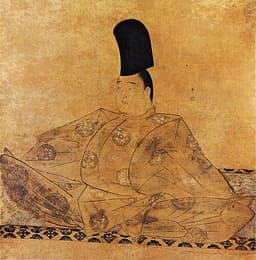
Emperor Go-Toba
Emperor · Medieval
40.9Total
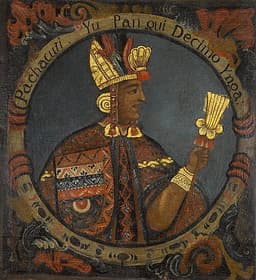
Pachacuti
Emperor · Medieval
69.4Total
Basic Information
Born
1180
1418
Died
1239
1472
Era
Medieval
Medieval
Nationality
Japan
Inca Empire
Occupation
Emperor
Emperor
Civilization
Eastern
Other
Score Comparison
Military (10%)
21.2
78.5
Political (20%)
27.9
58.1
Influence (20%)
53.3
65.0
Legacy (20%)
46.7
72.0
Leadership (15%)
34.6
78.0
Strategy (15%)
43.7
69.2
TOTAL
40.9
69.4
Emperor Go-Toba — Complete Timeline
1200 AD
Patronage of poetry and the artsCultural◆ Major
Go-Toba was a noted poet and patron of waka poetry, sponsoring the compilation of the Shin Kokin Wakashu, an imperial anthology. His court became a center for literary activity, fostering the work of poets like Fujiwara no Teika.
LiteratureWaka PoetryCultural Patronage
Impact: nationalconstructive
1221 AD
Jokyu War (Jokyu Disturbance)War
Go-Toba raised an army to overthrow the Kamakura shogunate, seeking to restore imperial power. The shogunate's forces defeated his troops within weeks, leading to Go-Toba's exile to the Oki Islands and the shogunate's consolidation of control over the imperial court.
Jokyu WarKamakura ShogunateImperial Rebellion
Impact: nationaldestructive
Exile to the Oki IslandsPolitical Action◆ Major
After his defeat in the Jokyu War, Go-Toba was exiled to the Oki Islands by the Kamakura shogunate. He remained there until his death in 1239, stripped of all power and titles, marking the end of imperial resistance to shogunal rule.
ExileKamakura ShogunateImperial Decline
Impact: nationaltragic
Pachacuti — Complete Timeline
1438 AD
Conquest of the Chanka KingdomWar
Pachacuti led the Inca army to defeat the Chanka, a powerful rival, in a decisive battle near Cusco. This victory secured his position as Sapa Inca and initiated a period of rapid expansion, transforming the Inca from a small kingdom into a vast empire.
ConquestInca ExpansionChanka
Impact: regional
1440 AD
Reconstruction of CuscoCultural◆ Major
Pachacuti rebuilt Cusco as the imperial capital, designing it in the shape of a puma and constructing massive stone structures like Sacsayhuam
Urban PlanningArchitectureInca Empire
Impact: regionalconstructive
1450 AD
Initiation of Machu Picchu's ConstructionCultural◆ Major
Pachacuti ordered the construction of Machu Picchu, a royal estate and ceremonial site high in the Andes. The complex featured sophisticated dry-stone masonry and terraced agriculture, serving as a symbol of Inca engineering and a retreat for the emperor.
ArchitectureRoyal EstateInca Engineering
Impact: regionalconstructive
Expert Analysis
Pachacuti vs Emperor Go-Toba
### The Emperor Who Built an Empire and the Emperor Who Lost One
In the high Andes of the fifteenth century, a warrior prince stood before a crumbling wall, the stench of a defeated Chanka army still thick in the air. His father had fled, the city of Cusco was nearly lost, and the Inca people seemed destined for extinction. But Pachacuti did not run. He rallied his soldiers, turned the tide of battle, and in that single moment of defiance, planted the seed of the greatest empire the Americas had ever known. Six thousand miles away and two centuries earlier, another emperor, Go-Toba of Japan, sat in a Kyoto palace surrounded by poets and cherry blossoms. He dreamed not of conquest, but of restoration—of reclaiming a throne that had become a shadow. Both men were sovereigns. Both faced existential threats to their power. One succeeded beyond measure; the other failed so completely that his name became a cautionary tale. What separated them was not luck, but a fundamental difference in how they understood power itself.
### Origins
Pachacuti was born in 1418 into a world of fragile city-states. The Inca were just one of many warring groups in the Andes, and his father, Viracocha Inca, was a cautious ruler who preferred diplomacy to battle. Young Cusi Yupanqui—his birth name—grew up in the shadow of Cusco’s stone walls, learning the arts of war and statecraft from a people who had never known true empire. The Chanka, a fierce rival kingdom, threatened to erase them. This was a world where survival depended on strength, and the weak were devoured.
Go-Toba, born in 1180, inherited a very different world. Japan’s imperial court in Kyoto had long been the center of culture and ritual, but real power had slipped away to the samurai clans. The Genpei War had just ended, and the Minamoto clan had established a military government in Kamakura, far from the capital. Go-Toba was a child-emperor, placed on the throne by political maneuvering, not by his own ambition. He grew up surrounded by courtiers who whispered of past glories—of emperors who commanded armies, not just ceremonies. His world was one of elegant decline, where power was a memory and poetry was a comfort.
### Rise to Power
Pachacuti’s rise was forged in fire. In 1438, when the Chanka attacked Cusco, his father fled the city in despair. The young prince refused to abandon his people. He took command of the remaining forces, led them into battle, and crushed the Chanka in a victory so decisive that it reshaped the Andean world. He did not merely win a battle; he won the right to be called Sapa Inca, the sole emperor. His father abdicated, and Pachacuti began a reign that would last over thirty years. His path was one of violent opportunity seized at the moment of greatest peril.
Go-Toba’s rise was quieter, but no less determined. After retiring from the throne in 1198, he became a cloistered emperor, a position that allowed him to exert influence without the burdens of daily rule. He used his courtly power to patronize the arts, sponsoring the *Shin Kokin Wakashu*, one of Japan’s greatest poetry anthologies. But he also watched the Kamakura shogunate grow stronger, and he chafed at the loss of imperial authority. Unlike Pachacuti, who ascended through conquest, Go-Toba’s path was one of patient intrigue. He waited for nearly two decades, building alliances among disgruntled samurai and temple warriors, preparing for a moment that might never come.
### Leadership & Governance
Pachacuti governed as a builder and organizer. He did not just conquer; he transformed. After the Chanka victory, he rebuilt Cusco in the shape of a puma, a sacred animal, with massive stone walls that still stand today. He initiated the construction of Machu Picchu around 1450, a royal estate high in the Andes that was both a retreat and a statement of power. He established the imperial system of roads, storehouses, and tribute that allowed the Inca to administer a vast, diverse empire. His leadership was practical, visionary, and ruthless—he centralized authority, imposed the Quechua language, and demanded absolute loyalty. He was a military strategist with a score of 76.7, but his political wisdom, at 70.6, was equally crucial. He understood that an empire is not won by battles alone, but by the systems that sustain it.
Go-Toba’s governance was that of a patron, not a builder. His score for political acumen, 53.1, reflects a man more comfortable with courtly intrigue than with the hard work of administration. He was a noted poet and a generous sponsor of the arts, but he never created institutions that could rival the shogunate’s military bureaucracy. His leadership style was charismatic but impractical—he inspired loyalty among his followers, but he lacked the strategic depth to challenge a well-organized enemy. When he finally raised an army in 1221 for the Jōkyū War, his forces were quickly crushed by the shogunate’s professional warriors. His leadership score of 74.6 suggests personal courage, but his military score of 14.0 reveals a man who had never truly commanded an army.
### Triumph & Tragedy
Pachacuti’s greatest triumph was the transformation of a small kingdom into an empire that stretched from modern Ecuador to Chile. He conquered the Chanka, the Lupaca, and the Colla, among others, and he did so with a mix of military force and diplomatic cunning. His tragedy? He never saw the empire at its zenith. He died in 1472, before the final conquests of his son, Topa Inca Yupanqui. But his legacy was secure: he had built a civilization that would awe the Spanish conquistadors a century later.
Go-Toba’s triumph was cultural, not political. The *Shin Kokin Wakashu* remains a masterpiece of Japanese literature, and his patronage ensured that waka poetry flourished. His tragedy was the Jōkyū War itself. In 1221, he raised the imperial banner and called for the shogunate’s overthrow. Within months, his army was defeated, and he was exiled to the remote Oki Islands, where he would die in 1239, a forgotten prisoner. His attempt to restore imperial power ended in total failure, and the shogunate tightened its grip on Japan for centuries.
### Character & Destiny
Pachacuti’s character was defined by ambition and pragmatism. He was a visionary who could also be a butcher—he did not hesitate to execute defeated enemies or to destroy rival cities. But he was also a planner who thought in generations. He built roads that would outlast him, terraces that would feed millions, and a system of governance that could hold together dozens of ethnic groups. His destiny was to create something new.
Go-Toba’s character was defined by pride and nostalgia. He was a man who believed in the past more than the present, who thought that poetry and lineage could defeat swords and strategy. He was brave—he did not flee when the shogunate’s army approached—but his bravery was misplaced. His destiny was to be a martyr for a cause that was already lost. His score for influence, 72.7, is high because his story inspired later imperial loyalists, but his total score of 59.9 reflects a life that ended in failure.
### Legacy
Pachacuti is remembered as the father of the Inca Empire. His name means “earth-shaker,” and he lived up to it. Machu Picchu, the reconstruction of Cusco, and the imperial system all bear his mark. He is a symbol of indigenous achievement, a reminder that great civilizations can rise from small beginnings. His legacy score of 66.1 is modest only because so much of his work was destroyed by the Spanish conquest, but his influence on Andean history is immeasurable.
Go-Toba is remembered as a poet and a failed rebel. The *Shin Kokin Wakashu* is still studied, and his exile is a tragic tale of imperial ambition crushed by feudal reality. He is a figure of pathos, not power—a reminder that in medieval Japan, the emperor’s role was ceremonial, not political. His legacy score of 63.3 is close to Pachacuti’s, but for different reasons: one built an empire, the other wrote a poem.
### Conclusion
The difference between these two emperors is not one of talent or courage. Both were brave, both were ambitious, both believed in their right to rule. The difference is that Pachacuti understood the world as it was—a place of war, logistics, and organization—while Go-Toba understood the world as it had been—a place of ritual, poetry, and courtly grace. One built for the future; the other fought for the past. In the end, the earth-shaker triumphed, and the poet was exiled. Their stories remind us that leadership is not just about wanting power, but about knowing how to wield it in the world that actually exists.
Rankings
🥇
PachacutiLeader
Mil: 78.5Pol: 58.1Inf: 65.0
69.4
🥈
Emperor Go-Toba
Mil: 21.2Pol: 27.9Inf: 53.3
40.9
+28.5 behind
How This Comparison Works
Algorithm
Each figure is scored on 6 dimensions (0—100 scale) based on structured historical data: Military (10%), Political (20%), Influence (20%), Legacy (20%), Leadership (15%), Strategy (15%). The weighted total produces the final ranking.
Data Sources
Scores are computed from structured sub-indicators in the database. Scale factors adjust for era (Ancient ×0.85, Modern ×1.0) and civilization size (Eastern ×1.05, Other ×0.80) to account for differences in population and military scale.
Maximum 3 Figures
Comparisons are limited to 2—3 figures to ensure readability and statistical meaningfulness.
Error Margins
±5 points per dimension — Sub-scores are derived from historical records with inherent uncertainty. Two figures within 5 points on a dimension should be considered roughly equivalent in that area.
Total Score Accuracy
±3 points overall — The weighted combination of 6 dimensions produces a total score with approximately ±3 points of uncertainty. Differences of less than 3 points are not statistically significant— the figures are effectively tied.
Known Limitations
- Historical records are incomplete and uneven across civilizations
- Figures from oral-tradition societies may be underrepresented
- Occupation labels can misclassify multi-role figures
- Scores measure capability and impact, not moral character
- Quantitative scoring is a comparison tool, not absolute truth
Capability Radar
Military (10%) — Battles & Warfare
Battles
15
85
Win Rate
10
90
Expansion
5
90
Political (20%) — Governance & Reform
Reform
15
92
Diplomacy
20
75
Economy
10
80
Influence (20%) — Cultural & Global Reach
Cultural
40
85
Global
20
65
Legacy (20%) — Historical Impact
Historical
45
80
Longevity
35
70
Leadership (15%) — Power & Stability
Tenure
30
85
Stability
10
82
Strategy (15%) — Tactics & Innovation
Strategy
25
88
Tactics
20
80
Reform
10
85
Similar Comparisons
Comments & Discussion
CRUSHER_OF_CHANKAS6/16/2026
Pachacuti didn't just win a battle—he invented a model of total domination. The infamous *mitma* system, where conquered peoples were forcibly relocated to break their identity, shows his strategic brilliance. Go-Toba invited his own ruin by underestimating the Kamakura shogunate. Comparing them? One built an empire from a single victory; the other threw his throne away on poetry and court intrigue. That's not bad luck—that's bad generalship.
京都剑圣6/16/2026
说到底,后鸟羽根本不懂什么叫真正的权力。他以为靠隐居的院政和几首和歌就能扳倒北条氏?1185年坛之浦海战已经证明武士的刀比公家的笔锋厉害。而帕查库蒂在库斯科城下面对昌卡人的重围时,选择的是冲锋。后鸟羽在承久之乱里只会躲在京都,等幕府大军来抓。一个是建立帝国,一个是葬送皇室最后的一点本钱。