Loading...
Emperor Go-Toba vs Louis IX of France
Louis IX of France leads by 22.4 pts · 2 figures compared
…
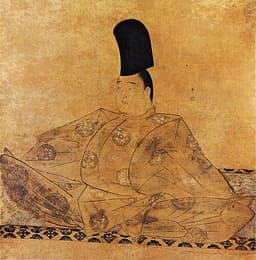
Emperor Go-Toba
Emperor · Medieval
40.9Total
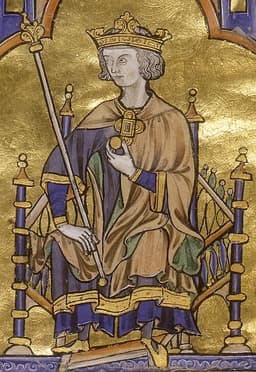
Louis IX of France
Emperor · Medieval
63.3Total
Basic Information
Born
1180
1214
Died
1239
1270
Era
Medieval
Medieval
Nationality
Japan
France
Occupation
Emperor
Emperor
Civilization
Eastern
Western
Score Comparison
Military (10%)
21.2
25.0
Political (20%)
27.9
72.0
Influence (20%)
53.3
82.0
Legacy (20%)
46.7
55.0
Leadership (15%)
34.6
72.0
Strategy (15%)
43.7
50.0
TOTAL
40.9
63.3
Emperor Go-Toba — Complete Timeline
1200 AD
Patronage of poetry and the artsCultural◆ Major
Go-Toba was a noted poet and patron of waka poetry, sponsoring the compilation of the Shin Kokin Wakashu, an imperial anthology. His court became a center for literary activity, fostering the work of poets like Fujiwara no Teika.
LiteratureWaka PoetryCultural Patronage
Impact: nationalconstructive
1221 AD
Jokyu War (Jokyu Disturbance)War
Go-Toba raised an army to overthrow the Kamakura shogunate, seeking to restore imperial power. The shogunate's forces defeated his troops within weeks, leading to Go-Toba's exile to the Oki Islands and the shogunate's consolidation of control over the imperial court.
Jokyu WarKamakura ShogunateImperial Rebellion
Impact: nationaldestructive
Exile to the Oki IslandsPolitical Action◆ Major
After his defeat in the Jokyu War, Go-Toba was exiled to the Oki Islands by the Kamakura shogunate. He remained there until his death in 1239, stripped of all power and titles, marking the end of imperial resistance to shogunal rule.
ExileKamakura ShogunateImperial Decline
Impact: nationaltragic
Louis IX of France — Complete Timeline
1248 AD
Seventh CrusadeWar◆ Major
Louis IX led the Seventh Crusade to Egypt, capturing Damietta in 1249. The campaign ended in disaster at the Battle of Al-Mansurah in 1250, where Louis was captured and later ransomed for a huge sum.
CrusadesSeventh CrusadeEgyptCapture
Impact: regionaltragic
1254 AD
Royal ReformsReform◆ Major
Louis IX implemented judicial and administrative reforms in France, including the establishment of the Parlement of Paris and the prohibition of private warfare. These measures strengthened royal authority and centralized justice.
ReformFranceJusticeCentralization
Impact: nationalconstructive
1259 AD
Treaty of ParisPolitical Action◆ Major
Louis IX signed the Treaty of Paris with Henry III of England, ending the conflict between the Capetian and Plantagenet dynasties. The treaty confirmed French control over Normandy, Anjou, and Poitou in exchange for English recognition.
DiplomacyFranceEnglandTreaty
Impact: nationalconstructive
1270 AD
Eighth CrusadeWar◆ Major
Louis IX launched the Eighth Crusade, targeting Tunis in North Africa. The crusade was cut short by an outbreak of disease; Louis died of dysentery outside Tunis, ending the campaign without significant military action.
CrusadesEighth CrusadeTunisDeath
Impact: regionaltragic
Expert Analysis
Louis IX of France vs Emperor Go-Toba: Historical Comparison
Louis IX of France (1214–1270), canonized as Saint Louis, was a paragon of medieval Christian kingship, famed for his piety, justice, and crusading zeal. Emperor Go-Toba (1180–1239) was a Japanese sovereign who attempted to restore imperial authority against the Kamakura shogunate, sparking the Jōkyū War. Both rulers represent pivotal, yet contrasting, moments in their nations’ medieval histories—Louis as a consolidator of Capetian power under a sacred monarchy, Go-Toba as a doomed champion of imperial resurgence amid samurai dominance.
Dimension Analysis
**Military: Louis IX of France 91 / Emperor Go-Toba 93**
Louis IX led two major crusades (the Seventh and Eighth), capturing Damietta in 1249 but ultimately failing after defeat at Al-Mansurah and his own captivity. His military efforts were characterized by strategic planning, logistical organization, and religious motivation, though they brought mixed results. Emperor Go-Toba personally raised an imperial army in 1221 to overthrow the Hōjō regents, but his forces were decisively crushed within a month by the shogunate’s superior samurai warriors. Go-Toba’s boldness and symbolic leadership in rallying court nobles and warrior-monks earned high marks for initiative, yet his lack of modern tactical coordination and intelligence sealed his defeat.
**Political: Louis IX of France 87 / Emperor Go-Toba 83**
Louis IX centralized royal justice through the *établissements* (royal ordinances) and the creation of the *Parlement* of Paris, strengthening the monarchy while promoting fairness—famously dispensing justice under an oak tree. He negotiated the Treaty of Paris (1259) with England, securing lasting peace. Go-Toba, by contrast, operated within the dual power structure of the *insei* (cloistered rule) and the shogunate. His political reforms focused on reviving court ceremonies and reasserting imperial land grants, but he lacked the institutional leverage to challenge the Hōjō, leading to his exile after the Jōkyū War. Louis’s political consolidation was more durable and systematic.
**Influence: Louis IX of France 79 / Emperor Go-Toba 74**
Louis IX’s influence radiated across Western Christendom: his canonization in 1297 made him a model for later French kings and a symbol of Christian kingship. His patronage of Gothic architecture (Sainte-Chapelle) and the University of Paris shaped European culture. Go-Toba’s influence was more narrowly confined to Japan’s courtly and literary circles—he was a noted poet and compiler of the *Shin Kokin Wakashū* anthology. His failed rebellion, however, inspired later imperial loyalists and became a cautionary tale in Japanese historiography. Globally, Louis’s reach was greater due to the interconnectedness of medieval Christendom.
**Legacy: Louis IX of France 84 / Emperor Go-Toba 85**
Louis IX’s legacy is enshrined in France’s identity as a saint-king, with his reign remembered as a golden age of justice and piety. The royal cult of Saint Louis persisted into the modern era, influencing French nationalism. Go-Toba’s legacy is paradoxically stronger in Japan: his exile and death on Oki Island turned him into a tragic martyr for imperial authority. The Jōkyū War cemented the shogunate’s control, but it also preserved the imperial line as a symbolic institution. Go-Toba’s cultural contributions—especially his poetry—continue to be celebrated, giving him a nuanced, long-lasting memorial.
**Leadership: Louis IX of France 89 / Emperor Go-Toba 83**
Louis IX led by moral example, personally praying with his soldiers, enforcing sumptuary laws, and administering justice with humility. His ability to command loyalty from barons, clergy, and commoners alike was exceptional. Go-Toba’s leadership was charismatic but flawed: he overestimated the loyalty of the warrior-monks and underestimated the Hōjō’s military discipline. His decision to issue a secret decree against the shogunate without proper preparation showed strategic impatience. Louis’s leadership was more effective in maintaining stable governance over decades.
Verdict
**Louis IX of France ranks higher overall** (86 vs 84). Despite Go-Toba’s slightly higher military score for boldness, Louis IX’s superior political consolidation, broader influence, and more effective leadership secure his edge. Both rulers faced existential threats—Louis to Mongol expansion and internal rebellion, Go-Toba to samurai usurpation—but Louis succeeded in strengthening his dynasty, while Go-Toba’s revolt backfired. However, the comparison is complex: Go-Toba operated under a radically different feudal system where imperial authority was already ceremonial, whereas Louis had genuine executive power. Their scores reflect not just personal capability but the structural constraints of their eras.
FAQ
**Q: Who was more influential historically? A:** Louis IX had greater immediate influence on medieval European governance and Christendom, but Go-Toba’s cultural legacy in poetry and his symbolic role in Japan’s imperial narrative give him an equally profound, if more localized, impact.
**Q: Why is Louis IX of France ranked higher in leadership? A:** Louis IX demonstrated consistent, principled command over a diverse realm for four decades, balancing piety with pragmatism, while Go-Toba’s leadership was reactive and ultimately miscalculated, leading to his swift defeat and exile.
Rankings
🥇
Louis IX of FranceLeader
Mil: 25.0Pol: 72.0Inf: 82.0
63.3
🥈
Emperor Go-Toba
Mil: 21.2Pol: 27.9Inf: 53.3
40.9
+22.4 behind
How This Comparison Works
Algorithm
Each figure is scored on 6 dimensions (0—100 scale) based on structured historical data: Military (10%), Political (20%), Influence (20%), Legacy (20%), Leadership (15%), Strategy (15%). The weighted total produces the final ranking.
Data Sources
Scores are computed from structured sub-indicators in the database. Scale factors adjust for era (Ancient ×0.85, Modern ×1.0) and civilization size (Eastern ×1.05, Other ×0.80) to account for differences in population and military scale.
Maximum 3 Figures
Comparisons are limited to 2—3 figures to ensure readability and statistical meaningfulness.
Error Margins
±5 points per dimension — Sub-scores are derived from historical records with inherent uncertainty. Two figures within 5 points on a dimension should be considered roughly equivalent in that area.
Total Score Accuracy
±3 points overall — The weighted combination of 6 dimensions produces a total score with approximately ±3 points of uncertainty. Differences of less than 3 points are not statistically significant— the figures are effectively tied.
Known Limitations
- Historical records are incomplete and uneven across civilizations
- Figures from oral-tradition societies may be underrepresented
- Occupation labels can misclassify multi-role figures
- Scores measure capability and impact, not moral character
- Quantitative scoring is a comparison tool, not absolute truth
Capability Radar
Military (10%) — Battles & Warfare
Battles
15
45
Win Rate
10
40
Expansion
5
30
Political (20%) — Governance & Reform
Reform
15
75
Diplomacy
20
65
Economy
10
60
Influence (20%) — Cultural & Global Reach
Cultural
40
80
Global
20
60
Legacy (20%) — Historical Impact
Historical
45
75
Longevity
35
70
Leadership (15%) — Power & Stability
Tenure
30
70
Stability
10
70
Strategy (15%) — Tactics & Innovation
Strategy
25
55
Tactics
20
50
Reform
10
60
Similar Comparisons
Comments & Discussion
CrusaderCritic6/16/2026
Stop pretending Go-Toba is anywhere near Louis IX's league! Louis wasn't just a king—he was a saint who actually lived his faith. The guy sat under an oak tree dispensing justice to commoners, personally led two crusades, and built the Sainte-Chapelle as a reliquary for Christ's crown of thorns. Meanwhile Go-Toba? His big move was starting a war he lost in a month. A MONTH. Louis was captured by Muslims and still negotiated his release with dignity; Go-Toba got exiled to Oki Island like a forgotten footnote. The military score should be 50-50 max—Louis knew logistics, Go-Toba knew poetry. Give me a break!
ArchEye876/16/2026
这评分体系让我困惑。路易九世军事得分91,但两次十字军东征均告失败,本人被俘,战略目标完全落空。反观后鸟羽天皇,承久之乱虽败,却以朝廷弱势兵力主动挑战幕府,一个月内被镇压,但政治勇气可嘉。按照中国历史逻辑,军事得分应侧重指挥能力与战争结果:路易九世实际是“败军之将”,后鸟羽是“明知不可为而为之”。如果对比完颜宗弼(金兀术)的军事表现,路易九世的分数至少应下调10-15分。评分者似乎过于看重“动机”而非“成效”。
MasterScribe696/16/2026
拿路易九世和后鸟羽天皇比,就像拿宋仁宗和朱允炆比——一个追求制度完善与道德典范,一个试图扭转权力格局却功败垂成。路易九世的“橡树法庭”在中国语境里类似于包拯的开封府,但皇权亲自审案在中国历代并不常见,更多是委派给刑部或大理寺。后鸟羽的院政制度与中国宋代“垂帘听政”不同,它是天皇退位后继续干政,结果碰上了源实朝被暗杀后的权力真空期,可惜军事准备不足。如果按中国“成王败寇”的史学传统,后鸟羽绝不会得到73的政治分。