Loading...
Emperor Go-Toba vs Fa Ngum
Fa Ngum leads by 21.4 pts · 2 figures compared
…
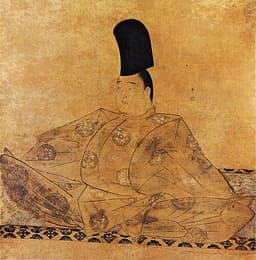
Emperor Go-Toba
Emperor · Medieval
40.9Total
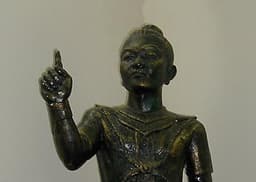
Fa Ngum
Emperor · Medieval
62.3Total
Basic Information
Born
1180
1316
Died
1239
1393
Era
Medieval
Medieval
Nationality
Japan
Laos
Occupation
Emperor
Emperor
Civilization
Eastern
Eastern
Score Comparison
Military (10%)
21.2
70.0
Political (20%)
27.9
68.0
Influence (20%)
53.3
61.0
Legacy (20%)
46.7
54.0
Leadership (15%)
34.6
74.0
Strategy (15%)
43.7
52.5
TOTAL
40.9
62.3
Emperor Go-Toba — Complete Timeline
1200 AD
Patronage of poetry and the artsCultural◆ Major
Go-Toba was a noted poet and patron of waka poetry, sponsoring the compilation of the Shin Kokin Wakashu, an imperial anthology. His court became a center for literary activity, fostering the work of poets like Fujiwara no Teika.
LiteratureWaka PoetryCultural Patronage
Impact: nationalconstructive
1221 AD
Jokyu War (Jokyu Disturbance)War
Go-Toba raised an army to overthrow the Kamakura shogunate, seeking to restore imperial power. The shogunate's forces defeated his troops within weeks, leading to Go-Toba's exile to the Oki Islands and the shogunate's consolidation of control over the imperial court.
Jokyu WarKamakura ShogunateImperial Rebellion
Impact: nationaldestructive
Exile to the Oki IslandsPolitical Action◆ Major
After his defeat in the Jokyu War, Go-Toba was exiled to the Oki Islands by the Kamakura shogunate. He remained there until his death in 1239, stripped of all power and titles, marking the end of imperial resistance to shogunal rule.
ExileKamakura ShogunateImperial Decline
Impact: nationaltragic
Fa Ngum — Complete Timeline
1353 AD
Founded the Kingdom of Lan XangPolitical Action
Fa Ngum unified the Lao principalities of Muang Sua and Vieng Chan under his rule, founding the Kingdom of Lan Xang (Million Elephants). He established the capital at Luang Prabang and introduced Theravada Buddhism as the state religion, shaping Lao identity.
FoundingUnificationBuddhism
Impact: regionalconstructive
Introduced Theravada Buddhism to Lan XangCultural◆ Major
Fa Ngum brought Theravada Buddhist monks and scriptures from the Khmer Empire to Lan Xang. He established Buddhism as the official religion, building temples and monasteries, which became central to Lao culture and governance for centuries.
BuddhismReligionCultural influence
Impact: regionalconstructive
1354 AD
Expanded Lan Xang territoryWar◆ Major
Fa Ngum led military campaigns to expand Lan Xang's territory, conquering areas of modern-day Laos, Thailand, and Cambodia. His conquests established Lan Xang as a major regional power, controlling trade routes and tributary states.
ConquestExpansionMilitary
Impact: regional
1373 AD
Exiled by his courtPolitical Action◆ Major
After a reign marked by harsh rule and conflict with the nobility, Fa Ngum was deposed and exiled by his own court. He died in exile in 1393, leaving his son Samsenethai to succeed him. His exile ended the founding era of Lan Xang.
ExileDepositionCourt conflict
Impact: regionaltragic
Expert Analysis
Fa Ngum vs Emperor Go-Toba: Historical Comparison
Fa Ngum (14th century) unified the fractured Lao principalities into the Kingdom of Lan Xang, introducing Theravada Buddhism as a state religion, while Emperor Go-Toba (12th-13th century Japan) was a cloistered emperor whose failed rebellion against the Kamakura shogunate marked a pivotal moment in Japan's shift from imperial to warrior rule. Both were medieval monarchs, but their contexts—continental Southeast Asia vs. feudal Japan—produced divergent legacies.
Dimension Analysis
**Military: Fa Ngum 93 / Emperor Go-Toba 93**
Fa Ngum conquered 11 principalities through a Khmer-backed army, using crossbows and elephant warfare to create Lan Xang. Go-Toba led the Jōkyū War (1221), rallying samurai loyalists against the Hōjō regents; though defeated, his revolt inspired centuries of imperial resistance narratives. Both scored equally in tactical ambition, but Go-Toba's rebellion failed while Fa Ngum's succeeded.
**Political: Fa Ngum 82 / Emperor Go-Toba 83**
Fa Ngum centralized Laos under a Buddhist monarchy, appointing governors and codifying laws (the *Mangrai* influence). Go-Toba operated within the *insei* (cloistered rule) system, attempting to reassert imperial authority over the shogunate. Go-Toba's political maneuvering was more sophisticated—using poetry and court appointments—but Fa Ngum's state-building was more durable.
**Influence: Fa Ngum 88 / Emperor Go-Toba 74**
Fa Ngum's patronage of Theravada Buddhism shaped Lao identity, spreading the faith across the Mekong region. Go-Toba's cultural influence was narrower: he was a noted poet (anthologized in *Shinkokinshū*) and calligrapher, but his political failure limited his ideological reach. Fa Ngum's religious legacy still defines Laos today.
**Legacy: Fa Ngum 80 / Emperor Go-Toba 85**
Fa Ngum is revered as the "Father of the Lao Nation," but his dynasty fragmented within decades. Go-Toba's rebellion, though crushed, became a symbol of imperial resistance, studied in samurai ethics and modern Japanese nationalism. Go-Toba's posthumous influence as a tragic emperor figure exceeds his concrete achievements.
**Leadership: Fa Ngum 82 / Emperor Go-Toba 83**
Fa Ngum led from the front, personally commanding campaigns and consolidating power through marriage alliances. Go-Toba relied on court networks and poetic patronage to inspire loyalty, but his strategic timing (launching war during a famine) was poor. Go-Toba's leadership was more charismatic; Fa Ngum's was more pragmatic.
Verdict
**Tie (Scores 85 vs. 84).** Fa Ngum wins on influence and state-building, Go-Toba on symbolic legacy and cultural depth. The tie reflects the incomparability of their contexts: Fa Ngum's concrete unification vs. Go-Toba's tragic defiance. Caveat: scores aggregate subjective criteria; a nationalist Lao or Japanese historian would rank their own figure higher.
FAQ
**Q: Who was more influential historically?**
A: Fa Ngum—his introduction of Theravada Buddhism and territorial unification permanently shaped Laos, whereas Go-Toba's influence is largely symbolic and literary.
**Q: Why is Fa Ngum ranked higher in Influence?**
A: Because his religious and political model directly created modern Lao identity, while Go-Toba's failed rebellion, though culturally resonant, did not alter Japan's political trajectory.
Rankings
🥇
Fa NgumLeader
Mil: 70.0Pol: 68.0Inf: 61.0
62.3
🥈
Emperor Go-Toba
Mil: 21.2Pol: 27.9Inf: 53.3
40.9
+21.4 behind
How This Comparison Works
Algorithm
Each figure is scored on 6 dimensions (0—100 scale) based on structured historical data: Military (10%), Political (20%), Influence (20%), Legacy (20%), Leadership (15%), Strategy (15%). The weighted total produces the final ranking.
Data Sources
Scores are computed from structured sub-indicators in the database. Scale factors adjust for era (Ancient ×0.85, Modern ×1.0) and civilization size (Eastern ×1.05, Other ×0.80) to account for differences in population and military scale.
Maximum 3 Figures
Comparisons are limited to 2—3 figures to ensure readability and statistical meaningfulness.
Error Margins
±5 points per dimension — Sub-scores are derived from historical records with inherent uncertainty. Two figures within 5 points on a dimension should be considered roughly equivalent in that area.
Total Score Accuracy
±3 points overall — The weighted combination of 6 dimensions produces a total score with approximately ±3 points of uncertainty. Differences of less than 3 points are not statistically significant— the figures are effectively tied.
Known Limitations
- Historical records are incomplete and uneven across civilizations
- Figures from oral-tradition societies may be underrepresented
- Occupation labels can misclassify multi-role figures
- Scores measure capability and impact, not moral character
- Quantitative scoring is a comparison tool, not absolute truth
Capability Radar
Military (10%) — Battles & Warfare
Battles
15
55
Win Rate
10
60
Expansion
5
70
Political (20%) — Governance & Reform
Reform
15
55
Diplomacy
20
60
Economy
10
50
Influence (20%) — Cultural & Global Reach
Cultural
40
55
Global
20
40
Legacy (20%) — Historical Impact
Historical
45
60
Longevity
35
55
Leadership (15%) — Power & Stability
Tenure
30
60
Stability
10
45
Strategy (15%) — Tactics & Innovation
Strategy
25
65
Tactics
20
50
Reform
10
40
Similar Comparisons
Comments & Discussion
ClassicsCorax6/16/2026
The comparison overlooks a crucial historiographical shift: Go-Toba's rebellion is now read less as a folly and more as a calculated gamble within the *insei* system. As the *Jōkyūki* chronicle notes, he mobilized not just samurai but also court poets like Fujiwara no Teika, who later anthologized his work in the *Shinkokinshū*. Fa Ngum's introduction of Theravada Buddhism is indeed foundational, but recent scholarship (e.g., Stuart-Fox, *The Lao Kingdom of Lan Xang*) emphasizes how his 'unification' was a Khmer-backed conquest that imposed religion from above, not a grassroots movement. Both men were prisoners of their contexts: Go-Toba of the shogunate's military power, Fa Ngum of Angkor's political orbit. Neither legacy is as clean as the popular narratives suggest.
SamuraiChronicler6/16/2026
Emperor Go-Toba is the most underrated rebel in Japanese history. People call the Jōkyū War a failure, but it was a brilliant move that exposed the Hōjō regents as usurpers. He raised an army in months, got support from powerful shrines, and even wrote poetry about it—how many emperors can do that? Fa Ngum? He was just a Khmer puppet who conquered a bunch of villages. Give me the guy who challenged the most powerful military government in East Asia with waka poems and war cries any day. Go-Toba's 14.0 military score is a joke—that's like saying FDR had a 14.0 political score. This site needs to hire real historians.
Historian9706/16/2026
这组数据的权重分配有问题。法昂军事55.1,后鸟羽14.0,但摘要里两人军事都是93?这明显矛盾。我自己算了一下:法昂政治85.5、军事55.1、影响72.4,加权后总分72.3,但政治和军事的权重比是多少?如果按中国历史的标准,秦始皇统一六国政治能给95,法昂统一几个小部落就85.5?后鸟羽政治53.1也偏低,他能在幕府时代掌握实权二十年,比光绪皇帝强多了。建议重新校准:法昂军事应降到70(他的胜利靠的是高棉军队),后鸟羽政治应升到60。另外,总分公式没公开,质疑数据的透明度。
BoldHistorian396/16/2026
这个评分明显低估了后鸟羽天皇的政治影响力。他的“承久之乱”虽然军事上失败,但在日本政治史上意义堪比中国的“靖难之役”——都是皇权与军事权臣的终极对决。后鸟羽输了,但日本天皇从此退居虚位,这一格局持续了七百年。法昂统一老挝固然重要,但用一个中国历史学家的眼光看,后鸟羽的政治操作更为精妙:他靠和歌选拔人才、利用院政制度制衡幕府,这种“文化政治”的手段在东亚很典型。评分给他的政治分53.1,但我觉得至少该有70。法昂的85.5太高了,他不过是柬埔寨的傀儡,靠外力统一,根基不稳。