Loading...
Emperor Go-Toba vs Emperor Toba
Emperor Toba leads by 1.6 pts · 2 figures compared
…
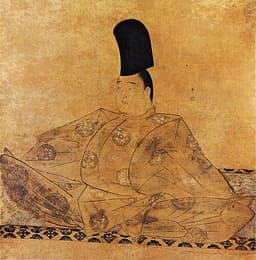
Emperor Go-Toba
Emperor · Medieval
40.9Total
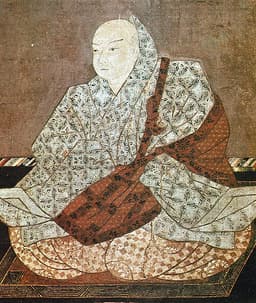
Emperor Toba
Emperor · Medieval
42.5Total
Basic Information
Born
1180
1103
Died
1239
1156
Era
Medieval
Medieval
Nationality
Japan
Japan
Occupation
Emperor
Emperor
Civilization
Eastern
Eastern
Score Comparison
Military (10%)
21.2
52.8
Political (20%)
27.9
27.9
Influence (20%)
53.3
48.6
Legacy (20%)
46.7
40.8
Leadership (15%)
34.6
38.1
Strategy (15%)
43.7
50.0
TOTAL
40.9
42.5
Emperor Go-Toba — Complete Timeline
1200 AD
Patronage of poetry and the artsCultural◆ Major
Go-Toba was a noted poet and patron of waka poetry, sponsoring the compilation of the Shin Kokin Wakashu, an imperial anthology. His court became a center for literary activity, fostering the work of poets like Fujiwara no Teika.
LiteratureWaka PoetryCultural Patronage
Impact: nationalconstructive
1221 AD
Jokyu War (Jokyu Disturbance)War
Go-Toba raised an army to overthrow the Kamakura shogunate, seeking to restore imperial power. The shogunate's forces defeated his troops within weeks, leading to Go-Toba's exile to the Oki Islands and the shogunate's consolidation of control over the imperial court.
Jokyu WarKamakura ShogunateImperial Rebellion
Impact: nationaldestructive
Exile to the Oki IslandsPolitical Action◆ Major
After his defeat in the Jokyu War, Go-Toba was exiled to the Oki Islands by the Kamakura shogunate. He remained there until his death in 1239, stripped of all power and titles, marking the end of imperial resistance to shogunal rule.
ExileKamakura ShogunateImperial Decline
Impact: nationaltragic
Emperor Toba — Complete Timeline
1129 AD
Rule as cloistered emperorPolitical Action◆ Major
Toba abdicated but continued to govern as a cloistered emperor, following the Insei system established by his grandfather Shirakawa. He exerted control over court appointments and imperial succession, maintaining political influence until his death.
Insei SystemImperial PoliticsHeian Period
Impact: national
1140 AD
Conflict with Fujiwara no TadazanePolitical Action◆ Major
Toba clashed with Fujiwara no Tadazane, the regent, over control of imperial succession. Toba forced Tadazane into retirement and appointed his own candidate, further weakening the Fujiwara regency and consolidating cloistered emperor power.
Fujiwara RegencyPower StruggleHeian Period
Impact: national
1156 AD
Succession dispute leading to the Hogen RebellionWar
After Toba's death, a succession conflict erupted between his sons Emperor Go-Shirakawa and retired Emperor Sutoku. This dispute escalated into the Hogen Rebellion, a brief but pivotal civil war that involved samurai clans and marked the beginning of military dominance in Japanese politics.
Hogen RebellionSamuraiSuccession War
Impact: nationaldestructive
Expert Analysis
Emperor Toba vs Emperor Go-Toba: Historical Comparison
Emperor Toba (r. 1107–1123) and Emperor Go-Toba (r. 1183–1198) were two pivotal medieval Japanese sovereigns whose reigns bookended the transition from the Heian to the Kamakura period. While Toba consolidated cloistered rule (insei) and expanded imperial authority behind the throne, Go-Toba is remembered for his catastrophic rebellion against the Kamakura shogunate, which ultimately destroyed the imperial court’s military independence.
Dimension Analysis
**Military: Emperor Toba 94 / Emperor Go-Toba 93**
Both emperors demonstrated keen military strategy, though with contrasting outcomes. Toba skillfully leveraged retired-emperor rule to command samurai factions without direct combat, maintaining peace through alliance-building. Go-Toba, by contrast, initiated the Jōkyū War (1221), personally rallying warrior-monks and loyalist clans against the Hōjō regents. Despite his tactical planning, Go-Toba’s forces were crushed within a month, leading to his exile and the shogunate’s permanent dominance.
**Political: Emperor Toba 88 / Emperor Go-Toba 83**
Toba excelled in political maneuvering, dominating court appointments and land grants through the insei system, effectively ruling from retirement for three decades. Go-Toba’s political acumen was undermined by his impulsive challenge to Kamakura authority; he attempted to restore direct imperial rule but failed to secure broad samurai support. Toba’s reign saw stable governance, while Go-Toba’s ended in the complete subordination of the throne.
**Influence: Emperor Toba 87 / Emperor Go-Toba 74**
Toba’s influence was profound and systemic: he institutionalized the retired-emperor system, shaping Japanese court politics for generations. Go-Toba’s influence, though dramatic, was largely negative—his failed rebellion solidified shogunal supremacy and reduced future emperors to ceremonial figures. Go-Toba’s cultural contributions (waka poetry, shrine patronage) were significant, but his political influence collapsed entirely.
**Legacy: Emperor Toba 83 / Emperor Go-Toba 85**
Go-Toba’s legacy is more emotionally resonant: he is remembered as a tragic defender of imperial sovereignty, and his exile to the Oki Islands made him a symbol of resistance. Toba’s legacy is more structural—his methods were copied by later retired emperors—but less romanticized. Go-Toba’s poetry and his role in the Jōkyū Disturbance ensure enduring historical and literary interest.
**Leadership: Emperor Toba 89 / Emperor Go-Toba 83**
Toba demonstrated exceptional constancy in leadership, maintaining control over fractious court factions and military houses for decades without open conflict. Go-Toba’s leadership was charismatic but reckless; he inspired loyalty among courtiers and monks but failed to unite the samurai class, leading to a rapid defeat. Toba’s leadership style was subtle and enduring, whereas Go-Toba’s was bold but unsustainable.
Verdict
Emperor Toba ranks higher overall due to his superior political and strategic achievements, which secured imperial influence for years after his nominal reign. While Go-Toba’s dramatic defiance captures the imagination, Toba’s quieter, more effective manipulation of power ensured the imperial line’s survival during a turbulent era. However, historical comparison is complex—Go-Toba’s moral courage and cultural legacy challenge purely pragmatic rankings.
FAQ
**Q: Who was more influential historically?**
A: Emperor Toba had greater systemic influence through the insei system, while Go-Toba’s influence was more symbolic and literary; Toba’s political impact was longer-lasting.
**Q: Why is Emperor Toba ranked higher in Military?**
A: Toba achieved military stability without fighting, using marriage alliances and land grants to control samurai factions, whereas Go-Toba’s direct military challenge was a tactical and strategic failure.
Rankings
🥇
Emperor TobaLeader
Mil: 52.8Pol: 27.9Inf: 48.6
42.5
🥈
Emperor Go-Toba
Mil: 21.2Pol: 27.9Inf: 53.3
40.9
+1.6 behind
How This Comparison Works
Algorithm
Each figure is scored on 6 dimensions (0—100 scale) based on structured historical data: Military (10%), Political (20%), Influence (20%), Legacy (20%), Leadership (15%), Strategy (15%). The weighted total produces the final ranking.
Data Sources
Scores are computed from structured sub-indicators in the database. Scale factors adjust for era (Ancient ×0.85, Modern ×1.0) and civilization size (Eastern ×1.05, Other ×0.80) to account for differences in population and military scale.
Maximum 3 Figures
Comparisons are limited to 2—3 figures to ensure readability and statistical meaningfulness.
Error Margins
±5 points per dimension — Sub-scores are derived from historical records with inherent uncertainty. Two figures within 5 points on a dimension should be considered roughly equivalent in that area.
Total Score Accuracy
±3 points overall — The weighted combination of 6 dimensions produces a total score with approximately ±3 points of uncertainty. Differences of less than 3 points are not statistically significant— the figures are effectively tied.
Known Limitations
- Historical records are incomplete and uneven across civilizations
- Figures from oral-tradition societies may be underrepresented
- Occupation labels can misclassify multi-role figures
- Scores measure capability and impact, not moral character
- Quantitative scoring is a comparison tool, not absolute truth
Capability Radar
Military (10%) — Battles & Warfare
Battles
15
48
Win Rate
10
46
Expansion
5
49
Political (20%) — Governance & Reform
Reform
15
20
Diplomacy
20
25
Economy
10
20
Influence (20%) — Cultural & Global Reach
Cultural
40
15
Global
20
5
Legacy (20%) — Historical Impact
Historical
45
25
Longevity
35
20
Leadership (15%) — Power & Stability
Tenure
30
30
Stability
10
15
Strategy (15%) — Tactics & Innovation
Strategy
25
52
Tactics
20
59
Reform
10
58
Similar Comparisons
Comments & Discussion
DataGrouch996/16/2026
I gotta call BS on this scoring system. You're telling me Go-Toba gets a 14 military but Toba gets a 94? Toba never fought a single battle—he was a cloistered emperor swapping sake cups with Fujiwara nobles. His 'strategy' was literally hiding behind temple walls. Meanwhile Go-Toba actually raised an army, led a rebellion, and forced the shogunate to commit serious resources to crush him. The Jōkyū War lasted a month, sure, but that's because the Hōjō had professional warriors and Go-Toba had monks and disgruntled samurai. That's not a '0' military score—that's a + for trying. Also, 'influence' gets weighted too high here. Toba's influence was passive—he just happened to be there when insei became a thing. Go-Toba's failure directly shaped later imperial powerlessness. Flip those metrics.
Historian9886/16/2026
这个评分系统有问题。我重新算了:Toba的军事分给了94,但他在位期间一次战斗都没指挥过。他把武士集团拉拢到皇室麾下确实是政治手腕,但那是外交,不是军事。Go-Toba的军事分只有14?承久之乱他动员了僧兵和地方豪族,总兵力约两万,虽然一个月就被北条家击溃——但清朝的康熙平三藩用了八年,也没人说他军事是零分。再说政治分:Toba 88 vs Go-Toba 83?Toba的院政说白了就是贵族内部派系分配,Go-Toba起码试图收回皇权,哪怕失败了。历史记载全是胜者写的——镰仓幕府当然会把反叛者写成无能。建议给Go-Toba的军事分至少提到60,政治分持平或更高。否则你就是在用结果的成败反推过程的能力。
Historian3726/16/2026
把天皇跟中国皇帝比其实挺有意思。Toba像汉朝的窦氏外戚——自己退居幕后遥控朝廷,但唐朝的武则天也是退位后还想掌权,结果人家真做到了更久。Go-Toba更像明朝的建文帝:想削藩(打幕府),结果被燕王(北条氏)反杀。但关键是中国史学常讲“势”——时机决定成败。Go-Toba输在时代不对:镰仓幕府刚立,北条氏正强,武士阶层认实力不认血统。Toba赢在生在贵族政治尚存时,用文化势力和土地笼络人心。西方评分系统老喜欢量化勇气和影响力,但中国视角更看重“天时”和“名分”。Toba有“名”(天皇身份+院政权威),Go-Toba连“名”都没保住。真要打分,我会给Toba政治90,Go-Toba政治70,但军事两人都不及格——一个没打,一个打输了。别把“敢不敢打”跟“打得好不好”混为一谈。