Loading...
Emperor Go-Daigo vs Marwan II
Emperor Go-Daigo leads by 6.1 pts · 2 figures compared
…
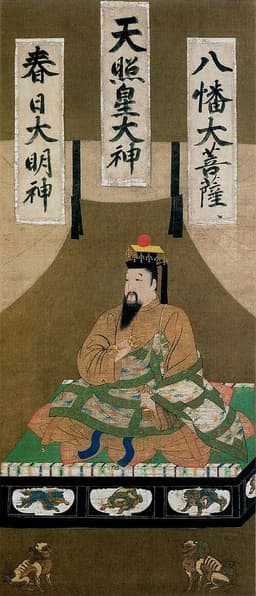
Emperor Go-Daigo
Emperor · Medieval
56.4Total
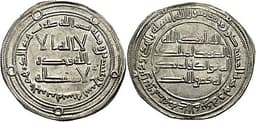
Marwan II
Emperor · Medieval
50.3Total
Basic Information
Born
1288
688
Died
1339
750
Era
Medieval
Medieval
Nationality
Japan
Umayyad Caliphate
Occupation
Emperor
Emperor
Civilization
Eastern
Middle Eastern
Score Comparison
Military (10%)
35.0
70.0
Political (20%)
68.0
40.8
Influence (20%)
58.0
53.3
Legacy (20%)
56.0
44.2
Leadership (15%)
65.7
48.4
Strategy (15%)
43.3
55.0
TOTAL
56.4
50.3
Emperor Go-Daigo — Complete Timeline
1331 AD
Exile to Oki IslandPolitical Action◆ Major
The Kamakura shogunate exiled Go-Daigo to Oki Island after his first attempt to overthrow them failed. He escaped two years later, rallying support from disaffected samurai and monks to renew his rebellion.
ExileRebellionKamakura Shogunate
Impact: nationaltragic
1333 AD
Kenmu RestorationPolitical Action
Go-Daigo overthrew the Kamakura shogunate and restored direct imperial rule. He issued the Kenmu Code, attempting to reassert imperial authority, but his policies alienated the samurai class, leading to rebellion.
RestorationImperial RuleJapan
Impact: national
1336 AD
Establishment of the Southern CourtPolitical Action
After Ashikaga Takauji turned against him, Go-Daigo fled to Yoshino and established the Southern Court. This created a split in the imperial line, leading to the Nanboku-cho period of rival courts lasting until 1392.
Civil WarImperial SplitNanboku-cho
Impact: national
Marwan II — Complete Timeline
744 AD
Accession as CaliphPolitical Action◆ Major
Marwan II became the last Umayyad caliph after a period of civil war and succession disputes. He was a military commander who seized power amid the weakening of the dynasty.
SuccessionCaliphateCivil War
Impact: global
750 AD
Battle of the ZabWar
Marwan II's army was decisively defeated by the Abbasid forces at the Battle of the Zab in Iraq. This battle ended Umayyad rule and led to the establishment of the Abbasid Caliphate.
BattleDefeatAbbasid Revolution
Impact: global
Death in EgyptWar◆ Major
After the Battle of the Zab, Marwan II fled to Egypt where he was captured and killed by Abbasid forces. His death marked the end of the Umayyad Caliphate, though a surviving prince founded a dynasty in Spain.
DeathUmayyadEnd of Dynasty
Impact: globaltragic
Expert Analysis
Origins
**Emperor Go-Daigo** was born in 1288 as the second son of Emperor Go-Uda, part of the Daikakuji line of the Japanese imperial family. His upbringing steeped in courtly traditions and Confucian learning, he developed a strong conviction in the emperor's divine right to rule directly, rejecting the de facto control by the Kamakura shogunate. His early experiences included the failed Shōchū Incident of 1324, where his first plot to overthrow the shogunate was discovered, leading to exile for some allies but not himself.
**Marwan II**, born around 688, was the last Umayyad caliph, hailing from the Marwanid branch of the Umayyad family. His father was Marwan I, a caliph for a short time, and his mother was a Kurdish slave. Marwan II grew up in the tumultuous environment of the late Umayyad Caliphate, marked by tribal factionalism and external threats. He was trained as a military commander from an early age, serving in campaigns against the Byzantines and later against internal revolts, which shaped his pragmatic and ruthless leadership style.
Rise to Power
Go-Daigo's path to power began with his ascension to the Chrysanthemum Throne in 1318, but real authority lay with the Kamakura shogunate and its regents, the Hōjō clan. His first major attempt to restore imperial rule, the Genkō Incident of 1331, failed when his plans were betrayed. He was captured and exiled to Oki Island in 1332. Remarkably, he escaped in 1333 with the help of local supporters, including the warrior monk Kusunoki Masashige. Rallying forces, he sparked a rebellion that led to the fall of the Kamakura shogunate after the Siege of Kamakura in July 1333. This success marked the beginning of the Kenmu Restoration, a two-year period of direct imperial rule.
Marwan II rose to power through military prowess amid the declining Umayyad Caliphate. After the death of Caliph Hisham in 743, the caliphate descended into civil war. Marwan II, then governor of Armenia and Azerbaijan, marched westward with his Syrian army. He defeated Caliph Yazid III in 744 and later Caliph Ibrahim, securing his own accession in December 744. His rule was immediately challenged by widespread revolts, including the Kharijite rebellion and the growing Abbasid movement. Marwan II's military score of 70.0 reflects his ability to seize power through force, but his political score of 40.8 indicates his failure to unify the empire.
Leadership & Governance
Go-Daigo's governance during the Kenmu Restoration aimed at centralizing power under the emperor, abolishing the shogunate, and restoring court aristocrats to positions of authority. He issued the Kenmu Code in 1334, a legal code blending imperial decrees with samurai customs, but it alienated many samurai who had supported him, as they expected rewards and land grants. His leadership style was idealistic but inflexible, ignoring the practical needs of the warrior class. He favored traditional courtiers over military supporters, leading to growing discontent. His total score of 56.4 masks a leadership score of 65.7, but his strategy score of 43.3 shows his poor political maneuvering.
Marwan II's leadership was that of a military strongman. He moved the capital to Harran in northern Mesopotamia to be closer to his power base. He attempted to restore order by suppressing rebellions with extreme brutality, but his policies failed to address the underlying social and economic grievances. He reorganized the army and tried to reduce the influence of the tribal factions, but his heavy-handed approach fueled more revolts. His military score of 70.0 is the highest in this comparison, yet his political score of 40.8 and leadership score of 48.4 indicate he was unable to govern effectively, relying on force rather than consensus.
Triumph & Tragedy
Go-Daigo's greatest triumph was the successful overthrow of the Kamakura shogunate, a regime that had dominated Japan for over a century. His escape from Oki Island and subsequent rallying of forces is a dramatic story of perseverance. However, his tragedy was the failure of the Kenmu Restoration. Within two years, his former ally Ashikaga Takauji turned against him, leading to the establishment of the Ashikaga shogunate. Go-Daigo fled to Yoshino and set up the Southern Court, creating a split in the imperial line that lasted for 56 years. His inflexibility and inability to compromise led to a civil war, the Nanboku-chō period.
Marwan II's triumph was his military campaigns that temporarily stabilized the Umayyad Caliphate. He defeated the Kharijite leader al-Dahhak ibn Qays al-Shaybani in 746 and reasserted control over Iraq and Persia. However, his tragedy was the Battle of the Zab in 750, where his army was decisively defeated by the Abbasids. He fled to Egypt, where he was captured and killed. His death marked the end of the Umayyad Caliphate, with the Abbasids massacring the Umayyad family. Marwan II's legacy is that of the last caliph of a dynasty, remembered for its splendor but ultimately overthrown due to internal decay.
Character & Destiny
Go-Daigo was a man of strong convictions, believing deeply in the divine right of emperors. His character was marked by idealism and stubbornness. He refused to compromise with the samurai class, which he saw as usurpers. This rigidity, while admirable in principle, doomed his restoration. Historians often describe him as a tragic figure, whose dreams exceeded his political acumen. His exile to Oki Island and later flight to Yoshino show a man willing to fight against overwhelming odds, but his inability to adapt cost him his throne. His political score of 68.0 was not enough to overcome his strategic weaknesses.
Marwan II was a pragmatic and ruthless commander. He was known for his personal bravery and strategic skills, but also for his cruelty, executing prisoners and suppressing dissent without mercy. His character was shaped by the chaotic environment of the late Umayyad period, where only the strong survived. However, his lack of political flexibility and inability to build alliances alienated potential supporters. His fate was sealed by his failure to recognize the growing Abbasid threat and his reliance on a narrow base of Syrian troops. His military score of 70.0 could not save him from political isolation.
Legacy
Go-Daigo's legacy is complex. He is remembered as a symbol of imperial authority and the attempt to restore direct rule. The Southern Court he established continued to claim legitimacy for decades, and the eventual reunification under the Northern Court did not erase his impact. The Kenmu Restoration influenced later imperial restoration movements, particularly during the Meiji period. However, his immediate failure led to the Ashikaga shogunate and a period of instability. His total score of 56.4 reflects a mixed legacy: high in political and leadership but low in military and strategy.
Marwan II's legacy is largely negative, as the last caliph of a fallen dynasty. The Umayyad Caliphate under him is often viewed as a period of decline. However, his military campaigns and administrative efforts delayed the Abbasid takeover. The Umayyad legacy continued in al-Andalus (Spain), where a surviving prince founded the Emirate of Córdoba. Marwan II's role is that of a transitional figure, unable to halt the dynasty's collapse. His influence score of 53.3 and legacy score of 44.2 are lower than Go-Daigo's, reflecting his failure to leave a positive historical mark.
Conclusion
Emperor Go-Daigo had a greater historical impact than Marwan II, despite his lower military score (35.0 vs 70.0). His total score of 56.4 exceeds Marwan II's 50.3, and his influence and legacy scores are higher. Go-Daigo's attempt at imperial restoration, though failed, shaped Japanese history by highlighting the tensions between the imperial court and the samurai class, influencing later political developments. In contrast, Marwan II's reign was the end of a dynasty, with his efforts only delaying the inevitable. While Marwan II was a competent military commander, Go-Daigo's vision and symbolic role had a more lasting effect. Therefore, Emperor Go-Daigo is assessed as having greater historical significance.
Rankings
🥇
Emperor Go-DaigoLeader
Mil: 35.0Pol: 68.0Inf: 58.0
56.4
🥈
Marwan II
Mil: 70.0Pol: 40.8Inf: 53.3
50.3
+6.1 behind
How This Comparison Works
Algorithm
Each figure is scored on 6 dimensions (0—100 scale) based on structured historical data: Military (10%), Political (20%), Influence (20%), Legacy (20%), Leadership (15%), Strategy (15%). The weighted total produces the final ranking.
Data Sources
Scores are computed from structured sub-indicators in the database. Scale factors adjust for era (Ancient ×0.85, Modern ×1.0) and civilization size (Eastern ×1.05, Other ×0.80) to account for differences in population and military scale.
Maximum 3 Figures
Comparisons are limited to 2—3 figures to ensure readability and statistical meaningfulness.
Error Margins
±5 points per dimension — Sub-scores are derived from historical records with inherent uncertainty. Two figures within 5 points on a dimension should be considered roughly equivalent in that area.
Total Score Accuracy
±3 points overall — The weighted combination of 6 dimensions produces a total score with approximately ±3 points of uncertainty. Differences of less than 3 points are not statistically significant— the figures are effectively tied.
Known Limitations
- Historical records are incomplete and uneven across civilizations
- Figures from oral-tradition societies may be underrepresented
- Occupation labels can misclassify multi-role figures
- Scores measure capability and impact, not moral character
- Quantitative scoring is a comparison tool, not absolute truth
Capability Radar
Military (10%) — Battles & Warfare
Battles
35
75
Win Rate
30
60
Expansion
15
50
Political (20%) — Governance & Reform
Reform
70
45
Diplomacy
55
35
Economy
30
30
Influence (20%) — Cultural & Global Reach
Cultural
50
30
Global
30
30
Legacy (20%) — Historical Impact
Historical
65
40
Longevity
55
25
Leadership (15%) — Power & Stability
Tenure
60
40
Stability
25
20
Strategy (15%) — Tactics & Innovation
Strategy
45
65
Tactics
40
70
Reform
20
55
Similar Comparisons
Comments & Discussion
No comments yet. Be the first to share your thoughts!