Loading...
Emperor Go-Daigo vs Pepin the Short
Emperor Go-Daigo leads by 3.5 pts · 2 figures compared
…
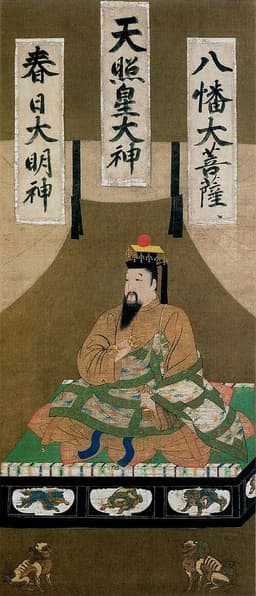
Emperor Go-Daigo
Emperor · Medieval
56.4Total
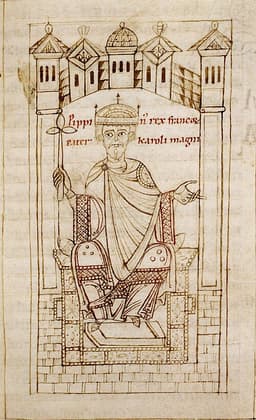
Pepin the Short
Emperor · Medieval
52.9Total
Basic Information
Born
1288
714
Died
1339
768
Era
Medieval
Medieval
Nationality
Japan
Frankish Empire
Occupation
Emperor
Emperor
Civilization
Eastern
Western
Score Comparison
Military (10%)
35.0
70.0
Political (20%)
68.0
53.8
Influence (20%)
58.0
55.0
Legacy (20%)
56.0
40.0
Leadership (15%)
65.7
53.2
Strategy (15%)
43.3
60.7
TOTAL
56.4
52.9
Emperor Go-Daigo — Complete Timeline
1331 AD
Exile to Oki IslandPolitical Action◆ Major
The Kamakura shogunate exiled Go-Daigo to Oki Island after his first attempt to overthrow them failed. He escaped two years later, rallying support from disaffected samurai and monks to renew his rebellion.
ExileRebellionKamakura Shogunate
Impact: nationaltragic
1333 AD
Kenmu RestorationPolitical Action
Go-Daigo overthrew the Kamakura shogunate and restored direct imperial rule. He issued the Kenmu Code, attempting to reassert imperial authority, but his policies alienated the samurai class, leading to rebellion.
RestorationImperial RuleJapan
Impact: national
1336 AD
Establishment of the Southern CourtPolitical Action
After Ashikaga Takauji turned against him, Go-Daigo fled to Yoshino and established the Southern Court. This created a split in the imperial line, leading to the Nanboku-cho period of rival courts lasting until 1392.
Civil WarImperial SplitNanboku-cho
Impact: national
Pepin the Short — Complete Timeline
751 AD
Anointment as King of the FranksPolitical Action
Pepin deposed the last Merovingian king, Childeric III, with the support of Pope Zachary. He was anointed king by Boniface, establishing the Carolingian dynasty and legitimizing his rule through papal approval.
Carolingian DynastyPapacyAnointment
Impact: regionalconstructive
755 AD
Siege of PaviaWar
Pepin besieged the Lombard capital of Pavia, forcing King Aistulf to surrender and cede territories. This campaign secured Frankish dominance in Italy and fulfilled Pepin's alliance with the papacy.
Lombard WarItalySiege
Impact: regional
756 AD
Donation of PepinPolitical Action◆ Major
Pepin granted the Pope control over territories in central Italy, including Ravenna and the Pentapolis, after defeating the Lombards. This created the Papal States and established the temporal power of the papacy.
Papal StatesLombardsDonation
Impact: regionalconstructive
Expert Analysis
Origins
Emperor Go-Daigo (1288-1339) was born into the Daikakuji line of the Japanese imperial family. His father was Emperor Go-Uda, and he received a thorough education in court rituals and Confucian classics. Go-Daigo chafed under the control of the Kamakura shogunate, which had reduced emperors to figureheads. He plotted from an early age to restore direct imperial rule, scoring 68.0 in political acumen.
Pepin the Short (714-768) was the son of Charles Martel, the Frankish mayor of the palace who had saved Europe from Muslim invasion at Tours. Born into the powerful Carolingian family, Pepin was raised in a military court. His father's death in 741 left Pepin and his brother Carloman as joint mayors. Pepin was physically short but politically ambitious, with a military score of 70.0.
Rise to Power
Go-Daigo's first attempt to overthrow the Kamakura shogunate in 1324 failed, leading to his exile to Oki Island in 1331. He escaped two years later, rallying support from disaffected samurai and Buddhist monasteries. In 1333, his loyal general Ashikaga Takauji captured Kyoto, and the Kamakura shogunate collapsed. Go-Daigo returned to the capital and launched the Kenmu Restoration, aiming to reassert imperial authority with a 43.3 strategy score.
Pepin rose by deposing the last Merovingian king, Childeric III, in 751. With Pope Zachary's approval, Pepin was anointed king by Boniface, establishing the Carolingian dynasty. He cemented his power by defeating the Lombards in Italy and securing the Donation of Pepin in 756, which granted the Pope territories in central Italy. Pepin's military and political scores of 70.0 and 53.8 reflect his effective use of force and diplomacy.
Leadership & Governance
Go-Daigo's governance was marked by the Kenmu Code, which attempted to restore Heian-era court practices. He alienated samurai by favoring court nobles and failing to distribute land effectively. His leadership score of 65.7 was undermined by strategic errors: he refused to grant Ashikaga Takauji the title of shogun, prompting Takauji to rebel in 1335. Go-Daigo's political score of 68.0 did not translate into practical governance.
Pepin's leadership was pragmatic and military-focused. He reformed the Frankish army, integrating heavy cavalry and fortifications. He maintained the alliance with the papacy, which legitimized his rule and provided a moral authority. Pepin's leadership score of 53.2 reflects his effective but less visionary style compared to his son Charlemagne. His governance strengthened the Frankish state and prepared for the Carolingian Renaissance.
Triumph & Tragedy
Go-Daigo's greatest triumph was the temporary overthrow of the Kamakura shogunate and the restoration of imperial rule in 1333. However, his tragedy was the subsequent split of the imperial line into Northern and Southern Courts, which lasted until 1392. He died in exile in Yoshino in 1339, having failed to secure lasting imperial authority. His influence score of 58.0 is tempered by the chaos he unleashed.
Pepin's triumph was the establishment of the Carolingian dynasty and the expansion of Frankish power into Italy. The Donation of Pepin created the Papal States, influencing European politics for centuries. His tragedy lies in his overshadowing by Charlemagne; Pepin's legacy score of 40.0 is lower partly because his achievements are often attributed to his son. Yet Pepin's military campaigns and political foundations were essential.
Character & Destiny
Go-Daigo was idealistic and stubborn, believing in the divine right of emperors. His determination to restore imperial power led him to resist compromise, ultimately causing his downfall. His character scored 65.7 in leadership but his strategic inflexibility doomed his restoration. Historians view him as a tragic figure who overreached.
Pepin was pragmatic and calculating. He knew when to seek papal approval and when to use military force. His destiny was to be a transitional figure, laying the groundwork for Charlemagne. His political score of 53.8 reflects his ability to navigate alliances. Pepin's character was less flamboyant but more effective in building durable institutions.
Legacy
Go-Daigo's legacy is the Nanboku-chō period of divided courts, which weakened imperial prestige. However, his attempt inspired later imperial loyalists, including the Meiji Restoration. His Kenmu Code was a reference for later legal reforms. His legacy score of 56.0 acknowledges his symbolic importance.
Pepin's legacy is the Carolingian dynasty and the Papal States. He established a model of church-state cooperation that shaped medieval Europe. His military reforms influenced Frankish warfare. Despite a legacy score of 40.0, Pepin's impact was foundational for Charlemagne's empire and the Holy Roman Empire.
Conclusion
Emperor Go-Daigo scored higher overall (56.4 vs 52.9), but Pepin the Short had greater lasting impact. Go-Daigo's restoration failed and deepened Japan's political fragmentation, while Pepin's actions created the Papal States and legitimized Carolingian rule. Pepin's military and strategic scores (70.0 and 60.7) enabled him to build institutions that endured for centuries. Go-Daigo's political score of 68.0 could not overcome his strategic errors. Therefore, Pepin the Short is more influential: his foundations supported the Carolingian Renaissance and the medieval papacy, whereas Go-Daigo's legacy is a cautionary tale of overreach. Pepin shaped the future of Europe; Go-Daigo shaped a failed rebellion.
Rankings
🥇
Emperor Go-DaigoLeader
Mil: 35.0Pol: 68.0Inf: 58.0
56.4
🥈
Pepin the Short
Mil: 70.0Pol: 53.8Inf: 55.0
52.9
+3.5 behind
How This Comparison Works
Algorithm
Each figure is scored on 6 dimensions (0—100 scale) based on structured historical data: Military (10%), Political (20%), Influence (20%), Legacy (20%), Leadership (15%), Strategy (15%). The weighted total produces the final ranking.
Data Sources
Scores are computed from structured sub-indicators in the database. Scale factors adjust for era (Ancient ×0.85, Modern ×1.0) and civilization size (Eastern ×1.05, Other ×0.80) to account for differences in population and military scale.
Maximum 3 Figures
Comparisons are limited to 2—3 figures to ensure readability and statistical meaningfulness.
Error Margins
±5 points per dimension — Sub-scores are derived from historical records with inherent uncertainty. Two figures within 5 points on a dimension should be considered roughly equivalent in that area.
Total Score Accuracy
±3 points overall — The weighted combination of 6 dimensions produces a total score with approximately ±3 points of uncertainty. Differences of less than 3 points are not statistically significant— the figures are effectively tied.
Known Limitations
- Historical records are incomplete and uneven across civilizations
- Figures from oral-tradition societies may be underrepresented
- Occupation labels can misclassify multi-role figures
- Scores measure capability and impact, not moral character
- Quantitative scoring is a comparison tool, not absolute truth
Capability Radar
Military (10%) — Battles & Warfare
Battles
35
55
Win Rate
30
65
Expansion
15
65
Political (20%) — Governance & Reform
Reform
70
70
Diplomacy
55
65
Economy
30
55
Influence (20%) — Cultural & Global Reach
Cultural
50
50
Global
30
60
Legacy (20%) — Historical Impact
Historical
65
75
Longevity
55
70
Leadership (15%) — Power & Stability
Tenure
60
60
Stability
25
60
Strategy (15%) — Tactics & Innovation
Strategy
45
60
Tactics
40
50
Reform
20
70
Similar Comparisons
Comments & Discussion
No comments yet. Be the first to share your thoughts!