Loading...
Emperor Go-Daigo vs Napoleon Bonaparte
Napoleon Bonaparte leads by 14.5 pts · 2 figures compared
…
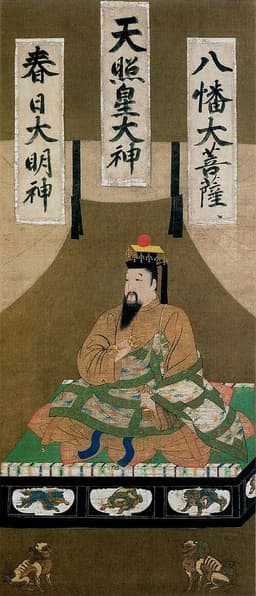
Emperor Go-Daigo
Emperor · Medieval
56.4Total

Napoleon Bonaparte
General · Modern
70.9Total
Basic Information
Born
1288
1769
Died
1339
1821
Era
Medieval
Modern
Nationality
Japan
France
Occupation
Emperor
General
Civilization
Eastern
Western
Score Comparison
Military (10%)
35.0
94.0
Political (20%)
68.0
72.0
Influence (20%)
58.0
40.0
Legacy (20%)
56.0
80.0
Leadership (15%)
65.7
78.0
Strategy (15%)
43.3
90.0
TOTAL
56.4
70.9
Emperor Go-Daigo — Complete Timeline
1331 AD
Exile to Oki IslandPolitical Action◆ Major
The Kamakura shogunate exiled Go-Daigo to Oki Island after his first attempt to overthrow them failed. He escaped two years later, rallying support from disaffected samurai and monks to renew his rebellion.
ExileRebellionKamakura Shogunate
Impact: nationaltragic
1333 AD
Kenmu RestorationPolitical Action
Go-Daigo overthrew the Kamakura shogunate and restored direct imperial rule. He issued the Kenmu Code, attempting to reassert imperial authority, but his policies alienated the samurai class, leading to rebellion.
RestorationImperial RuleJapan
Impact: national
1336 AD
Establishment of the Southern CourtPolitical Action
After Ashikaga Takauji turned against him, Go-Daigo fled to Yoshino and established the Southern Court. This created a split in the imperial line, leading to the Nanboku-cho period of rival courts lasting until 1392.
Civil WarImperial SplitNanboku-cho
Impact: national
Napoleon Bonaparte — Complete Timeline
1799 AD
Coup of 18 BrumaireOther◆ Major
Napoleon Bonaparte, with support from his brother Lucien and key political figures, overthrew the Directory in a bloodless coup. He established the Consulate with himself as First Consul, effectively becoming the ruler of France. This event ended the French Revolution's most unstable period.
French RevolutionCoupRise to Power
Impact: regional
1804 AD
Promulgation of the Napoleonic CodeOther◆ Major
Napoleon enacted the Civil Code of the French, known as the Napoleonic Code, a comprehensive set of laws that replaced the fragmented feudal legal systems. The code established legal equality, protected property rights, and secularized law. It became the basis for legal systems in many European and world countries.
Legal ReformNapoleonic CodeCivil Law
Impact: globalconstructive
1805 AD
Battle of AusterlitzWar◆ Major
Napoleon's Grande Arm
Napoleonic WarsBattleDecisive Victory
Impact: global
1812 AD
Invasion of RussiaWar◆ Major
Napoleon led the Grande Arm
Napoleonic WarsInvasionDisaster
Impact: globaldestructive
1815 AD
Battle of WaterlooWar◆ Major
Napoleon's French army was defeated by the combined forces of the Duke of Wellington's Anglo-Allied army and Gebhard Leberecht von Bl
Napoleonic WarsBattleFinal Defeat
Impact: globaldestructive
Expert Analysis
Origins
Emperor Go-Daigo (1288–1339) was the 96th emperor of Japan, born into the imperial family during the Kamakura shogunate. His father, Emperor Go-Uda, and the retired emperors of the Daikakuji line provided a political environment where the throne held symbolic power but actual governance lay with the shogunate. Go-Daigo studied Confucian classics and history, fostering a desire to restore direct imperial rule. His early reign saw him maneuver within the constraints of the shogunate, but he secretly plotted to overthrow it. In contrast, Napoleon Bonaparte (1769–1821) was born on Corsica to a minor noble family. His father, Carlo Buonaparte, secured a French education for him at military schools in Brienne and Paris. Napoleon graduated from the École Militaire in 1785 as a second lieutenant of artillery. The French Revolution of 1789 created opportunities for rapid advancement, which Napoleon seized through his military skills and political connections.
Rise to Power
Go-Daigo's rise began with his covert plans to overthrow the Kamakura shogunate. In 1331, his first attempt failed, leading to his exile to Oki Island. However, he escaped in 1333 and rallied support from disaffected samurai, including Ashikaga Takauji and Nitta Yoshisada. This coalition destroyed the shogunate, and Go-Daigo returned to Kyoto, initiating the Kenmu Restoration. His rule lasted only from 1333 to 1336. Napoleon's rise was meteoric: he became a general at 24 after the Siege of Toulon in 1793. His Italian campaign of 1796–1797 made him a national hero. In 1799, he staged the Coup of 18 Brumaire, overthrowing the Directory and becoming First Consul. By 1804, he crowned himself Emperor of the French. Unlike Go-Daigo's restorationist appeal, Napoleon's rise was driven by military conquest and political manipulation.
Leadership & Governance
Go-Daigo's governance focused on restoring imperial authority. He issued the Kenmu Code, which aimed to curb samurai power and reassert court nobility. However, his policies alienated key allies like Ashikaga Takauji, who had expected rewards. Go-Daigo's leadership scored 65.7, reflecting his determination but poor strategic execution. Napoleon's leadership scored 78.0, characterized by centralization and legal reform. He implemented the Napoleonic Code in 1804, unifying French law and influencing civil codes worldwide. He also reformed education, established the Banque de France, and reorganized local government. However, his governance became increasingly autocratic, and his military campaigns drained French resources. While Go-Daigo aimed to restore tradition, Napoleon built a modern bureaucratic state.
Triumph & Tragedy
Go-Daigo's greatest triumph was the brief Kenmu Restoration, where he ruled directly from 1333 to 1336. However, his failure to reward Ashikaga Takauji led to Takauji's rebellion. Go-Daigo fled to Yoshino, establishing the Southern Court, which split the imperial line for 60 years. His tragedy was that his restoration collapsed, and he died in exile in 1339. Napoleon's triumphs include the Battle of Austerlitz (1805), where he decisively defeated the Austrians and Russians, and the Napoleonic Code, which remains a legal foundation. His invasion of Russia in 1812 was a catastrophe: of the 600,000-strong Grande Armée, fewer than 100,000 returned. He was exiled to Elba in 1814, returned for 100 days, but was finally defeated at Waterloo in 1815 and exiled to Saint Helena, where he died in 1821. Napoleon's military score of 94.0 reflects his tactical brilliance, but his strategic score of 90.0 does not account for his fatal overreach.
Character & Destiny
Go-Daigo was idealistic and stubborn, believing in the divine right of emperors. He ignored practical politics, alienating samurai who expected land grants. His character scored 65.7 in leadership but only 43.3 in strategy, showing a disconnect between vision and execution. Napoleon was ambitious, charismatic, and ruthless. He was a brilliant tactician but overconfident, leading to strategic blunders. His political score of 72.0 indicates effective governance, but his influence score of 40.0 suggests his impact was more immediate than enduring. Both men's fates were shaped by their refusal to compromise: Go-Daigo's rigidity doomed his restoration, while Napoleon's insatiable ambition led to his downfall.
Legacy
Go-Daigo's legacy is mixed: he is remembered as a symbol of imperial authority, but his actions weakened the throne. The Southern and Northern Courts divided Japan until 1392, and the Ashikaga shogunate eventually took power. His attempt at restoration influenced later imperial loyalists, but his direct impact was limited. Napoleon's legacy is immense: the Napoleonic Code shaped modern law, his military tactics are studied worldwide, and his reorganization of Europe influenced nationalism. He scored 80.0 in legacy, reflecting his enduring influence on legal systems, state administration, and military strategy. However, his conquests also caused widespread destruction and instability.
Conclusion
Napoleon Bonaparte had greater impact than Emperor Go-Daigo. Napoleon's total score of 70.9 exceeds Go-Daigo's 56.4 by 14.5 points. While Go-Daigo's restoration attempt was historically significant for Japan, it failed and led to a divided court. Napoleon, despite his eventual defeat, transformed Europe and left a lasting legal and administrative legacy. His military innovations and the Napoleonic Code continue to influence the world. Go-Daigo's idealism could not overcome the entrenched power of the samurai, whereas Napoleon's practical reforms reshaped entire nations. Thus, in terms of global influence and lasting change, Napoleon clearly surpasses Go-Daigo.
Rankings
🥇
Napoleon BonaparteLeader
Mil: 94.0Pol: 72.0Inf: 40.0
70.9
🥈
Emperor Go-Daigo
Mil: 35.0Pol: 68.0Inf: 58.0
56.4
+14.5 behind
How This Comparison Works
Algorithm
Each figure is scored on 6 dimensions (0—100 scale) based on structured historical data: Military (10%), Political (20%), Influence (20%), Legacy (20%), Leadership (15%), Strategy (15%). The weighted total produces the final ranking.
Data Sources
Scores are computed from structured sub-indicators in the database. Scale factors adjust for era (Ancient ×0.85, Modern ×1.0) and civilization size (Eastern ×1.05, Other ×0.80) to account for differences in population and military scale.
Maximum 3 Figures
Comparisons are limited to 2—3 figures to ensure readability and statistical meaningfulness.
Error Margins
±5 points per dimension — Sub-scores are derived from historical records with inherent uncertainty. Two figures within 5 points on a dimension should be considered roughly equivalent in that area.
Total Score Accuracy
±3 points overall — The weighted combination of 6 dimensions produces a total score with approximately ±3 points of uncertainty. Differences of less than 3 points are not statistically significant— the figures are effectively tied.
Known Limitations
- Historical records are incomplete and uneven across civilizations
- Figures from oral-tradition societies may be underrepresented
- Occupation labels can misclassify multi-role figures
- Scores measure capability and impact, not moral character
- Quantitative scoring is a comparison tool, not absolute truth
Capability Radar
Military (10%) — Battles & Warfare
Battles
35
95
Win Rate
30
90
Expansion
15
95
Political (20%) — Governance & Reform
Reform
70
95
Diplomacy
55
80
Economy
30
85
Influence (20%) — Cultural & Global Reach
Cultural
50
85
Global
30
90
Legacy (20%) — Historical Impact
Historical
65
95
Longevity
55
90
Leadership (15%) — Power & Stability
Tenure
60
85
Stability
25
70
Strategy (15%) — Tactics & Innovation
Strategy
45
95
Tactics
40
98
Reform
20
92
Similar Comparisons
Comments & Discussion
No comments yet. Be the first to share your thoughts!