Loading...
Emperor Go-Daigo vs Emperor Taizu of Jin
Emperor Taizu of Jin leads by 7.1 pts · 2 figures compared
…
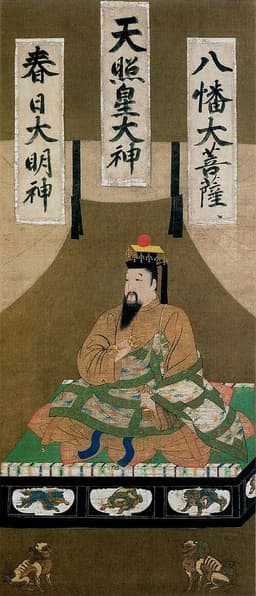
Emperor Go-Daigo
Emperor · Medieval
56.4Total
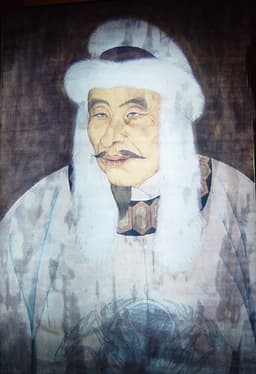
Emperor Taizu of Jin
Emperor · Medieval
63.5Total
Basic Information
Born
1288
1068
Died
1339
1123
Era
Medieval
Medieval
Nationality
Japan
China
Occupation
Emperor
Emperor
Civilization
Eastern
Eastern
Score Comparison
Military (10%)
35.0
82.0
Political (20%)
68.0
65.0
Influence (20%)
58.0
55.0
Legacy (20%)
56.0
55.0
Leadership (15%)
65.7
72.0
Strategy (15%)
43.3
72.0
TOTAL
56.4
63.5
Emperor Go-Daigo — Complete Timeline
1331 AD
Exile to Oki IslandPolitical Action◆ Major
The Kamakura shogunate exiled Go-Daigo to Oki Island after his first attempt to overthrow them failed. He escaped two years later, rallying support from disaffected samurai and monks to renew his rebellion.
ExileRebellionKamakura Shogunate
Impact: nationaltragic
1333 AD
Kenmu RestorationPolitical Action
Go-Daigo overthrew the Kamakura shogunate and restored direct imperial rule. He issued the Kenmu Code, attempting to reassert imperial authority, but his policies alienated the samurai class, leading to rebellion.
RestorationImperial RuleJapan
Impact: national
1336 AD
Establishment of the Southern CourtPolitical Action
After Ashikaga Takauji turned against him, Go-Daigo fled to Yoshino and established the Southern Court. This created a split in the imperial line, leading to the Nanboku-cho period of rival courts lasting until 1392.
Civil WarImperial SplitNanboku-cho
Impact: national
Emperor Taizu of Jin — Complete Timeline
1114 AD
Unification of the Jurchen tribesWar◆ Major
Wanyan Aguda led the Jurchen tribes in a rebellion against the Khitan-led Liao dynasty. He unified the Jurchen clans under his leadership, establishing a confederation that would form the basis of the Jin dynasty.
Jurchen unificationRebellionLiao dynasty
Impact: regionalconstructive
1115 AD
Battle of Hubu RiverWar◆ Major
Aguda's Jin forces defeated a Liao army at the Hubu River. This victory secured Jin control over the Liao's eastern territories and demonstrated the military effectiveness of the Jurchen cavalry against the Khitan.
BattleLiao-Jin WarMilitary victory
Impact: regional
Proclamation of the Jin dynastyPolitical Action◆ Major
Wanyan Aguda declared himself emperor, founding the Jin dynasty. He adopted the Chinese-style reign name Shouguo and established a centralized administration, marking the formal beginning of the Jin state.
Dynasty foundingImperial proclamationJin dynasty
Impact: regionalconstructive
1120 AD
Capture of the Liao Supreme CapitalWar◆ Major
Jin forces under Aguda captured the Liao dynasty's Supreme Capital (Shangjing). This conquest crippled the Liao state and forced the Liao emperor Tianzuo to flee, effectively ending Liao resistance in the region.
Capital captureLiao-Jin WarConquest
Impact: regional
Alliance with the Song dynastyPolitical Action◆ Major
Aguda negotiated the Alliance of the Sea with the Song dynasty, agreeing to jointly attack the Liao dynasty. The Song would receive the Sixteen Prefectures, while Jin would take the rest of Liao territory.
Diplomatic allianceSong-Jin relationsLiao partition
Impact: regional
Expert Analysis
Origins
Emperor Go-Daigo (1288-1339) was the 96th emperor of Japan, born into the Daikakuji line of the imperial family. His father was Emperor Go-Uda, and he received a traditional education in Confucian classics and Japanese history. From a young age, Go-Daigo was determined to restore the emperor's political authority, which had been eclipsed by the Kamakura shogunate since 1185.
Emperor Taizu of Jin (1068-1123), born Wanyan Aguda, was a chieftain of the Wanyan clan among the Jurchen tribes in what is now northeastern China. The Jurchen were semi-nomadic herders and hunters, subjects of the Khitan-led Liao dynasty. Aguda learned military skills early, leading raids against neighboring tribes. His father Helibo had begun unifying the Jurchen, a task Aguda would complete.
Rise to Power
Go-Daigo ascended the throne in 1318, but real power lay with the Kamakura shogunate. He secretly plotted with dissident samurai and Buddhist monasteries, launching a rebellion in 1331. The shogunate exiled him to Oki Island, but he escaped in 1333, rallying support from warlords like Ashikaga Takauji and Nitta Yoshisada. Their forces destroyed the shogunate, and Go-Daigo returned to Kyoto, initiating the Kenmu Restoration.
Aguda rose by uniting the Jurchen tribes. In 1113, he succeeded his brother as chieftain and began attacking Liao outposts. In 1115, he declared himself emperor, founding the Jin dynasty. His military genius shone at the Battle of Hubu River (1115), where his 10,000 men defeated a Liao army of 200,000. By 1120, he had captured the Liao Supreme Capital, crippling the Liao state. He also formed the Alliance of the Sea with the Song dynasty (1120) to divide Liao territories.
Leadership & Governance
Go-Daigo's leadership scored 65.7, reflecting his determination but poor execution. He attempted to centralize power, issuing the Kenmu Code in 1334, which sought to regulate land grants and reward his supporters. However, he alienated key allies like Ashikaga Takauji by favoring court nobles and temples over samurai. His governance was idealistic but impractical, leading to administrative chaos.
Taizu of Jin scored 72.0 in leadership and 72.0 in strategy. He adopted Chinese-style administration, establishing a centralized bureaucracy with six ministries. He promoted agriculture, built granaries, and standardized weights and measures. His military organization was efficient, using a decimal system for units. He also implemented a script for the Jurchen language, fostering cultural identity.
Triumph & Tragedy
Go-Daigo's greatest triumph was briefly restoring imperial rule, a feat unmatched since the Heian period. However, his failure to secure samurai loyalty led to Ashikaga Takauji's rebellion in 1335. Go-Daigo fled to Yoshino, establishing the Southern Court, splitting the imperial line for 56 years. He died in 1339, his restoration a failure.
Taizu's triumph was founding the Jin dynasty and destroying the Liao. His military scores 82.0 reflect his conquests. However, his alliance with the Song backfired: the Song later broke the treaty, leading to Jin-Song wars. Taizu died in 1123 before completing the conquest of the Sixteen Prefectures, which his successors achieved.
Character & Destiny
Go-Daigo was stubborn and idealistic, refusing to compromise. His political score of 68.0 shows skill in plotting, but he lacked pragmatism. Historical assessments note his inability to adapt to samurai power.
Taizu was pragmatic and charismatic, with a military score of 82.0. He was decisive and ruthless, executing rivals without hesitation. His strategy score of 72.0 reflects his ability to outmaneuver larger armies.
Legacy
Go-Daigo's legacy scored 56.0. The Southern Court's existence legitimized later imperial restoration movements, and his story became a symbol of imperial loyalty. However, his immediate impact was negative, weakening the imperial house.
Taizu's legacy scored 55.0. The Jin dynasty ruled northern China for over a century, influencing later conquest dynasties. His unification of the Jurchen created a national identity that persisted.
Conclusion
Emperor Taizu of Jin had greater impact, with a total score of 63.5 vs Go-Daigo's 56.4. Taizu founded a dynasty that reshaped East Asian geopolitics, while Go-Daigo's failed restoration only deepened imperial decline. Taizu's military and strategic scores far outstrip Go-Daigo's, and his governance innovations had lasting effects.
Rankings
🥇
Emperor Taizu of JinLeader
Mil: 82.0Pol: 65.0Inf: 55.0
63.5
🥈
Emperor Go-Daigo
Mil: 35.0Pol: 68.0Inf: 58.0
56.4
+7.1 behind
How This Comparison Works
Algorithm
Each figure is scored on 6 dimensions (0—100 scale) based on structured historical data: Military (10%), Political (20%), Influence (20%), Legacy (20%), Leadership (15%), Strategy (15%). The weighted total produces the final ranking.
Data Sources
Scores are computed from structured sub-indicators in the database. Scale factors adjust for era (Ancient ×0.85, Modern ×1.0) and civilization size (Eastern ×1.05, Other ×0.80) to account for differences in population and military scale.
Maximum 3 Figures
Comparisons are limited to 2—3 figures to ensure readability and statistical meaningfulness.
Error Margins
±5 points per dimension — Sub-scores are derived from historical records with inherent uncertainty. Two figures within 5 points on a dimension should be considered roughly equivalent in that area.
Total Score Accuracy
±3 points overall — The weighted combination of 6 dimensions produces a total score with approximately ±3 points of uncertainty. Differences of less than 3 points are not statistically significant— the figures are effectively tied.
Known Limitations
- Historical records are incomplete and uneven across civilizations
- Figures from oral-tradition societies may be underrepresented
- Occupation labels can misclassify multi-role figures
- Scores measure capability and impact, not moral character
- Quantitative scoring is a comparison tool, not absolute truth
Capability Radar
Military (10%) — Battles & Warfare
Battles
35
85
Win Rate
30
90
Expansion
15
85
Political (20%) — Governance & Reform
Reform
70
75
Diplomacy
55
80
Economy
30
65
Influence (20%) — Cultural & Global Reach
Cultural
50
55
Global
30
50
Legacy (20%) — Historical Impact
Historical
65
70
Longevity
55
60
Leadership (15%) — Power & Stability
Tenure
60
70
Stability
25
60
Strategy (15%) — Tactics & Innovation
Strategy
45
85
Tactics
40
88
Reform
20
75
Similar Comparisons
Comments & Discussion
No comments yet. Be the first to share your thoughts!