Loading...
Marwan II vs Napoleon Bonaparte
Napoleon Bonaparte leads by 20.6 pts · 2 figures compared
…
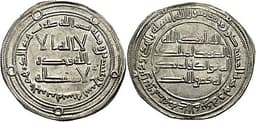
Marwan II
Emperor · Medieval
50.3Total

Napoleon Bonaparte
General · Modern
70.9Total
Basic Information
Born
688
1769
Died
750
1821
Era
Medieval
Modern
Nationality
Umayyad Caliphate
France
Occupation
Emperor
General
Civilization
Middle Eastern
Western
Score Comparison
Military (10%)
70.0
94.0
Political (20%)
40.8
72.0
Influence (20%)
53.3
40.0
Legacy (20%)
44.2
80.0
Leadership (15%)
48.4
78.0
Strategy (15%)
55.0
90.0
TOTAL
50.3
70.9
Marwan II — Complete Timeline
744 AD
Accession as CaliphPolitical Action◆ Major
Marwan II became the last Umayyad caliph after a period of civil war and succession disputes. He was a military commander who seized power amid the weakening of the dynasty.
SuccessionCaliphateCivil War
Impact: global
750 AD
Battle of the ZabWar
Marwan II's army was decisively defeated by the Abbasid forces at the Battle of the Zab in Iraq. This battle ended Umayyad rule and led to the establishment of the Abbasid Caliphate.
BattleDefeatAbbasid Revolution
Impact: global
Death in EgyptWar◆ Major
After the Battle of the Zab, Marwan II fled to Egypt where he was captured and killed by Abbasid forces. His death marked the end of the Umayyad Caliphate, though a surviving prince founded a dynasty in Spain.
DeathUmayyadEnd of Dynasty
Impact: globaltragic
Napoleon Bonaparte — Complete Timeline
1799 AD
Coup of 18 BrumaireOther◆ Major
Napoleon Bonaparte, with support from his brother Lucien and key political figures, overthrew the Directory in a bloodless coup. He established the Consulate with himself as First Consul, effectively becoming the ruler of France. This event ended the French Revolution's most unstable period.
French RevolutionCoupRise to Power
Impact: regional
1804 AD
Promulgation of the Napoleonic CodeOther◆ Major
Napoleon enacted the Civil Code of the French, known as the Napoleonic Code, a comprehensive set of laws that replaced the fragmented feudal legal systems. The code established legal equality, protected property rights, and secularized law. It became the basis for legal systems in many European and world countries.
Legal ReformNapoleonic CodeCivil Law
Impact: globalconstructive
1805 AD
Battle of AusterlitzWar◆ Major
Napoleon's Grande Arm
Napoleonic WarsBattleDecisive Victory
Impact: global
1812 AD
Invasion of RussiaWar◆ Major
Napoleon led the Grande Arm
Napoleonic WarsInvasionDisaster
Impact: globaldestructive
1815 AD
Battle of WaterlooWar◆ Major
Napoleon's French army was defeated by the combined forces of the Duke of Wellington's Anglo-Allied army and Gebhard Leberecht von Bl
Napoleonic WarsBattleFinal Defeat
Impact: globaldestructive
Expert Analysis
marwan-ii-vs-napoleon-bonaparte
# The Emperor and the Caliph: Two Men Who Shaped the Fate of Empires
On a June morning in 1815, Napoleon Bonaparte watched his Imperial Guard march into the maw of British artillery at Waterloo. The sun had burned away the night's rain, and the fields of Belgium were about to drink the blood of Europe's finest soldiers. Just over a thousand years earlier, in the summer of 750, another ruler—Marwan II—fled across the deserts of Egypt, his army shattered at the Battle of the Zab, his dynasty crumbling behind him like dust. Both men were the last of their kind: one the final emperor of a French empire that had remade Europe, the other the last caliph of a dynasty that had stretched from Spain to Persia. What drove these two men to such different fates—one remembered as a titan, the other as a footnote?
Origins
Napoleon Bonaparte was born in 1769 on the island of Corsica, a place that had only recently become French. His family was minor nobility, poor enough that young Napoleon wore hand-me-down uniforms to military school. He was small, intense, and fiercely ambitious—a boy who read Plutarch's lives of ancient heroes and dreamed of glory. The French Revolution erupted when he was twenty, and it shattered the old order, opening doors that would have been locked to a Corsican outsider in peacetime. Napoleon was a child of revolution, and revolution rewards audacity.
Marwan II came into the world in 688, a prince of the Umayyad Caliphate, a dynasty that had ruled the Islamic world for nearly a century. His grandfather was the caliph Marwan I, and his father was a governor. But the Umayyads were not the unified force they had been. Tribal rivalries simmered, religious dissent grew, and the empire was fracturing from within. Where Napoleon was forged in the fire of a new world, Marwan was born into an old one—a world of inherited authority, factional loyalty, and simmering rebellion. He was a military commander first, a politician second, and that order would define his reign.
Rise to Power
Napoleon's ascent was meteoric. In 1793, at just twenty-four, he recaptured the port of Toulon from British forces and was promoted to brigadier general. By 1796, he commanded the French army in Italy, where he won a series of breathtaking victories against the Austrians. He was not just a general; he was a political animal. He understood that in revolutionary France, victory on the battlefield translated into power in the capital. In 1799, he staged a coup and made himself First Consul. Five years later, he crowned himself Emperor. Every step was calculated, every risk measured against the possibility of glory.
Marwan II took a different path. He was already a seasoned commander when he became caliph in 744, but he did not seize the throne—he inherited a crisis. The previous caliph, Yazid III, had died after only six months, and the empire was in chaos. Marwan was the last strongman left standing, and he spent his entire reign trying to hold together what was already falling apart. He moved the capital north to Harran, in modern-day Turkey, trying to escape the factionalism of Damascus. But he was always reacting, never creating. He could win battles, but he could not win the peace.
Leadership & Governance
Napoleon governed with a blend of military precision and Enlightenment vision. He reformed French law with the Napoleonic Code, establishing principles of equality before the law, secular authority, and property rights that still shape legal systems across Europe. He centralized the state, built roads and canals, and established the Bank of France. He was a master of propaganda, presenting himself as the savior of the Revolution even as he crushed its democratic aspirations. His military genius was undeniable—at Austerlitz in 1805, he destroyed a combined Russian and Austrian army with a series of maneuvers that are still studied in war colleges today.
Marwan II governed as a soldier. He had no Napoleonic Code, no grand vision for reforming the caliphate. His priority was survival. He crushed rebellions in Syria and Iraq, but each victory came at a cost. The Umayyad dynasty had long been criticized for favoring Arab Muslims over non-Arab converts, and this resentment was the fuel for the Abbasid revolution. Marwan could not—or would not—address the structural inequalities that were tearing his empire apart. He fought the symptoms, not the disease.
Triumph & Tragedy
Napoleon's greatest moment was Austerlitz, where he defeated a larger army and forced the Holy Roman Empire to dissolve. His greatest tragedy was the invasion of Russia in 1812. He marched into a frozen wilderness with 600,000 men and returned with fewer than 100,000. The disaster broke his aura of invincibility. Exiled to Elba in 1814, he escaped and returned for the Hundred Days, but Waterloo in 1815 was the final act. He died in exile on Saint Helena in 1821, a prisoner of the British.
Marwan II's triumph was brief. He defeated the rebel army of Sulayman ibn Hisham in 744 and secured his throne. But the Abbasid revolution, led by Abu Muslim in Khorasan, was already spreading. At the Battle of the Zab in 750, Marwan's army was crushed. He fled to Egypt, where he was captured and killed. His death marked the end of the Umayyad Caliphate. The Abbasids hunted down his family, slaughtering almost every prince—except one, Abd al-Rahman, who escaped to Spain and founded a new Umayyad dynasty that would last for centuries.
Character & Destiny
Napoleon was driven by an insatiable hunger for order and glory. He believed he could shape history through sheer will, and for a time, he was right. But his arrogance blinded him. He could not stop, could not consolidate. He kept pushing until the world pushed back. Marwan was a capable commander but a reluctant ruler. He lacked Napoleon's charisma and political instinct. He fought to preserve what was already dying, not to build something new. One man created an empire from nothing; the other tried to save an empire that had already lost its soul.
Legacy
Napoleon's legacy is immense. The Napoleonic Code, the metric system, the structure of modern European states—his influence is woven into the fabric of the West. He is remembered as a genius and a tyrant, a liberator and a conqueror. Marwan II is remembered, if at all, as a footnote. The Umayyad Caliphate fell, but its cultural and architectural legacy survived in Spain, and the Abbasid Caliphate that replaced it ushered in a golden age of Islamic learning. Marwan was not the architect of that golden age; he was the last defender of a fading one.
Conclusion
Standing at Waterloo, Napoleon told his generals, "The word impossible is not in my dictionary." He was wrong. History has a way of humbling even the greatest. Marwan II never had such confidence. He knew, perhaps, that his dynasty was doomed. Both men were swept away by forces larger than themselves—Napoleon by the coalition of Europe's old powers, Marwan by the revolutionary energy of a new order. One left a world transformed; the other left a world that had already moved on. In the end, the difference between them was not talent or ambition, but timing. Napoleon arrived at the dawn of a new age; Marwan arrived at the twilight of an old one. And history, as always, belongs to the dawn.
Rankings
🥇
Napoleon BonaparteLeader
Mil: 94.0Pol: 72.0Inf: 40.0
70.9
🥈
Marwan II
Mil: 70.0Pol: 40.8Inf: 53.3
50.3
+20.6 behind
How This Comparison Works
Algorithm
Each figure is scored on 6 dimensions (0—100 scale) based on structured historical data: Military (10%), Political (20%), Influence (20%), Legacy (20%), Leadership (15%), Strategy (15%). The weighted total produces the final ranking.
Data Sources
Scores are computed from structured sub-indicators in the database. Scale factors adjust for era (Ancient ×0.85, Modern ×1.0) and civilization size (Eastern ×1.05, Other ×0.80) to account for differences in population and military scale.
Maximum 3 Figures
Comparisons are limited to 2—3 figures to ensure readability and statistical meaningfulness.
Error Margins
±5 points per dimension — Sub-scores are derived from historical records with inherent uncertainty. Two figures within 5 points on a dimension should be considered roughly equivalent in that area.
Total Score Accuracy
±3 points overall — The weighted combination of 6 dimensions produces a total score with approximately ±3 points of uncertainty. Differences of less than 3 points are not statistically significant— the figures are effectively tied.
Known Limitations
- Historical records are incomplete and uneven across civilizations
- Figures from oral-tradition societies may be underrepresented
- Occupation labels can misclassify multi-role figures
- Scores measure capability and impact, not moral character
- Quantitative scoring is a comparison tool, not absolute truth
Capability Radar
Military (10%) — Battles & Warfare
Battles
75
95
Win Rate
60
90
Expansion
50
95
Political (20%) — Governance & Reform
Reform
45
95
Diplomacy
35
80
Economy
30
85
Influence (20%) — Cultural & Global Reach
Cultural
30
85
Global
30
90
Legacy (20%) — Historical Impact
Historical
40
95
Longevity
25
90
Leadership (15%) — Power & Stability
Tenure
40
85
Stability
20
70
Strategy (15%) — Tactics & Innovation
Strategy
65
95
Tactics
70
98
Reform
55
92
Similar Comparisons
Comments & Discussion
PileDriver6/17/2026
Comparing Napoleon to Marwan II is like comparing a nuclear reactor to a candle. Napoleon rewrote the rules of warfare—corps system, mass conscription, the Grand Battery—and implemented them on a continental scale. Marwan II was a competent governor who crushed a few revolts, but he was just the last guy holding the bag when the Abbasids finally won. One built an enduring military legacy; the other lost his dynasty.
巴别观察者6/17/2026
这两位都是末日孤独的君王,但拿破仑的失败是宏大悲剧,马万二世则是注定遗忘的尘埃。拿破仑输给的是整个欧洲联合,滑铁卢前他还能组织二十万大军。马万二世在扎卜河战役后连三千人都凑不齐,逃命时连家人都被抛弃。这不仅是兵败,是整个王朝对时代车轮的绝望无力。悲剧和湮灭是两回事。
Chasseur6/17/2026
Data doesn't lie, and the gulf here is enormous. Napoleon fought over sixty battles and lost only about a dozen, and many of those were near-run things against stacked coalitions. Marwan II's handful of victories were against fellow Arabs in dynastic squabbles, and his one big battle against a real organized threat—the Abbasids at Zab—was a total rout. Comparing their win-loss records isn't even a contest; it's a humiliation.
沙场考据官6/17/2026
论历史碾压程度,拿破仑哪怕兵败滑铁卢也影响了整个十九世纪的军事和政治制度:法典、银行体制、现代民族主义。马万二世呢?他死后不到十年,阿拉伯帝国扩张基本停滞,倭马亚王朝迅速沦为教科书脚注。一个是结束了帝国但开启了时代,一个是结束了时代但什么都没开启。谁更值得记住?这问题本身就够偏袒的。