Loading...
Emperor Daigo vs Yelu Zongzhen
Emperor Daigo leads by 5.6 pts · 2 figures compared
…
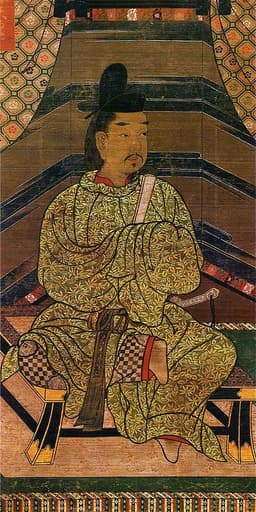
Emperor Daigo
Emperor · Medieval
58.0Total

Yelu Zongzhen
Emperor · Medieval
52.4Total
Basic Information
Born
885
1016
Died
930
1055
Era
Medieval
Medieval
Nationality
Japan
Khitan Empire
Occupation
Emperor
Emperor
Civilization
Eastern
Eastern
Score Comparison
Military (10%)
54.1
52.5
Political (20%)
45.0
61.3
Influence (20%)
59.0
51.8
Legacy (20%)
54.0
45.0
Leadership (15%)
72.0
53.2
Strategy (15%)
67.7
57.5
TOTAL
58.0
52.4
Emperor Daigo — Complete Timeline
897 AD
Reign as a Strong EmperorPolitical Action◆ Major
Emperor Daigo ruled directly without a Fujiwara regent for much of his reign. He maintained imperial authority and is remembered as a capable ruler. His reign is often idealized as a period of strong imperial rule in the Heian period.
Imperial RuleHeianAuthority
Impact: nationalconstructive
905 AD
Patronage of Poetry and LiteratureCultural◆ Major
Emperor Daigo sponsored the compilation of the 'Kokin Wakashu', the first imperial anthology of Japanese poetry. He commissioned Ki no Tsurayuki and others to collect poems. This anthology set the standard for waka poetry and influenced Japanese literature for centuries.
Kokin WakashuPoetryAnthology
Impact: nationalconstructive
927 AD
Compilation of the EngishikiReform◆ Major
Emperor Daigo ordered the compilation of the Engishiki, a detailed legal code that expanded on the Taiho and Yoro codes. It contained regulations for government administration, ceremonies, and rituals. The Engishiki became a foundational text for Japanese law and Shinto practice.
EngishikiLegal CodeRitsuryo
Impact: nationalconstructive
Yelu Zongzhen — Complete Timeline
1031 AD
Accession as Seventh Liao EmperorPolitical Action◆ Major
Yelu Zongzhen became the seventh Liao emperor after the death of his father, Yelu Longxu. His reign was marked by a shift in policy towards a more aggressive stance against the Song dynasty.
Liao dynastySuccessionPolicy shift
Impact: regional
1042 AD
Renewal of War with SongWar◆ Major
Yelu Zongzhen launched a military campaign against the Song dynasty, breaking the peace established by the Treaty of Shanyuan. The war resulted in a stalemate, but led to a renegotiation of the treaty terms, increasing Liao's tribute demands.
Liao-Song warTreaty renegotiationConflict
Impact: regionaldestructive
1045 AD
Reform of the Liao MilitaryReform
Yelu Zongzhen implemented military reforms to strengthen the Liao army, including the reorganization of Khitan cavalry units and the adoption of new tactics. These reforms aimed to maintain Liao's military superiority over the Song.
Liao dynastyMilitary reformArmy
Impact: regionalconstructive
Expert Analysis
Origins
Emperor Daigo (born 885, reigned 897–930) was the 60th emperor of Japan, son of Emperor Uda. He ascended the throne at age 12, initially under the regency of Fujiwara no Tokihira. His early education emphasized Chinese classics and Japanese poetry, shaping his cultural patronage. Daigo's reign occurred during the Heian period, when imperial power was gradually being eclipsed by the Fujiwara clan.
Yelu Zongzhen (born 1016, reigned 1031–1055) was the seventh emperor of the Liao dynasty, son of Yelu Longxu. He grew up in a Khitan nomadic tradition but was also educated in Chinese administrative practices. The Liao Empire controlled parts of northern China and Mongolia, and Zongzhen inherited a state at peace with the Song dynasty following the Treaty of Shanyuan (1005).
Rise to Power
Daigo's father, Emperor Uda, abdicated in 887, but Daigo did not immediately rule independently. The Fujiwara regent Tokihira dominated until his death in 909. Daigo then took direct control, becoming the first emperor in decades to rule without a Fujiwara regent. This period, known as the "Engi era," was marked by his assertion of imperial authority.
Zongzhen became emperor upon his father's death in 1031. His early reign was dominated by his mother, Empress Dowager Xiao Noujin, who acted as regent until her death in 1036. After that, Zongzhen pursued an aggressive foreign policy, breaking the peace with Song that had lasted 30 years. He launched a major campaign in 1042–1044, demanding territorial concessions and increased tribute from the Song.
Leadership & Governance
Daigo's governance focused on legal codification and cultural patronage. He ordered the compilation of the Engishiki (927), a detailed legal code comprising 50 volumes that regulated court ceremonies, administrative procedures, and religious rituals. This code remained influential for centuries. He also sponsored the Kokin Wakashu (905), the first imperial anthology of Japanese poetry, which set standards for waka poetry. Politically, Daigo scored 45.0, reflecting his limited ability to curb Fujiwara influence in the long term.
Zongzhen's leadership was more militaristic. He reformed the Liao military, reorganizing Khitan cavalry and adopting new siege technologies. His political score of 61.3 is higher than Daigo's, as he effectively managed the dual administration of Khitan and Chinese populations. However, his aggressive stance toward Song led to a costly war that drained resources and ended with a negotiated settlement in 1044 that restored the status quo ante but at greater expense to Song.
Triumph & Tragedy
Daigo's greatest triumph was the compilation of the Engishiki, which systematized Japanese law and ritual for over 500 years. His patronage of poetry also enriched Japanese culture. His tragedy was that his assertion of imperial authority did not outlast his reign; after his death, the Fujiwara regents regained control, leading to the decline of imperial power.
Zongzhen's triumph was his military campaign against Song, which demonstrated Liao's strength and extracted increased tribute (300,000 bolts of silk and 200,000 taels of silver annually). His tragedy was the human and economic cost of the war, and the failure to achieve permanent territorial gains. The war also alienated the Song, leading to a lasting peace that was essentially a return to previous terms.
Character & Destiny
Daigo was methodical and culturally inclined, setting scores of 72.0 in leadership and 67.7 in strategy. His character drove him to consolidate power through legal and cultural means rather than military force (military score 54.1). His destiny was to be remembered as a model emperor in Japanese history, but his efforts to centralize power ultimately failed due to structural weaknesses.
Zongzhen was more aggressive and militaristic (military score 52.5, strategy 57.5). His character led him to challenge the existing peace, but his strategic miscalculations resulted in a stalemate. His leadership score of 53.2 reflects his inability to maintain unity among Liao's multi-ethnic elites.
Legacy
Daigo's legacy is enduring: the Engishiki remained a foundational legal text until the Meiji Restoration, and the Kokin Wakashu influenced Japanese poetry for centuries. His reign is often cited as a high point of early Heian imperial authority. He scores 54.0 in legacy, reflecting the long-term impact of his cultural contributions.
Zongzhen's legacy is more mixed. His war with Song temporarily boosted Liao's prestige but exhausted the empire. The Liao dynasty continued for another 70 years after his death, but his reign marked the beginning of its decline. He scores 45.0 in legacy, lower than Daigo's, as his military campaigns had no lasting structural impact.
Conclusion
Emperor Daigo had a greater impact than Yelu Zongzhen. Despite a lower political score (45.0 vs. 61.3), Daigo's cultural and legal contributions endured for centuries, shaping Japanese society and governance. Zongzhen's military campaigns, while initially successful, ultimately achieved little lasting change. Daigo's total score of 58.0 vs. Zongzhen's 52.4 reflects this difference. In the long view, building institutions and culture outlasts military conquest.
Rankings
🥇
Emperor DaigoLeader
Mil: 54.1Pol: 45.0Inf: 59.0
58.0
🥈
Yelu Zongzhen
Mil: 52.5Pol: 61.3Inf: 51.8
52.4
+5.6 behind
How This Comparison Works
Algorithm
Each figure is scored on 6 dimensions (0—100 scale) based on structured historical data: Military (10%), Political (20%), Influence (20%), Legacy (20%), Leadership (15%), Strategy (15%). The weighted total produces the final ranking.
Data Sources
Scores are computed from structured sub-indicators in the database. Scale factors adjust for era (Ancient ×0.85, Modern ×1.0) and civilization size (Eastern ×1.05, Other ×0.80) to account for differences in population and military scale.
Maximum 3 Figures
Comparisons are limited to 2—3 figures to ensure readability and statistical meaningfulness.
Error Margins
±5 points per dimension — Sub-scores are derived from historical records with inherent uncertainty. Two figures within 5 points on a dimension should be considered roughly equivalent in that area.
Total Score Accuracy
±3 points overall — The weighted combination of 6 dimensions produces a total score with approximately ±3 points of uncertainty. Differences of less than 3 points are not statistically significant— the figures are effectively tied.
Known Limitations
- Historical records are incomplete and uneven across civilizations
- Figures from oral-tradition societies may be underrepresented
- Occupation labels can misclassify multi-role figures
- Scores measure capability and impact, not moral character
- Quantitative scoring is a comparison tool, not absolute truth
Capability Radar
Military (10%) — Battles & Warfare
Battles
45
60
Win Rate
50
55
Expansion
49
50
Political (20%) — Governance & Reform
Reform
65
45
Diplomacy
55
50
Economy
60
50
Influence (20%) — Cultural & Global Reach
Cultural
55
30
Global
30
20
Legacy (20%) — Historical Impact
Historical
60
40
Longevity
55
30
Leadership (15%) — Power & Stability
Tenure
60
65
Stability
65
55
Strategy (15%) — Tactics & Innovation
Strategy
57
55
Tactics
59
50
Reform
59
40
Similar Comparisons
Comments & Discussion
No comments yet. Be the first to share your thoughts!