Loading...
Chai Rong vs Emperor Daigo
Chai Rong leads by 7.7 pts · 2 figures compared
…

Chai Rong
Emperor · Medieval
65.7Total
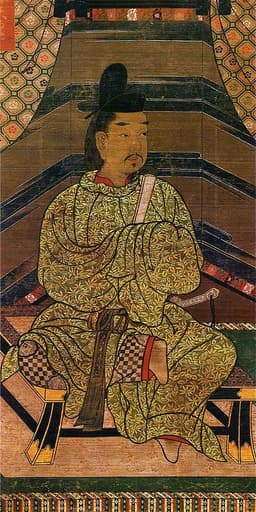
Emperor Daigo
Emperor · Medieval
58.0Total
Basic Information
Born
921
885
Died
959
930
Era
Medieval
Medieval
Nationality
China
Japan
Occupation
Emperor
Emperor
Civilization
Eastern
Eastern
Score Comparison
Military (10%)
82.0
54.1
Political (20%)
71.2
45.0
Influence (20%)
60.0
59.0
Legacy (20%)
54.0
54.0
Leadership (15%)
72.0
72.0
Strategy (15%)
75.0
67.7
TOTAL
65.7
58.0
Chai Rong — Complete Timeline
954 AD
Battle of GaopingWar◆ Major
Chai Rong personally led Later Zhou forces to defeat a combined Northern Han and Liao army at Gaoping. This victory secured his throne and demonstrated his military capability.
Later ZhouNorthern HanBattle
Impact: regionalconstructive
Ascended as Emperor Shizong of Later ZhouPolitical Action◆ Major
Chai Rong succeeded his adoptive father Guo Wei as emperor of Later Zhou. He immediately began reforms to strengthen the state, including military reorganization and economic policies.
Later ZhouSuccessionReform
Impact: nationalconstructive
955 AD
Military campaigns against Later Shu and Southern TangWar◆ Major
Chai Rong launched successful campaigns against Later Shu and Southern Tang, capturing key territories in the southwest and south. These conquests significantly expanded Later Zhou's territory.
Later ZhouConquestExpansion
Impact: regionalconstructive
Reforms to centralize powerReform◆ Major
Chai Rong implemented administrative and military reforms, including reducing the power of regional military governors and strengthening the central bureaucracy. These reforms laid the groundwork for later Song unification.
Later ZhouReformCentralization
Impact: nationalconstructive
959 AD
Died during campaign against LiaoWar
Chai Rong died suddenly at age 38 while leading a campaign to recover the Sixteen Prefectures from the Liao dynasty. His death ended Later Zhou's momentum and allowed the Song dynasty to rise.
Later ZhouLiaoDeath
Impact: nationaltragic
Emperor Daigo — Complete Timeline
897 AD
Reign as a Strong EmperorPolitical Action◆ Major
Emperor Daigo ruled directly without a Fujiwara regent for much of his reign. He maintained imperial authority and is remembered as a capable ruler. His reign is often idealized as a period of strong imperial rule in the Heian period.
Imperial RuleHeianAuthority
Impact: nationalconstructive
905 AD
Patronage of Poetry and LiteratureCultural◆ Major
Emperor Daigo sponsored the compilation of the 'Kokin Wakashu', the first imperial anthology of Japanese poetry. He commissioned Ki no Tsurayuki and others to collect poems. This anthology set the standard for waka poetry and influenced Japanese literature for centuries.
Kokin WakashuPoetryAnthology
Impact: nationalconstructive
927 AD
Compilation of the EngishikiReform◆ Major
Emperor Daigo ordered the compilation of the Engishiki, a detailed legal code that expanded on the Taiho and Yoro codes. It contained regulations for government administration, ceremonies, and rituals. The Engishiki became a foundational text for Japanese law and Shinto practice.
EngishikiLegal CodeRitsuryo
Impact: nationalconstructive
Expert Analysis
Origins
Chai Rong (921-959) was born into a wealthy merchant family in present-day Hebei, China. His adoptive father Guo Wei, a military governor, later founded the Later Zhou dynasty. Chai Rong received a practical education in statecraft and military affairs, serving as a district magistrate before being named heir. In contrast, Emperor Daigo (885-930) was born into Japan's imperial family as the son of Emperor Uda. He ascended the throne at age 12, but his early reign was controlled by the Fujiwara regents. Daigo's upbringing was steeped in courtly traditions, poetry, and Confucian classics, shaping his later interest in legal codification.
Rise to Power
Chai Rong rose through military prowess. In 951, his adoptive father founded Later Zhou, and Chai Rong was appointed governor of Kaifeng. In 954, he succeeded as emperor after Guo Wei's death. His first major test came immediately: the Battle of Gaoping (954), where he personally led troops to crush a coalition of Northern Han and Liao forces. This victory solidified his authority. Emperor Daigo's rise was more gradual. He became emperor in 897 but initially ruled under Fujiwara regency. In 901, he asserted direct rule, sidelining the Fujiwara and appointing loyalists like Sugawara no Michizane. His reign marked a brief period of imperial autonomy before the Fujiwara reasserted control.
Leadership & Governance
Chai Rong's leadership was centralized and expansionist. He reduced the power of military governors (jiedushi), reorganized the army to be loyal to the throne, and implemented land reforms to strengthen the tax base. He scored 72.0 in leadership. Emperor Daigo's governance was legalistic and cultural. He ordered the compilation of the Engishiki (927), a 50-volume legal code detailing administrative procedures, rituals, and penalties. He also sponsored the Kokin Wakashu (905), the first imperial poetry anthology. His political score of 45.0 reflects limited authority due to aristocratic power.
Triumph & Tragedy
Chai Rong's greatest triumph was his military campaign against Southern Tang (956-958), capturing the Yangtze River region and forcing the Tang emperor to cede 14 prefectures. He also defeated Later Shu. His tragedy: death at age 38 during a campaign against Liao, leaving his young son vulnerable. The Later Zhou collapsed within a year, and his general Zhao Kuangyin founded the Song dynasty. Emperor Daigo's triumph was the Engishiki, which remained influential for centuries. However, his reign saw the rise of the Fujiwara clan, who eventually marginalized imperial power. His tragedy was the exile of Sugawara no Michizane, a loyal minister, under false accusations, leading to later legends of vengeance.
Character & Destiny
Chai Rong was decisive and ambitious, with a military score of 82.0. He personally led armies and micromanaged campaigns. His early death cut short reunification. Emperor Daigo was cautious and cultured, with a leadership score of 72.0. He sought to preserve imperial authority through law, but his reliance on courtiers weakened the throne. His legacy is tied to cultural achievements rather than political power.
Legacy
Chai Rong's military reforms and territorial gains directly enabled the Song dynasty's reunification. His policies on centralization were adopted by Zhao Kuangyin. His legacy score is 54.0. Emperor Daigo's Engishiki became a foundational legal text, studied until the 19th century. The Kokin Wakashu set standards for Japanese poetry. His legacy score is also 54.0, but his influence on culture is enduring.
Conclusion
Chai Rong had greater immediate impact, scoring 65.7 total vs Emperor Daigo's 58.0. His military conquests and reforms reshaped China's trajectory, while Daigo's legal code preserved norms but did not alter power structures. Chai Rong's death prevented full reunification, but his groundwork made the Song dynasty possible. Daigo's reign was a cultural high point but politically stagnant. Chai Rong's impact on history is more decisive.
Rankings
🥇
Chai RongLeader
Mil: 82.0Pol: 71.2Inf: 60.0
65.7
🥈
Emperor Daigo
Mil: 54.1Pol: 45.0Inf: 59.0
58.0
+7.7 behind
How This Comparison Works
Algorithm
Each figure is scored on 6 dimensions (0—100 scale) based on structured historical data: Military (10%), Political (20%), Influence (20%), Legacy (20%), Leadership (15%), Strategy (15%). The weighted total produces the final ranking.
Data Sources
Scores are computed from structured sub-indicators in the database. Scale factors adjust for era (Ancient ×0.85, Modern ×1.0) and civilization size (Eastern ×1.05, Other ×0.80) to account for differences in population and military scale.
Maximum 3 Figures
Comparisons are limited to 2—3 figures to ensure readability and statistical meaningfulness.
Error Margins
±5 points per dimension — Sub-scores are derived from historical records with inherent uncertainty. Two figures within 5 points on a dimension should be considered roughly equivalent in that area.
Total Score Accuracy
±3 points overall — The weighted combination of 6 dimensions produces a total score with approximately ±3 points of uncertainty. Differences of less than 3 points are not statistically significant— the figures are effectively tied.
Known Limitations
- Historical records are incomplete and uneven across civilizations
- Figures from oral-tradition societies may be underrepresented
- Occupation labels can misclassify multi-role figures
- Scores measure capability and impact, not moral character
- Quantitative scoring is a comparison tool, not absolute truth
Capability Radar
Military (10%) — Battles & Warfare
Battles
75
45
Win Rate
80
50
Expansion
70
49
Political (20%) — Governance & Reform
Reform
88
65
Diplomacy
70
55
Economy
80
60
Influence (20%) — Cultural & Global Reach
Cultural
50
55
Global
30
30
Legacy (20%) — Historical Impact
Historical
65
60
Longevity
40
55
Leadership (15%) — Power & Stability
Tenure
55
60
Stability
75
65
Strategy (15%) — Tactics & Innovation
Strategy
82
57
Tactics
78
59
Reform
85
59
Similar Comparisons
Comments & Discussion
No comments yet. Be the first to share your thoughts!