Loading...
Emperor Daigo vs Julius Caesar
Julius Caesar leads by 24.8 pts · 2 figures compared
…
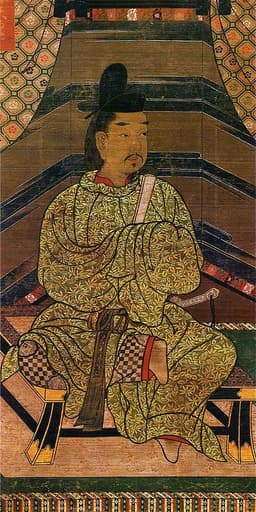
Emperor Daigo
Emperor · Medieval
58.0Total

Julius Caesar
General · Ancient
82.8Total
Basic Information
Born
885
-100
Died
930
-44
Era
Medieval
Ancient
Nationality
Japan
Roman Republic
Occupation
Emperor
General
Civilization
Eastern
Western
Score Comparison
Military (10%)
54.1
88.0
Political (20%)
45.0
78.0
Influence (20%)
59.0
85.0
Legacy (20%)
54.0
82.0
Leadership (15%)
72.0
80.0
Strategy (15%)
67.7
85.0
TOTAL
58.0
82.8
Emperor Daigo — Complete Timeline
897 AD
Reign as a Strong EmperorPolitical Action◆ Major
Emperor Daigo ruled directly without a Fujiwara regent for much of his reign. He maintained imperial authority and is remembered as a capable ruler. His reign is often idealized as a period of strong imperial rule in the Heian period.
Imperial RuleHeianAuthority
Impact: nationalconstructive
905 AD
Patronage of Poetry and LiteratureCultural◆ Major
Emperor Daigo sponsored the compilation of the 'Kokin Wakashu', the first imperial anthology of Japanese poetry. He commissioned Ki no Tsurayuki and others to collect poems. This anthology set the standard for waka poetry and influenced Japanese literature for centuries.
Kokin WakashuPoetryAnthology
Impact: nationalconstructive
927 AD
Compilation of the EngishikiReform◆ Major
Emperor Daigo ordered the compilation of the Engishiki, a detailed legal code that expanded on the Taiho and Yoro codes. It contained regulations for government administration, ceremonies, and rituals. The Engishiki became a foundational text for Japanese law and Shinto practice.
EngishikiLegal CodeRitsuryo
Impact: nationalconstructive
Julius Caesar — Complete Timeline
58 BC
Gallic WarsWar◆ Major
Caesar, as proconsul of Gaul, launched a series of campaigns that conquered all of Gaul (modern France, Belgium, and parts of Switzerland). He fought numerous battles, including against the Helvetii, the Belgae, and the Gallic chieftain Vercingetorix. The wars brought immense wealth and a loyal army to Caesar.
Gallic WarsConquestRoman Expansion
Impact: regional
49 BC
Crossing the RubiconPolitical Action◆ Major
Caesar led Legio XIII across the Rubicon River into Italy, defying the Roman Senate's order to disband his army. This act triggered a civil war against Pompey and the Optimates, ultimately leading to Caesar's dictatorship and the end of the Roman Republic.
Roman Civil WarEnd of RepublicPower Struggle
Impact: global
48 BC
Battle of PharsalusWar◆ Major
Caesar's outnumbered army defeated the larger forces of Pompey the Great at Pharsalus in Greece. Caesar's tactical use of a reserve line to counter Pompey's cavalry charge proved decisive. Pompey fled to Egypt, where he was assassinated, leaving Caesar as the undisputed master of the Roman world.
Roman Civil WarBattleDecisive Victory
Impact: regional
44 BC
Appointment as Dictator for LifePolitical Action◆ Major
The Roman Senate appointed Caesar dictator perpetuo (dictator for life), granting him unprecedented personal power. This move concentrated military, legislative, and judicial authority in one person, effectively ending the Roman Republic's traditional system of checks and balances and alarming many senators.
DictatorshipEnd of RepublicPower Consolidation
Impact: regionaldestructive
Assassination on the Ides of MarchPolitical Action◆ Major
A group of Roman senators, led by Marcus Junius Brutus and Gaius Cassius Longinus, stabbed Caesar to death at a meeting of the Senate in the Theatre of Pompey. The assassination was intended to restore the Republic, but instead triggered another civil war that led to the rise of the Roman Empire.
AssassinationRoman PoliticsEnd of Republic
Impact: globaldestructive
Expert Analysis
emperor-daigo-vs-julius-caesar
# The Dictator and the Poet-Emperor: Two Paths to Power
On the Ides of March in 44 BCE, Julius Caesar fell beneath twenty-three dagger strokes in the Roman Senate, his blood pooling on the marble floor where he had once commanded the world. Less than a thousand years later and half a world away, Emperor Daigo of Japan died peacefully in his palace at the age of forty-five, surrounded by poets and courtiers, having compiled the most elegant legal code of his age. One man conquered Gaul and crossed the Rubicon; the other conquered nothing but time itself, preserving a civilization through words rather than swords. What explains the gulf between these two rulers—one whose name became synonymous with imperial ambition, the other largely forgotten outside his homeland? The answer lies not in their abilities, but in the worlds they inherited.
Origins
Julius Caesar was born into the chaos of the late Roman Republic, a world of civil wars, senatorial corruption, and the constant jostling of aristocratic families. His patrician lineage was ancient but poor, forcing him to claw for status through military command and political alliances. The Rome of his youth was a predator state, hungry for conquest and glory, where a general’s worth was measured in provinces subdued and treasure seized. Caesar absorbed this ethos completely: he was ambitious, ruthless, and convinced that personal glory and the Republic’s greatness were one and the same.
Emperor Daigo, by contrast, was born into the Heian court of Japan—a world of ritual, poetry, and carefully calibrated hierarchy. His grandfather had been the first emperor to rule without a Fujiwara regent in decades, but the imperial family’s power was already more ceremonial than real. Daigo’s Japan was not expansionist; it was inward-looking, concerned with perfecting governance through precedent and aesthetic refinement. Where Caesar learned to command legions, Daigo learned to preside over poetry contests and rice-planting ceremonies.
Rise to Power
Caesar’s path was a masterclass in calculated risk. He rose through the Roman *cursus honorum*—quaestor, aedile, praetor—but his true breakthrough came in 58 BCE when he secured command of Gaul. Over eight years, he conquered a territory larger than Italy, building a veteran army personally loyal to him. When the Senate ordered him to disband, he crossed the Rubicon River into Italy in 49 BCE, igniting a civil war. His victory was complete: by 45 BCE, he was dictator for life, the undisputed master of Rome.
Daigo’s rise was quieter but no less significant. He ascended the throne in 897 at age twelve, but unlike Caesar, he did not seize power—he inherited it. What made Daigo remarkable was that he ruled *directly*, without a Fujiwara regent, for much of his reign. In a system where emperors were often figureheads, he maintained genuine authority. His key turning point came not on a battlefield but in 905, when he sponsored the *Kokin Wakashu*, the first imperial anthology of Japanese poetry—a cultural declaration that the throne, not the Fujiwara clan, would define Heian civilization.
Leadership & Governance
Caesar governed as he conquered: decisively, personally, and often brutally. He reformed the calendar (creating the Julian calendar still used in modified form today), expanded Roman citizenship to provincials, and initiated massive public works. But his political wisdom was undermined by his arrogance—he accepted divine honors and treated the Senate as a rubber stamp. His military genius was undeniable: at Alesia in 52 BCE, he besieged a Gallic army while simultaneously repelling a relief force, a feat of logistics and tactics that still astounds military historians.
Daigo governed through codification and culture. His greatest achievement, the *Engishiki* of 927, was a meticulous legal code that expanded on the Taiho and Yoro codes, detailing everything from court ceremonies to tax collection to Shinto rituals. It was not a dramatic reform but a work of bureaucratic perfectionism. His leadership style was consensus-building: he patronized poets like Ki no Tsurayuki, commissioned histories, and ensured that the imperial court remained the cultural center of Japan. Where Caesar’s governance was a hammer, Daigo’s was a brush.
Triumph & Tragedy
Caesar’s greatest triumph was the conquest of Gaul, which made him fabulously wealthy and gave him an army that worshiped him. His greatest tragedy was his death: having centralized all power in himself, he created enemies everywhere. The Ides of March was not an accident but the logical end of a system he had broken. “The die is cast,” he reportedly said at the Rubicon, but he could not foresee that the same ambition that raised him would destroy him.
Daigo’s triumph was the *Engishiki*—a legal code so comprehensive that it remained in use for centuries, a testament to his vision of stable, ritualized governance. His tragedy was more subtle: after his death, the Fujiwara regents reasserted control, and later emperors became puppets once more. Daigo had proven that an emperor could rule, but he could not make the system last. The Heian court’s golden age faded into a long twilight of aristocratic infighting.
Character & Destiny
Caesar was driven by an insatiable need for glory—*dignitas*, the Romans called it. He gambled constantly, staking everything on audacity. His personality shaped his destiny: he could not stop, could not share power, could not imagine a future where he was not supreme. This made him great and doomed him.
Daigo was driven by duty—to his ancestors, to the gods, to the ideal of a well-ordered realm. He was cautious, methodical, and reverent. His personality shaped a different destiny: he preserved rather than created, consolidated rather than conquered. He died in bed, but his name faded from the world stage.
Legacy
Caesar’s legacy is immeasurable. His name became a title—*Kaiser*, *Tsar*—and his assassination set the stage for the Roman Empire under Augustus. Every Western leader who centralizes power walks in his shadow.
Daigo’s legacy is quieter but enduring. The *Kokin Wakashu* influenced Japanese poetry for a millennium. The *Engishiki* preserved Shinto ritual and court procedure. In Japan, he is remembered as a model emperor—wise, cultured, and independent. But outside Japan, he is virtually unknown.
Conclusion
Caesar and Daigo represent two poles of human ambition: the conqueror who reshapes the world through force, and the preserver who shapes it through culture. One died violently, the other peacefully. One is remembered globally, the other locally. Yet both were products of their eras—Rome demanded conquest, Heian Japan demanded refinement. The difference between them is not of talent but of circumstance. Caesar could never have written the *Kokin Wakashu*; Daigo could never have crossed the Rubicon. History gives us the tools we need, and the tools we have shape what we become.
Rankings
🥇
Julius CaesarLeader
Mil: 88.0Pol: 78.0Inf: 85.0
82.8
🥈
Emperor Daigo
Mil: 54.1Pol: 45.0Inf: 59.0
58.0
+24.8 behind
How This Comparison Works
Algorithm
Each figure is scored on 6 dimensions (0—100 scale) based on structured historical data: Military (10%), Political (20%), Influence (20%), Legacy (20%), Leadership (15%), Strategy (15%). The weighted total produces the final ranking.
Data Sources
Scores are computed from structured sub-indicators in the database. Scale factors adjust for era (Ancient ×0.85, Modern ×1.0) and civilization size (Eastern ×1.05, Other ×0.80) to account for differences in population and military scale.
Maximum 3 Figures
Comparisons are limited to 2—3 figures to ensure readability and statistical meaningfulness.
Error Margins
±5 points per dimension — Sub-scores are derived from historical records with inherent uncertainty. Two figures within 5 points on a dimension should be considered roughly equivalent in that area.
Total Score Accuracy
±3 points overall — The weighted combination of 6 dimensions produces a total score with approximately ±3 points of uncertainty. Differences of less than 3 points are not statistically significant— the figures are effectively tied.
Known Limitations
- Historical records are incomplete and uneven across civilizations
- Figures from oral-tradition societies may be underrepresented
- Occupation labels can misclassify multi-role figures
- Scores measure capability and impact, not moral character
- Quantitative scoring is a comparison tool, not absolute truth
Capability Radar
Military (10%) — Battles & Warfare
Battles
45
95
Win Rate
50
92
Expansion
49
97
Political (20%) — Governance & Reform
Reform
65
90
Diplomacy
55
85
Economy
60
82
Influence (20%) — Cultural & Global Reach
Cultural
55
88
Global
30
94
Legacy (20%) — Historical Impact
Historical
60
95
Longevity
55
96
Leadership (15%) — Power & Stability
Tenure
60
75
Stability
65
60
Strategy (15%) — Tactics & Innovation
Strategy
57
94
Tactics
59
96
Reform
59
88
Similar Comparisons
Comments & Discussion
No comments yet. Be the first to share your thoughts!