Loading...
Emperor Daigo vs Napoleon Bonaparte
Napoleon Bonaparte leads by 12.9 pts · 2 figures compared
…
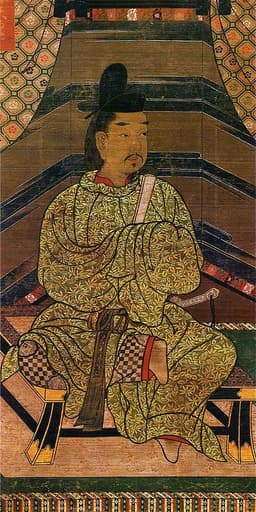
Emperor Daigo
Emperor · Medieval
58.0Total

Napoleon Bonaparte
General · Modern
70.9Total
Basic Information
Born
885
1769
Died
930
1821
Era
Medieval
Modern
Nationality
Japan
France
Occupation
Emperor
General
Civilization
Eastern
Western
Score Comparison
Military (10%)
54.1
94.0
Political (20%)
45.0
72.0
Influence (20%)
59.0
40.0
Legacy (20%)
54.0
80.0
Leadership (15%)
72.0
78.0
Strategy (15%)
67.7
90.0
TOTAL
58.0
70.9
Emperor Daigo — Complete Timeline
897 AD
Reign as a Strong EmperorPolitical Action◆ Major
Emperor Daigo ruled directly without a Fujiwara regent for much of his reign. He maintained imperial authority and is remembered as a capable ruler. His reign is often idealized as a period of strong imperial rule in the Heian period.
Imperial RuleHeianAuthority
Impact: nationalconstructive
905 AD
Patronage of Poetry and LiteratureCultural◆ Major
Emperor Daigo sponsored the compilation of the 'Kokin Wakashu', the first imperial anthology of Japanese poetry. He commissioned Ki no Tsurayuki and others to collect poems. This anthology set the standard for waka poetry and influenced Japanese literature for centuries.
Kokin WakashuPoetryAnthology
Impact: nationalconstructive
927 AD
Compilation of the EngishikiReform◆ Major
Emperor Daigo ordered the compilation of the Engishiki, a detailed legal code that expanded on the Taiho and Yoro codes. It contained regulations for government administration, ceremonies, and rituals. The Engishiki became a foundational text for Japanese law and Shinto practice.
EngishikiLegal CodeRitsuryo
Impact: nationalconstructive
Napoleon Bonaparte — Complete Timeline
1799 AD
Coup of 18 BrumaireOther◆ Major
Napoleon Bonaparte, with support from his brother Lucien and key political figures, overthrew the Directory in a bloodless coup. He established the Consulate with himself as First Consul, effectively becoming the ruler of France. This event ended the French Revolution's most unstable period.
French RevolutionCoupRise to Power
Impact: regional
1804 AD
Promulgation of the Napoleonic CodeOther◆ Major
Napoleon enacted the Civil Code of the French, known as the Napoleonic Code, a comprehensive set of laws that replaced the fragmented feudal legal systems. The code established legal equality, protected property rights, and secularized law. It became the basis for legal systems in many European and world countries.
Legal ReformNapoleonic CodeCivil Law
Impact: globalconstructive
1805 AD
Battle of AusterlitzWar◆ Major
Napoleon's Grande Arm
Napoleonic WarsBattleDecisive Victory
Impact: global
1812 AD
Invasion of RussiaWar◆ Major
Napoleon led the Grande Arm
Napoleonic WarsInvasionDisaster
Impact: globaldestructive
1815 AD
Battle of WaterlooWar◆ Major
Napoleon's French army was defeated by the combined forces of the Duke of Wellington's Anglo-Allied army and Gebhard Leberecht von Bl
Napoleonic WarsBattleFinal Defeat
Impact: globaldestructive
Expert Analysis
emperor-daigo-vs-napoleon-bonaparte
# The Emperor and the Conqueror: Two Paths to Power
On a June morning in 1815, Napoleon Bonaparte watched his Grande Armée crumble at Waterloo, the dream of a European empire dissolving into mud and blood. A thousand years earlier and half a world away, Emperor Daigo of Japan sat in his Kyoto palace, composing poetry and reviewing legal codes, unaware that his reign would be remembered as a golden age of governance. One man conquered continents; the other compiled laws. Both shaped history, but their paths could not have been more different. What drove these two leaders to such divergent destinies?
Origins
Napoleon was born in 1769 on the island of Corsica, a rugged Mediterranean outpost recently annexed by France. His family was minor nobility, but they were impoverished and resentful of French rule. Young Napoleon was short, intense, and fiercely ambitious—a boy who taught himself mathematics and military history while his classmates played. He entered the French military academy at Brienne at age nine, a foreigner among aristocrats, mocked for his accent and his size. That outsider’s hunger would never leave him.
Emperor Daigo was born in 885 into the chrysanthemum throne of Japan, a world of silk screens and ritualized silence. His father, Emperor Uda, had fought to free the imperial court from the grip of the Fujiwara regents—a powerful family that had dominated Japanese politics for generations. Daigo inherited not just a crown but a war of attrition against noble influence. His weapon was not the sword but the brush.
Their eras shaped them: Napoleon came of age in revolutionary France, where a commoner could rise to rule Europe. Daigo lived in Heian Japan, where hierarchy was fixed and power flowed through lineage and courtly grace. One era rewarded audacity; the other rewarded patience.
Rise to Power
Napoleon’s ascent was a cannon blast. In 1793, at just 24, he drove British forces from the port of Toulon, earning promotion to brigadier general. By 1796, he commanded the French army in Italy, where his lightning campaigns humiliated Austria and made him a national hero. In 1799, he staged a coup d’état, becoming First Consul of France. Five years later, he crowned himself Emperor in Notre-Dame Cathedral—a gesture that shocked Europe but thrilled his soldiers. He had climbed from Corsican obscurity to the throne of Charlemagne in less than a decade.
Daigo’s rise was a slow dawn. He became emperor in 897, at age 12, but real power eluded him for years. The Fujiwara regents still pulled strings from behind silk screens. Yet Daigo was patient. He cultivated alliances with lesser nobles, patronized scholars, and waited. By his twenties, he had quietly reasserted imperial authority, ruling without a regent—a rare achievement in Heian Japan. His turning point came not on a battlefield but in a poetry contest, where his sponsorship of the *Kokin Wakashu* (the first imperial anthology of Japanese verse, compiled in 905) signaled that the emperor, not the Fujiwara, was the true patron of culture.
Leadership & Governance
Napoleon governed with a general’s decisiveness. He centralized the French state, created the Bank of France, and reorganized education. His greatest achievement was the Napoleonic Code of 1804—a sweeping legal reform that established equality before the law, protected property rights, and secularized justice. It was a masterpiece of clarity and logic, and it spread across Europe wherever his armies marched. But he also ruled through fear: secret police, censorship, and endless war. His military score of 94.0 reflects his genius—he won 40 battles and lost only 7—but his political score of 75.0 hints at the brittleness of his empire.
Daigo’s governance was the opposite: quiet, incremental, and durable. In 927, he ordered the compilation of the *Engishiki*, a detailed code of administrative procedures that expanded on the earlier Taiho and Yoro codes. It covered everything from shrine rituals to tax collection, creating a framework that would guide Japanese governance for centuries. He did not conquer; he codified. His military score of 53.9 is almost irrelevant—his power was the power of precedent. He patronized poetry because poetry was politics in Heian Japan; a well-turned verse could secure a noble’s loyalty more effectively than a regiment.
Triumph & Tragedy
Napoleon’s greatest moment was probably Austerlitz in 1805, where he crushed the combined armies of Russia and Austria in a single day. His worst was the 1812 invasion of Russia, where 600,000 men marched east and fewer than 100,000 returned. The disaster broke his aura of invincibility, and by 1814, he was exiled to Elba. He returned for the Hundred Days, but Waterloo ended it all. He died in 1821 on Saint Helena, a prisoner of the British, at age 51.
Daigo’s triumph was subtler: a reign of 33 years that stabilized imperial authority and produced cultural treasures like the *Kokin Wakashu*. His tragedy was personal—he outlived his favorite son, who died young, and his own health declined in his forties. He died in 930 at age 45, not in exile but in his palace, surrounded by courtiers. There was no dramatic fall, only a quiet end.
Character & Destiny
Napoleon was a force of nature: restless, brilliant, and insatiable. He once said, “Impossible is a word to be found only in the dictionary of fools.” His character drove him to conquer Europe, but it also drove him to overreach. He could not stop. Daigo was a different kind of leader: disciplined, patient, and wise. He understood that in Heian Japan, power was not seized but cultivated, like a garden. His character made him a great administrator but not a conqueror—and that was exactly what his era needed.
Legacy
Napoleon’s legacy is a paradox. He spread revolutionary ideals of equality and nationalism across Europe, yet he also restored slavery and crowned himself emperor. The Napoleonic Code remains the foundation of law in many countries, from France to Egypt to Louisiana. But his wars killed millions, and his name is synonymous with both genius and hubris. His total score of 82.4 reflects a figure of immense but flawed achievement.
Daigo’s legacy is quieter but deeper. The *Engishiki* remained in use for centuries, and the *Kokin Wakashu* shaped Japanese poetry for a millennium. He is remembered as a model emperor—one who ruled, not just reigned. His score of 67.3 seems modest, but it measures a different kind of power: the power of continuity.
Conclusion
Standing on opposite ends of history, Napoleon and Daigo remind us that greatness takes many forms. One built an empire that collapsed in a generation; the other built a legal code that outlasted his dynasty. Napoleon’s story is a firework—brilliant, explosive, and brief. Daigo’s is a candle—steady, warm, and enduring. Both left their marks, but the question lingers: which kind of legacy matters more? The answer, perhaps, lies not in the size of the empire but in the depth of the foundation.
Rankings
🥇
Napoleon BonaparteLeader
Mil: 94.0Pol: 72.0Inf: 40.0
70.9
🥈
Emperor Daigo
Mil: 54.1Pol: 45.0Inf: 59.0
58.0
+12.9 behind
How This Comparison Works
Algorithm
Each figure is scored on 6 dimensions (0—100 scale) based on structured historical data: Military (10%), Political (20%), Influence (20%), Legacy (20%), Leadership (15%), Strategy (15%). The weighted total produces the final ranking.
Data Sources
Scores are computed from structured sub-indicators in the database. Scale factors adjust for era (Ancient ×0.85, Modern ×1.0) and civilization size (Eastern ×1.05, Other ×0.80) to account for differences in population and military scale.
Maximum 3 Figures
Comparisons are limited to 2—3 figures to ensure readability and statistical meaningfulness.
Error Margins
±5 points per dimension — Sub-scores are derived from historical records with inherent uncertainty. Two figures within 5 points on a dimension should be considered roughly equivalent in that area.
Total Score Accuracy
±3 points overall — The weighted combination of 6 dimensions produces a total score with approximately ±3 points of uncertainty. Differences of less than 3 points are not statistically significant— the figures are effectively tied.
Known Limitations
- Historical records are incomplete and uneven across civilizations
- Figures from oral-tradition societies may be underrepresented
- Occupation labels can misclassify multi-role figures
- Scores measure capability and impact, not moral character
- Quantitative scoring is a comparison tool, not absolute truth
Capability Radar
Military (10%) — Battles & Warfare
Battles
45
95
Win Rate
50
90
Expansion
49
95
Political (20%) — Governance & Reform
Reform
65
95
Diplomacy
55
80
Economy
60
85
Influence (20%) — Cultural & Global Reach
Cultural
55
85
Global
30
90
Legacy (20%) — Historical Impact
Historical
60
95
Longevity
55
90
Leadership (15%) — Power & Stability
Tenure
60
85
Stability
65
70
Strategy (15%) — Tactics & Innovation
Strategy
57
95
Tactics
59
98
Reform
59
92
Similar Comparisons
Comments & Discussion
THE_MATH_OF_MARS6/17/2026
If Napoleon fought 60 battles and lost only 7, while Daigo fought zero, the numbers alone prove who changed history. 600,000 men died in Napoleon’s Russian campaign alone—that’s more than the entire population of Kyoto in Daigo’s era. The “golden age” of governance is just a fancy term for doing nothing while your court poets stroke your ego. Conquest isn’t pretty, but it’s how the world actually moves. Give me the emperor who draws blood over the one who draws haikus.
帝国语法6/17/2026
你们啊,就知道比胜负数字。拿破仑的滑铁卢失败了,但《拿破仑法典》至今影响着欧洲民法;醍醐天皇修了《延喜式》,日本律令制度的巅峰。胜利或者失败,都是后人编的故事。我只看一个标准:谁留下的制度活得更久?拿破仑跑了十年,醍醐的法条跑了一千年。那你们说,谁更“伟大”?历史不是打牌,比的是后劲。
VIVE_LA_TRADUCTION6/17/2026
Let’s be honest—both are overhyped by their own national fanboys. Napoleon’s “genius” was just French propaganda; he lost Egypt, Spain, and Waterloo. Daigo’s “golden age” was basically a courtly book club where he wrote poems while the real power stayed with the Fujiwara. Neither man truly ruled. Napoleon had marshals running his empire; Daigo had regents. The real lesson? Solo leaders are a myth. It’s always the team, the bureaucracy, the machine behind the throne. Stop worshiping individuals.
九品中正6/17/2026
说拿破仑是军事天才的,怕是忘了他在圣赫勒拿岛的结局吧?醍醐天皇虽然没打过仗,但人家在位三十三年,国内太平,文化昌盛。你们总爱吹“征服者”,可真正的治理难道不是让百姓吃饱饭、有法可依?拿破仑的征服带来了什么?尸山血海和战败赔款。醍醐的《延喜式》带来了稳定的税收和司法体系。我用脚投票,选太平天子,不选战争狂人。
BONE_AND_INK6/17/2026
Comparing a man who died in exile on a volcanic rock to one who died in his own palace is already a verdict. Napoleon was a brilliant tactician but a disastrous strategist—he conquered Europe but couldn’t hold it. Daigo consolidated a dynasty without leaving Kyoto. One burned through men like ammunition; the other conserved them like ink. If history is a ledger, Daigo’s balance sheet shows less blood per achievement. Sometimes the best general is the one who never needs to fight.