Loading...
Emperor Daigo vs Henry IV of England
Emperor Daigo leads by 10.3 pts · 2 figures compared
…
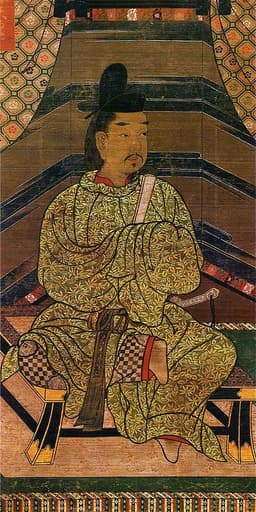
Emperor Daigo
Emperor · Medieval
58.0Total
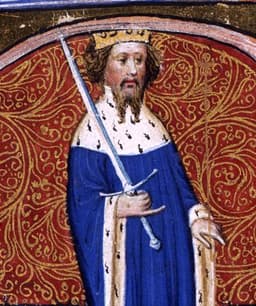
Henry IV of England
Emperor · Medieval
47.7Total
Basic Information
Born
885
1367
Died
930
1413
Era
Medieval
Medieval
Nationality
Japan
England
Occupation
Emperor
Emperor
Civilization
Eastern
Western
Score Comparison
Military (10%)
54.1
55.0
Political (20%)
45.0
35.1
Influence (20%)
59.0
53.3
Legacy (20%)
54.0
45.8
Leadership (15%)
72.0
55.3
Strategy (15%)
67.7
38.3
TOTAL
58.0
47.7
Emperor Daigo — Complete Timeline
897 AD
Reign as a Strong EmperorPolitical Action◆ Major
Emperor Daigo ruled directly without a Fujiwara regent for much of his reign. He maintained imperial authority and is remembered as a capable ruler. His reign is often idealized as a period of strong imperial rule in the Heian period.
Imperial RuleHeianAuthority
Impact: nationalconstructive
905 AD
Patronage of Poetry and LiteratureCultural◆ Major
Emperor Daigo sponsored the compilation of the 'Kokin Wakashu', the first imperial anthology of Japanese poetry. He commissioned Ki no Tsurayuki and others to collect poems. This anthology set the standard for waka poetry and influenced Japanese literature for centuries.
Kokin WakashuPoetryAnthology
Impact: nationalconstructive
927 AD
Compilation of the EngishikiReform◆ Major
Emperor Daigo ordered the compilation of the Engishiki, a detailed legal code that expanded on the Taiho and Yoro codes. It contained regulations for government administration, ceremonies, and rituals. The Engishiki became a foundational text for Japanese law and Shinto practice.
EngishikiLegal CodeRitsuryo
Impact: nationalconstructive
Henry IV of England — Complete Timeline
1399 AD
Usurpation of the ThronePolitical Action◆ Major
Henry Bolingbroke deposed Richard II and claimed the English throne as Henry IV. This usurpation established the Lancastrian dynasty but created a legitimacy crisis that led to future conflicts.
UsurpationLancasterSuccession
Impact: national
1403 AD
Battle of ShrewsburyWar◆ Major
Henry IV defeated a rebellion led by Henry Percy (Hotspur) at the Battle of Shrewsbury. Hotspur was killed, and the rebellion was crushed, but the king suffered heavy casualties and ongoing challenges.
BattleRebellionPercy
Impact: nationaldestructive
1405 AD
Execution of Archbishop ScropePolitical Action◆ Major
Henry IV ordered the execution of Richard Scrope, Archbishop of York, for leading a rebellion. This act shocked the church and nobility, damaging Henry's reputation and legitimacy.
ExecutionChurchRebellion
Impact: nationaldestructive
Illness and DeclineOther
Henry IV suffered from a debilitating illness, possibly leprosy or epilepsy, which weakened his rule. He became increasingly unable to govern effectively, leading to factionalism and his son's growing influence.
IllnessDecline
Impact: nationaltragic
Expert Analysis
Origins
**Emperor Daigo** (born 885) was the 60th emperor of Japan, ascending the Chrysanthemum Throne in 897. He was the son of Emperor Uda and came from a lineage that sought to reassert imperial authority against the rising Fujiwara regency. Daigo received a classical education in Chinese literature and Confucian governance, which shaped his legalistic and administrative approach. His formative years were marked by the decline of the Fujiwara clan's direct regency, allowing him to rule directly.
**Henry IV of England** (born 1367) was the son of John of Gaunt, Duke of Lancaster, making him a member of the powerful House of Plantagenet. He was educated in chivalric and military traditions, participating in the Teutonic Crusades and gaining administrative experience as a lord. His early life was overshadowed by the erratic rule of his cousin, King Richard II, whose favoritism and arbitrary actions alienated the nobility. Henry's background was one of aristocratic privilege and martial prowess, but also political instability.
Rise to Power
Daigo became emperor at age 12 after his father's abdication. Initially, the Fujiwara regent Fujiwara no Mototsune held influence, but after Mototsune's death in 891, Daigo gradually asserted direct control. By 901, he had dispensed with regents entirely, ruling personally for the remainder of his reign (897-930). His rise was peaceful, relying on legal reforms and cultural patronage rather than military force.
Henry IV's rise was violent and abrupt. In 1399, while Henry was in exile, Richard II confiscated his Lancastrian inheritance. Henry returned with a small force, capitalizing on widespread discontent. He captured Richard and forced his abdication, claiming the throne in September 1399. Unlike Daigo's smooth transition, Henry's usurpation created a legitimacy crisis that sparked multiple rebellions, including the Percy revolt in 1403.
Leadership & Governance
Daigo's leadership focused on codifying law and promoting culture. He ordered the compilation of the Engishiki (927), a detailed administrative and ceremonial code that standardized rituals, regulations, and taxes. This code, built on earlier Taiho and Yoro codes, strengthened imperial bureaucracy. He also sponsored the Kokin Wakashu (905), the first imperial poetry anthology, elevating Japanese literature. His governance was systematic and stable, with a leadership score of 72.0.
Henry IV's governance was reactive and plagued by rebellion. He faced uprisings from the Percys, the Welsh under Owain Glyndwr, and even the Archbishop of Scrope. His political score of 35.1 reflects his inability to secure lasting peace. He executed Archbishop Scrope in 1405, alienating the Church. His reign saw the growth of Parliament, as he needed its support for taxes, but he struggled with illness (possibly leprosy) from 1408 onward, leading to diminished control.
Triumph & Tragedy
Daigo's greatest triumph was the Engishiki, which remained influential for centuries, and his successful direct rule without regents. His tragedy was the decline of imperial power after his death, as the Fujiwara regained control. His military score of 54.1 reflects no major wars, but his political score of 45.0 shows limited long-term impact.
Henry IV's triumph was defeating the Percy rebellion at Shrewsbury (1403), where his archers proved decisive. His tragedy was his illegitimate claim, which spawned constant unrest. His execution of Archbishop Scrope (1405) was a moral and political disaster. His military score of 55.0 is modest, and his strategy score of 38.3 indicates poor planning. He died in 1413, exhausted and ill.
Character & Destiny
Daigo was methodical, cultured, and determined to restore imperial authority. His character matched his destiny: a peaceful reign that preserved tradition but failed to reverse the Fujiwara's long-term ascendancy. Historical assessments view him as a capable administrator but not a transformative figure.
Henry IV was ambitious, pragmatic, and ruthless, but his usurpation defined his fate. His character—decisive yet politically inept—led to a reign of constant crisis. Historians note his courage but criticize his lack of legitimacy. His total score of 47.7 reflects a struggling ruler.
Legacy
Daigo's legacy includes the Engishiki, which preserved Shinto and court rituals, and the Kokin Wakashu, which shaped Japanese poetry. His reign is seen as a high point of early imperial authority. He scored 54.0 in legacy and 59.0 in influence.
Henry IV's legacy is the Lancastrian dynasty, which led to the Wars of the Roses. His usurpation set a precedent for deposing kings. His legacy score of 45.8 is lower, as his reign is overshadowed by his son Henry V's triumphs. He scored 53.3 in influence.
Conclusion
Emperor Daigo had a greater impact than Henry IV. Daigo's legal and cultural contributions endured for centuries, while Henry IV's reign was a turbulent precursor to civil war. Daigo's total score of 58.0 against Henry's 47.7 reflects his superior leadership and lasting influence. Henry's usurpation destabilized England, whereas Daigo's rule strengthened Japan's administrative framework. Thus, Daigo's legacy is more positive and enduring.
Rankings
🥇
Emperor DaigoLeader
Mil: 54.1Pol: 45.0Inf: 59.0
58.0
🥈
Henry IV of England
Mil: 55.0Pol: 35.1Inf: 53.3
47.7
+10.3 behind
How This Comparison Works
Algorithm
Each figure is scored on 6 dimensions (0—100 scale) based on structured historical data: Military (10%), Political (20%), Influence (20%), Legacy (20%), Leadership (15%), Strategy (15%). The weighted total produces the final ranking.
Data Sources
Scores are computed from structured sub-indicators in the database. Scale factors adjust for era (Ancient ×0.85, Modern ×1.0) and civilization size (Eastern ×1.05, Other ×0.80) to account for differences in population and military scale.
Maximum 3 Figures
Comparisons are limited to 2—3 figures to ensure readability and statistical meaningfulness.
Error Margins
±5 points per dimension — Sub-scores are derived from historical records with inherent uncertainty. Two figures within 5 points on a dimension should be considered roughly equivalent in that area.
Total Score Accuracy
±3 points overall — The weighted combination of 6 dimensions produces a total score with approximately ±3 points of uncertainty. Differences of less than 3 points are not statistically significant— the figures are effectively tied.
Known Limitations
- Historical records are incomplete and uneven across civilizations
- Figures from oral-tradition societies may be underrepresented
- Occupation labels can misclassify multi-role figures
- Scores measure capability and impact, not moral character
- Quantitative scoring is a comparison tool, not absolute truth
Capability Radar
Military (10%) — Battles & Warfare
Battles
45
35
Win Rate
50
40
Expansion
49
15
Political (20%) — Governance & Reform
Reform
65
30
Diplomacy
55
35
Economy
60
25
Influence (20%) — Cultural & Global Reach
Cultural
55
30
Global
30
20
Legacy (20%) — Historical Impact
Historical
60
45
Longevity
55
30
Leadership (15%) — Power & Stability
Tenure
60
50
Stability
65
20
Strategy (15%) — Tactics & Innovation
Strategy
57
25
Tactics
59
30
Reform
59
10
Similar Comparisons
Comments & Discussion
No comments yet. Be the first to share your thoughts!