Loading...
Emperor Daigo vs Ottokar II of Bohemia
Ottokar II of Bohemia leads by 3.9 pts · 2 figures compared
…
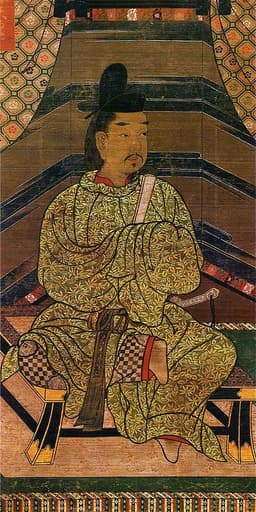
Emperor Daigo
Emperor · Medieval
58.0Total

Ottokar II of Bohemia
Emperor · Medieval
61.9Total
Basic Information
Born
885
1233
Died
930
1278
Era
Medieval
Medieval
Nationality
Japan
Bohemia
Occupation
Emperor
Emperor
Civilization
Eastern
Western
Score Comparison
Military (10%)
54.1
74.7
Political (20%)
45.0
72.0
Influence (20%)
59.0
56.7
Legacy (20%)
54.0
54.0
Leadership (15%)
72.0
68.0
Strategy (15%)
67.7
58.0
TOTAL
58.0
61.9
Emperor Daigo — Complete Timeline
897 AD
Reign as a Strong EmperorPolitical Action◆ Major
Emperor Daigo ruled directly without a Fujiwara regent for much of his reign. He maintained imperial authority and is remembered as a capable ruler. His reign is often idealized as a period of strong imperial rule in the Heian period.
Imperial RuleHeianAuthority
Impact: nationalconstructive
905 AD
Patronage of Poetry and LiteratureCultural◆ Major
Emperor Daigo sponsored the compilation of the 'Kokin Wakashu', the first imperial anthology of Japanese poetry. He commissioned Ki no Tsurayuki and others to collect poems. This anthology set the standard for waka poetry and influenced Japanese literature for centuries.
Kokin WakashuPoetryAnthology
Impact: nationalconstructive
927 AD
Compilation of the EngishikiReform◆ Major
Emperor Daigo ordered the compilation of the Engishiki, a detailed legal code that expanded on the Taiho and Yoro codes. It contained regulations for government administration, ceremonies, and rituals. The Engishiki became a foundational text for Japanese law and Shinto practice.
EngishikiLegal CodeRitsuryo
Impact: nationalconstructive
Ottokar II of Bohemia — Complete Timeline
1260 AD
Battle of KressenbrunnWar◆ Major
Ottokar II defeated King B
Territorial ExpansionBattleAustria
Impact: regional
1273 AD
Election as King of GermanyPolitical Action◆ Major
Ottokar II was elected King of Germany by a faction of prince-electors, but he refused to accept the election of Rudolf I of Habsburg. This dispute led to conflict with Rudolf, who claimed the throne and challenged Ottokar's authority.
ElectionConflictHabsburg
Impact: regional
1278 AD
Battle on the MarchfeldWar
Ottokar II was defeated and killed by Rudolf I of Habsburg at the Battle on the Marchfeld. This battle ended Bohemian expansion and allowed the Habsburgs to gain control of Austria, Styria, and Carinthia.
BattleDeathHabsburg Rise
Impact: regionaltragic
Expert Analysis
Origins
Emperor Daigo (born 885) was the 60th emperor of Japan, ascending the throne in 897. He was the son of Emperor Uda and a member of the Yamato dynasty. Daigo's early education emphasized Confucian classics and legal studies, preparing him for a direct role in governance. He received training in court rituals and poetry, reflecting the Heian period's cultural values.
Ottokar II (born 1233) was the son of King Wenceslaus I of Bohemia and a member of the Přemyslid dynasty. He grew up in the Přemyslid court, learning military tactics and governance. His father's reign saw Bohemia's growing influence, and Ottokar was groomed for kingship, gaining experience in administration and warfare.
Rise to Power
Daigo became emperor in 897 at age 12, but initially relied on regents. By 900, he began ruling directly, sidelining the Fujiwara regency. His reign from 897 to 930 marked a period of strong imperial authority. Daigo's major turning point was his decision to compile the Engishiki, a comprehensive legal code, which he initiated around 905. This project solidified his reputation as a reformer.
Ottokar II's rise began after his father's death in 1253. He became King of Bohemia and immediately pursued expansion. In 1260, he defeated King Béla IV of Hungary at the Battle of Kressenbrunn, securing the Duchy of Austria and Styria. This victory elevated him to the most powerful ruler in Central Europe. In 1273, he was elected King of Germany by a faction of prince-electors, but he refused to accept Rudolf I of Habsburg's election, leading to conflict.
Leadership & Governance
Daigo's leadership focused on legal codification and cultural patronage. He ordered the Engishiki, which detailed court ceremonies, administrative procedures, and tax regulations. This code improved governance by standardizing practices. He also sponsored the Kokin Wakashu, the first imperial poetry anthology, commissioning poets like Ki no Tsurayuki. Daigo's rule was characterized by direct involvement in court affairs, maintaining imperial prestige.
Ottokar II governed through military expansion and centralized control. He established a strong administration in acquired territories, appointing loyal officials. He founded cities and encouraged German colonization in Austria and Styria. His style was autocratic, relying on his military strength. He scored 72.0 in political leadership, reflecting his ability to manage a multi-ethnic realm.
Triumph & Tragedy
Daigo's greatest success was the compilation of the Engishiki, which became a foundational legal text in Japan. His patronage of poetry preserved cultural heritage. However, his reign saw a decline in imperial power after his death, as the Fujiwara regained control. His failure was the inability to permanently curb regent influence, scoring 45.0 in political metrics.
Ottokar II's triumph was his expansion of Bohemia, creating a domain from Silesia to the Adriatic. His military score of 74.7 reflects victories like Kressenbrunn. His tragedy came at the Battle on the Marchfeld in 1278, where he was defeated and killed by Rudolf I. This defeat ended Bohemian expansion and allowed the Habsburgs to rise. His refusal to compromise with Rudolf was a fatal miscalculation.
Character & Destiny
Daigo was methodical and culturally inclined, prioritizing law and art. His decision to compile the Engishiki shows a systematic mind. But his reliance on traditional structures limited his impact. He scored 67.7 in strategy, indicating careful planning.
Ottokar II was ambitious and militaristic, earning the nickname "Iron and Golden King." His aggressive expansion created enemies. His refusal to accept Rudolf's election demonstrated arrogance, leading to his downfall. His personality shaped a destiny of rapid rise and catastrophic fall.
Legacy
Daigo's Engishiki influenced Japanese law for centuries, remaining a reference until the Meiji period. The Kokin Wakashu shaped Japanese poetry. His reign is remembered as a high point of imperial authority. He scored 54.0 in legacy.
Ottokar II's legacy is mixed. He expanded Bohemia but lost it all. His defeat enabled Habsburg dominance, altering Central European history. He is remembered as a powerful but flawed ruler. His legacy score is also 54.0.
Conclusion
Ottokar II had a greater immediate impact on European geopolitics, with his military and political scores (74.7 and 72.0) exceeding Daigo's (54.1 and 45.0). However, Daigo's cultural and legal contributions endured longer, shaping Japanese society. Ottokar's total score of 61.9 surpasses Daigo's 58.0, but Daigo's influence on governance was more lasting. Given the breadth of his territorial changes and the shift in power dynamics, Ottokar II had the greater impact.
Rankings
🥇
Ottokar II of BohemiaLeader
Mil: 74.7Pol: 72.0Inf: 56.7
61.9
🥈
Emperor Daigo
Mil: 54.1Pol: 45.0Inf: 59.0
58.0
+3.9 behind
How This Comparison Works
Algorithm
Each figure is scored on 6 dimensions (0—100 scale) based on structured historical data: Military (10%), Political (20%), Influence (20%), Legacy (20%), Leadership (15%), Strategy (15%). The weighted total produces the final ranking.
Data Sources
Scores are computed from structured sub-indicators in the database. Scale factors adjust for era (Ancient ×0.85, Modern ×1.0) and civilization size (Eastern ×1.05, Other ×0.80) to account for differences in population and military scale.
Maximum 3 Figures
Comparisons are limited to 2—3 figures to ensure readability and statistical meaningfulness.
Error Margins
±5 points per dimension — Sub-scores are derived from historical records with inherent uncertainty. Two figures within 5 points on a dimension should be considered roughly equivalent in that area.
Total Score Accuracy
±3 points overall — The weighted combination of 6 dimensions produces a total score with approximately ±3 points of uncertainty. Differences of less than 3 points are not statistically significant— the figures are effectively tied.
Known Limitations
- Historical records are incomplete and uneven across civilizations
- Figures from oral-tradition societies may be underrepresented
- Occupation labels can misclassify multi-role figures
- Scores measure capability and impact, not moral character
- Quantitative scoring is a comparison tool, not absolute truth
Capability Radar
Military (10%) — Battles & Warfare
Battles
45
75
Win Rate
50
70
Expansion
49
75
Political (20%) — Governance & Reform
Reform
65
65
Diplomacy
55
65
Economy
60
70
Influence (20%) — Cultural & Global Reach
Cultural
55
60
Global
30
55
Legacy (20%) — Historical Impact
Historical
60
65
Longevity
55
50
Leadership (15%) — Power & Stability
Tenure
60
70
Stability
65
55
Strategy (15%) — Tactics & Innovation
Strategy
57
70
Tactics
59
65
Reform
59
60
Similar Comparisons
Comments & Discussion
No comments yet. Be the first to share your thoughts!